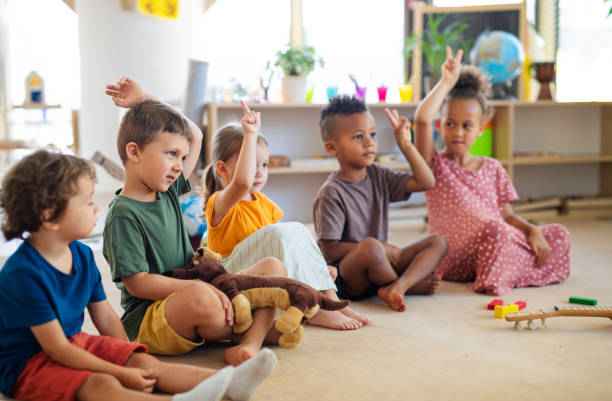
Parenting is a beautiful journey from how babies grow and walk and even go to school; you experience every part of their life with them. As a mother, I understand the excitement and anxiety when your baby moves from primary school to the big one; it is a major developmental leap a child will ever take. You may also feel, is my child ready to explore the world?
While academic benchmarks are totally based on counting to 20 or knowing the alphabet, the child is ready in parents’ and educators’ minds. However, true school readiness is a holistic puzzle that is based on main factors like social-emotional resilience, physical independence, and communication skills.
In this definitive guide, we will discuss every pillar of school readiness. We just don’t talk about the basics; in fact, we will explore the “hidden” skills that help children thrive, not just survive, in a classroom environment.
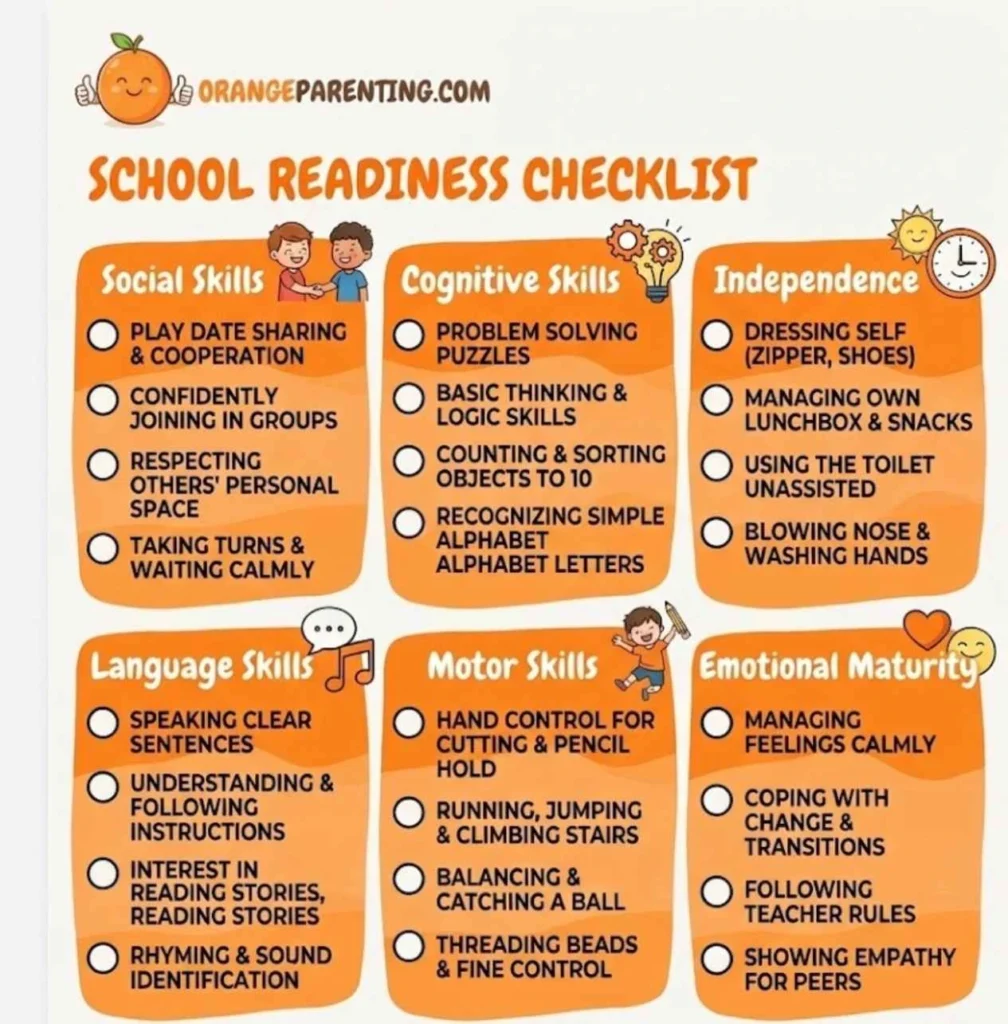
What is a School Readiness Checklist?
A school readiness checklist is a practical tool used by parents and educators to evaluate if a child is developmentally prepared for kindergarten. Rather than just focusing on academic skills like reading or counting, a comprehensive checklist assesses a child’s emotional maturity, social independence, motor skills, and language development to ensure a smooth, confident transition into the classroom.
You can use this checklist as a living document. Don’t worry if your child isn’t perfect in every point mentioned. Consider the checklist just as targets to work toward in the months leading up to the first bell.
Social & Emotional Maturity
The first aspect to evaluate includes several key factors, as success in school relies 20% on academics and 80% on social interaction.
- Separation Confidence: Is your child capable of saying goodbye and joining a group normally without prolonged distress?
- Emotional Regulation: Are they starting to communicate with you instead of having physical outbursts when they are frustrated?
- Turn-Taking: Do they have patience? Can they wait for their turn in games or wait to speak in a group?
- Empathy: Do they show concern when a person is upset or hurt?
- Resilience: If you are playing a game with them, like a puzzle, if they fail, will they try again or ask for your help instead of just giving up?
- Following Rules: Do they understand environments such as home, library, and park have different sets of expected behaviors?
Physical Independence & Self-Care
Teachers are always there to help kids; however, it’s better to give your child a gift of independence.
- The Toilet Milestone: Look, is your child capable of using the bathroom independently, from washing their hands to wiping?
- The Lunchbox Challenge: Can they open the lunchbox or unzip the bag without any help?
- Dressing Mastery: Can they put on their own shoes (Velcro or buckles), zip up a jacket, and put on a sun hat? without anyone’s help.
- Hygiene Awareness: Do they know how to use tissue for their nose or cough?
- Belongings Management: Do they have enough sense to identify what’s theirs, like a bag, water bottle, and jumper, in a place of similar items?
Communication & Language
Remember, communication is the key; when a child expresses their needs, it is a child who feels safe.
- Expressing Needs: Can they communicate with adults easily, like “I’m hungry,” “I’m tired,” or “I need to go to the toilet”?
- Multi-Step Instructions: Can they follow commands like “put your shoes in the basket,” “wash your hands,” or “sit on the chair”?
- Active Listening: Can they sit in a place for 10 to 14 minutes to listen to just a story instead of constant interruption?
- Vocabulary: Can they tell you how the day was by using 4 or more words in one sentence?
- Questioning: Do they ask you questions like “who,” “what,” “where,” and “why” to get information about the world around them?
Cognitive & Academic Foundations
Remember these are just tools for learning, not the end goal.
- Name Recognition: Can they recognize their name written on a label or a locker?
- Early Literacy: Do they understand what they read from right to left?
- Foundational Math: Can they do counting to 10 by just touching random objects correctly?
- Shape & Color Literacy: Can they recognize primary colors or basic shapes like circle, square, or triangle?
- Fine Motor Strength: Can they hold the pencil with a strong grip or use safety scissors properly to cut the paper?
Developmental Disclaimer: This checklist is for educational purposes only and does not replace professional pediatric or developmental counseling. Every child develops at their own pace. Always consult your pediatrician or a child specialist if you have specific concerns about your child’s school readiness.
What are the soft skills that actually matter?
If you speak to a kindergarten teacher, they will tell you that the alphabet is the easy part. The “soft skills” are what determine a child’s happiness and confidence during the first term.
The Power of Waiting
In many modern households, children are often the center of attention. However, in a classroom with 25 other students, they become just one among many.
So they have to be calm to wait for their turn, whether it’s about teacher attention, lunch, or even playing on a swing.
How to practice: To train your children to adjust in an environment with many other kids, play board games that require strict turn-taking.
Don’t let them win every time. This trick helps in building patience needed for crowded places like school.
Asking for Help
Sometimes a quiet child keeps struggling with a broken pencil or a task, and they don’t have the confidence to say it to the teacher. School readiness means giving your child the script to advocate for themselves. The Script:
Teach them to ask for help in the classroom by raising their hand and calling the teacher’s name, like, “I am stuck.” Could you please help me?
The Lunchbox Test: A Practical Deep Dive
Most breaks in school last for 20 to 30 minutes. If a child spends 15 minutes just struggling with a sealed yogurt or a stiff zipper, they don’t eat enough.
To avoid this situation, teach your child like two weeks before starting school. Pack their lunch box and have them sit on a rug to eat it. Observe:
- Can they open a granola bar? If not, then teach them how to open it properly.
- Can they open the water bottle without spilling it down their front?
- Do they know what they need to pull in trash and what they need to take back home?
The 20-Minute Lunchbox Test
| The Challenge | What to Observe | The Action Plan |
|---|---|---|
| Packaging & Wrappers | Can they open a granola bar or sealed yogurt without help? | Practice the “pinch and pull” technique at home or pre-slit tricky wrappers. |
| Bottles & Containers | Can they open and close their water bottle without spilling it on themselves? | Switch to simple push-button or flip-top lids. Avoid stiff, screw-top caps. |
| The Zipper Hurdle | Can they smoothly open and close the main lunchbox zipper? | Choose bags with large, durable zipper pulls or add a key ring extension for better grip. |
| Waste Management | Do they know what to throw away in the school trash and what to bring back home? | Use colored containers (e.g., green = keep, clear = toss) to build a visual habit. |
How to manage separation anxiety? (Parents and Children)
Remember children are emotional sponges; like, if you are projecting anxiety, they will absorb it.
Keep goodbyes short, like avoid long, drawn-out goodbyes at the classroom door, as they increase anxiety for both of you. Give them a small hug and say, “I will see you at 3:00,” and leave immediately because the teachers are trained to distract and settle the child.
Some children are very emotionally attached and sensitive to their parents; to keep them normal, you can draw a small heart on their wrist and a matching one on yours. Tell them if they miss you, just press the heart. This also helps in reducing separation anxiety.
The Academic Baseline: What do they really need to know?
Don’t let academic pressure overwhelm you. Here is the realistic baseline that most schools expect for a smooth start:
Children don’t need to read the whole book; however, they do need a relationship with books, meaning they have to know books do have stories and they can enjoy reading them. They need to understand that letters represent sounds.
- Check: Can they identify the first letter of their name?
- Check: Can they rhyme simple words (cat/hat/mat)?
Another thing is focus on number sense instead of rote counting. If your child can count to 100 but is unable to tell you the actual number of apples a bowl has, then it means they don’t actually understand numbers.
- Check: Can they look at small objects like 3 to 4 and tell you how many there are instead of taking time to just count?
Lastly, writing is the end result of months of muscle building. Involve them in activities like playing with playdough, using tweezers to move pom-poms, threading large beads, and coloring. All these activities help in building strength, especially in hands.
When to Consider a Gift Year?
Many schools have a cutoff date, meaning that children born close to this date are often the youngest in their class. Sometimes, these children may not be ready for school; however, this should not be seen as a failure; it’s simply a guideline based on chronological age. Consider delaying school entry if your child is physically smaller, struggles to follow simple, single-step instructions, sleeps more hours during the day, or shows little interest in play.
The Ready for School Routine Makeover
Remember, preparation starts at home, so you need to make your child ready by following these tricks.
4 Weeks Before
- Sleep Training: Change bed timing; like, if the child sleeps at 10 pm, change it to 9.45 pm every day. Most 5-year-olds need 10 to 12 hours of sleep.
- Morning Simulations: Get dressed, have breakfast, and pack the bag by a certain time.
2 Weeks Before
- Uniform Rehearsals: Let them do the work, like wearing shoes and clothes, and also ask them to take them off. Avoid stiff shirts, as they can be a major distraction for a child.
- The School Walk: Walk or drive the route to school multiple times. Let them see by pointing out the big playground or the colorful gate.
The 4-Week School Routine Countdown
| Timeframe | Focus Area | Daily Practice | Home Modification / Tip |
|---|---|---|---|
| 4 Weeks Before | Sleep Alignment | Shift bedtime earlier by 15 minutes each night until hitting the target school schedule. | Aim for 10 to 12 hours of total sleep for 5-year-olds to prevent morning meltdowns. |
| 4 Weeks Before | Morning Simulations | Run a timed morning trial: wake up, get fully dressed, eat breakfast, and pack the backpack. | Use a visual chart or timer so the child sees the countdown to “departure time.” |
| 2 Weeks Before | Uniform Rehearsals | Have the child practice putting on and taking off their school clothes and shoes completely solo. | Swap out stiff shirts and complicated buttons for elastic waistbands and velcro. |
| 2 Weeks Before | The Route Familiarity | Drive or walk the exact route to the school campus at the actual morning drop-off time. | Point out positive landmarks like the big playground or the colorful gate to build excitement. |
The Neurodivergent Perspective
Standard checklists usually fail when the child has ADHD, autism, or a sensory processing disorder. Readiness for these children needs extra support.
- Use a picture to show the sequence for the day, like first school, then park, then home.
- If you have time, visit school when it is empty to check if there is a sharp light or if chairs are scratchy. Understanding these earlier practices can help you to work with teachers.
- Identify one teacher with whom your child feels comfortable immediately.
Conclusion: Confidence is the Goal
School readiness isn’t just about passing a test but is more about confidence. A child who feels capable—able to open their lunch box, find their bag, or ask for help—is truly ready for school. As a parent, your job is not only to make them the smartest in the class but also to make them prepare for this new stage of life. Use the given checklist as a guide. Trust the journey, and enjoy this incredible new chapter.
Frequently asked questions
1. What is the most important skill for school readiness?
The two important skills a child needs are self-regulation and social-emotional skills. Academics are important, but a child that is capable of managing emotions, following directions, and interacting with peers is the true foundation. Once children adjust in groups, literacy and numeracy are much easier to teach.
2. My child can’t write their name yet. Should I be worried?
No work on name recognition, such as being able to identify their name on a cubby or water bottle, is necessary. Help them to straighten the hand by practicing prewriting activities like playing with playdough, drawing, or painting.
3. What is the Lunchbox Test?
In this test you will observe quickly if the child can unzip their bag, open containers, and peel fruit within a limited time. Before going to school, let them practice how to open a lunch box alone at home for a few weeks.
4. At what age should a child start school?
The correct age is typically between 4.5 and 6 years old. If your child has a “borderline” birthday, you may consider “redshirting” (waiting an extra year).
5. Should my child be fully toilet trained?
Yes, as most schools prefer children to be fully independent in the bathroom, a child can unzip, wipe, and wash hands without any help.
6. How can I support a shy child?
Facilitate small connections early. Take them to the play area where many children from the same school play so when they go to school, they will see familiar faces. Teach them how to talk with other kids, like “Hi, can I play?” to slow their anxiety and build confidence.
7. What if the teacher says my child isn’t ready?
Trust their observation and perspective; don’t take it as failure, it’s just a developing phase. If a teacher suggests another year of preschool or therapy, it is to ensure your child enters school feeling capable and successful rather than overwhelmed.
Sources & Further Reading
- Child Development & Milestones: Centers for Disease Control and Prevention (CDC) – Developmental Milestones
- School Readiness Guidelines: American Academy of Pediatrics (AAP) – Is Your Child Ready for Kindergarten?
- Early Childhood Education Standards: National Association for the Education of Young Children (NAEYC) – Transitions to Kindergarten
- Sleep Requirements for Children: National Institutes of Health (NIH) – Pediatric Sleep Duration and Health
