As a parent, welcoming a new baby is one of the best things in life; however, preparing for a new baby is a challenging task, especially for new parents, because when you go to buy new baby stuff, there are thousands of products marketed as must-haves, and how to find what fits the best is a difficult decision.
This guide isn’t based on just some random shopping list; in fact, I will provide baby essentials list based on the first six months of your baby’s life so your money and time are both saved and you enjoy the new phase of life with the baby easily.
The Safe Sleep Sanctuary
The main concern that comes with newborns is sleep, as it is important for baby health as well as parental sanity. Finding products that help with better sleep is a must. Here are some items that can help as follows:
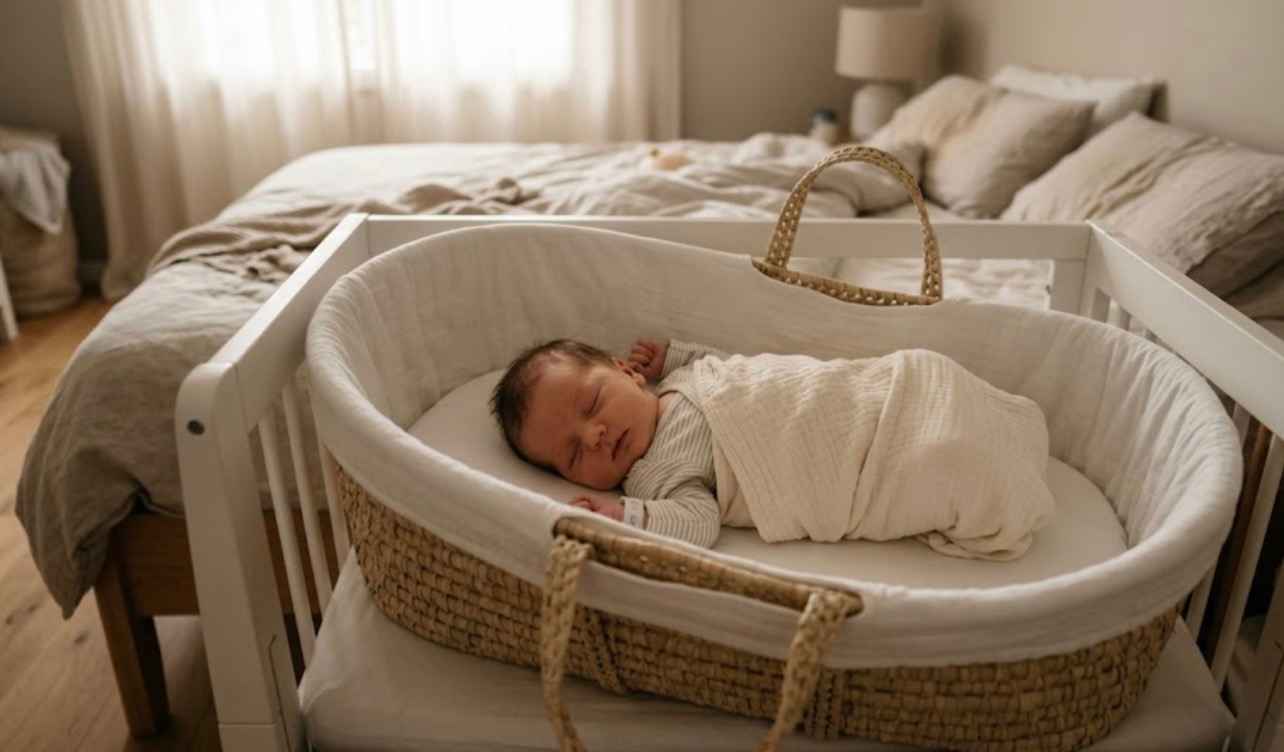
The Bedside Crib or Moses Basket: During the first 6 months, the baby sleeps in the same room but in a separate sleep place, like a bedside crib, so both parents and the baby can sleep peacefully, and there is no place from where the baby can fall easily, like a bed.
A New, Firm Mattress: Crucial Safety Tip: When you welcome a baby, always buy a new mattress, as a second-hand one can contain bacteria or lose the firmness that supports the development of a baby’s spine.
Waterproof Mattress Protectors: Make sure you follow the triple-layer rule, like one on the bed, one in washing, and one in the cupboard so you can easily get one when you need to change the baby’s diaper at 3:00 AM.
Organic Cotton Fitted Sheets: Avoid other clothing materials, as a newborn baby’s body isn’t used to any clothing material; however, you can use cotton bed sheets, as they are light and naturally breathable.
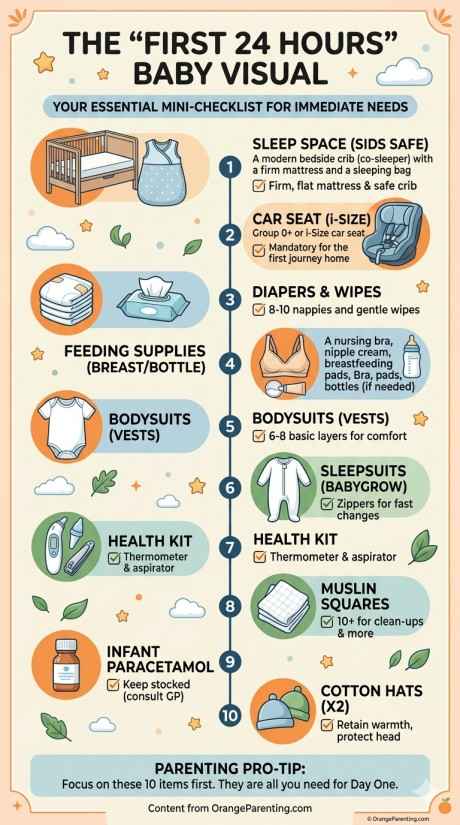
Baby Sleeping Bags (2 per TOG): According to the modern guideline, sleeping bags are much safer than loose blankets. Make sure you have the right Thermal Overall Grade, like 2.5 for rooms 16–20°C (winter), 1.0 for rooms 20–24°C (spring/autumn), and 0.5 for rooms above 24°C (summer). The recommended room temperature is between 16°C and 20°C. Many modern monitors include this; a thermometer is more correct.
Also Read: Sleep Regression Ages: Signs, Timing, and Sleep Tips
The Spit-Up Proof Wardrobe
Newborns grow very fast, so the biggest mistake new parents make is they overbuy newborn sizes. So here I’m explaining what essentials you can buy based on a 0 to 3 month old baby.
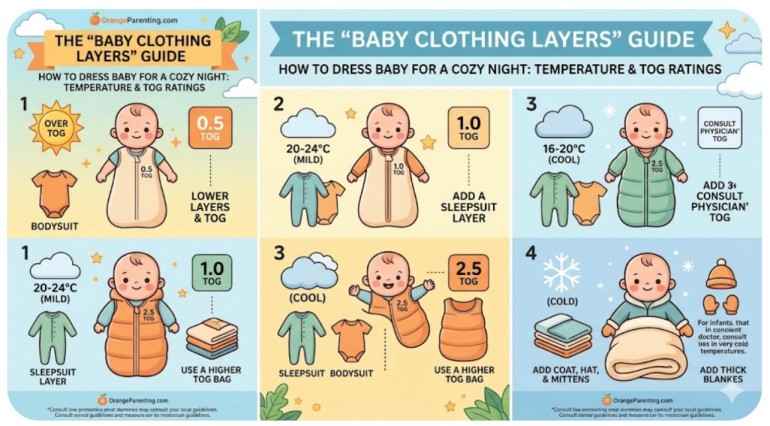
- 8 Short-Sleeved Bodysuits (Vests): You can consider them as underwear in the new baby world. However, always choose the one with envelope necklines so you can easily pull the vest down over a diaper change instead of taking it off from your head.
- 8 Long-Sleeved Sleepsuits: Always go for zippers instead of poppers (buttons) as they are easier to take off during 3:00 AM.
- 2 Cardigans: For layering, heavy cotton works the best
- 6 Pairs of Socks: Your baby wearing sleepsuits and using socks will make them feel warm, especially in cold weather.
- 1 Sun Hat and 1 Soft Beanie: These 2 things are important when you are taking a baby out, as they save the baby’s skin, which is very thin.
The What Not to Buying Clothing
Following are some items that parents find useful and attractive before buying, but in reality they are useless.
- Baby Shoes: All baby shoes look so attractive that parents end up buying them; however, they are useless and can be a hurdle in natural foot development.
- Occasion Wear: You can buy it, like only 1 outfit, as babies spend all their time sleeping or feeding, and occasion wear isn’t comfortable.
Feeding Systems (Breast, Bottle, & Combo)
The most important part of motherhood is feeding, so whether you are giving breast milk, formula, or a combination of both, you need a feeding system that makes the journey easy.
If you are feeding breast milk, do the following steps:
Nursing Bras: Buy these after 36-38 weeks of pregnancy, as your breast size increases by 1–3 cup sizes during pregnancy. Once you give birth, the natural milk comes out in 2 to 5 days; these nursing bras are made to handle this change.
Nipple Cream: For better relief, you can use pure lanolin, as it is completely safe for the baby to digest.
Nursing Pads: Always go for washable bamboo pads, as they are comfortable as compared to the disposable ones.
A Manual Collector Pump: In the modern world, many mothers are using collector pumps. This suction-based pump catches letdown from the breast and helps you to build a milk stash with no effort.
If you are going for a formula/bottle kit, then use these steps.
6–8 Anti-Colic Bottles: Use these bottles, as they can mimic the natural pace of breastfeeding.
Sterilizer: You have three choices, like electric steam, which is the fastest; microwave, which is the cheapest option; or cold water, which is best for travel.
Bottle Brush: They are the best and essential as they reach the bottom of the bottle where milk protein takes place.
First Infant Formula: If you are giving formula, always check the expiry date and ensure it is Stage 1.
All these items need to be in new baby essentials list.
The Changing Station Logistics
In the first year after the arrival of a baby, you will surely change 2000+ diapers. Being smart isn’t a goal; it is necessary.
Wedge Changing Mat: They aren’t like flat mats; in fact, wedge mats keep the baby in the center as they have raised sides.
Diaper Caddy: This portable basket is easy to move from one room to another.
Diaper Bin: It is optional but can be a good pick. Look for the one that has a seal and a mechanism to reduce odor.
Diapers (Size 1): Since babies grow fast, so many skip size zero for this. You can buy 2 jumbo packs of size 1.
Water-Based Wipes: For the first month many mothers use cotton or warm water, which can sometimes be difficult to manage. Water-based wipes can work the same and are easy to manage.
Barrier Cream: Babies spend a lot of time in diapers, which leads to rashes, so you can apply barrier cream every time you change it.
Mobility & Travel (The High-Ticket Items)
This is where many parents spend most of the money. Here is how to choose wisely.
The Car Seat (Non-Negotiable)
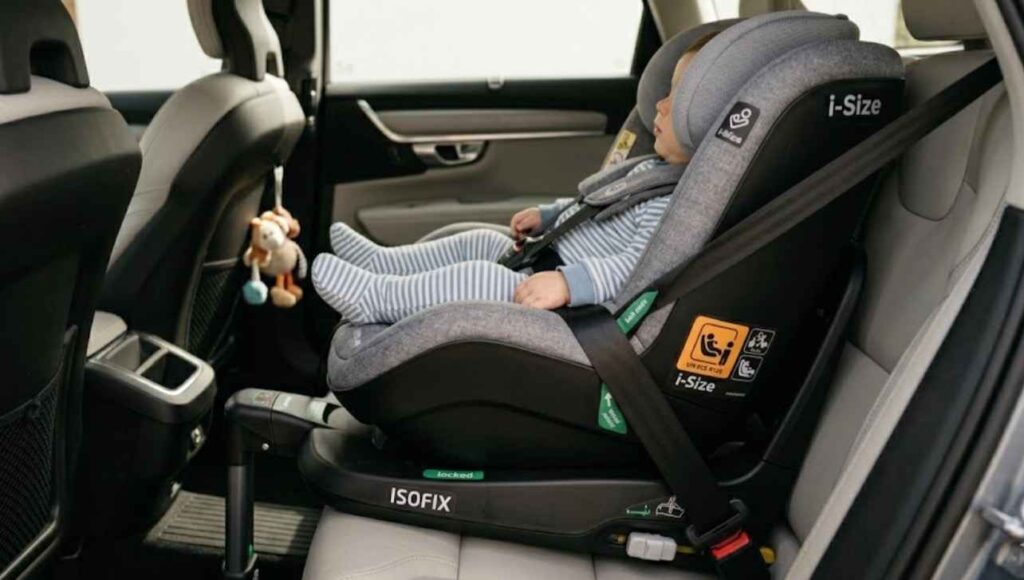
Make sure the car seat meets the required i-Size safety regulation because it supports better neck and head protection because it is based on height, not on baby’s weight.
Rear-Facing as Long as Possible: It is important and safer for a child to remain rear-facing until they are 15 months or 4 years old.
The Stroller/Travel System
Make sure your car has a bassinet attached, as a newborn needs to lie on it a long way to develop a spine and remain fully open to air. Never leave a newborn in a car seat for more than 2 hours.
While taking your baby for a walk, if the pavement or grass is uneven. Make sure the stroller has strong, big wheels instead of plastic ones.
Health, Hygiene, & First Aid
These are some important items you will regret not buying when the baby is suffering from a fever at midnight.
- Always keep a digital ear or forehead thermometer near the bed, as they are fast and provide accurate readings.
- Buy a nasal aspirator because when babies get sick, they face difficulty breathing, so a nasal aspirator helps to clear airways during a cold.
- Always keep infant paracetamol in a drawer. Usually suitable for 2-month/5 kg babies.
- Since baby nails are very sharp and parents become nervous while cutting them, buy an electric file, as it is safe.
- Buy soft hooded towels, as they can warm a baby’s head immediately after a bath.
The Psychological Essentials (Modern Additions)
These items aren’t important; however, they can help in improving the quality of living.
White Noise Machine: Helps the baby to sleep better as it replicates the sound of blood rushing in the placenta.
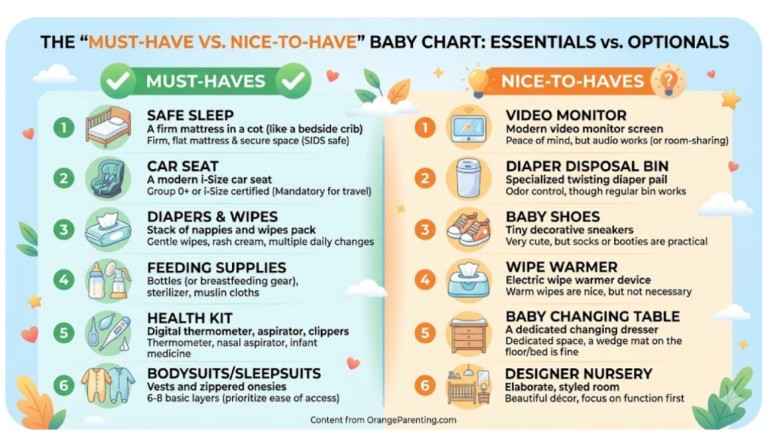
Video Monitor: Many parents use it, as you can easily monitor what a child is doing through it. It is more secure against any hacking.
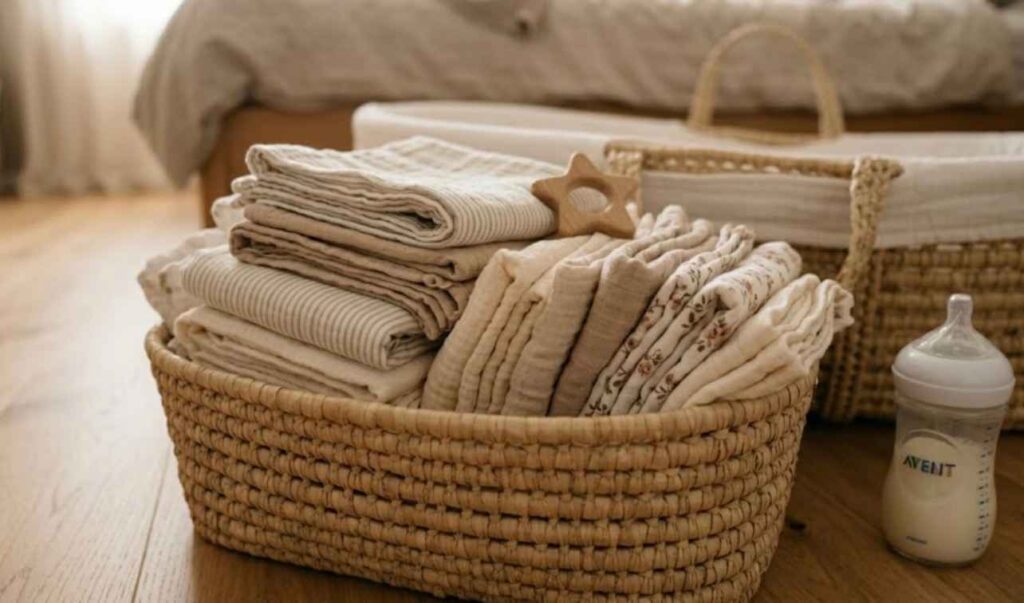
Muslin Squares (12+): You will need these, as they are best for burping, wrapping the baby, or even cleaning a cloth quickly.
A High-Quality Baby Carrier: Baby wearing works great when you are doing all the housework while giving babies all the cuddles they need.
The What NOT to Buy (The Minimalist Manifesto)
Save your money by avoiding these common marketing traps:
Wipe Warmers: They can be a breeding place for bacteria, which is not needed around babies.
Expensive Diaper Disposal Systems: Many parents find them unnecessary; in fact, they find regular bins work better.
Tummy Time Mats: A clean blanket on the floor works perfectly fine. Usually babies make it messy and dirty.
Specialist Baby Detergent: It is useless unless your baby has extreme eczema; a non-bio fragrance-free detergent works best.
Frequently Asked Questions (FAQ) by Parent
1. When should I have my baby essentials ready?
Make sure you order a car seat, pram, and crib by week 30. Due to the possibility of parcel delays, it’s advisable to order your essentials earlier, ideally by week 36.
2. Is it safe to buy second-hand?
Yes, many second-hand items like clothes, strollers, and wooden furniture are safe; however, never buy a second-hand car seat because you don’t know how much damage it has. Never buy a second-hand mattress because there is a risk of bacteria.
3. How many outfits does a newborn really need?
A newborn baby spits up and needs leaky diapers throughout the day, so change their clothes 3 times in a day. For a month you can keep like 10–12 sleepers so you don’t need to do laundry every single day.
4. What are the “Big Three” for a baby registry?
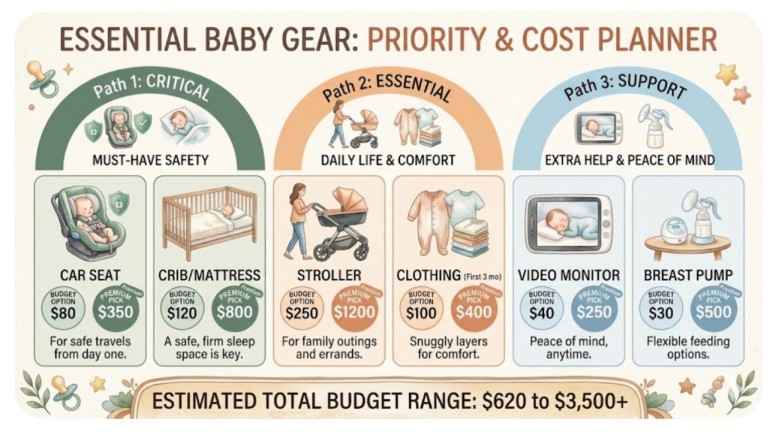
If you are having a baby shower, three important things like a car seat, stroller, and crib are for the registry. These are the highest costs and the most vital for safety.
Summary Checklist for New Parents
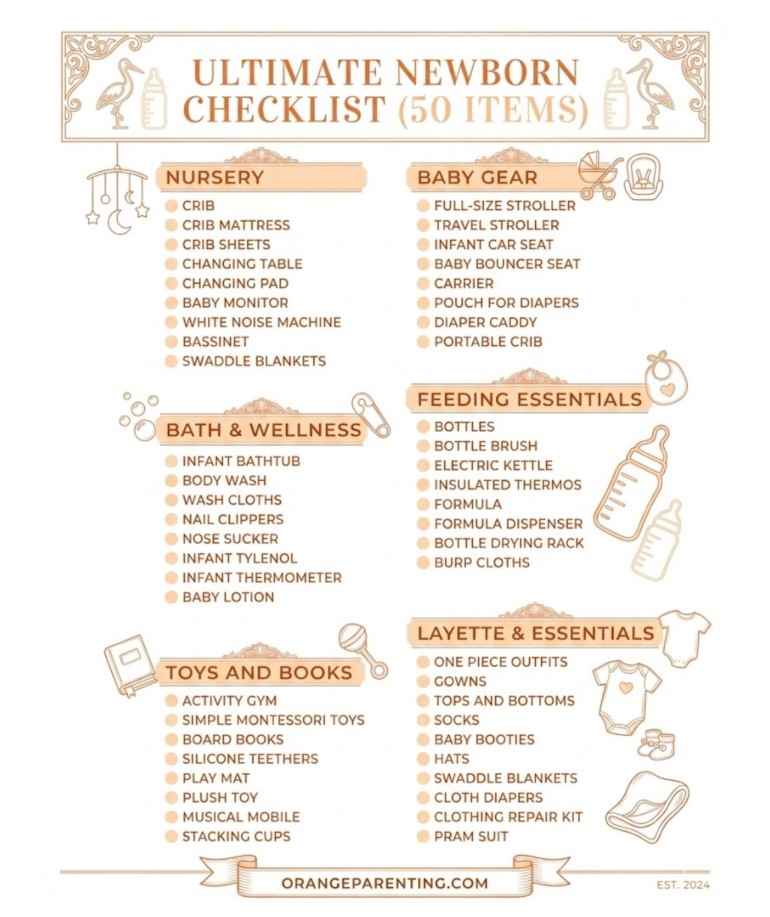
- For baby sleep: a bedside crib, a new mattress, 3 protectors, 4 sheets, and 2 sleeping bags.
- For baby transport: an i-Size car seat, a lie-flat pram, or a diaper backpack.
- For baby feeding: 6 bottles, sterilizer, nursing bras, nipple cream, and 12 muslins.
- For baby changing: 2 packs of diapers, water wipes, barrier cream, or wedge mat.
- For baby’s overall health: digital thermometer, nasal aspirator, and non-bio detergent.
- For baby’s Toys and Books: Small toys, play mat, board books, plushy toys and stacking cups.
Essential Baby Gear: Priority and Cost Planner
The Bottom Line
Remember babies are very simple; they don’t need a whole nursery that looks like a Pinterest board. They just need a safe place to sleep, the best feeding, and parents who aren’t stressed with them. By using this new baby essential in your life, you can make the parental journey easy by avoiding spending money on unnecessary things. I wish you the best for your new arrival.
Medical Disclaimer: This article is for educational purposes only and is not a substitute for professional medical advice. Always consult your pediatrician or healthcare provider for guidance regarding your baby’s sleep, health, or development.
References to Related Content
- American Academy of Pediatrics (AAP). (2025). Newborn babies: Getting ready at home. Stanford Medicine Children’s Health. https://www.stanfordchildrens.org/en/topic/default?id=newborn-babies-getting-ready-at-home-90-P02703
- Mayo Clinic. (2025). Feeding your newborn: Tips for new parents. Healthy Lifestyle: Infant and Toddler Health. https://www.mayoclinic.org/healthy-lifestyle/infant-and-toddler-health/in-depth/healthy-baby/art-20047741
- National Health Service (NHS). (n.d.). What to buy for your newborn baby. Best Start in Life. https://www.nhs.uk/best-start-in-life/pregnancy/preparing-for-labour-and-birth/what-to-buy-for-your-newborn-baby/
- The Lullaby Trust. (2025). Safer sleep for babies: A guide for parents. https://www.lullabytrust.org.uk/wp-content/uploads/2025/01/Safer-sleep-guide-for-parents.pdf
- The Lullaby Trust. (n.d.). Safer sleep overview: The basics of safer sleep. https://www.lullabytrust.org.uk/baby-safety/safer-sleep-information/safer-sleep-overview/
