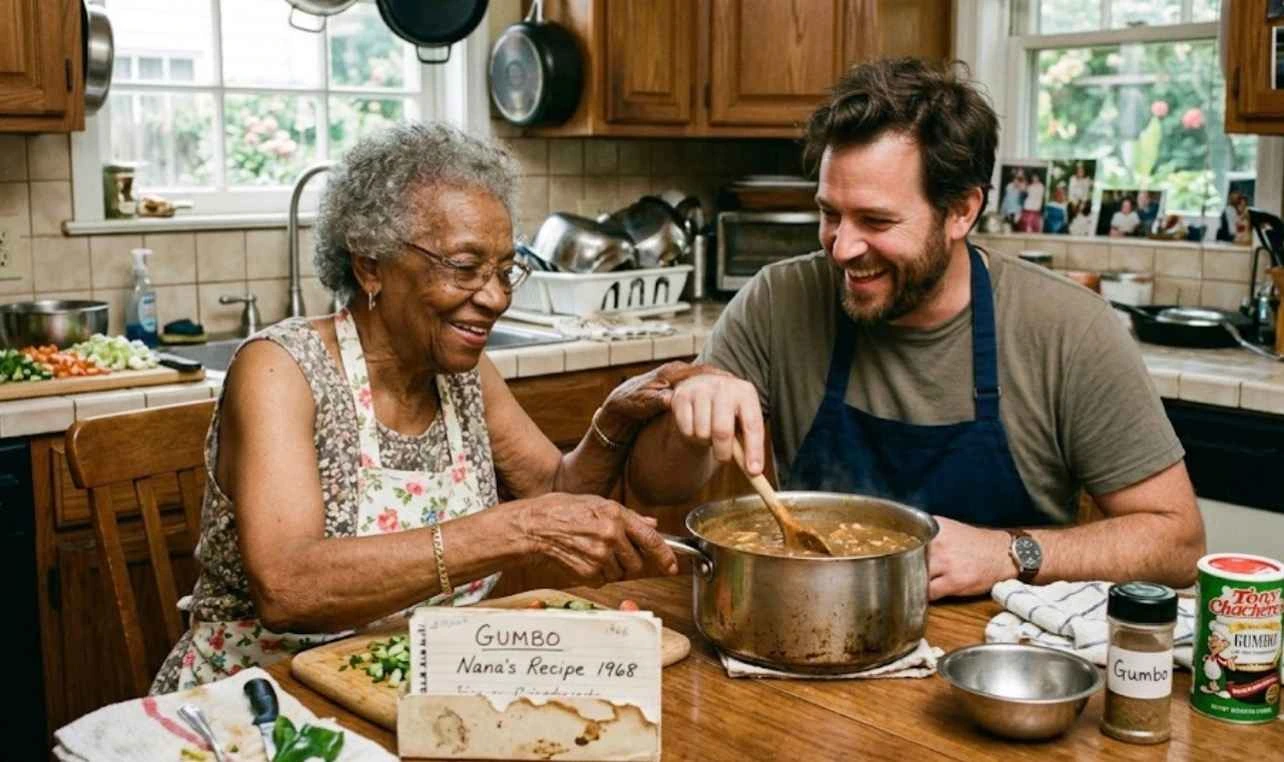
A recipe is heartumental because it acts as an emotional anchor and a piece of living history. While normal recipes provide just measurements for food, a heartumental one preserves culinary nostalgia, saves a family’s cultural identity, and triggers vivid memories through the neurobiology of scent. Cooking provides active mindfulness, lowering stress and inducing a calm “flow state” in the kitchen.
In this busy world we treat food as basic things like fuel for the body; we calculate macros, track calories, and look for nutrition. But anyone who has been thinking about their childhood while eating may miss the scent of browning butter or a specific blend of spices and understand that the recipe is something more than food-making instructions.
The term “heartumental” captures the importance of recipes. The word “heart” basically represents the emotional and nostalgic connection with food, whereas the word “monumental” represents the historical and cultural significance of culinary preservation.
When we ask why is a recipe important Heartumental, we aren’t looking for just a recipe; in fact, we look at how to maintain humanity and our traditional history by just simply cooking. Here the recipe isn’t based on instruction only; it is like a roadmap of personal and collective histories.
Beyond the Ingredients: Recipes as Emotional Anchors
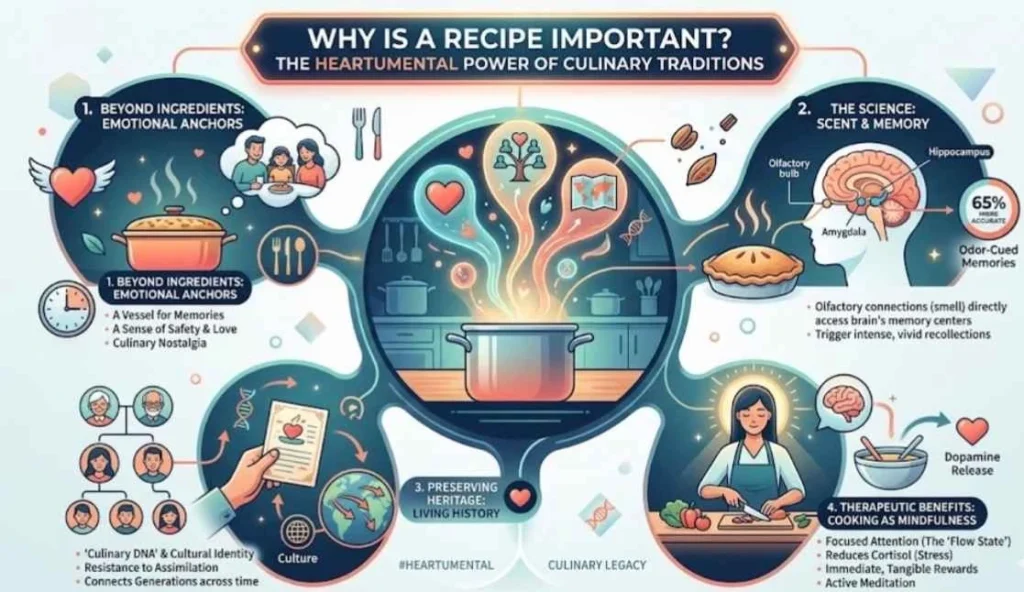
When we open a recipe from a book or online, we see a list of ingredients like flour, eggs, sugar, and salt. However, a cook thinks the ingredients are more than just a list; they’re emotional anchors. This is a specific sensory trigger that grounds us in a feeling of safety, love, or belonging.
What is the concept of culinary nostalgia?
It is a powerful psychological phenomenon where food serves as a time machine, meaning it’s not just a photograph you see or a song you hear but a recipe that includes all five senses.
When you try to recreate a heartwarming recipe, such as Grandma’s famous Sunday pancakes or a specific dish you enjoyed while traveling, you are not just making food; you are experiencing that time. You are not only eating food by just making it; you are experiencing that time. This beautiful connection is exactly the reason why a recipe is important fundamentally; it preserves an old memory of food making, which can’t be lost with time.
The texture of the crust or the specific acidity of a sauce acts as a source that opens the emotions that have been locked for years.
Even for some people, the recipes work as the only connection to the loved ones who passed away.
The Philosophy of the Invisible Chef
Every time you recreate an old recipe, you get in a silent meeting with the person who created that first and no more. You move your hand like they do. You want the same taste as they had. This creates a sense of shared presence that transcends time.
Recipes are a part of beautiful memories; they aren’t just a list of ingredients and methods; they are pieces of a person’s soul.
Core Pillars of The Invisible Chef Philosophy
The Science Behind the Sentiment According to Neurogastronomy
When we talk about the emotional side of a recipe, it’s not always just poetic; it’s also related to the complex architecture of the human brain. To understand the topic in more detail, we must look at the neurobiology and the emerging field of neurogastronomy.
The Neurological Link Between Scent and Memory
As we all know about senses, smell is one of the important ones that travels directly to the brain and triggers emotions or memories.
When you inhale the aroma of a recipe that is in the making, the signals bypass the thalamus and go to emotional processing and memory formation.
Additionally, the brain’s scent processor is physically located right next to the amygdala that handles emotions. Since the brain is near, the connection is very fast, which constructs what scientists call odor-cued memories.
Scientific Fact: According to the scientific research, a human can remember a scent at a rate of 65% after a year. Whereas the visual memory reduces to 50% after four months.
This is why a recipe journal is important, as it works like a hard drive for our personal history.
Preserving Heritage: Why Family Recipes are Living History
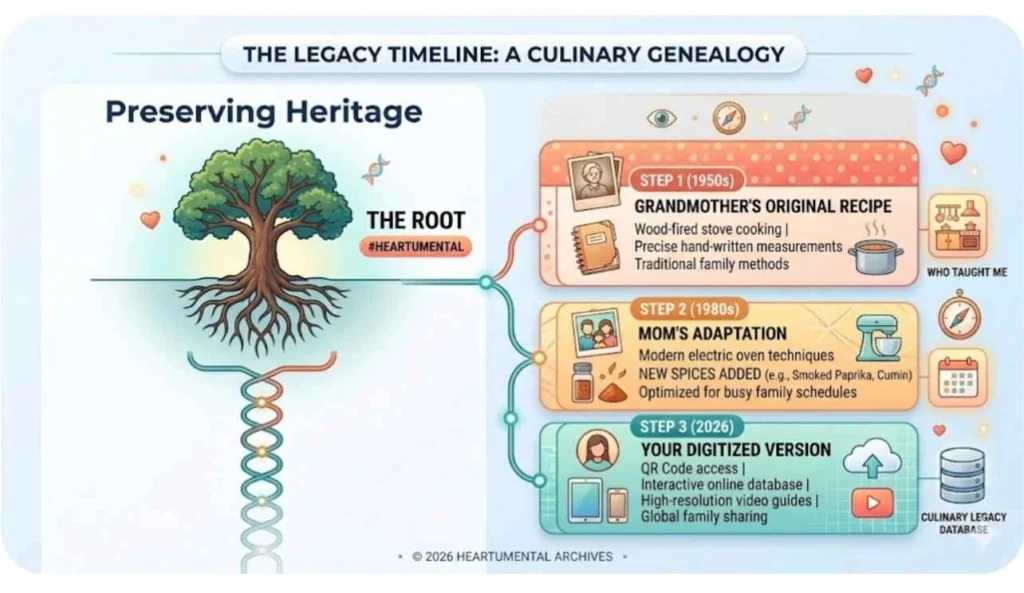
Our history books are full of stories related to kings and wars; on the other hand, the old family recipes tell us the story of a specific person. They exist within recipes as a form of living history, a narrative that goes beyond mere reading to be tasted and experienced.
Recipes as Cultural DNA
In many communities around the world, recipes work as an act of resistance against cultural loss. When people move from one country to another, they may lose the language or their land, but they carry the recipes in mind.
- The Archaeology of Taste: Recipes is a reflection of how ancestors survived. What specific grains or techniques they used tells us the story of what ingredients were affordable in the market at that time or what was available in the soil.
- Ritual and Identity: The significance of recipes is often tied to specific moments, such as when bread is baked for holidays or when a special dinner recipe is prepared for someone who is unwell. These rituals define the boundaries of a culture.
The Evolution of the Secret Ingredient
The secret ingredient in the heartumental recipe isn’t a spice but the technique used, like making dough at a specific temperature; the trick is transferred from generation to generation. Preserving the techniques creates a difference between a normal meal and a legacy.
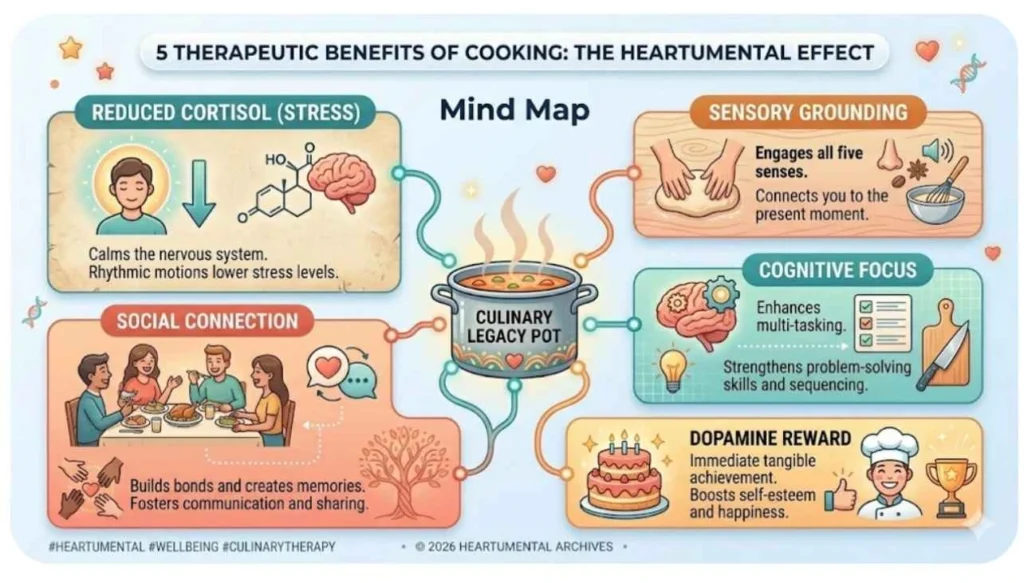
Therapeutic Benefits: Cooking as a Form of Mindfulness
In today’s fast-paced world, cooking can serve as a mental workout. I’ve noticed that many people turn to cooking when they feel angry or need to distract themselves, as the kitchen provides a unique sense of control.
Here is why cooking works as therapy, broken down simply:
1. The Recipe as a Safety Net
When the mind feels confused or overwhelmed, deciding what to cook can become a challenge; however, a recipe serves as a cognitive container.
- You don’t need to guess; in fact, you know exactly what to do and when to do it.
- You know when the recipe starts and when it ends; that stops the mental spiral.
- You stay focused, as it forces you to follow a sequence.
2. Sensory Grounding
According to many psychologists, grounding helps in reducing anxiety. Cooking is the ultimate grounding exercise because it engages all five senses:
- Touch: When you make dough or chop vegetables.
- Smell: When you sauté garlic or bake bread.
- Sight: When you watch the ingredients changing in the pan.
- Sound: When you hear a sound that indicates oil is completely hot.
- Taste: Adjusting the seasoning.
3. The Small Win Effect
Depression and stress often create a place where our minds get stuck for hours; however, cooking helps to divert them instantly.
The process of diverting your mind begins when you gather raw ingredients and fully engage your efforts in creating a flavorful meal. This activity creates a signal in your brain that you are capable of doing the task and even finishing it; the final product will be good.
This is a primary benefit of any dinner recipe fundamentally; it nourishes the chef as much as the diner.
How to Create Your Own Heartumental Recipe Archive
As we all know, recipes are a part of our tradition and history, so we must be careful so they won’t leak or disappear in time. Many secret family recipes are lost because they aren’t written down anywhere. When we write a cooking recipe, heartumental is more about just listing the ingredients. It’s about capturing the soul of the dish.
Step-by-Step Guide to Culinary Documentation
To make sure your traditional recipes survive, follow these steps to create a modern, high-authority archive:
- The Kitchen Interview: Today everything is based on technology, where people record whatever they want. You can use it to record a video of your relative cooking. This way you will save the recipe by capturing sound and visuals. Consider this the first step in fundamentally learning how to write a cooking recipe.
- The Sensory Narrative: When you are writing a recipe, don’t just write, “Take 2 tablespoons of oil.” Write “Take enough oil to coat the pan.” This helps the next generation to match the sensory experience.
- Hybrid Journaling: Keep a physical binder; however, use modern technology too, like using Paprika or Mela apps to scan handwritten notes.
The Heartumental Recipe Archiving System
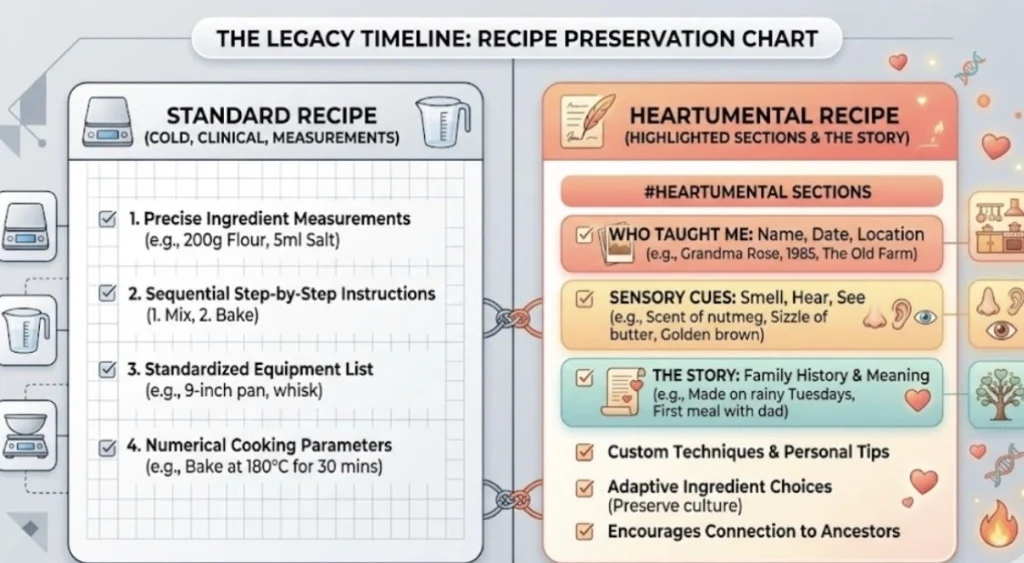
The Anatomy of a Heartumental Recipe Card
If you have old traditional recipe cards, then don’t throw them away, as they preserve the old way of making recipes; use them as historical documents.
When you are writing a cooking recipe document, include these four sections:
- The Narrative: The backstory where this recipe comes from
- The Technicals: Precise measurements for consistency.
- The Sensory Cues: What to smell, hear, and see at each stage.
- The Variations: How the recipe has changed over time, for example, your mother added extra cumin.
Why a Simple Dinner Recipe Heartumental Matters Most?
The traditional recipes are an important part; however, the true anchors of our lives are the everyday meals. A dinner recipe is significant because we made dinner every single day. It is regarded as the final meal of the day, a time when children return from a long and imaginative day while elders come home from demanding jobs. These dinner recipes are the fabric of our daily emotional well-being.
Conclusion: The Edible Heirloom
In conclusion, why is a recipe important Heartumental? Well, it’s because it is the only piece of history we can consume. It is a part of the memory of ancestors, a psychological tool for peace, and a cultural bridge between old and modern. The heartumental is a power that is not only based on instructions but also based on memory, emotions, and sharing ourselves.
Frequently Asked Questions: Why is a recipe important heartumental?
Q: Why do recipes taste different when I make them vs. when my parents make them?
It happens sometimes that a taste can be different by following the same recipe because of sensory calibration. May your parents’ making it at a specific heat, the seasoning of their old pans, and even the climate of the kitchen affect the outcome. Additionally, parents make food for you with full energy and emotions that enhance the flavors of food.
Q: Can I create a sentimental recipe from scratch?
Yes, you can, by making a specific dish for your kids and husband during Saturday or Sunday when the whole family is together. You are encoding that flavor with emotional significance for the next generation.
Q: Is it better to follow a recipe strictly or improvise?
It is better to follow a recipe strictly because it provides a better mental anchor; however, to make recipes easier for the coming generation, you can add your own twist.
Q: Is it possible to find a dinner recipe that is heartwarming for a busy workweek?
Yes, heartfulness isn’t dependent on how much time you invest in making a recipe; in fact, it’s based on consistency and the memories that are created at the dinner table.
Q: How do I start learning how to write a cooking recipe document if I’m not a writer?
Start with the question “Why?” Then write a sentence that conveys the message of who taught you the recipe and how you feel about it. The technical measurements can follow, but the story is what makes it heart-warming.
Q: How to make easy dinner recipes heartumental?
To create simple dinner recipes that are “heartumental” (heartwarming, filling, and soul-satisfying), focus on three quick components: Sauté aromatic staples (garlic, onions, butter, or olive oil) for instant depth of flavor. Add lean meats, lentils, beans or whole grains (such as brown rice or quinoa) to make the meal filling and warm. Finish with a splash of warm broth, heavy cream, fresh herbs or melted cheese for a cozy, satisfying finish.
Q: What is the best cooking recipe heartumental?
The best “heartumental” (hearty, deeply nourishing and comforting) recipe is a one pot creamy Tuscan garlic chicken. It provides maximum comfort with minimum effort through a quick, step-by-step process:
- Pan-fry seasoned chicken breasts in olive oil until brown, remove, and set aside. In the same pan, cook the minced garlic, sun-dried tomatoes, and fresh spinach in butter until tender and fragrant.
- Add chicken broth and a splash of heavy cream or coconut milk, whisking in grated Parmesan until rich and smooth. Add chicken back to the skillet and simmer for 3-5 minutes. Serve warm over a bed of pasta, brown rice, or crusty bread.
Q: How to write a cooking recipe heartumental?
To write a “heartumental” (hearty, deeply nourishing, and comforting) cooking recipe, frame the cooking process as an inviting, warm experience rather than a cold set of instructions. Begin with an inviting intro that emphasizes the warm aromas and comforting goodness, then use descriptive, sensory language in your steps focusing on sizzling sounds, golden brown colors, and fragrant garlic or herbs. Keep the prep easy and accessible with healthy, hearty ingredients such as rich broths, savory proteins, and creamy finishes that guarantee a healthy, homemade meal.
Q: Is this recipe vegan and healthy?
A recipe is vegan if it contains zero animal products (no meat, dairy, eggs, or honey). It is healthy when it focuses on nutrient-dense whole foods like fresh vegetables, legumes, whole grains, and healthy fats while keeping excess sodium and refined sugars low.
