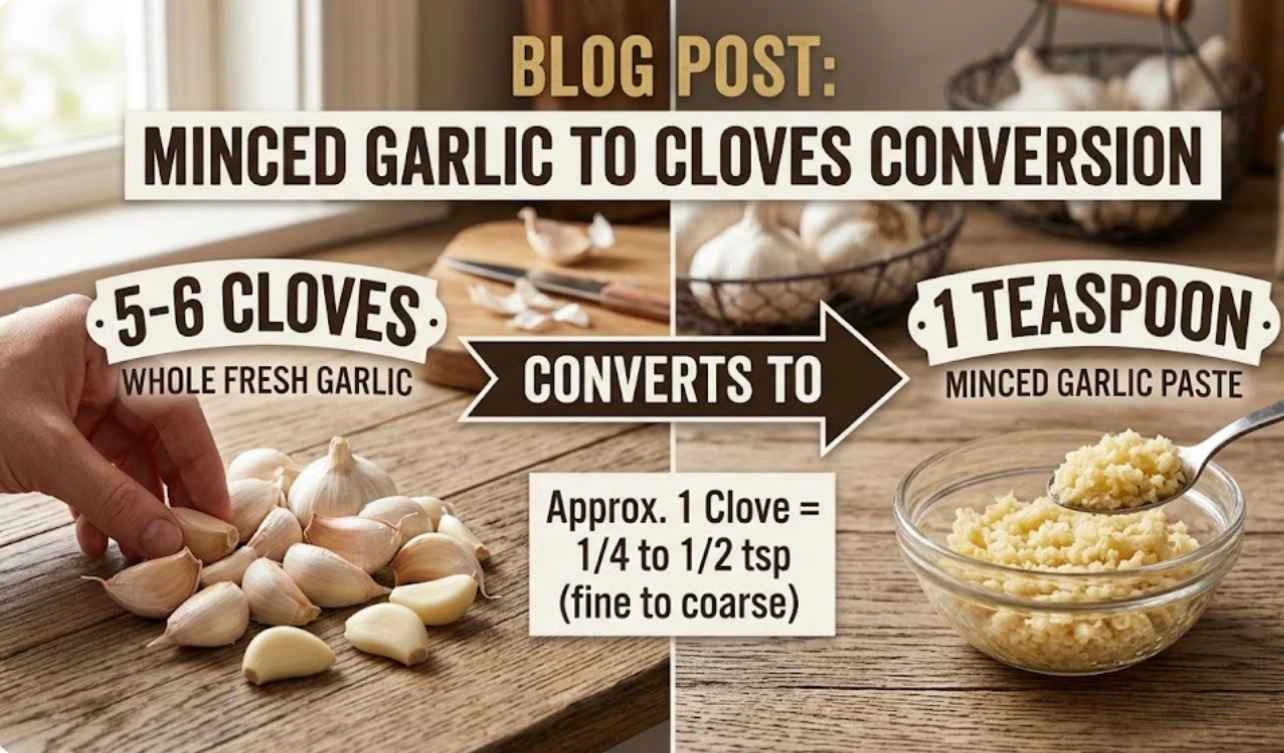
Quick Answer: How much minced garlic equals a clove? The standard conversion is 1/2 teaspoon of minced garlic per one medium clove. For larger recipes, 1 tablespoon of minced garlic equals 6 cloves.
The Conversion Table: From Cloves to Teaspoons and Beyond
| Number of Cloves | Minced Garlic (Teaspoons) | Minced Garlic (Tablespoons) | Garlic Powder (Approx.) |
|---|---|---|---|
| 1 Clove | 1/2 tsp | 0.16 tbsp | 1/8 tsp |
| 2 Cloves | 1 tsp | 1/3 tbsp | 1/4 tsp |
| 3 Cloves | 1.5 tsp | 1/2 tbsp | 3/8 tsp |
| 4 Cloves | 2 tsp | 2/3 tbsp | 1/2 tsp |
| 6 Cloves | 3 tsp | 1 tbsp | 3/4 tsp |
| 8 Cloves | 4 tsp | 1.33 tbsp | 1 tsp |
| 12 Cloves | 6 tsp | 2 tbsp | 1.5 tsp |
The Garlic Dilemma: Flavor vs. Aftermath
When we talk about an ingredient that is used in many cultural, traditional, and modern dishes, the first name that comes to mind is garlic. Yes, it is the most essential aroma in the global kitchen. From Southeast Asia to Mediterranean cooking around the world, every chef uses it for flavor. However, nowadays there are many forms of garlic available as compared to our ancestors’ time, so people get confused.
In the world where everything is based on convenience, the jar of garlic becomes a staple in many refrigerators. The recipes aren’t consistent, like some writers can easily add cloves to any food without measuring, while some think measuring spoons and glass jars are important. This different thinking creates a flavor gap.
For instance, if you substitute 3 large fresh cloves with just 1.5 teaspoons of aged jarred garlic, the dish may not have the desired garlic aroma and flavor. On the other hand, if you use a full paste of garlic with cloves in a cream sauce, the taste may get bad.
In this article we will explore the minced garlic to cloves relationship, what quantity you can add to the recipes, and alternatives to garlic, so let’s start.
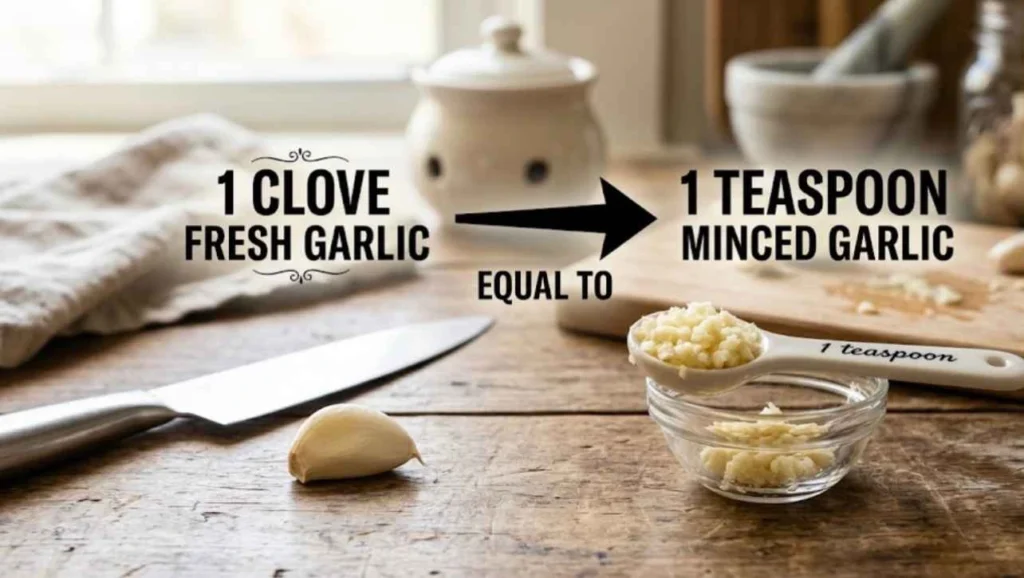
Clove vs. Minced: The Quick Measurement Guide
To understand the answer, we need to look at what a clove actually is. Well, it is a botanical term used for a segment of a garlic bulb. In easy words, garlic is made from 10-15 cloves (parts).
In many culinary schools, they teach a medium clove equals 1/2 teaspoon of minced garlic. This measurement is based on a garlic whose skin is removed and whose flesh is finely chopped.
If you want to understand the weight, then a medium clove of garlic weighs approximately 3 to 5 grams. When you mince the clove, it can be around 1/2 teaspoon. However, “minced clove” can be a subjective term because a piece of garlic occupies more volume. whereas a fine mince or a paste will be more compressed.
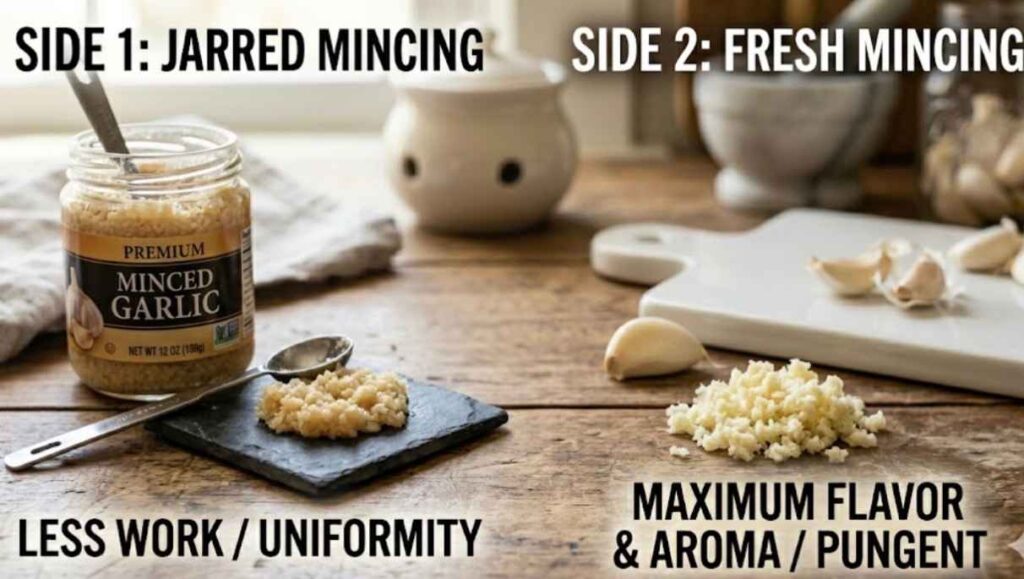
Jarred vs. Fresh Mincing
When you buy a minced garlic jar, you may notice the garlic is sitting at the bottom with preservatives like water and citric acid, so when you take a teaspoon, you aren’t just taking garlic; it’s also liquids. Since garlic itself is flavorful, the liquids have less flavor. This is why many chefs recommend using 1/2 teaspoon to account for the dilution of the jarred product.
Different Types of Garlic
The most important challenge with the minced-garlic-to-cloves conversion is that nature does not standardize them. The garlic comes in many varieties.
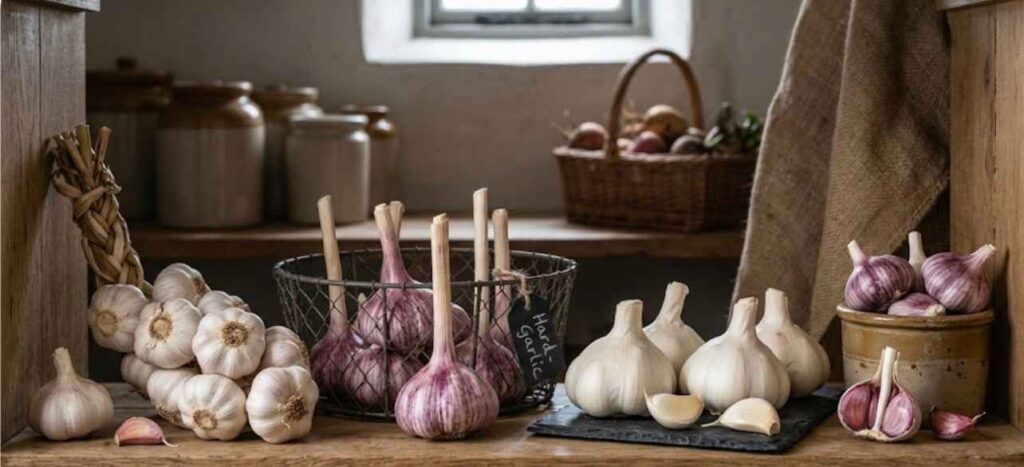
Soft-neck garlic: This is the common variety you can find at any grocery store. It has a very mild flavor. This garlic has many cloves of different sizes, like larger ones on the outside and tiny ones on the inside.
Hard-neck garlic: This variety is found at the farmer’s markets; the cloves are large in size with less quantity and have a woody stalk at the center. One hard-neck garlic bulb is equal to 2 to 3 standard cloves, and in measurement, it is 1.5 teaspoons when minced.
Elephant Garlic: This variety is a relative of the leek. The cloves are massive, sometimes even the same size as a whole standard bulb. One clove of this garlic variety can be around 2 tablespoons of minced garlic in measurement; however, the flavor is much milder.
The Freshness Factor
Aged garlic has less juice as compared to a fresh, plump clove. Older garlic can be shriveled, which leads to dried mince that is still good in flavor but smaller in volume. If you see a green thing inside a garlic clove, then it means the flavor of garlic is very bitter. However, if you remove the green part and then mince, you can avoid bitterness, but you will still need more cloves to reach your teaspoon requirement.
The Clove Swap: Using Jarred vs. Fresh Garlic
The short answer is yes, but you are making a trade-off between convenience and chemical complexity.
When you cut a garlic clove, there is a chemical reaction that happens. Garlic contains one compound that is alliin and an enzyme that is alliinase; together they create allicin, which gives garlic the heat and aroma.
This chemical reaction is at its peak when you mince the fresh cloves. The flavor will be sharp, spicy, and bright.
If you are using jarred minced garlic that was minced weeks or months ago, the allicin may be stabilized or degraded. Also, to keep garlic jars lasting longer, many manufacturers use citric acid, which changes the flavor profile from savory to acidic.
How’s Garlic’s performance in the pan?
The freshly minced garlic is naturally good in sugars and oils that caramelize easily when put to heat; however, the jarred one, which contains liquid like water and citric acid, steams in high heat on a pan before even getting brown. If you are making a recipe where roasted garlic is needed, like Gambas al Ajillo, and you use jarred garlic, it will lead to a complete failure in the sense that the roasted flavor of garlic is absent.
When to Use Jarred Garlic Instead of Freshly Minced?
Since fresh minced cloves have amazing flavors, in some cases jarred garlic is better to use.
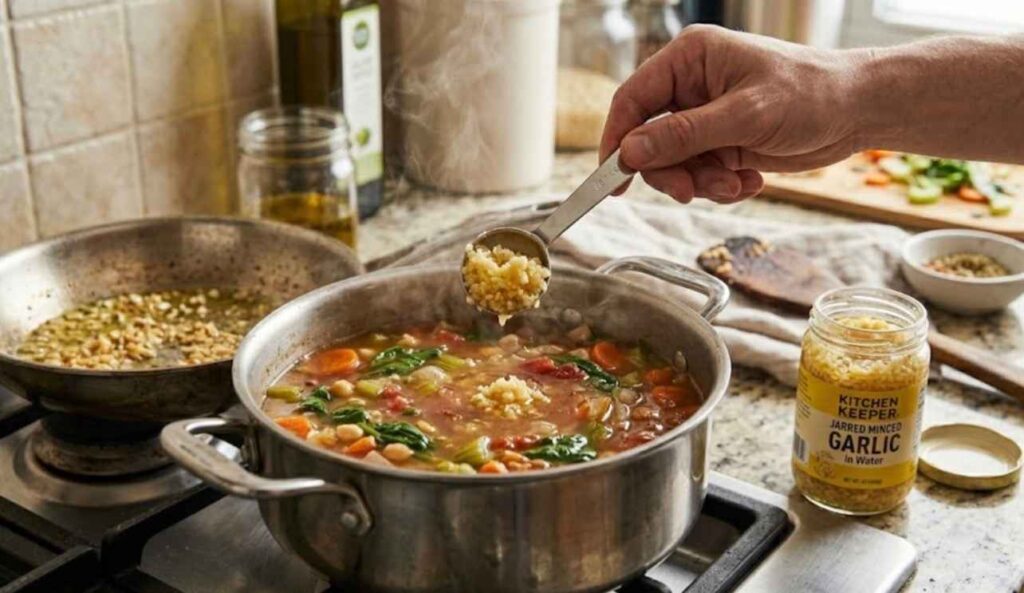
High-Volume Cooking: If you are making a chili or stew for around 50 people, then you need to peel 40 cloves, which is a difficult and time-consuming task, so you will go for a convenient option like jarred garlic. Also the nuances of fresh garlic are often lost in heavy, slow-cooked dishes anyway.
Wet Heat Methods: If you are making braises, soups, and slow-cooker meals, then jarred garlic works best here.
Marinades for Grilling: Since marinades already contain vinegar, salt, and sugar, and the jarred garlic has citric acid, this combination is perfect for the dish.
When to Avoid the Jar?
Since jarred garlic comes with liquid, you need to avoid adding it while making a traditional Caesar dressing, salsa, or bruschetta topping. Fresh mince garlic is important here.
If you are making a dish where you just need to add roasted garlic at the top, then jarred garlic won’t work for it; you need to use fresh garlic.
4 Best Alternatives of Minced Garlic
If you just want to find the right minced garlic to cloves ratio, then you should also go for the following alternatives:
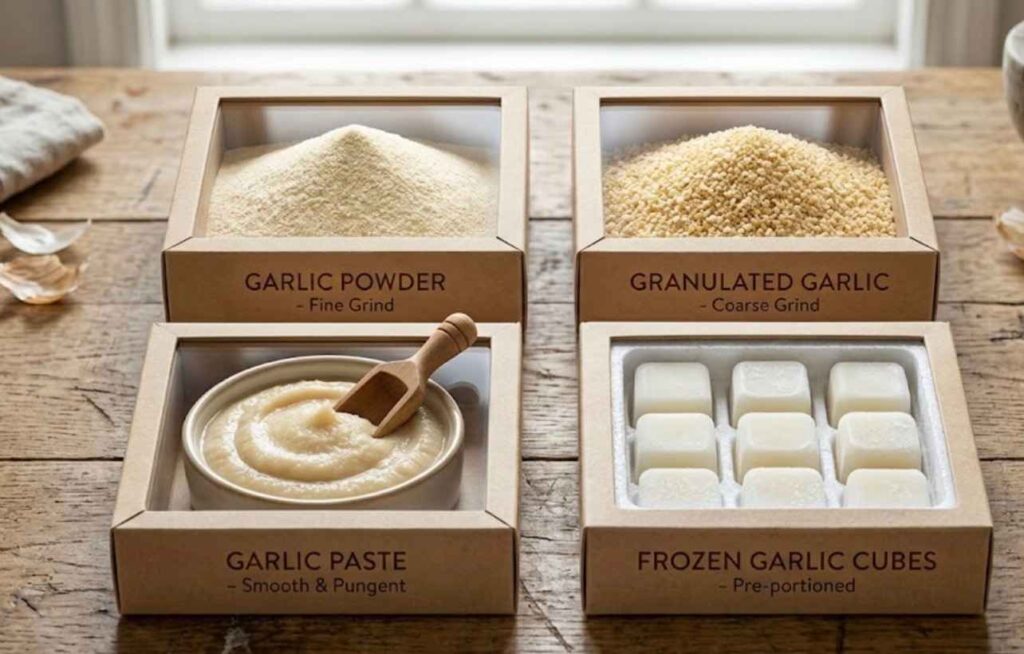
1. Garlic Powder
Many people use this in dry batters in meat or in frying a broasted flour mixture. as it is made from dehydrated cloves that have been ground into a fine flour. It doesn’t burn like fresh minced garlic. It is also known as garlic essence. A 1/8 teaspoon of garlic powder is equal to 1 clove.
2. Granulated Garlic
It is slightly coarser than powder; consider its texture like salt or sand. A 1/4 teaspoon of granulated garlic is equal to 1 clove.
3. Garlic Paste
This is considered one of the closest substitutes for fresh garlic, usually available in the market in small tubes. This can be made from fresh cloves without the need for much water, unlike jarred ones. A 1/2 teaspoon of paste is equal to one clove.
4. Frozen Garlic Cubes
A new variation of garlic is available in many grocery stores called “frozen garlic cubes.” The garlic is first minced and then frozen, preserving more allicin as compared to a jarred one. 1 cube of frozen garlic is equal to 1 clove.
4 Cloves to Tablespoons: The Quick Conversion
Understanding the measurements is very important for scaling recipes.
- The Base Unit: 1 clove is 1/2 teaspoon.
- The Calculation: 4 cloves × 0.5 teaspoons = 2 teaspoons.
- The Conversion to Tablespoons: There are 3 teaspoons in 1 tablespoon.
- The Result: 2 teaspoons is 2/3 of a tablespoon.
If you have doubt about a recipe that needs 4 teaspoons of garlic paste, then you can use 8 cloves.
- 8 cloves = 4 teaspoons.
- 4 teaspoons = 1 tablespoon + 1 teaspoon.
The Secret to a Perfect Half-Teaspoon Every Time
If you decide to go the fresh route, your technique affects your measurement.
The Garlic Press: This process gives you a fine and paste-like consistency and texture. A 1/2 teaspoon of pressed garlic is very effective. This pressing of garlic releases many oils and is amazing if you want flavors.
The Chef’s Knife (Mincing): In this the small cubes take place; it gives a standard minced texture. However, it is slightly less hot as compared to raw garlic.
The Microplane (Grating): This creates a liquid-heavy garlic slurry; however, it is very strong in flavor. 1/4 teaspoon of grated garlic is equal to 1/2 teaspoon of chopped garlic in the sense of flavors.
Pro tip: If you are mincing garlic with hands, then sprinkle a pinch of kosher salt over the cloves. The salt breaks down the garlic fibers into a finer paste, and the garlic won’t stick to the cutting board.
How is garlic used in different countries?
In China: Recipes often call for heads of garlic or specific weights in grams. A stir-fry method uses 30 grams, which is approximately 6 to 8 cloves.
In Italy, the chefs use garlic in camici, meaning they smash the cloves, don’t remove the skin, and only remove it after flavoring the oil. The use of minced garlic isn’t suitable in this case because it can’t be removed later.
In Spain, the people of Spain consider garlic the heart of aioli. The use of fresh minced garlic is strictly applied because a jarred minced garlic won’t satisfy the oil and make sauces thicker.
Is it necessary to use the refrigerator once the jar is opened?
Yes, you can absolutely refrigerate minced garlic after opening, but you have to understand critical food safety and chemical stability.
The Botulism Risk
Since garlic is a low-acidic vegetable that grows in the soil, it might carry Clostridium botulinum. However, these spores are not dangerous in the presence of oxygen, but when the garlic is minced and stored with oils or water, these spores start to bloom, which leads to the deadliest toxins known to man.
The manufacturers use citric acid and store minced garlic to lower the pH, which reduces the growth of botulism; however, once the seal is opened, the oxygen and airborne bacteria hold in the jar.
That’s why it is recommended to store the garlic jar in the refrigerator, as it slows down the growth of bacteria, making the product safe for consumption in the long term.
Chemical Degradation
If safety isn’t the concern, refrigeration also helps in preserving flavors. Garlic flavor comes from sulfur compounds, which usually break at room temperature or evaporate, so when you keep the minced garlic at 40°F (4°C) or lower, these compounds get preserved in garlic for a long time.
How to store minced garlic safely in the refrigerator?
The storage of garlic isn’t just about the fridge; it’s about the how and the where you store it:
The Back of the Fridge Rule
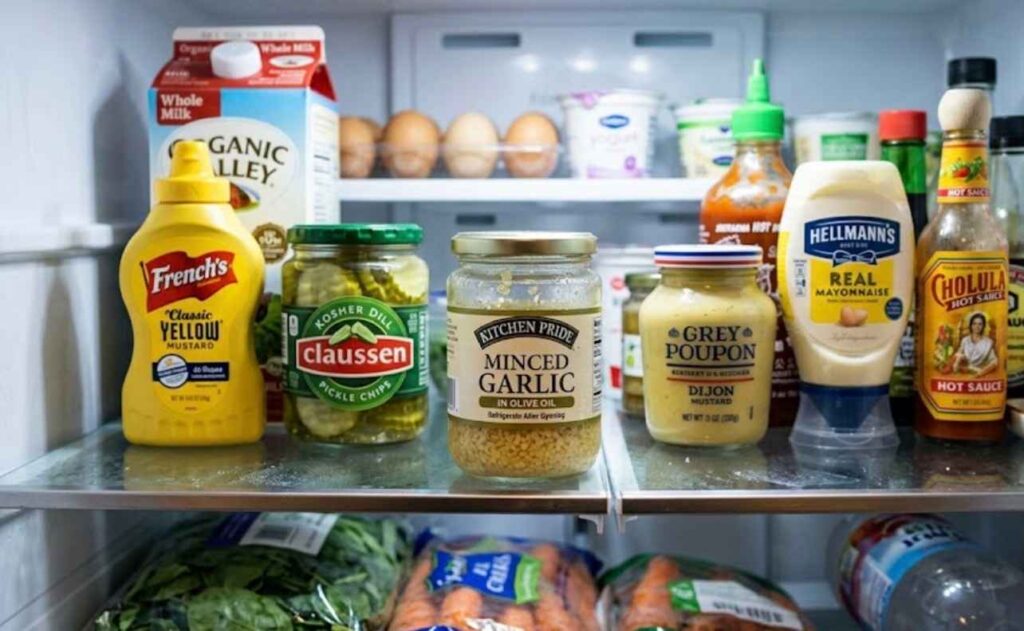
When storing a mince jar in the refrigerator, make sure not to put it at the door because it is a warm part of the fridge and faces temperature fluctuations every time the door opens. It is best to store the garlic jar on the middle shelf in the back, as the temperature remains constant there.
Contamination Prevention
Here hygiene plays an important role. Always use a clean spoon; don’t use the one that touched the raw meat or was used in a sauce. If you use a dirty spoon in the jar, then bacteria can easily take place, leading to fermenting and mold faster.
Home-Minced Storage (The Methods)
If you chopped much garlic at once and worried about how to store it for later use, then I have some tips for you.
In Oil: You can easily store it in a sealed container; however, use it in just 7 days. After this time period, the increase of botulism is even in the refrigerator.
In vinegar: You can also create a garlic pickle, as it lasts longer for weeks; however, you may notice the flavors of garlic change with time.
Freezing: One of the best ways to store minced garlic while keeping it fresh is freezing. Scoop 1/2 teaspoon portions, equal to 1 clove, into ice cube trays, then freeze them until they become solid. Lastly, transfer them to a freezer bag. This method helps in keeping minced garlic fresh for future recipes.
How to Tell if Garlic Has Gone Bad?
Like any other vegetable, garlic isn’t immortal either. Since jarred garlic is already sitting in liquid, it can be hard to tell if it goes bad as compared to a fresh piece of garlic.
1. Color Changes
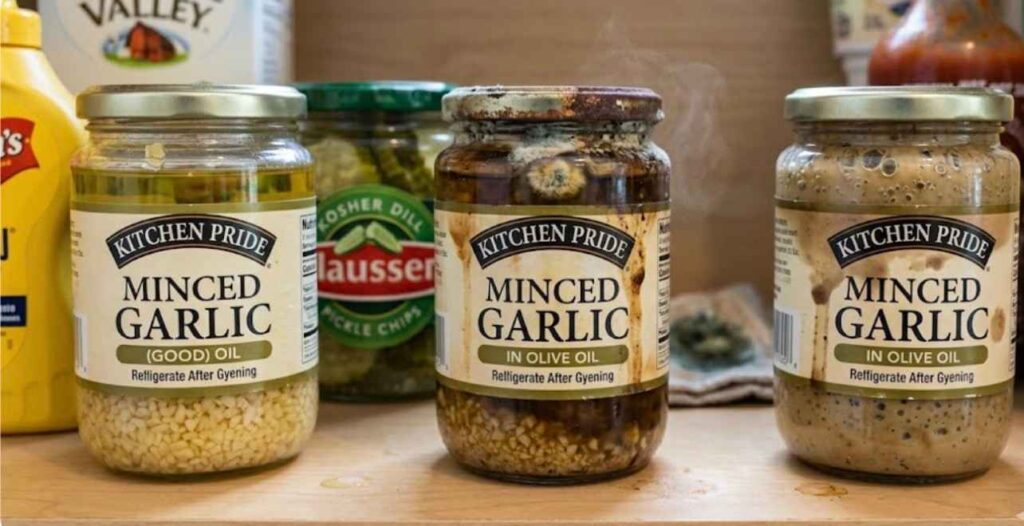
Freshly minced garlic has a beautiful white and off-white color, so if you notice the garlic turns yellow, tan, or even light brown, then it is a signal it is oxidizing. It is considered spoiled, but the flavors can be bitter. However, if you notice there is a blue or green tint inside the garlic jar, then it can be because of acid, and it is still completely safe to use, but if you notice dark brown or black spots, then discard the jar immediately.
2. The Fuzz Factor
Check the jar from inside near the lid and at the rim of the jar, as these are the places where mold starts to build when the jar faces air exposure. If you see any white, grey, or green fuzz, then throw the whole jar. Don’t just scrape the mold off; its roots may already be mixed in the liquid.
3. Bubbling or Pressure
If you’re opening a minced garlic jar and notice it hisses the same as soda or you find small bubbles at the top of the liquid, then it is a sign the garlic is getting fermented where bacteria are active; that’s why gas occurs. This jar isn’t safe to eat.
4. The Smell Test
A clove of garlic should smell like garlic, pungent and savory. However, if you notice the aroma change from savory to sour, musty, yeasty, or no smell at all, it means it is useless for cooking. It’s best to start with a fresh jar or bulb.
| Task | Measurement / Action | Why? |
|---|---|---|
| Convert 6 Cloves | 1 Tablespoon | Standard kitchen ratio. |
| Store Jarred Garlic | Refrigerator (Back shelf) | Temperature stability and safety. |
| Store Fresh Mince | Max 7 days in fridge | Prevents botulism risk. |
| Identify Spoilage | Look for bubbles or brown color | Indicates fermentation or oxidation. |
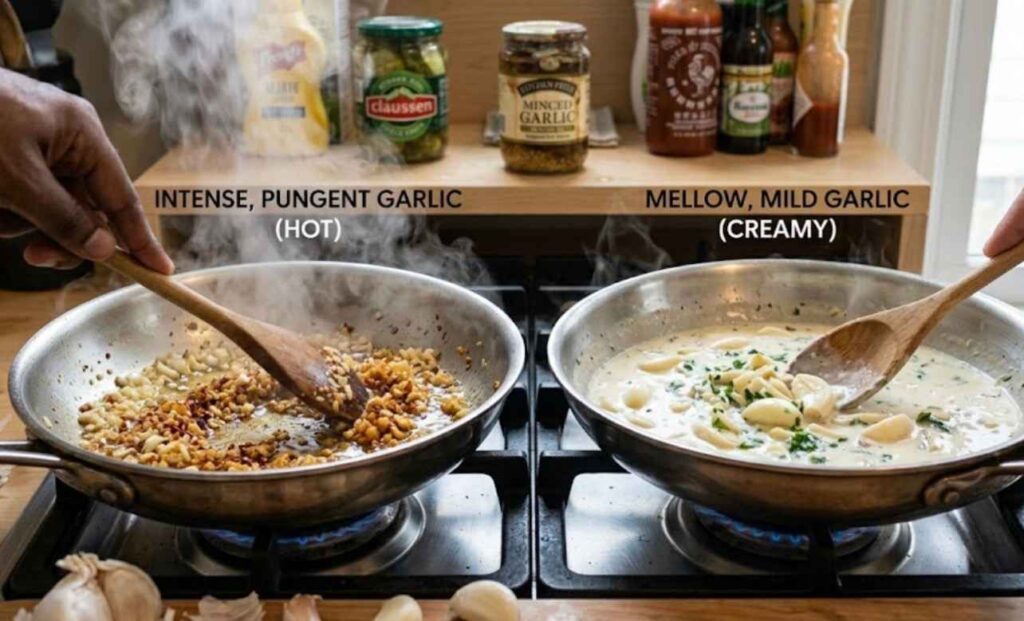
What’s the difference between pungent garlic and mild garlic in cooking?
Following are the different types of garlic:
Pungent Garlic (High Sulfur)
It’s fresh and young and comes from the hard-neck garlic variety. However, it contains high levels of sulfur compounds.
If you eat it raw, it may cause a strong sting on the tongue. It is used to cook dishes like garlic bread, pesto, or spicy stir-fries. Since it is very strong, you need to use less than 1/2 teaspoon per clove to avoid it overpowering the other ingredients.
Mild Garlic (Mellow)
This type of garlic is a part of the soft-neck variety. Jarred minced garlic is always mild because its preservation process kills the enzymes.
It has a sweeter taste, not a hot one; however, it lacks the spicy kick. You can use this garlic in dishes like cream sauces and seafood. You can use 3/4 teaspoon of mild minced garlic, as it is equal to 1 medium pungent clove, to get the same flavor.
The Aged Garlic Exception
Black garlic is aged under specific heat and humidity. It is considered the mildest one among all. However, its flavor profile is quite similar to vinegar or molasses.
If you have aged garlic, then there is no conversion required, as it is a totally different ingredient and can’t work as a substitute for garlic powder or standard minced garlic.
| Situation | Recommended Form | Conversion Logic |
|---|---|---|
| Out of Fresh Cloves | Garlic Powder |
Use 1/8 tsp per clove.
|
| Making a Dry Rub | Garlic Powder |
Better heat resistance.
|
| High Heat Stir-Fry | Freshly Minced |
Needs to caramelize quickly.
|
| Slow Cooker / Soup | Jarred Minced |
Stands up well to long simmering times without losing flavor profile.
|
In What Recipes I can use garlic as main ingredient?
Following are some great recipes purely based on garlic.
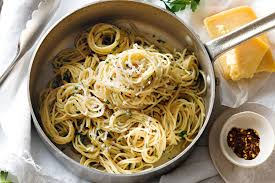
1. Classic Garlic Aglio e Olio
It is one of the purest recipes for garlic, as it is totally based on the quality of garlic and olive oil used.
- Prep time: 5 minutes
- Cook time: 10 minutes
- Serves: 2
Ingredients:
- 250 g spaghetti
- 6 Fresh Garlic Cloves (or 1 tablespoon of minced garlic)
- 1/2 cup extra virgin olive oil
- 1/2 tsp Red Pepper Flakes
- Fresh parsley, finely chopped
- Salt to taste
Instructions:
- First boil water and salt in a large pot, then add spaghetti and cook until al dente.
- While the pasta cooks, slice the garlic cloves into very thin sizes.
- Then in a cold pan add olive oil and then garlic. Set the heat to medium-low so the garlic won’t burn.
- Once the garlic turns a pale golden color, add the red pepper flakes, followed by a bit of the pasta cooking water to prevent the mixture from frying too much.
- Lastly, toss the spaghetti and parsley. Mix completely with garlic oil. Serve immediately.
2. 40-Clove Garlic Chicken (Slow Cooker Version)
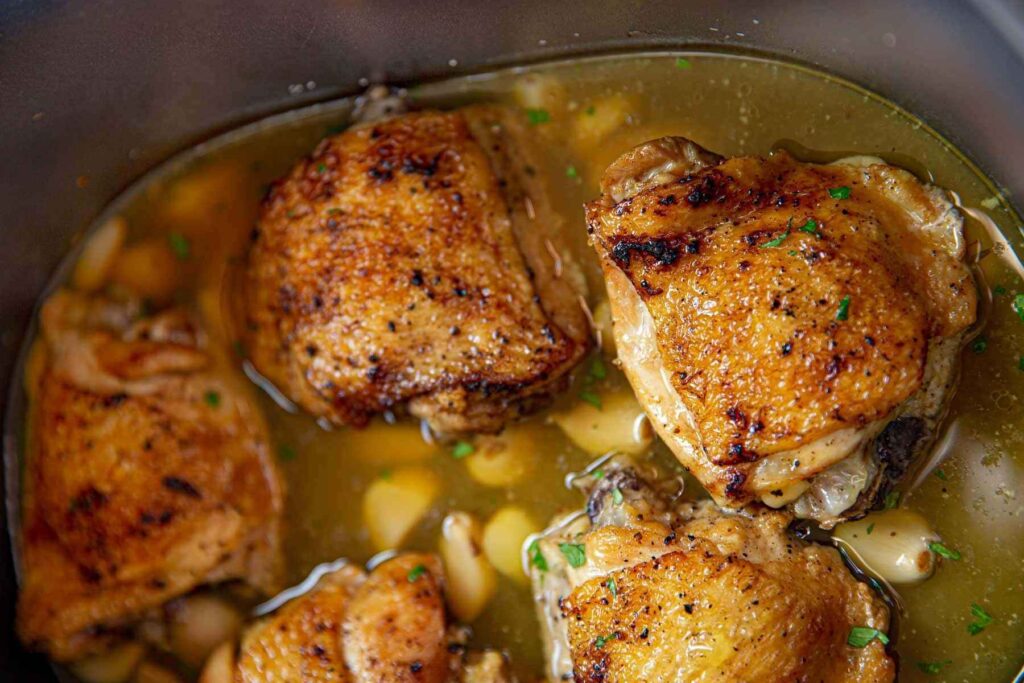
Don’t feel tense by the number of garlic cloves used in this recipe, as when garlic is cooked slowly, it loses its bite and becomes sweet, buttery, and incredibly mild.
- Prep time: 15 minutes
- Cook time: 4–6 hours (low)
- Serves: 4
Ingredients:
- 1 kg chicken thighs
- 40 Garlic Cloves, peeled
- 1 cup chicken broth
- 1/2 cup white wine
- 1 tsp dried thyme
- Salt and pepper to taste
Instructions:
- First season the chicken thighs with salt and pepper, let them rest for some minutes, then add them to the pan, and sear them for 2 minutes on each side till a crispy skin forms.
- Now take a cooker and add 40 garlic cloves at the bottom, then add the seared chicken thighs on top of the garlic.
- Mix the broth, wine, and thyme, then pour over the chicken.
- Cover the cooker and leave it on low heat for 4 to 6 hours. By the end, the garlic cloves will have softened, allowing you to spread them on bread like butter.
3. Honey Garlic Glazed Salmon
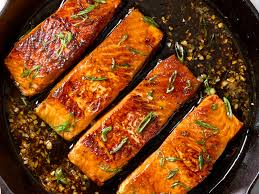
This recipe demonstrates how garlic balances sweetness and acidity to create a restaurant-quality glaze.
- Prep time: 10 minutes
- Cook time: 10 minutes
- Serves: 2
Ingredients:
- 2 Salmon Fillets
- 3 Cloves Garlic, minced
- 1 tbsp soy sauce
- 1 tbsp Lemon Juice
- 1 tbsp butter
Instructions:
- Take a small bowl, then whisk all the ingredients like honey, soy sauce, lemon juice, and minced garlic.
- Now heat the butter in a skillet, keeping the heat medium to high. Season the salmon with some pepper and salt, then place it in a skillet.
- Sear the salmon for 3 minutes on each side till it becomes golden.
- Now add the garlic mixture to the pan. Let it heat for 1 to 2 minutes, then add it over the salmon.
- Remove salmon from heat once it’s cooked and the glaze gets sticky.
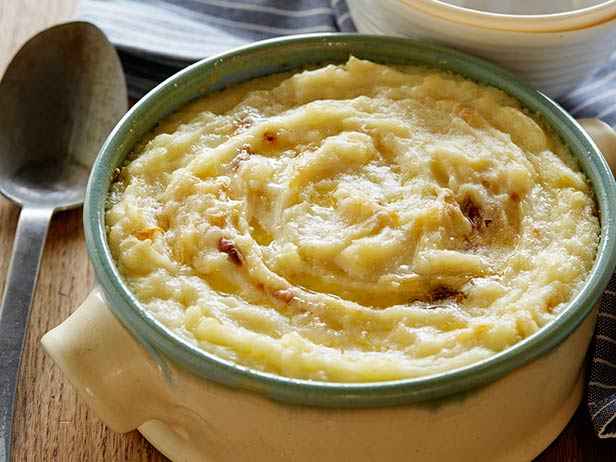
4. Roasted Garlic Mashed Potatoes
When you use roasted garlic instead of a raw one on potatoes, a beautiful taste takes place.
- Prep time: 5 minutes
- Cook time: 20 minutes
- Serves: 4
Ingredients:
- 1 kg potatoes
- 1 whole head of garlic
- 1/2 cup milk or cream
- 4 tbsp butter
- 1 tsp olive oil
Instructions:
- First roast the garlic cloves; for this, you need to remove the top head of the garlic cloves, then add some olive oil over them, wrap them in foil, and bake for 40 minutes at 200°C (400°F). Squeeze the soft garlic paste from the skin once it’s cooled.
- Now boil the potatoes in salted water for 15 minutes, then take them out and mash them with butter and milk.
- Now add the roasted garlic paste to the mixture.
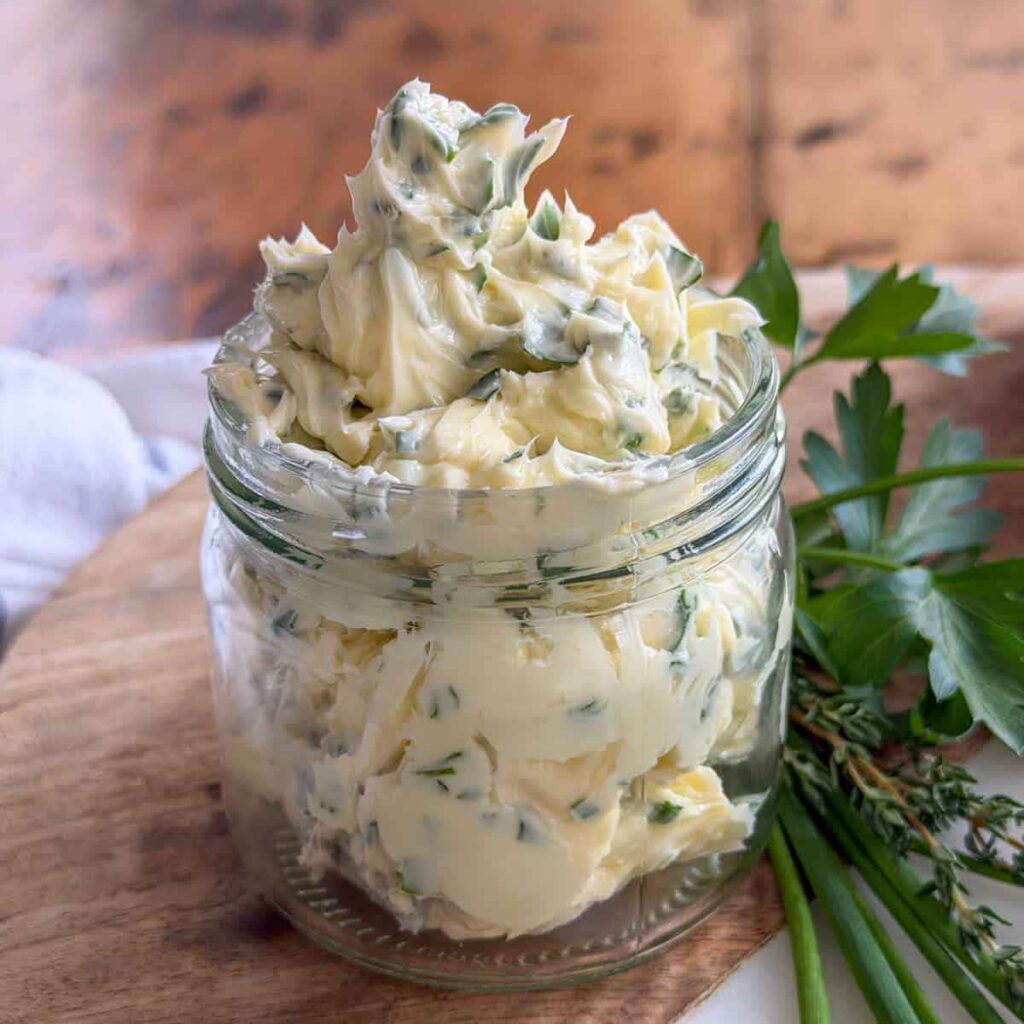
5. Quick Garlic and Herb Compound Butter
This butter is perfect for steaks, corn on the cob, or making the best garlic bread of your life.
- Prep time: 10 minutes
- Serves: Makes 1/2 cup
Ingredients:
- 1/2 cup unsalted butter, softened
- 4 Cloves Garlic, very finely minced
- 1 tbsp fresh chives or chopped parsley,
- 1/4 tsp salt
- 1/8 tsp Black Pepper
Instructions:
- In a small bowl add melted butter with minced garlic, herbs, salt, and pepper.
- Use a fork or spoon to mash the ingredients until the garlic is completely mixed.
- Now add the mixture in plastic wrap, roll it into a log shape, and then refrigerate it for at least an hour before using.
What if I use the wrong garlic form in my recipe?
The kitchen is a place where food mistakes happen; you use a full teaspoon of garlic powder instead of minced garlic, or you use jarred garlic when the recipe has a specific condition of using fresh cloves. Well, do worry; I have some tricks on how to fix it.
What to do if you used too much?
If you accidentally add more garlic powder instead of the recommended 1/8 teaspoon, then your dish may be overwhelmed with garlic flavor. To fix this, increase the liquids, like if the dish is based on soup or sauce; if the dish is solid, then add some potatoes, beans, or pasta to overcome the garlic flavor. Avoid adding lemon juice, as it enhances the garlic flavor more.
What if the texture goes wrong?
If you use jarred minced garlic in a dish where there is a need for chopped garlic, like steak, then the dish looks so bad and tastes boiled. To fix this issue, strain the jarred minced garlic from the dish if possible, or if the garlic is too soft, then just add some more sauce. This will keep the flavors correct and stop jarred garlic from floating around.
Quick Garlic Converter
Convert measurements instantly for any recipe
Recipe Equivalents:
Can I use garlic powder in place of fresh garlic for any course?
Yes, you can add garlic powder as a substitute for fresh garlic in any dish; however, you shouldn’t always do it. If you want professional-quality food results, then always use fresh ones.
1. Appetizers and Fresh Courses
When you are preparing a raw dish like bruschetta, fresh salsa, or a classic Caesar salad, then adding garlic powder isn’t a good option. These dishes depend on sharp and spicy bites, which include fresh garlic.
2. Main Courses (Meat and Poultry)
This is the place where garlic powder can work best, like if you are making a dry rub for a steak or a seasoning for roasted turkey. The reason is fresh garlic includes water and can also burn at high temperatures; however, garlic powder stays the same with no burn and no water on it.
3. Side Dishes and Grains
For side dishes like mashed potatoes and rice pilaf, the garlic powder can work, as it combines with the texture completely, and every bit has the garlic flavor without chunks of garlic.
Frequently ask question by people
How Many Cloves Are in a Head of Garlic?
A soft-neck variety, which is available in the market, contains 10 to 15 cloves. However, if you are taking hardneck garlic, then it will have 6 to 10 large cloves.
How Much Minced Garlic Equals a Clove?
The standard conversion is 1 clove = 1/2 teaspoon of minced garlic. A jarred variety is less so as compared to a fresh one.
What are the best substitutes for fresh garlic?
If you are making a dip or sauce, then use 1 tsp of garlic paste; if using it for dry rubs or roasting, use garlic powder. If making a dish for 20 people, use jarred minced garlic.
Is 1 clove of garlic equal to 1 tsp of minced garlic?
No, using 1 tsp for each clove will make the dish a bit garlicky, and it is a dream for garlic lovers, but it can ruin the balance of flavors in a dish.
Does 1 clove change if I am using elephant garlic?
Yes, because the elephant garlic clove is much bigger as compared to other varieties. A single elephant clove is equal to 2 to 3 tablespoons of minced garlic.
Can I use garlic salt as a 1:1 substitute for minced garlic?
A big no because garlic isn’t garlic; it’s a salt. It includes 3 parts salt to 1 part garlic powder. If you try to use 1 teaspoon of garlic salt in a dish instead of minced garlic, then it can lead to a salty dish.
Why did my minced garlic turn blue or green in the pan?
The only reason garlic changes color is when it interacts with an active acid like lemon juice or vinegar. It also reacts with cast iron pans; the sulfur compound in garlic turns them blue or green. However, it is just a chemical reaction; the garlic is completely safe.
How long does a jar of minced garlic stay “good” after opening?
Once the jar is opened, the jarred minced garlic can be used in 18 to 24 months if you place it in the refrigerator; however, many chefs recommend using it in 3 to 6 months because after that the flavor may decrease.
Is there a difference between minced and crushed garlic measurements?
Yes, there is a slight difference, as minced garlic is chopped into tiny cubes, whereas crushed, pressed garlic is a paste. According to many cooks, 1/4 teaspoon of pressed garlic is equal to 1/2 teaspoon of minced garlic in terms of flavors.
How do I measure two cloves if I only have garlic powder?
If you are preparing a recipe that calls for two fresh cloves of garlic but only have garlic powder available in your kitchen, you may need some guidance. Then you are dealing with something concerning. Since garlic powder is dried, there is no water in it, while the flavor that remains is incredibly potent.
To measure two cloves using garlic powder:
- The Ratio: 1 clove = 1/8 teaspoon of powder.
- The Calculation: 1/8 + 1/8 = 1/4 teaspoon.
Conclusion: Minced Garlic to Cloves
Mastering the minced garlic to cloves conversion is an amazing skill that helps in getting flavor consistency in every dish. While the standard rule is 1 clove = 1/2 teaspoon of minced garlic,
By understanding the difference between fresh, jarred, and powdered garlic, you can easily choose which one works best. By balancing garlic in the dish, you can make something that is not only flavorful but also something everyone loves. Whether you are using a quick measurement or a slow-simmered technique, these ratios are the key to a perfectly seasoned kitchen.
Also Read: Is protein powder made from worms? Myth vs. Mealworm Facts (2026)
References and Further Reading
To provide you with the highest level of accuracy regarding food safety, culinary standards, and nutritional science, this guide references the following authoritative sources:
- U.S. Department of Agriculture (USDA): Food Safety and Inspection Service – Technical guidelines on the refrigeration of low-acid vegetables and shelf-life safety.
- National Institutes of Health (NIH): National Center for Biotechnology Information – Research on the chemical formation of Allicin and the antimicrobial properties of crushed garlic.
- Centers for Disease Control and Prevention (CDC): Botulism Prevention and Safety – Essential safety data on storing garlic-in-oil mixtures and preventing foodborne illness.
- The Culinary Institute of America (CIA): ProChef Resources – Professional standards for ingredient weight-to-volume conversions and mincing techniques.
- Oregon State University: Linus Pauling Institute Micronutrient Information Center – In-depth botanical and nutritional analysis of Allium sativum (Garlic).
- University of California, Davis: Postharvest Technology Center – Scientific data on the storage, oxidation, and color changes of fresh garlic.
- Serious Eats: The Science of Garlic – Culinary research on how various preparation methods (slicing vs. mincing) affect flavor intensity.
