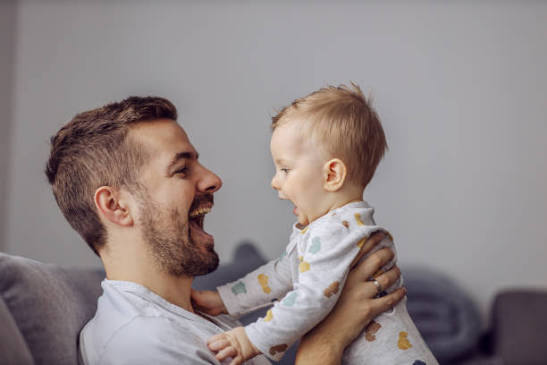
Quick Answer: Most babies say their first words around 12 months of age (such as “mama,” “dada,” or “bye-bye”). However, speech development begins much earlier, with cooing at 2 months and babbling by 6 months, and rapidly expands to 50+ words and simple two-word phrases between 18 and 24 months.
When you become parents for the first time, it comes with a lot of learning, starting from what solid food a 9-month-old baby can have to what time they start walking and talking. Every milestone comes with excitement and experiences. If you’re looking for when do babies talk, you’re not alone; the internet is full of sanitized, clinical charts. Every major health forum gives you a checklist that includes months, a couple of words by twelve months, and short sentences by age two.
It is a predictable pattern, but if you are a parent whose eleven-month-old starts communicating through pointed grunts or a fifteen-month-old understands all the instructions you give yet refuses to say a word, then these little things can make you confused instead of feeling like an actual sign of talking.
Language development in humans isn’t quick or just like a software update. Every child takes their time, experiencing a distinct, messy, and fascinating progression from absolute silence to full sentences. In this article, we will break down the exact timeline, explain what is happening in each phase, discuss how to promote speech at home, and clarify that we will break down the exact timeline, what is happening in the hood during every phase, how to promote speech at home, and how to understand the difference between a normal late talker and a true developmental stall.
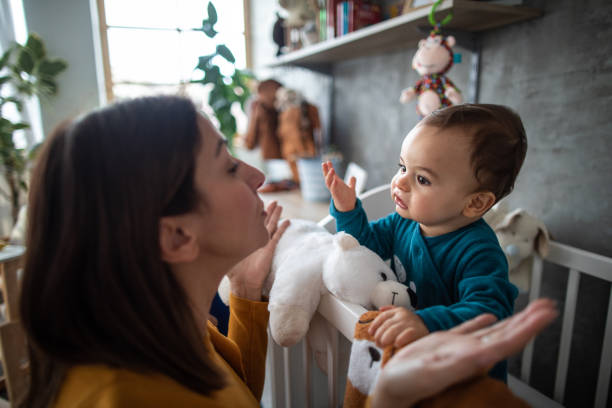
The Pre-Speech Foundation: Birth to 3 Months
They are doing heavy groundwork for communication long before a baby starts to recognize dictionary words. Language is about survival the first few weeks, and lots of audio exposure is needed to get the brain used to the rhythm. Now you may have a question in mind: what receptive hearing looks like?
The Acoustic Startle: When a sharp noise or sudden sound happens, you may notice a newborn react like they blink their eyes or move. This proves their auditory pathways are working actively and responding to the changes.
Voice Recognition: Babies know your voice before they understand what you are saying because hearing is a main thing that calms the infant heart rate and reduces stress faster as compared to random noises.
What Expressive Sounds Look Like
Crying is an infant’s first trick to show they are active. In the first few months, you will start understanding whether the crying is related to a hunger cry, a pain cry, or an overtired whine. When babies turn two months old, they unlock a single vowel sound, which is “ooh” and “aah.” You notice every baby makes such sounds. This happens during calm or face-to-face interaction by eye contact.
The Babbling Breakthrough: 4 to 6 Months
When babies turn 4 to 6 months, they start knowing a set of physical tools like lips, tongue, breath, and vocal cords. This is the moment when vocal became explosive. There will be two receptive milestones, like head turning and tone matching.
Head Turning: When you call the baby from the other end of the room, they will physically turn their head to track which direction the sound is coming from.
Tone Matching: Babies can sense the moods, which means they can pick up emotional context. The angry tone will upset them, whereas the happy voice or tone can lead to smiles, wiggles, and giggles.
Expressive Milestones
Reduplicated babbling is a phase where babies lock in consonant-vowel pairings, repeating strings like “ba-ba-ba,” “ma-ma-ma,” or “da-da-da. “They love to test pitch limit, which means you can expect sudden high-pitched squeals, low growls, and wet raspberries because they are understanding how air moves in the mouth.
Conversational Sounds & Comprehension: 6 to 12 Months
This is the main phase where language stops looking like random noise and starts connecting to the world they are living in. You will experience 3 main millstones, like name recognition, command associations, and gestural comprehension.
Name Recognition: When babies enter at nine or ten months of age, they will constantly pause, turn, and even look at you when you say their name.
Command Associations: They start to recognize the real meaning of random household words like ‘bye,’ ‘no,’ or ‘milk.’ They listen to you when you say no to touch an object.
Gestural Comprehension: Babies start understanding the simple physical cues and even raise their arms when you say them to wave for goodbye.
Expressive Milestones
Babies babble less and give more mini speeches, which means they will have a conversation by raising and lowering the pitch of their voice. Babies begin to mimic the sounds around them. For example, if you have a barking dog, they’ll try to imitate it, or if you clap, they’ll copy you.
The First Word Spurt: 12 to 18 Months
When the baby turns 1 year old, parents become curious; they start to search for what age babies start talking. Well, like any other milestone, there is no restricted time or weeks. Every baby talks according to their milestones.
A fifteen-month-old can successfully understand the commands you give, like “Bring me your shoes” or “Roll the ball.” When you ask where the light is or where the nose is, they will show you by pointing at it.
Expressive Milestones
Most babies start saying the first word when they turn 12 to 15 months of age. These words can be like “mama,” “dada,” “dog,” “milk,” or “ball,” which they listen to in everyday life at home. When babies turn 18 months of age, they then turn into toddlers and speak 10 to 50 words. New words need to be used regularly so they adopt them. Baby points at toys while saying words like “mine” or “wave” when they say “bye” to someone.
Putting Phrases Together: 18 to 24 Months
When babies turn 2 years old, the speech development changes into a fast gear as cognitive mapping explodes. Many parents wonder when babies start trying to talk in a structured way instead of isolated labels. Babies will achieve milestones like complex processing and story comprehension.
Complex Processing: At this point babies easily process two-step words or instructions without physical signs like “Pick up your cup and put it on the table.” They understand all the words you say on a daily basis even when you are not saying the words to them.
Story Comprehension: When you are reading a visually cartoonist book, they even point out any character and object.
Expressive Milestones
When babies turn into toddlers at the age of 2 years old, they start welding single words to express complex needs like “more milk,” “Mommy go,” or “big dog.” They start to say words such as “me,” “mine,” or “you.” By the age of 24 months, the parents understand 50% to 75% of what a toddler says, even if they are talking on breaking words.
Full Conversations: Age 3 and Beyond
When babies turn 3 years old, they are successfully done with the toddler phase and take a step into childhood communication. It sometimes brings many questions to parents, like when should kids start talking in full?
Sentence Complexity: Once parents figure out when babies start taking in sentences instead of single words. They start to use three- to four-word phrases on a daily basis to tell the baby basic stories, like what happened today, or express thoughts. This will increase a child’s vocabulary and let them understand about the environment.
Clear Intelligibility: Your neighbor or strangers that visit your house once a week will also understand 75% to 100% of a three-year-old’s speech.
Why Some Babies Talk Later Than Others
If your baby is behind the exact average age when most of the babies start talking or speaking, then it is not a problem; it is a natural process. There are many core factors that account for standard variations in speech timing:
The Motor Skill Trade-off: Our brain focuses on intense cognitive energy in a single milestone at a time. This means when a baby spends many months by adding their energy into walking, climbing, and physical coordination, they will have another milestone, like speech or sitting on the back door. Once they develop the walking skill completely, then they put energy on vocabulary.
Personality and Temperament: Some babies love to make noise, so we call them natural vocal explorers. While other babies are quite observant, they take months to observe the world before they decide to speak out loud.
Environmental Engagement: A small amount of direct and face-to-face interaction a child gets can influence their verbal timeline. A home where people talk a lot, read books, and share everything experiences helps the baby to gain the vocabulary fast.
Bilingual Processing: A child raised in homes where people are using multiple languages hits a milestone on the correct schedule. However, their vocabulary is split on both tongues. A child can learn 14 words of English and 15 words of Spanish at same time so the total words they understand is 30.
Actionable Ways to Encourage Speech at Home
You don’t need any expensive high-tech screen or flashcards to help the baby to talk. The best language stimulation can take place naturally at home during everyday routines.
Parallel Narration: Talk about the things that are useful several times in a day. If they are looking at a red block that is in the room, then say “red block,” stacking high. Crash! Instead of just a word.
The Five-Second Pause: Ask your toddler a simple question, then pause for some minutes so they can use the brain to process the question and give an answer when they speak.
Semantic Expansion: When you see a toddler is saying a single word, such as “ball,” expand it to a sentence instead of saying yes. You can say, “Yes!” Big blue ball. You rolled the ball!”
Eliminate Background Noise: Turn off the television and background music when your toddler is playing, as the repeated noises can cause difficulty in baby to isolate and mimic human speech sounds.
Month-by-Month Action Plan for New Parents
| Age Stage | What’s Happening (Milestones) | How You Can Help / Tips |
|---|---|---|
| Birth to 3 Months | Listens to your voice; coos, gurgles, and tries to mimic sounds. |
|
| 3 to 6 Months | Learning how people converse; testing vocal ranges and pitches. |
|
| 6 to 9 Months | Playing with sounds (baba, dada); reacting to happy vs. angry tones; turning toward sounds. |
|
| 9 to 12 Months | Understanding simple words (no-no, Where’s Mommy?); using gestures and body language to request things (lifting arms, handing you a toy). |
|
| 12 to 15 Months | Translating sounds to language; using consistent sounds for objects (baba for bottle); understanding 25+ words while speaking 1 or 2. |
|
| 15 to 18 Months | Using facial expressions and complex gestures (pulling your hand to the bookshelf to say “buk”); building vocabulary. |
|
| 18 Months to 2 Years | Following multi-step directions; combining words (car go, want juice); engaging in early pretend play. |
|
| 2 to 3 Years | Stringing words into simple sentences (Mommy go bye-bye); answering open-ended/complex questions; acting out elaborate imaginary scenes by 36 months. |
|
Normal Variation vs. True Red Flags
Now after understanding when babies start to talk or how you can help them, it’s the time to look at when parents need to seek professional advice. For this you need to look at what the normal variations are and what the red flags are according to months.
6 months: In this time period the normal variation is the baby prefers squealing over babbling and follows a quiet observation phase. The teddy bear is a baby that doesn’t respond to sounds, make eye contact, or smile.
12 months: In this time period the normal variation is the baby uses gestures like pointing and waving extensively but doesn’t say a clear word. The red flags can be total absence of gestures, or they even don’t respond when you say their name.
18 months: In these months the normal variation includes the baby starting to say small words or mixing plenty of gibberish with real words. The red flags are the baby says fewer than 10 words and doesn’t react to sounds.
24 months: At this stage babies start using two-word pairings repeatedly and can hesitate on occasions. The red flags include they can’t say two words together or fail to follow simple verbal instructions.
If your child is facing any red flags like a total lack of joint attention, dropping previously learned skills, or zero response to sounds, then go to the doctor as soon as possible.
Medical Disclaimer: The information provided in this article is for educational and informational purposes only and is not intended as medical advice. It should not be used to diagnose or treat any health condition or speech delay. Always consult a qualified healthcare provider or pediatrician regarding your child’s specific developmental needs or health concerns.
Frequently Asked Questions by Parents
1. Is it normal for a 15-month-old to understand everything but not talk?
Yes, it is completely normal because many toddlers spend months building a massive internal database of receptive language that they understand before they even decide to say a word. As long as your baby is making eye contact or responding to everything you said, a lack of spoken words at 15 months is not an issue.
2. Does using baby sign language delay speech development?
No, in fact, it helps in verbal speech. When you teach a baby simple signs like “more,” “milk,” or “eat long” before they even speak the words, this will give them a bridge to communicate their needs. Sign language also helps in reducing toddler frustration, which takes place when parents can’t understand what they want.
3. How many words should a toddler have at 18 months?
When toddlers turn 18 months of age, they speak a range of words from 10 to 50. However, these cannot say all the words correctly. They say “baa” for ball and “da” for dog.
4. How does growing up in a bilingual household affect when babies talk?
When people speak 2 to 3 languages at home, it won’t delay the speech milestones. Bilingual babies hit their communication targets on expected schedules; however, if they learn 50 words, it means they learn 25 in one language and 25 in another language you speak at home. They can occasionally mix grammar rules, but they rapidly learn to separate the languages.
5. Why do some toddlers skip single words and jump straight to sentences?
Some children master the complex mechanics internally before they even start talking. When a toddler finally decides to open up a conversation at 18 to 24 months of age, they often start with many words instead of one word because they have already spent months observing sentence structure and syntax.
6. Are boys really later talkers than girls?
According to the studies, girls can learn vocabulary faster as compared to boys in early toddlerhood. However, this gap is very little, and other things that play an important role include individual temperament, environment, and personality rather than just biological sex. A late-talking toddler boy is also normal.
7. When should I panic if my child isn’t talking?
First of all, don’t panic, but go to the pediatrician or speech-language pathologist (SLP) if you notice the red flags that aren’t normal, such as complete lack of gestures by 12 months, saying fewer words by 18 months, and inability to combine two words by 24 months.
