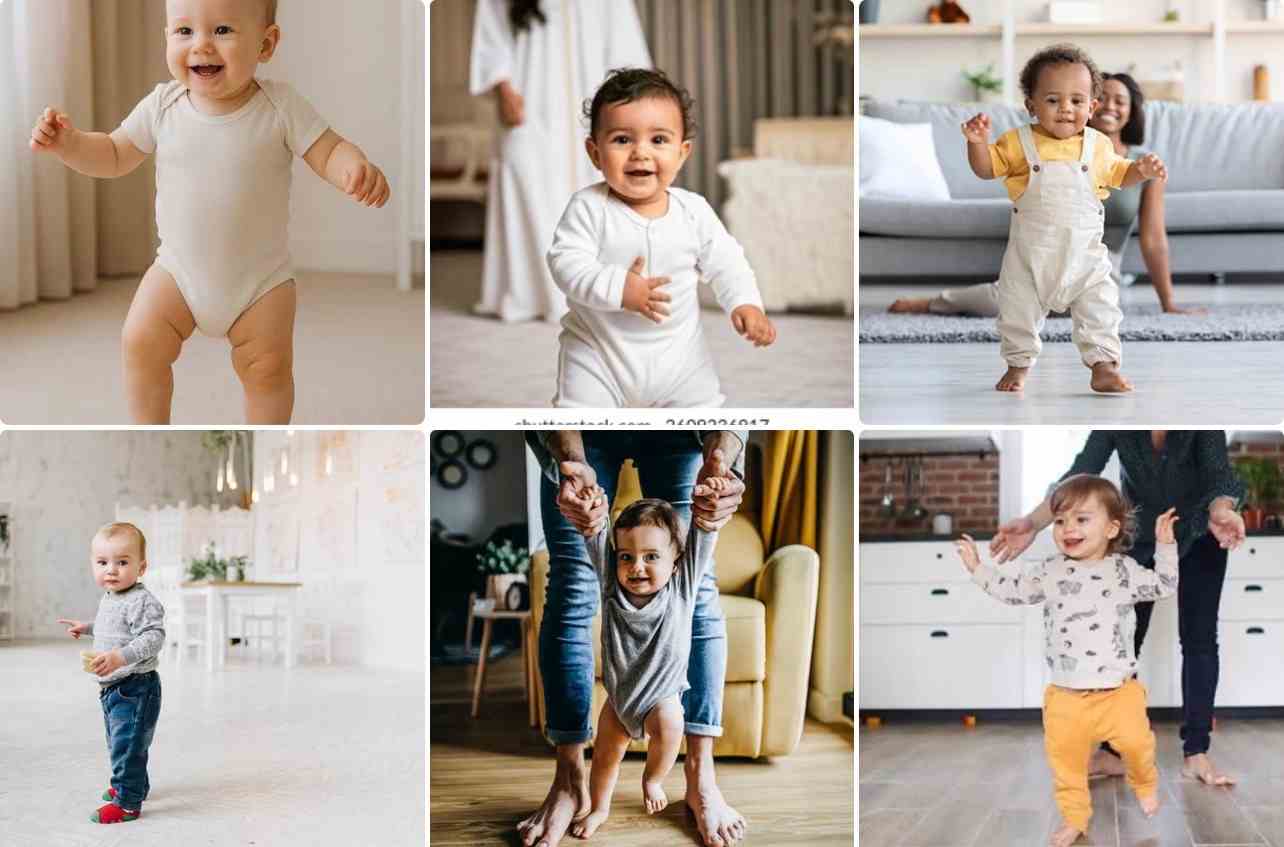
Quick Answer: Most babies start walking independently between 9 and 18 months of age, with the average clustering around 12 to 13 months. Every child develops at their own pace, moving through a natural progression of tummy time, sitting, crawling, pulling up to stand, and furniture cruising before taking their first unassisted steps.
When you became a parent for the first time, everything mattered: from the baby’s first crawl and walk to the day they became a toddler and went to preschool. Watching your little baby transition is a godprecious gift in parenthood. If you find yourself currently searching for when do babies start walking, as your baby is in the crawling stage, then you are not alone. It is the most common thing a parent searches for to analyze a child’s first two years of life.
As parents we became curious, anxious, and excited at the same time. We think, ‘Is my baby on track?’ Why is the neighbor baby, who is the same age, walking while mine is still crawling? How can I help my baby to start walking smoothly?
There are so many parenting websites on the internet that turn the development milestone into a competitive race to the finish line, but by human biology there is no equal time limit for all babies. In this guide we will look at the real timeline, the physical stages of learning to walk, 7 signs your baby is about to take off, the safety essentials, the frequency of asking questions of parents on baby walking, and lastly, when it is time to consult a medical professional, so at the end you have all the answers you are looking for.
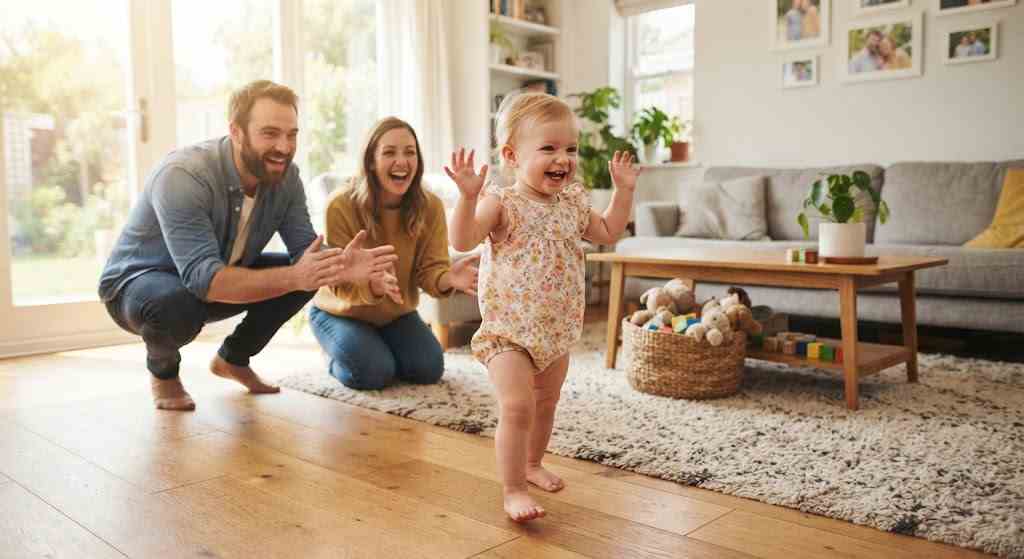
The Big Picture: When Do Babies Usually Start Walking?
If you want a straight clinical answer, a baby can usually start walking independently between 9 and 18 months of age. There’s an average age, around 12 to 13 months, because not every baby’s on the same timeline, you know. However, when a parent sees someone else’s baby walking at 18 and they still didn’t start walking at the age of 12 months, the parents panic. According to pediatric developmental experts, the normal range of walking in babies is wide. When parents wonder when babies start walking on their own, they often forget the fact that skills build naturally with time to understand more about it. I have divided months as follows.
1. The Early Walkers (9 to 11 Months)
Some babies are adventurous, highly coordinated, and driven, so they start walking even before they turn 1 year old. These little babies are high-energy explorers who get bored when they sit in one place for hours and want to follow where Mommy or siblings are going. While it’s exciting that some babies start to walk that early, it also means you need to start to walk that early; you have to take care of them more.
2. The Average Walkers (12 to 15 Months)
Many babies when they turn 12 or 15 months start walking properly. They typically start with a wide, wobbly gait, arms held higher in the guard, and master stability in several weeks.
3. The Late, Yet Entirely Normal Walkers (16 to 18 Months)
Some babies take long to start walking, like they do when they take 16, 17, or even 18 months to walk independently. This is very common and healthy development in babies. However, parents often become curious when one baby of the same age walks earlier while their 15-month-old is still crawling and not yet walking. It is the simple logic of genetics, body composition, muscle tone, and temperament.
Babies who are from families where the older take long to walk or those who have a cautious, observational temperament focus on a specific skill mastered in mind can take time. As long as the baby is successful in every other milestone, late walking is just a normal thing.
Developmental Timeline Chart
| Age Range | Primary Motor Milestone | Physical / Neurological Focus |
|---|---|---|
| 0 – 6 Months | Tummy time push-ups & unsupported sitting | Building neck, shoulder, and core extensor strength |
| 6 – 10 Months | Crawling (hands-and-knees or alternative styles) | Establishing cross-body coordination and spatial awareness |
| 8 – 10 Months | Pulling up to a standing position | Engaging lower body strength against gravity |
| 9 – 12 Months | Furniture cruising & side-stepping | Shifting weight, balancing, and building ankle stability |
| 12 – 18 Months | Independent, unassisted walking | Perfecting gait, confidence, and dynamic balance |
The Developmental Staircase: How Babies Learn to Walk
Walking is not an easy thing for babies; they can suddenly start it overnight. It is a complex culmination that takes months, including physical conditioning, core strengthening, balance training, and neurological processing. Before a baby stands up independently on their own, the body is climbing a structured developmental staircase as follows:
Phase 1: Head Control and Core Stability (0 to 6 Months)
During tummy time in earlier months, like 0 to 6 months, babies start building neck, shoulder, and upper back strength. They learn how to push up on the forearms, so I’m not wrong here to say it all starts from top down. When babies start sitting properly at 6 to 7 months of age, it forces the core muscles like abdominals and back extensors to take part and teaches the baby’s brain how to keep the torso upright against gravity.
Phase 2: Floor Mobility: Crawling and Creeping (6 to 10 Months)
Not every baby starts crawling with the same known and traditional hands-and-knees style. Some follow bottom-shuffle, army crawl with the help of bellies, and even some babies skip crawling completely and stand up straight. However, the main reason why parents focus on the traditional hands-and-knees crawling is because it is important for cross-body coordination. In reality, all crawling styles follow neurological pathways needed for future walking.
Phase 3: Gravity Defiance: Pulling Up to Stand (8 to 10 Months)
Once the core and leg strength are built, the baby starts discovering they can stand up by using the arms and legs to push off the floor against gravity. You might be walking down the hall and suddenly see in the room that the baby is using the coffee table or sofa to pull himself up. This is an official sign, close to the walking.
Phase 4: Furniture Cruising (9 to 12 Months)
Once your baby starts standing, they will realize they can move on any side. When a baby holds furniture like couches, heavy accent chairs, or push toys and side steps later in the room, this is what we call cruising. In this phase they are just testing the balance, finding the center of gravity, and learning how to shift the body weight from one foot to another.
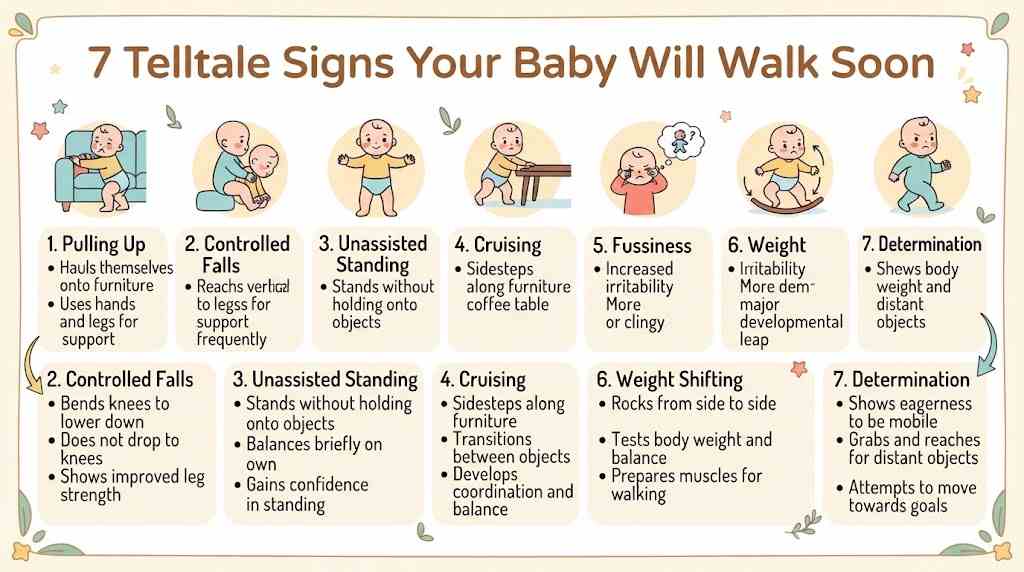
7 Telltale Signs Your Baby Will Walk Soon
Before babies can take magic solo steps and let go of the support system that is furniture or any other object, there are some clear signs that will be a major developmental leap. Keep your camera charged so you can capture those signs.
- Relentless Pulling Up: The first sign is they will transit from standing sometimes to hauling themselves up to any vertical surfaces like your legs, pet gates, and bookshelves.
- Mastering the “Controlled Fall”: Early standers start dropping, which means a baby gets ready to walk when they completely learn how to bend their knees and lower themselves back down without any hurdle.
- The Two-Second Unassisted Stand: They will not use anything as a support system and stand properly while playing with a toy; they even forget to hold a single thing for a second before realizing they’re free and sitting back down.
- Purposeful Cruising Between Objects: They will stop shuffling on the sofa. They start to navigate the open gaps, which means they won’t grab the coffee table when they stretch their hands.
- Unexplained Fussiness and Sleep Disruptions: This sign is similar to teething or growth spurts when the neurological milestones need brain work. Before the walking milestone, babies do experience sleep regression, which is temporary, and fussiness before a mobility breakthrough.
- Weight Shifting and Foot Stomping: When a baby starts standing, you will notice they intentionally rock the weight back and forth from heel to toe or side to side, which helps to map the body weight in space.
- Increased Determination and Frustration: When a baby looks at the toy on another corner of the room and realizes the crawling will be too slow, they start to make efforts to reach the toy by trying to force their bodies to move forward vertically.
Footwear & Environment Comparison Chart
| Environment / Gear | Impact on Walking Development | Expert Recommendation |
|---|---|---|
| Barefoot Indoors | Maximizes proprioception, grip, and ankle strength | Highly Recommended for daily indoor play |
| Structured Hard-Sole Shoes | Can restrict natural foot movement and reduce sensory feedback | Limit to outdoor use (protecting against rough surfaces) |
| Sit-In Baby Walkers | Increases tip-over risks and delays natural core muscle engagement | Avoid Completely (unsafe and counterproductive) |
| Weighted Push Walkers | Encourages upright posture and independent weight shifting | Beneficial when used under direct supervision |
The Footwear Debate: Should Babies Wear Shoes While Learning?
The most common question parents ask while evaluating when my baby should start standing and walking is whether a baby needs expensive supporting walking shoes when they start cruising. The answer is quite surprising. According to the pediatricians and pediatric physical therapists, the babies need to be barefoot when they just start walking, especially at home.
- The Power of Barefoot Exploration: A baby foot is made from flexible cartilage; they are not made from hard bones and won’t ossify into mature bone structure until they start going to school, so walking barefoot will allow their tiny muscles, tendons, and ligaments in the feet and ankles to get strength.
- Sensory Feedback (Proprioception): The soles of human feet are full of nerve endings. When babies walk on barefoot on home areas like hardwood, carpet, or grass, their feet start sending important signals back to the brain on texture, balance, and spatial awareness. Shoes can act as a protective thing outside the safe environment.
- When Shoes Are Necessary: Shoes are very important and a must when a baby goes outside the house because they give protection against rough surfaces, hot pavement, or cold weather. When you do buy shoes for babies, always look for ultra-flexible soles instead of outer attracting surfaces. Comfortable shoes will save the baby from developing ramp toes.
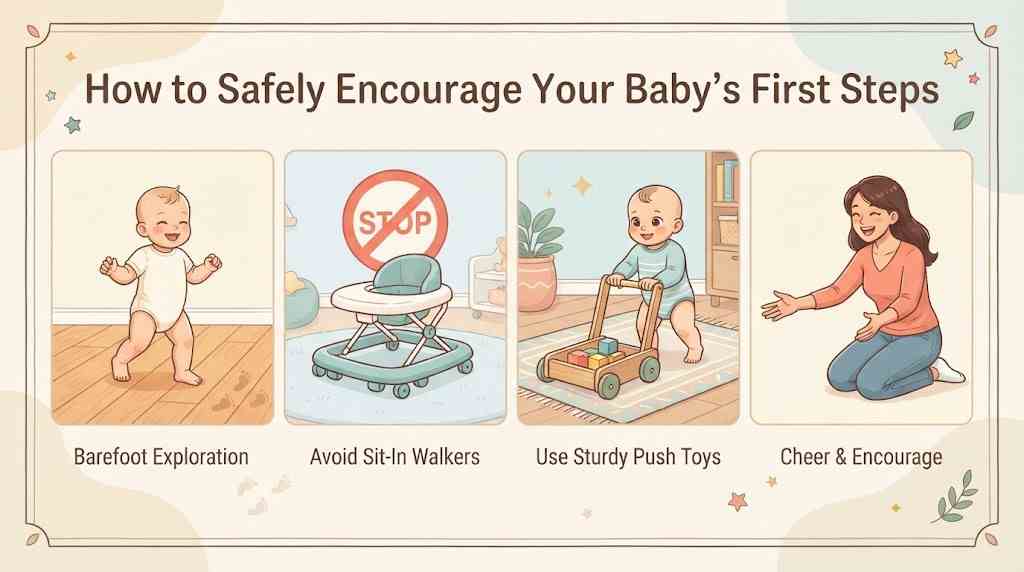
How to Safely Encourage Your Baby’s First Steps
Walking is a natural process just like crawling, so it can’t take place when you force a child to walk before their neuromuscular system is ready, but you can make an environment that helps them to build confidence.
Maximize Uninhibited Floor Time: Keep them away from restrictive gear like sit-in baby walkers, which is unsafe, causes tipping, or even delays natural milestones. Give them more time on the floor to roll, crawl, and pull up.
Utilize Sturdy Push Toys: Push walkers can also help to move quickly once you see the baby is currently cruising. Avoid anything that allows them to sit for hours instead of moving or walking.
Create Safe Open Spaces: Clear out sharp-edged coffee tables or use the corner guards on them. Make a wide runway of soft carpeting or play mats where the baby can enjoy safely without risk of falling down.
Get Down on Their Level: When your baby is on the floor rolling or crawling, you can also sit there for some minutes and cheer them on. This will make a positive connection and make them more confident naturally.
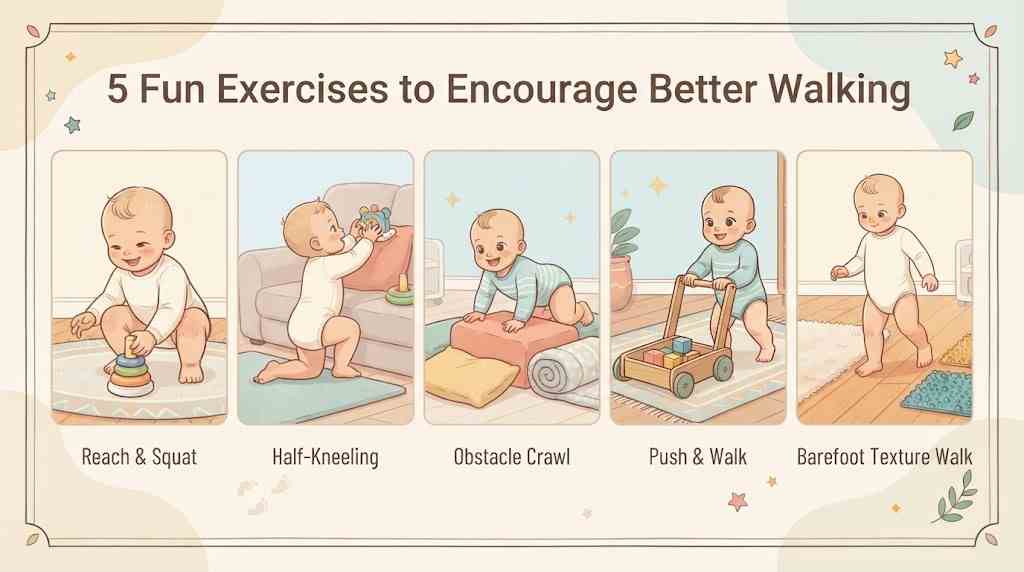
5 Fun Exercises to Encourage Better Walking
Following are some recommended exercises for better walking:
1. The “Reach and Squat” (Toy Pickup Game)
For this, let your baby sit on the floor and place their favorite toy on the ground out of reach, or have them stand while you hold their hands. You can also place a toy on a low stool or couch cushion. Encourage your baby to squat down to pick it up. This will help because squatting creates important eccentric and concentric strength in the quadriceps, hamstrings, and glutes while teaching the baby how to lower the center safely without even falling.
2. The Tall-Kneeling and Half-Kneeling Practice
Encourage your baby to play while kneeling upright against a low table or couch. You can place a toy on top of the couch so they can use strength by using their foot in a half-kneeling position to get the toy. This half-kneeling is the most important of the foundational movements for converting from floor to standing. This also forces the hips and core stabilizers to take part.
3. Obstacle Course Crawling
You can make a safe, soft obstacle course on the floor of the living room by just using the yoga mats, firm pillows, or couch cushions. This will help the baby to crawl over, under, and around independently. This course will help to face the uneven surface challenges to their motor planning, spatial awareness, and core balance, overall strengthening cross-body coordination, which is necessary for walking.
4. The “Push and Stride” (Assisted Walking)
Avoid using sit-in walkers; let the baby sit on the floor, place a weighted pushcart or a heavy cardboard box filled with toys or books, and let the baby push it while you hold their hands or supervise closely. This will teach the baby to lean forward against the resistance, coordinate leg movements, and create dynamic forward momentum.
5. Barefoot Balance on Different Textures
You can let the baby crawl or cruise barefoot on different indoor surface textures like smooth hardwood, thick low-pile rugs, a rubber play mat, or a patch of clean outdoor grass. Make sure the surfaces are safe. This will help the tiny muscles in the tiny feet to get activated and improve the ankle stability.
Things to Avoid to Help a Baby Learn to Walk
Here are the most important things to avoid when trying to help your baby learn to walk safely and naturally, keeping their motor development on track:
| Practice / Gear to Avoid | Why It Hinders Progress | Safer, Recommended Alternative |
|---|---|---|
| 1. Sit-In Wheeled Walkers | Increases fall/stair hazards and encourages unnatural toe-walking patterns. | Unrestricted floor time or stationary play centers. |
| 2. Restrictive Hard-Soled Shoes | Acts like a cast, weakening foot muscles and blocking sensory feedback. | Barefoot exploration or non-slip socks indoors. |
| 3. Excessive “Container” Time | Restricts movement needed for core and leg muscle conditioning. | Frequent floor play with space to roll, crawl, and pull up. |
| 4. Pulling Up by the Hands | Strains shoulders/elbows and disrupts natural balance development. | Letting them pull up independently or supporting at the hips. |
| 5. Rushing Past Crawling | Skips vital cross-body coordination and upper-body strengthening. | Encouraging crawling games and floor-based obstacle courses. |
Red Flags: When to Consult Your Pediatrician
While babies walk naturally on their own milestone window. The professional advice is for parents to monitor specific guidelines to catch the main reasons behind developmental delays earlier.
Parents start worrying about why the baby isn’t starting to walk when they turn 1 year old; however, you need to follow a given schedule that is 18 months of age. If your baby passes this timeline and is still not walking, then you can consult your pediatrician even if they show all signs of walking.
Additionally, there are some warning signs; if you notice any, consult your doctor at the earliest.
- You notice the baby is just favoring one leg or dragging a side of the body.
- The baby is doing persistent toe-walking, but there is no change or improvement taking place.
- You notice the baby suddenly has loose motor skills or milestones they achieved some days ago.
- See that baby have extreme muscle floppiness (hypotonia) or extreme rigidity (hypertonia).
Pre-Walking Progression Checklist
| Pre-Walking Milestone | Status / Description | What to Look For |
|---|---|---|
| 1. Core Control | Supported Stability | Can sit independently for prolonged periods without tipping over or needing propped arms. |
| 2. Floor Locomotion | Navigating Space | Demonstrates consistent crawling, bottom-shuffling, or belly-creeping to reach objects. |
| 3. Full Weight Bearing | Leg Strength | Supports their full body weight on their legs when held upright or when hauling themselves up. |
| 4. Lateral Cruising | Side-Stepping | Cruises smoothly along sofas, coffee tables, or heavy furniture, shifting weight laterally. |
| 5. Dynamic Balance | Unassisted Moments | Attempts brief unassisted stands, lets go of surfaces momentarily, or transitions smoothly down to a seated position. |
Frequently Asked Questions (FAQs) on When do babies start walking?
1. When do babies start walking on average?
Most babies take their first independent step at the age of 9 to 18 months, with the average clustering right around 12 to 13 months.
2. Is it normal for a baby to skip crawling?
Yes, a small percentage of healthy and normal developing babies skip the traditional hands-and-knees crawling; they move from sitting to pulling up and cruising directly.
3. Why is my 14-month-old only cruising and not walking?
The main factors needed for cruising are immense core stability, balance, and spatial confidence. Many babies cruise with furniture for some weeks or even for months before they feel confident and let go of the support system.
4. Are sit-in baby walkers safe to use?
No, according to pediatric medical organizations, you should avoid sit-in wheeled walkers because they can lead to tip-down stair risks, allow babies to access unsafe items, and can even delay natural muscle development.
5. Should my baby wear shoes inside the house?
I would recommend keeping the baby barefoot or in light and zero-slip socks at home. The major benefit is that walking in barefoot shoes can be helpful in strengthening the foot and ankle muscles.
6. What causes persistent toe-walking?
Occasionally toe walking is very common in toddlers when they are exploring movement; however, persistent toe-walking can sometimes be a sign of tight calf muscles, sensory processing preferences, or neurological stiffness that needs a paediatrician examination.
7. Can frequent falls cause brain damage when learning to walk?
Toddlers normally fall onto the carpets or padded floors when they are in the learning phase, as it is generally every parent’s experience. However, it is important to consult the doctor if your baby starts lethargy, vomiting, or unresponsiveness when they fall hard or on hard surfaces.
8. How can I help my baby gain confidence to walk?
Well, you can help the baby to gain confidence while walking by floor play, use push toys, or give them a clutter-free, safe environment so they can explore more.
9. When is late walking considered a developmental red flag?
If your child didn’t start walking on their own by the end of 18 months of age or if they lost motor milestones, then it’s time to consult the pediatrician.
10. Do boys or girls learn to walk earlier?
There is just a minor difference between genders. The main factors that play an important role in walking are individual temperament, body build, and personal drive instead of any gender.
Medical Disclaimer: This content is for informational purposes only and does not substitute for professional medical advice. Always consult your pediatrician with any concerns regarding your child’s development.
Summary: Enjoy the Journey
Learning how to walk is a personal journey for your child. Whether they start walking at 9 months or take more time and walk at 17 months, it is completely normal because a body is doing exactly what is needed. When you see a baby start walking or even show signs, as we discussed in this guide, create a safe and babyproofed environment for them, and show happiness and even laugh when they fall and again stand up. This positivity will work as a support for them, and they will take every step with confidence.
Government & Public Health Sources
- CDC Developmental Milestones
- HealthyChildren.org
- WHO Child Growth Standards
- AAP Infant Development
- MedlinePlus Child Development
