
Quick answer: The best big van for most large families is the Ford Transit Passenger Wagon, thanks to its modern tech, available all-wheel drive, and flexible 12- to 15-passenger layouts. Other top-tier full-size vans include the highly customizable Mercedes-Benz Sprinter and the budget-friendly Chevrolet Express.
If you go to travel with family and have many family members, then you know putting everybody in a car can be a struggle and an uncomfortable trip. A normal car or a standard minivan start feels so small when there are many people in it. It can be more difficult once the kids turn 6 or 7 or become tall; the small space doesn’t work. However, for a big family, you don’t need a bigger trunk; all you need is to upgrade from a mini car or van to a big van.
I know that when people think about upgrading, they often ask themselves: Do we really need to go buy a giant passenger bus? The reality is this full-size passenger van works best for large families; it is different from an SUV, as the salesmen won’t warn you about the hidden realities of these vehicles.
Some models are too tall; they can’t fit in the garage, while other models are blocked by insurance companies as they are flagged as commercial vehicles. Don’t worry; I will not talk about the brochure of Vans. As a parent, I want to share my experience with big vans; I will share the pros and cons of large vans. Let’s find the perfect, stress-free ride for your crew.
Why a Standard Minivan Fails the 6+ Kid Test
When we hear minivans and vans, the names that come to mind are the Honda Odyssey, the Toyota Sienna, and the Chrysler Pacifica. They have a vacuum system, sliding doors, and enough space for fewer people; however, these are designed for the average American family of four or five. Once your family changes from 5 members to 7 because of more kids, these minivans start to feel like a small box.
1. The “Cramped Shoulder” Reality
On documentation of minivans, it is written that it can easily seat 7 or 8 passengers, but in the real world, this setting only works if the kids are toddlers. As the kids grow and turn teenagers, those seats won’t work. Your family will end up with shoulder-to-shoulder combat on every trip, not enough space for elbows, and a pure physical exhaustion of climbing over folded seats, or if there is also an infant stroller, the place will be a complete mess.
2. The Great Cargo Disappearance
This is the ultimate minivan trap. When all the seats are filled with kids, there will be no space left for trunk space. A standard minivan trunk has only space for basic luggage; if you have a stroller too, the space will run out.
If you try to fit a stroller, a full week’s worth of groceries, 3 sports bags, and lastly a diaper bag into the back side of the seat, it will turn the van into an extremely suffocating space until your family reaches the destination.
Many parents go for upgrades and think to buy three-row SUVs like the Chevy Suburban or Ford Expedition; however, these three-row legrooms have less flexibility as compared to minivans. Parents get attracted because it looks tall and cool, but these high floorboards make accessing the back row a nightmare for small kids.
When you have large families, you don’t just plan to travel from point A to B. You can move a small mobile ecosystem. You need a vehicle that has many seats, a center aisle, and large trunk space.
Quick Comparison: The Best 12 & 15-Passenger Vans at a Glance
When you make up your mind to change from a minivan to a heavy-duty passenger van, the first thing to do to choose a perfect one is to do a comparison. The following table has a brief comparison based on specs of the contenders on the market today.
This table has modern options as well as the highly popular, discontinued Nissan NV 3500, which is popular among families.
| Vehicle Model | Est. Starting Price | Seating Capacity | Available Roof Heights | Drivetrain Options | Standout Family Perk |
|---|---|---|---|---|---|
| Ford Transit | $58,680+ (New) | 12 to 15 passengers | Low (56.9″) / Mid (67.6″) / High (81.5″) | RWD or All-Wheel Drive (AWD) | Feels most like a standard car to drive; loaded with modern safety tech. |
| Mercedes-Benz Sprinter | $56,930+ (New) | 12 to 15 passengers | Standard (67.7″) / High (75.5″) | RWD or All-Wheel Drive (AWD) | Maximum customizability, exceptional build quality, and highly efficient diesel engines. |
| Chevrolet Express | $47,950+ (New) | 12 to 15 passengers | Standard Only (53.8″) | Rear-Wheel Drive (RWD) | Indestructible V8 workhorse; highly affordable to buy and incredibly cheap to maintain. |
| Nissan NV 3500 | $28,000 – $42,000 (Used only) | 12 passengers | Standard (56.8″) / High (76.9″) | Rear-Wheel Drive (RWD) | Best-in-class seating flexibility with 324 configurations and true passenger car safety airbags. |
Note on heights: If you have tall kids or want to stand to keep the toddlers on car seats, then go for mid and high roof options!
Deep-Dive Reviews: The Top 4 Large Family Vans
When you make up your mind to upgrade to a big van, you are looking for an option that has seats, windows, and safety features for families, and you can go with it to shop easily. I have listed down 4 options you can look at. Each one is reliable for different weather and how tall the kids are. You can select any based on your budget.
1. Ford Transit Passenger Van (The Modern Gold Standard)
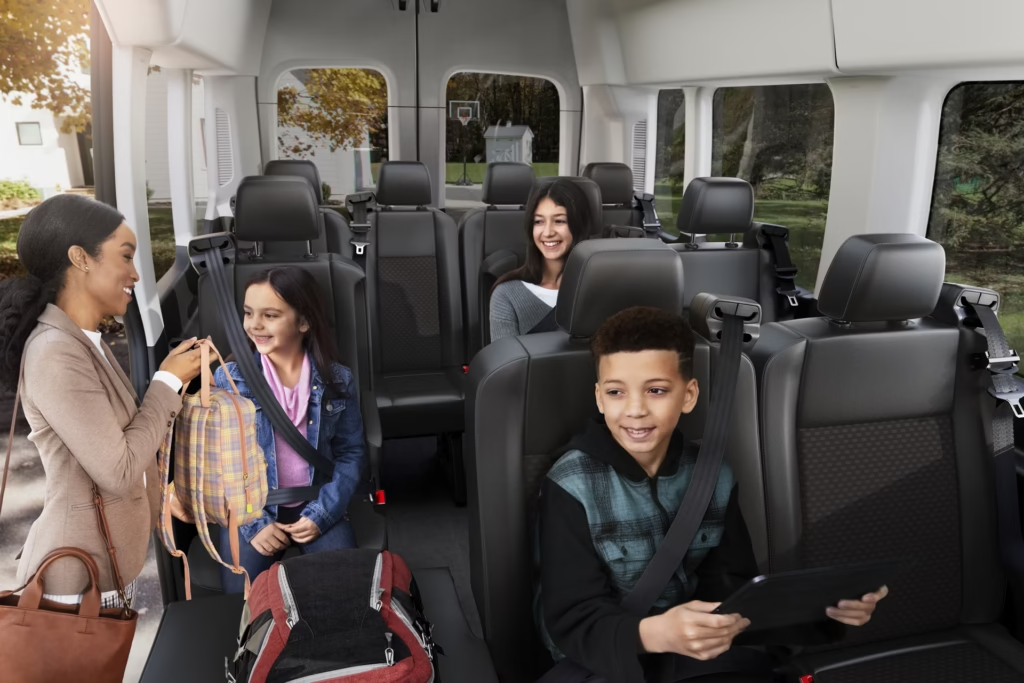
If you want a big van but don’t want a commercial truck feel, then go for the Ford Transit. It has sharp and similar handling to a car, a tight turning radius, and is packed with modern technology that can make busy parking easy.
Family Verdict: It is the best option for modern families and All-Wheel Drive (AWD) capability.
The Powerhouse Setup: Always go for the 3.5L Twin-Turbo EcoBoost V6 because when the van is loaded with ten people and luggage, this EcoBoost provides the highway merging power needed.
Smart Features: The best feature of this van is that it has a silky-smooth 10-speed automatic transmission, which maximizes fuel efficiency. Other amazing features include lane-keeping assist, pre-collision braking, and adaptive cruise control.
2. Mercedes-Benz Sprinter (The Premium Road Tripper)
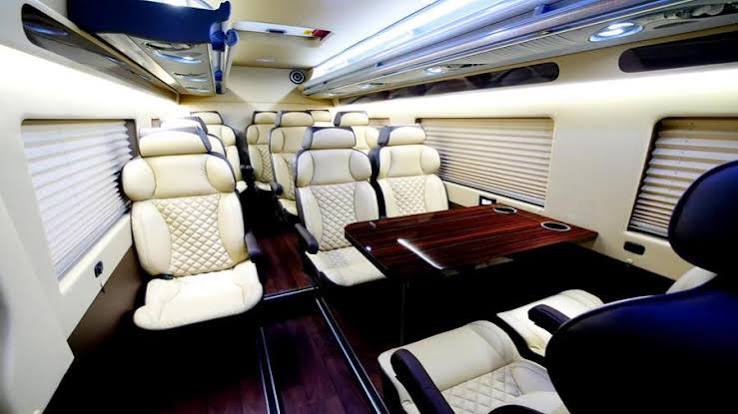
This one is perfect for your large family if you want to go for a long family trip to distant cities of the country. It provides high-end, premium engineering to large families.
Family Verdict: If you have a tall teenager, then there is a need for high roofs and premium cabins; the Mercedes-Benz Sprinter provides you with this.
The Diesel Advantage: It is powered by highly efficient turbo-diesel engines. These engines work best for long distances up to 300,000 miles.
The Cabin Experience: It gives a feel of high-end Mercedes SUVs with an optional touchscreen infotainment system, highly supportive seats, and excellent sound dampening.
The Catch: The only drawback is that it is quite expensive, so you need to prepare yourself for premium maintenance costs as compared to cars.
3. Chevrolet Express / GMC Savana (The Budget-Friendly Workhorse)
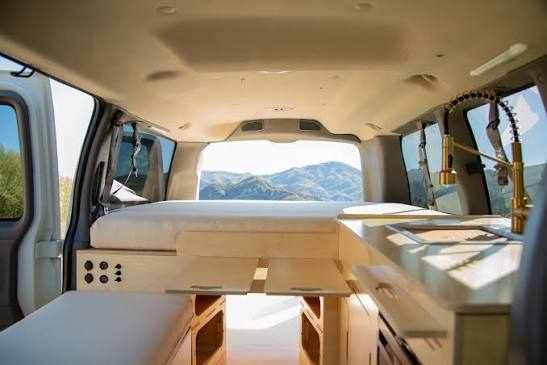
This one is considered a living legend. The structure of this van has been the same for the last three decades. It’s a perfect definition of ‘If it isn’t broke, it doesn’t need fixing.’
Family Verdict: Perfect for large families who have a low budget but want a reliable, simple, and cheap maintenance option.
The Beast Under the Hood: This van has a heavy-duty General Motors V8 engine, which is strong and can be taken out easily so the local mechanic can fix it.
The Trade-offs: As we discussed earlier, the design is old, so the safety technology can be outdated. Additionally, there is no high roof option, so the tall teenager will have to hunch to walk at the back.
4. Nissan NV 3500 (The Discontinued Hidden Gem)
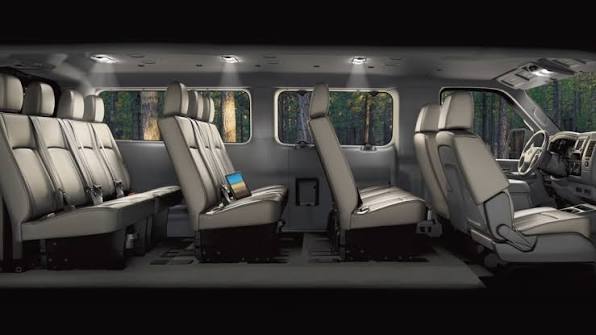
While Nissan stopped making this model in 2021, it is still one of the best vehicles on the market for large families. It is designed mainly to challenge the domestic van market with full family-focused details.
Family Verdict: If you are focused on car seat flexibility, then this option is overall the best one.
324 Seat Configurations: The main feature of this van is the modular seating. Parents can easily remove one or two seats to make a space for a baby stroller or for extra legroom.
Truck-Like Safety: Another feature that makes it different from other vans is the NV 3500 has a massive, truck-like hood. The engine is out front, which provides front safety protection for families.
The Hidden Realities of Driving a “Beast” (What No One Tells You)
Most parents go to buy a van while just having the thought they would have a large car; however, when they start driving a big van, they enter the world of light commercial vehicles. There will be many quirks, structural traps, and unexpected logistical hurdles that you have to deal with every single day. However, the seller doesn’t discuss these with you because they just have to sell a product. Here are the things no one tells you about owning a giant passenger van as follows.
Drive-Thrus, Garages, and the Ceiling Height Trap
When you go to buy a big van for large families. M, you have to choose the one with a roof height. If you get the wrong one, it will be a waste, and you have to live with it for a long time.
Low Roof (Approx. 82”–84”): Its height is similar to SUV height and can easily fit in a standard 7-foot (84-inch) residential garage door. However, the adults and teens will struggle to walk inside.
Medium Roof (Approx. 100”–101”): This is a safe spot if your kids and family members are under 6 feet tall. However, you can’t park these in a multi-story parking garage, home garage, or drive-thru. You have to park it in outdoor lots.
High Roof (Approx. 110”+): It is pure luxury for adult kids, but you have to consider it as a commercial bus. There is no automatic car wash system in it.
| Daily Location | Standard Height | Low Roof Vans (Transit / Express / NV) |
Mid Roof Vans (Transit / NV High) |
High Roof Vans (Transit / Sprinter) |
|---|---|---|---|---|
| Standard Home Garage | 7 Feet (84″) | YES | ❌ NO | ❌ NO |
| Bank / Fast Food Drive-Thru | 7.5 Feet (90″) | YES | ❌ NO | ❌ NO |
| Multi-Story Parking Garage | 6.8 to 7 Feet | YES | ❌ NO | ❌ NO |
| Standard Automatic Car Wash | 7.2 Feet (86″) | YES | ❌ NO | ❌ NO |
The AC/Heat Reality: Why Rear Climate Control is Non-Negotiable
A big van works as a giant metal greenhouse on wheels, but due to its structure, like a massive cabin and window glass, the temperature can’t stay the same for a long time. The main disadvantage is many base models and cargo vans have just dashboard AC and heat.
If you buy a van that doesn’t have rear climate control vents, the vehicle will become terrible to stay in. The people in front will feel cold, and their backs will melt from heat. In winter the front-row family member will feel they are in a sauna and the back one will be shivering under blankets. It is important to verify the van has a secondary rear HVAC unit with rear controls before buying.
The Car Seat Dilemma: LATCH Anchors and Tether Anchors
If you are taking many toddlers or infants into a big van, then don’t think every seat is car seat ready because these vans are designed in a commercial way, so they don’t follow any family-focused safety as compared to minivans.
The LATCH Shortage: The minivans have LATCH anchors, meaning lower anchors and tethers for children in all rear seats, whereas a 12- or 15-passenger big van has these on two to three seats in the whole cabin.
| Van Model | Total Rear Seats | Factory LATCH Positions | Top-Tether Only Seats | Best Row for Infant Car Seats |
|---|---|---|---|---|
| Ford Transit (12-Passenger) |
10 | 3 Positions | 3 Positions | Row 2 (Driver side) & Row 3 |
| Mercedes Sprinter | 10-13 | 2 Positions | 2 Positions | Row 2 Only |
| Nissan NV 3500 | 10 | 3 Positions | 5 Positions | Highly flexible (Removable seats) |
| Chevy Express | 10-13 | 0 to 2 (Year dependent) | Variable | Requires seatbelt installations |
Seatbelt Installs: You have to be experienced at installing car seats with the help of the vehicle’s lap-and-shoulder belts instead of just quick-click LATCH connectors.
Tether Anchor Hunting: If you are buying old or base models, make sure you check for top tether anchors at the back of the bench because these types of models don’t have them, which leads to less safety for your youngest family members.
Commercial vs. Personal Insurance: The Surprise Cost
When you want to add the big van to your available policy and they say no. The main reason is large vans need high maintenance, which includes higher passenger-injury liability, etc., so many standard auto insurance policies block it.
How to Bypass the Block: Don’t let them sell you another policy; let your agent know it is for personal use only.
Shop Around: Some major State Farm agents are highly accommodating of large families driving these vehicles for personal use, while others will flat-out refuse. Get quotes before you sign the paperwork at the dealership.
The Annual Fuel Impact: Calculating the Real Cost
A full-size van is going to use more fuel than your old hybrid or minivan. But the cost varies widely depending on what engine you choose, such as a modern Ford EcoBoost versus an older Chevy V8. Use our live interactive budget calculator below to plan. To get a realistic breakdown of your yearly fuel costs, slide the bar to the average annual mileage for your family:
Drag the slider to match your family’s annual driving miles and see estimated fuel costs instantly.
The 15-Passenger Cargo Hack
If you look at the large van that can easily have the space of 15 passengers but you only have 7 or 8 kids, then this vehicle can be extra large for your family. However, it can solve your cargo problems.
The large van will have 5 rows so the 5 rows can be removed and used as a luggage area. 4 remaining rows have 3 seats. This hack will make the big van useful; you can easily add a double stroller, a wagon, weeks of groceries, and luggage for a cross-country road trip.
Buying New vs. Used: What to Look for in a Family Passenger Van
If you are looking for a used big van, then the experience of buying it would be different as compared to buying a used sedan or standard minivan. The main reason is big vans are built on heavy-duty commercial platforms; they can easily travel from 250,000 to 300,000 miles. However, these vehicles start the journey in commercial fleets; you need to examine everything before signing the paperwork.
The Fleet Vehicle Warning (What to Check on the CARFAX)
If you look at the used van list, there will be many options, like a low mileage number paired with a budget-friendly price tag. However, if these vans were previously used for an airport shuttle, a hotel transfer bus, or a church transport, you need to check the engine idle hours, like 50,000 miles on the odometer vs. 3,000+ hidden engine idle hours.
The reality is one hour of engine idling is equal to 30 miles of driving wear on the engine’s internal components. A hotel shuttle can only drive 10 miles in a day, but it can sit in the parking lot for 6 hours, and passengers can easily stay in an air-conditioned environment. This time makes heavy wear on the alternator, cooling system, and engine oil. None of this is listed on the odometer.
How to check it: On modern vans like the Ford Transit, you can easily find the Engine Hours” and “Idle Hours” metrics in the dashboard menu.
The Golden Rule: For good negotiation, always compare the idle hours and mileage. If the idle hours are high, consider that it has doubled from its actual mileage and give the price accordingly.
Year Models to Avoid
Every used vehicle goes through both phases: one is golden years, and another is lemon years. When you are buying a used big van for a large family and have a strict budget, then avoid the specific model years:
1. Ford Transit: Avoid 2015–2016 and 2023 Models
Avoid 2015–2016: These models are the first production of North American Transit. It has two main issues; one is severe driveshaft coupling recalls, and others are early-stage 6-speed transmission failures.
Avoid 2023: These year models have issues like electrical glitches, frozen rearview cameras, and incorrect tire labeling, which trigger safety concerns.
What to buy instead: The safest and best options are the 2021, 2022, and 2024–2026 models, where all the past model issues get solved.
2. Mercedes-Benz Sprinter: Avoid Pre-2006 and 2007–2009 Models
Avoid Pre-2006: It uses the T1N generation engines, which are indestructible; however, the steel frames used in these models have severe rust vulnerabilities. These models only work in dry climate areas.
Avoid 2007–2009: These models have early V6 BlueTEC diesel engines, which can only work well on long trips, meaning if you are going for a short family road trip, these engines clog with soot and let the van go into limp mode, which needs high repair charges.
What to buy instead: If you are looking for a diesel Sprinter, then go for 2014 or newer models, where these Engines are improved and more reliable.
Which Big Van is Right for Your Family? (Quick Decisions)
If you are stuck at these models and can’t choose a perfect one for your family, then to simplify this option, I have a quick tip for you. Let’s look at which option suits you perfectly.
Best for Snowy Climates: Ford Transit (with AWD)
This is suitable for winter weather or if you live in a place where snow is fixed for months. Ford Transit (with AWD) drive systems handle winters like champions; they aren’t like older commercial vans that are rear-wheel drive and slide on ice.
Best for Standing Up Comfortably: Mercedes-Benz Sprinter or Mid/High-Roof Ford Transit
If you have a height over 5’10” and don’t want to crawl on hands and knees to buckle a toddler from row 4, then go for the Mercedes-Benz Sprinter and mid-/high-Roof Ford Transit, as they will allow you to stand up.
Best on a Strict Budget: Chevrolet Express or Used Nissan NV 3500
If you have a strict budget, then go for the Chevrolet Express or the used Nissan NV 3500. They are highly reliable and don’t need a lot of money for maintenance.
Frequently ask Questions on Big Van for Large Families
Q1: Do I need a special commercial driver’s license (CDL) to drive a 12 or 15-passenger van?
No, you don’t need a commercial license if you are using it for family in the United States and Canada; you only need a Class C passenger vehicle driver’s license to drive a big van. However, if you are planning to rent it or driving for school, church, or business travel, then you may need a commercial endorsement.
Q2: Are 15-passenger vans safe for families? What about the old rollover risks?
Yes, the modern large vans for families are incredibly safe. However, the older models have less controlling stability and would roll when they’re overloaded, as we see in movies. Modern vans that are built after 2012 have stability control, rollover mitigation technology, lane-keeping systems, and multi-row side-curtain airbags.
Q3: Which large passenger van gets the best gas mileage (MPG)?
The Mercedes-Benz Sprinter (diesel) is on top in this category; it regulates around 18 to 22 MPG on the highway. The Ford Transit with the 3.5L EcoBoost is second with 15 to 19 MPG, and the Chevrolet Express (with its heavy V8 engine) is third with 11 to 14 MPG.
Q4: Can you easily put infant and toddler car seats in a passenger van?
Yes, but you would install them differently than you do in minivans because minivans have LATCH anchors, whereas big vans have 2 to 3 designated LATCH seats in the entire vehicle. Other seats in it require standard seat belt installations.
Q5: Can a 12 or 15-passenger van fit in a standard residential driveway?
Yes, a standard-length van has the same length as a Ford F-150 SuperCrew truck or a Chevy Suburban that is 220 to 235 inches and can easily fit in a suburban driveway. However, if you are buying an extended length model or a “high roof” model, it won’t fit.
Q6: How many miles can a full-size passenger van last?
A well-maintained Ford Transit or Chevy Express can last from 250,000 to 300,000 miles. An LA diesel Mercedes Sprinter can often pass 350,000+ miles if it’s done the maintenance schedule.
Q7: Is a passenger van actually better than a large SUV like a Chevy Suburban?
Yes, if you have 6 or more kids, the big van is better than the SUV. It has more space as compared to an SUV. Big vans also offer walking space, standing headroom, and a huge luggage area.
