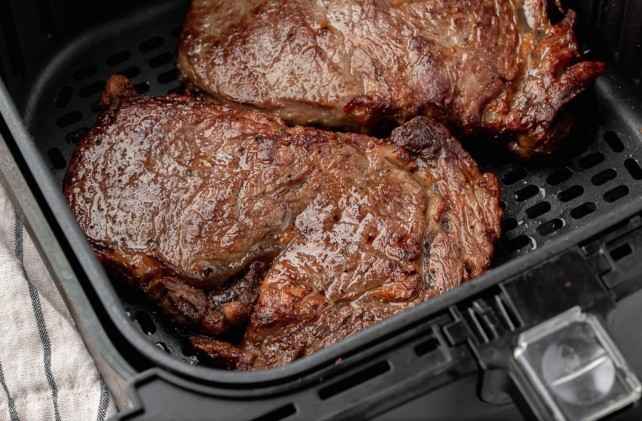
Leftover food items like steaks often have a bad reputation in many people’s minds. The most common issue is that the flavors become chewy and rubbery, resulting in a gray appearance after being heated in microwaves. However, according to the scientific mindset, reheating a streak won’t make any difference as compared to its original state.
In this guide I will tell you about the types of streaks and how to reheat steak without losing any flavors, so let’s see what methods can help out.
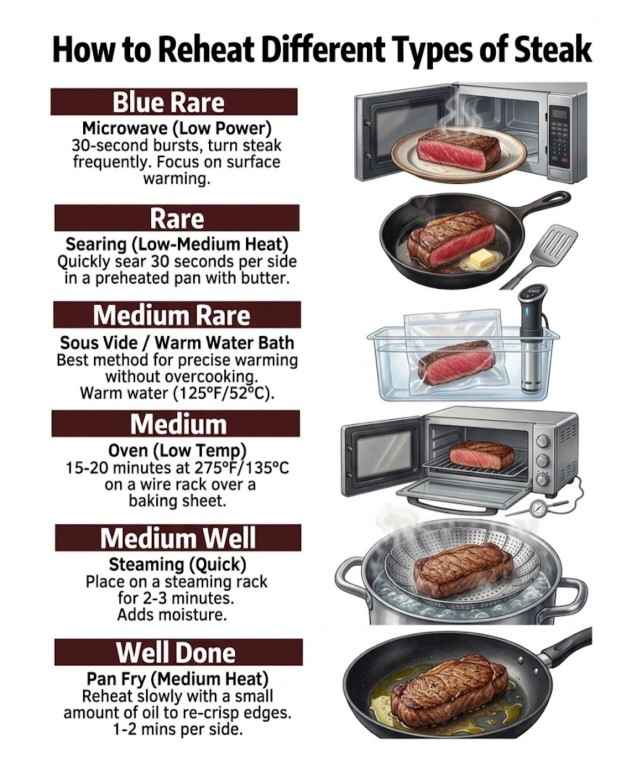
How to Reheat Different Types of Steak?
Following is a complete guide chart about reheating different types of Steak:
The Science of the “Second Cook
Reheating steak can be a difficult task. To understand this, we must look at the structure of beef. Steak is made of roughly 75% water, so when you cook it for the first time, the heat causes the muscle fibers to contract, which naturally expels moisture.
When you reheat the same steak for the second time, it means you are starting a second cook. If you put steak at high heat, like in a microwave or searing-hot pan, then the remaining moisture in the steak evaporates, and also the protein fibers tighten into a knot. This leads to a bad and leathery texture. To avoid this issue, it is important to reheat steak by setting the microwave at a low temperature of 250°F for 20 to 30 minutes till the internal temperature of the microwave leads to 110°F–130°F.
Preparation: The Foundation of Success
Remember you can’t save a steak that was ruined in the refrigerator. It’s important to store leftover steak properly. Here are some tips as follows.
The Airtight Rule
Many people don’t realize that oxygen can compromise flavors. When food is not stored properly in the refrigerator, it can absorb odors from other leftovers due to oxidation.
- Vacuum Sealing: To prevent moisture migration, the best thing you can use is a vacuum sealer.
- Tight Wrapping: If you don’t have a vacuum sealer, then you can wrap the steak in butcher paper too, as this will help to maintain surface integrity.
- The “Jus” Reservoir: When you cook steak for the first time, you may notice the steak is very juicy when you cut it. You can pour those juices into the storage container while refrigerating; this will cause a “hydro-seal” during the reheating process.
The Tempering Phase (30-Minute Rule)
Temperature plays an important role when it comes to food items like steak. It is my advice to never take out steak from a 38°F (3°C) refrigerator and place it immediately on heating, as this can cause thermal shock, meaning the meat will overall be cooked from the outside and even change color to grey when the inner side is still just getting heat.
To avoid such a situation, you can take out the steak and let it rest for around 30 to 45 minutes. This will make the inner temperature of the steak the same as room temperature, so when you put it on the heating element, it will remain its natural color, which is a pink center.
Also Read: How Long Does Cooked Salmon Last in the Fridge? (2026 Guide)
4 Best way to Reheat Steak
Following are some methods that I personally apply on daily routine:
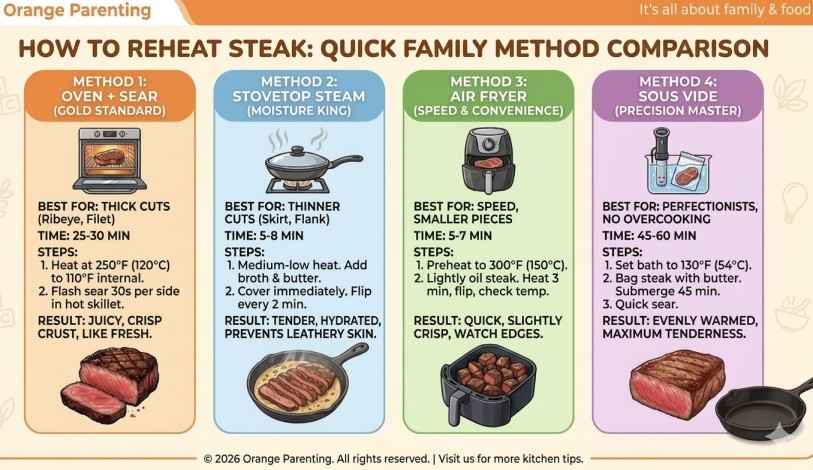
The “Professional Reverse-Reheat” (Oven + Sear)
It is considered one of the most common methods used by professional chefs. It is similar to the “reverse sear” cooking method used for thick-cut ribeyes and porterhouses.
The first thing you need to do is set the oven temperature lower, like 250°F (120°C).
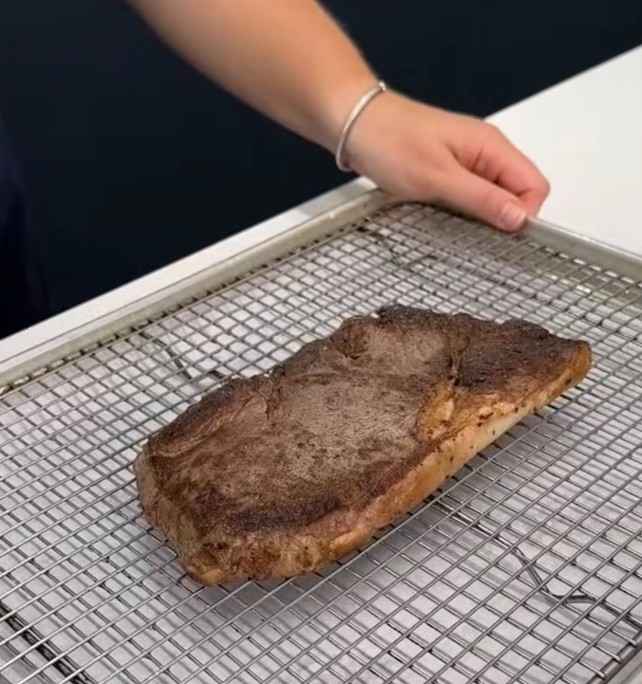
The most important equipment used in this method is the wire rack because placing steak directly into a baking sheet consumes moisture, which leads to a soggy and grey bottom. Using a wire rack allows 360-degree air circulation.
The Process (Main Steps)
- Place the steak on the wire rack.
- Use a digital meat thermometer in the thick part of the steak.
- Then heat the steak for around 20 to 30 minutes.
- Remove from the oven. You may find it a little dull, as it is completely normal.
The Finishing Spear
After taking it out from the oven, you may want to make it crusty and flavorful; for this, you need a flash sear.
- First heat an iron skillet over high heat and use oil like avocado that can produce smoke.
- Then sear each side for 30 seconds.
- For more taste, add a little butter or sprig of rosemary in the last 10 seconds.
The Sous Vide Precision Method
If you have a circulator, then this is the only “fail-proof” method. It is impossible to overcook the steak using this technique. The main reason why this method works is sous vide uses a water bath, which makes the meat temperature normal since water can never exceed the targeted temperature; the meat preserves its flavors and stays perfectly medium-rare for an hour. Here are some instructions as follows:
- Set the water bath to 130°F (54°C).
- Now put the steak in a vacuum-sealed bag with a teaspoon of beef broth or pat it with butter.
- Now let it set for 40 to 60 minutes.
- Then remove the pat completely dry with paper towels
- Now flash sear in a hot pan for just 30 seconds.
The Air Fryer “Gentle Roast”
In modern cooking air fryers are considered a good alternative to traditional ovens. They are excellent when it comes to speed; however, it is also dangerous for some food items, like steak, if not handled properly. Here are some instructions on how to reheat steak in an air fryer safely:
- Set the air fryer to 300°F (150°C).
- Brush the steak with a little oil or melted butter to make it more flavorful and juicy.
- Now heat for 3 minutes, then flip.
- It is important to check temperature; usually a steak can reheat in an air fryer in just 5 to 8 minutes.
The Stovetop “Steam Sauté”
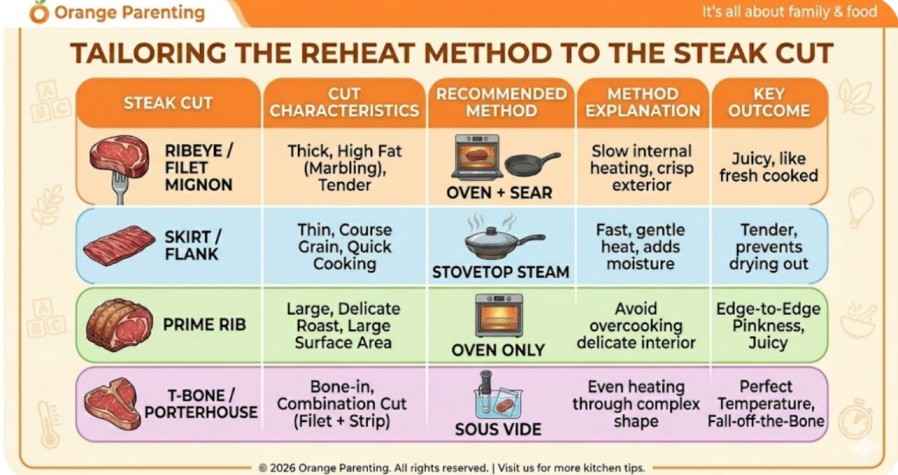
This method is best for thin steaks like flank, skirt, or flat iron, which dry quickly in the oven.
- Heat a heavy skillet over medium-low.
- Add 1 tablespoon of beef broth or butter.
- Now put the steak in and cover it with a lid.
- Flip both sides for minutes until just warm to the touch.
Tailoring the Method to the Cut
The Science of Food Safety
In order to understand the exact temperature leftovers like steak need, we need to know what food authorities like the USDA suggest. According to the USDA, the temperature needed to reheat leftovers is 165°F (74°C). However, a steak at 165°F is a “dead” steak, dry, gray, and flavorless.
If your steak was cooked at a safe temperature and refrigerated within 2 hours or you let it store for less than 4 days, then the standard reheating temperature can be 110°F–125°F, followed by a high-heat sear, which is the industry standard for quality. At this temperature bacteria get killed, and steak remains the same in color and flavor.
How to Transform “Ruined” Leftover like Steak?
Sometimes a steak is already cooked and doesn’t need a traditional reheating method. All you can do is use the “Flash-Heat” method for these dishes:
- Steak Tacos: Slice the cold steak in thin slices like paper and toss it into a pan with some sautéed peppers and onions for only 30 seconds.
- Beef Stroganoff: Add the cut cold steak into creamy mushroom sauce in the last minutes before serving.
- Steak Salad: You don’t need to reheat steak; cut it in slices and add it to a salad over grains and other vegetables.
Reheating Troubleshooting FAQ
- Q: Can I use a microwave?
Only as a last resort. Use 50% power in 30-second bursts and cover with a damp paper towel to trap steam. - Q: Should I slice the steak before reheating?
Not in all cases does keeping the steak whole preserve the juices, whereas slicing increases surface area, leading to faster evaporation. - Q: Why is my steak gray after the oven?
You likely didn’t sear it. The oven warms it; the pan creates the flavor.
The Ultimate Summary Checklist
Use this checklist to ensure you never have a bad leftover steak again:
- Tempered: Has the steak sat out for 30 minutes?
- Airflow: Is the steak on a wire rack before placing in the oven?
- Liquid: Have you added butter or broth before heating?
- Monitoring: Is your meat thermometer ready?
- The “Pull” Temp: Are you pulling the meat at 110°F (for med-rare)?
- The Sear: Is the pan smoking hot before you add the meat?
- Resting: Did you let it rest for 5 minutes after the sear?
Conclusion
Learning different methods on how to reheat steak not only saves you from wasting ingredients, but it also allows you to enjoy a restaurant-quality meal twice. All you need to do is careful management of temperature and moisture. Choose the right method and do the right cuts, whether it is the precise oven and sear method for a thick ribeye or the quick stovetop steam for thinner slices; every bite will be juicy. As a busy parent like me, you need food items like steak for weekly meal preparation. Instead of eating rubbery or gray steak, you can use perfect methods as I applied in my busy schedule. For more science-backed kitchen hacks and family-friendly nutrition tips, be sure to explore the rest of our Food & Kitchen section here at Orange Parenting.
Medical Disclaimer: This content is for informational purposes only and does not replace professional food safety or health advice. Always follow local food safety guidelines and consult a qualified expert if you have specific concerns about food handling or illness prevention.
