Baby teeth typically begin erupting around 6 months of age, with a full set of 20 primary teeth completing by age 3. The process usually starts with the lower central incisors (6–10 months), followed by the upper central incisors (8–12 months), lateral incisors (9–16 months), first molars (13–19 months), canines (16–23 months), and finally second molars (23–33 months).
The baby teething timeline is one of the biggest milestones in their growing journey; however, it can be challenging for both baby and parent. When a baby turns 6 months, they start the process of cutting their primary teeth, which does a major transformation in their smile, feeding, and everyday routine. While every baby has a different unique schedule, a general timeline gives parents an idea about how long the process will take, what to expect, when the first teeth come, and when the set will be complete by their third birthday.
Understanding the sequence of teething will help parents to get mentally prepared about the baby’s new shift, like the change in comfort and behavior. The teething journey starts with lower central incisors, followed by upper front teeth, lateral incisors, and the larger back molars and pointed canines. Each stage comes with different signs like increased drool, tender gums, or an urge to chew solid objects. Knowing what remedies you can use to help them in the process and what to avoid is an important task.
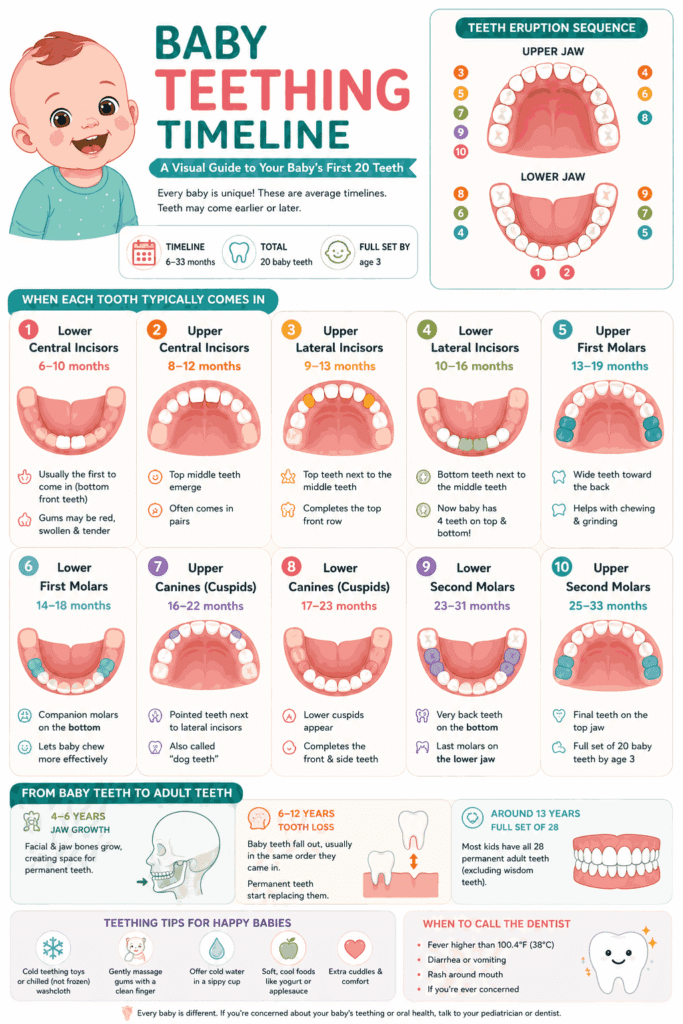
You also need to keep track of development when the first teeth come out, then the second, then the last. For this understanding, I created an infographic that will help you to understand everything easily; you can even save it for the future.
Baby Teething at a Glance
- 6–10 Months: Lower Central Incisors (bottom 2 middle teeth)
- 8–12 Months: Upper Central Incisors (top 2 middle teeth)
- 9–13 Months: Upper Lateral Incisors (top 2 side teeth)
- 10–16 Months: Lower Lateral Incisors (bottom 2 side teeth)
- 13–19 Months: First Molars (top & bottom back teeth)
- 16–23 Months: Canines / Cuspids (Top & bottom pointed teeth)
- 23 – 33 Months: Second Molars (top & bottom back molars)
Total: 20 primary baby teeth by age 3.
Which Baby Teeth Come In First?
Usually the first teeth to appear are the two lower front teeth (lower central incisors). The upper front teeth usually erupt next, followed by the lateral incisors, molars, and canines.
Remember: Teething timelines are averages, not deadlines. Some babies get their first tooth earlier or later, and teeth may not emerge in exactly the same order.
What are the common teething signs?
| Category | Common Teething Signs (Normal) | Red Flag Symptoms (Call Doctor) |
|---|---|---|
| Gums & Mouth |
Expected Signs Swollen, red, tender gums; visible white bumps on gum ridges. |
Medical Attention Required Bleeding gums, pus, sores, or large fluid-filled blisters. |
| Behavior & Mood |
Mild Fussiness Mild irritability, fussiness, and increased desire to chew or gnaw on hard objects. |
Severe Distress Extreme lethargy, inconsolable crying for hours, or unresponsiveness. |
| Saliva & Skin |
Localized Drool Heavy drooling; mild drool rash around the chin, lips, or chest. |
Systemic Rash Full-body skin rash, hives, or spreading facial redness. |
| Sleep Patterns |
Slight Disruption Slight sleep disruption or difficulty falling asleep due to gum discomfort. |
Extreme Refusal Total refusal to sleep combined with high distress or labored breathing. |
| Feeding & Appetite |
Temporary Pickiness Temporary decrease in appetite for solid foods; preference for liquids or nursing. |
Dehydration Risk Complete refusal to drink fluids or nurse for 12+ hours. |
| Temperature |
Slight Elevation Slight rise in body temperature below 100.4°F (38°C). |
True Fever True fever of 100.4°F (38°C) or higher. |
| Stool & Digestion |
Mild Loose Stool Slightly looser stool from swallowing excess saliva. |
Gastrointestinal Distress Repeated watery diarrhea, vomiting, or blood in the stool. |
How to help a baby when they are teething?
Teething is considered a major milestone in a baby’s first-year development, but they do feel a lot of pain as the gums get swollen. While the process of cutting teeth is completely normal, it gives a lot of
pressure and inflammation, which leads to discomfort. As a parent you can’t stop the natural process, but what you can do is help the baby to ease the pain.
Following are the pediatrician-approved, safe strategies that help in relieving teething pain and safety warnings on what to avoid.
Safe & Effective Ways to Soothe Teething Gums
Providing babies quick relief has 2 main principles: the first one is gentle pressure, and the second one is cool temperature.
1. Apply Cold (Not Frozen) Pressure
Cold temperatures help to numb the sore gum tissue and reduce the inflammation. For this you can use a clean cotton washcloth soaked in water and place it inside the refrigerator for half an hour, then place it on the baby’s mouth and let them chew it.
If you don’t want to use a cotton washcloth, then use a BPA-free silicone or rubber teething ring; place it in the refrigerator for half an hour. Avoid using frozen teethers, as they can cause bruises in the gums and cold injury.
If your baby just started eating solid foods, then place a frozen mesh or silicone feeder filled with cold fruit like a banana slice, cucumber, or strawberries in it.
2. Perform a Gentle Gum Massage
Pressure counteracts the aching feeling in the tooth pushing outside from the gum line. For this massage you need to first wash your hands properly, then gently rub the baby’s swollen gum with the help of your finger in a circular motion. You can also use a soft, silicone finger toothbrush, which is specifically designed for infants’ sensitive gums.
3. Manage Heavy Drool
Teething causes extreme production of saliva. Unmanaged drool can lead to skin irritation and rashes on the chin, lips, and neck. Use soft bibs on the baby to absorb the moisture and control heavy drooling. Do not rub the drool, but just pat gently with the help of a cloth. Before bed, add a small amount of any baby-safe ointment to the chin and mouth.
4. Consult Your Pediatrician About Pain Relief
If you notice the baby is struggling at bedtime or refusing to feed because of gum pain, then ask your pediatrician for pain medications. Don’t give anything without a prescription.
Over-the-counter medication like acetaminophen or ibuprofen can reduce pain, but it is only approved for babies 6 months or older. Always ask the doctor first.
Critical Teething Remedies to Avoid
Not all products you find on the internet or in medical stores about teething are safe. The health organizations and the FDA strongly advise against the following remedies, which are popular; they can be safe for adults but not for babies.
- Numbing Gels & Benzocaine: These types of gels have either benzocaine or lidocaine, which is not safe for infants. Benzocaine can cause methemoglobinemia, which is a rare but life-threatening blood condition that minimizes the oxygen transport in the body.
- Amber Teething Necklaces: Avoid beads, wooden rings, or amber necklaces worn around a baby’s neck, as they can cause strangulation and choking hazards.
- Liquid-Filled Teethers: These plastic rings have liquid, and if the ring punctures, it leads to bacteria-laden fluid in the baby’s mouth.
- Homeopathic Teething Tablets: Many homeopathic remedies that are not clinically tested have been linked to dangerous ingredients.
When to Call the Doctor?
While teething is a natural process when a baby faces mouth soreness, drooling, and mild irritability, it is not considered any kind of long illness; however, there are some symptoms you need to notice. If you find them in a baby, contact the pediatrician.
- Fever of 100.4°F (38°C) or higher.
- Unstoppable diarrhea, vomiting, or a full-body rash.
- Consistent crying or extreme lethargy.
- Full rejection to drink fluids for more than 8–12 hours.
Is It Teething or an Illness?
Select all current symptoms your baby is experiencing:
Likely Normal Teething Symptoms
The symptoms you selected align with typical baby teething. You can help soothe sore gums using a chilled damp washcloth, solid silicone teethers, or a gentle finger massage on the gums.
Contact Your Pediatrician
You selected one or more red flag symptoms. True fever, diarrhea, vomiting, full-body rashes, and extreme lethargy are not caused by teething. Please contact your healthcare provider for evaluation.
Frequently Asked Questions by Parents
1. In what order do baby teeth usually appear?
The teething process in babies starts from the front and then moves to the back. The standard order includes bottom front teeth, then top front teeth, top and bottom side teeth, back teeth, pointed teeth, and lastly the back corner teeth. A total of 33 months’ time to complete the teething fully.
2. Is it normal if my baby gets teeth out of order?
Yes, it’s perfectly normal. Most babies get their teeth in the same order, but some babies get their top teeth first instead of their bottom teeth. This is a normal thing. If the teeth are healthy then, everything is normal, everything is fine.
3. What are the signs that a baby is about to get a tooth?
Common physical and behavioral signs that a tooth is breaking through include heavy drool, swollen gums, an urge to bite objects, sleep disruption, and rubbing cheeks.
4. Can teething cause a high fever or diarrhea?
No, a baby won’t face any kind of high fever or diarrhea, so if your baby has such symptoms, then go to the doctor, as the main cause behind it can be bacteria, not teething.
5. How long does teething discomfort last for each tooth?
The discomfort will take place from 3 to 5 days before a tooth breaks from the gum. The whole process of a single tooth lasts less than a week; however, the baby experiences a lot of pain.
Medical Disclaimer: The information provided on this page is for educational and informational purposes only and is not intended as medical advice, diagnosis, or treatment. Always seek the advice of your pediatrician
Government & Official Medical Sources
- https://www.fda.gov/drugs/drug-safety-and-availability/fda-warns-against-use-over-counter-teething-products-containing-benzocaine
- https://medlineplus.gov/ency/article/002045.htm
- https://www.cdc.gov/oralhealth/basics/childrens-oral-health/index.html
- https://www.healthychildren.org/English/ages-stages/baby/teething-tooth-care/Pages/Babys-First-Tooth.aspx
