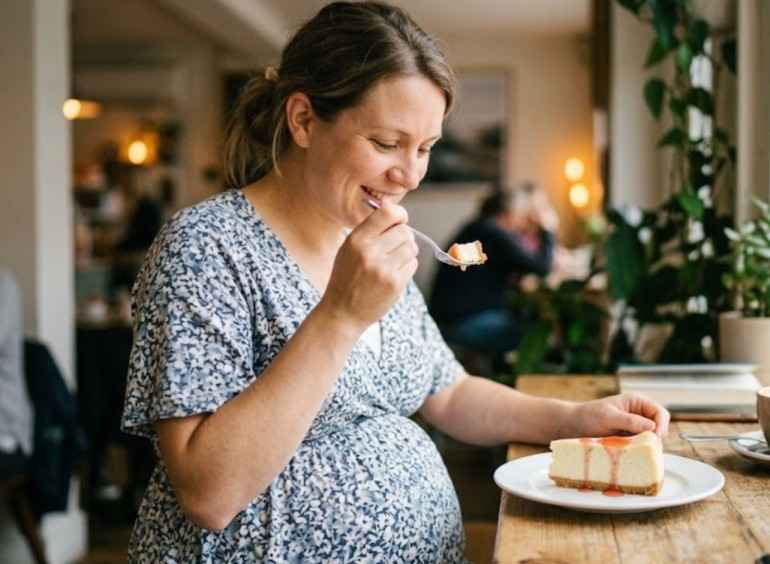
Quick Summary: Yes, most cheesecake is safe during pregnancy; however, to stay safe and 100% sure, you need to follow three rules, like choosing baked cheesecake because it contains fully cooked eggs. Make sure the cream cheese is pasteurized, and lastly, avoid homemade no-bake versions if they use raw egg whites for fluffiness. Never eat cheesecake that has been out of the fridge for the last 2 hours
Pregnancy is a beautiful journey; however, it is also a complicated one because everything you eat matters. You crave different food items every day, so if you are currently craving a thick slice of creamy cheesecake, you may be worried and think you can’t eat soft cheese or raw eggs, and also watch for listeria.
You have a question in mind: can pregnant women eat cheesecake? Well, the answer is yes; you can eat cheesecake during pregnancy, as it is completely safe. However, “safety” isn’t the only thing when it comes to cheesecake; the preparation temperature and storage also play an important role.
This guide is here to help you navigate that scale with scientific backing from the FDA, CDC, and NHS.
Risky Ingredient in Cheese Cake
To understand why medical professionals ask you to be cautious while eating a cheesecake. Here are some reasons:
1. Soft Cheese
The most common fear is Listeria monocytogenes. Listeria is a dangerous bacterium that causes listeriosis. According to CDC notes, pregnant women are 10 times more vulnerable to getting a Listeria infection as compared to a normal person. Listeria can even cross the placenta, leading to pregnancy complications.
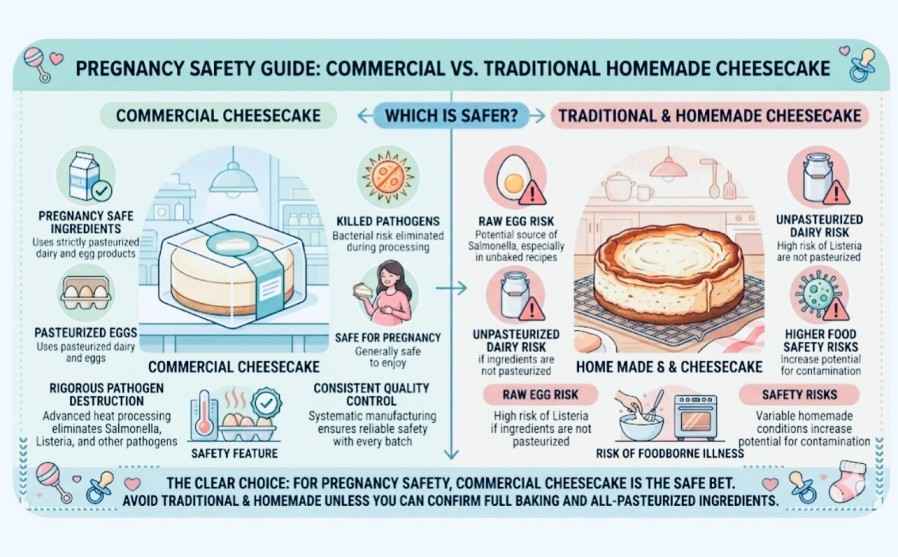
Most cheesecake is made from cream cheese. According to FDA Standards of Identity (21 CFR 133.133), cheese creams used commercially need to be made from pasteurized dairy. Pasteurization involves heating the milk to a temperature of 72°C (161°F) to kill harmful pathogens. If you are buying a commercial cheesecake, always read the labels, and if you find
If the label says “Pasteurized,” then it is completely safe to consume, as the risk of listeria becomes zero.
2. Raw Egg
Traditional cheesecake recipes do involve eggs for structure.
- Salmonella bacteria are the common concern here. While it rarely harms the fetus directly, the FDA warns that if salmonella goes inside the body, it can cause maternal dehydration and high fever, resulting in preterm labor.
- The Safety Threshold: However, the Salmonella bacteria can be easily killed if the eggs reach an internal temperature of 71°C (160°F).
Because baked cheesecakes exceed this temperature during the baking process, they are completely safe to consume; however, no-bake versions can be risky, as they include uncooked unpasteurized eggs.
The Three Tiers of Cheesecake Safety
Tier 1: The “Green Light” (Always Safe)
- Baked Cheesecakes: This type of cheesecake undergoes a double-kill process, meaning the ingredients like cream cheese and milk are pasteurized before mixing in the batter, and then the cake is baked in an oven at 160°C and 180°C. This temperature ensures all bacteria get killed.
- Supermarket Frozen/Boxed Cakes: Famous brands like The Cheesecake Factory (At-Home), Sara Lee, and Philadelphia use ultra-pasteurized and even egg substitutes. Such techniques can increase the shelf life and follow commercial safety protocols.
Tier 2: The “Yellow Light” (Ask Before You Eat)
- Restaurant No-Bake/Mousse Styles: Some well-known pastry chefs use traditional methods that involve using raw egg whites or yolks to get a fluffy texture. Raw eggs can be harmful in pregnancy, so it’s better to ask. Are the eggs in this no-bake cake pasteurized?
- Artisan/Farmers Market Slices: Small bakers sometimes use farm-fresh unpasteurized milk and eggs. These cheesecakes taste great, but the risk of Listeria or Salmonella remains the same. It is important to verify the source before eating.
Tier 3: The “Red Light” (Avoid or Modify)
- Traditional Tiramisu: People get confused and think it is also a cheesecake, but no, it’s not. However, it does contain raw egg yolks whipped with mascarpone that is not heated. Combined with caffeine and alcohol, it is better to avoid during pregnancy.
- Homemade “Raw” Vegan Cakes: Many raw vegan cakes depend on soaked cashews. If the nuts are soaked for more than 12 hours, they can contain bacteria. Before consuming, make sure vegan treats are kept strictly refrigerated or made with heat-treated nuts.
Why Cheesecake Toppings Can Be the Real Culprit
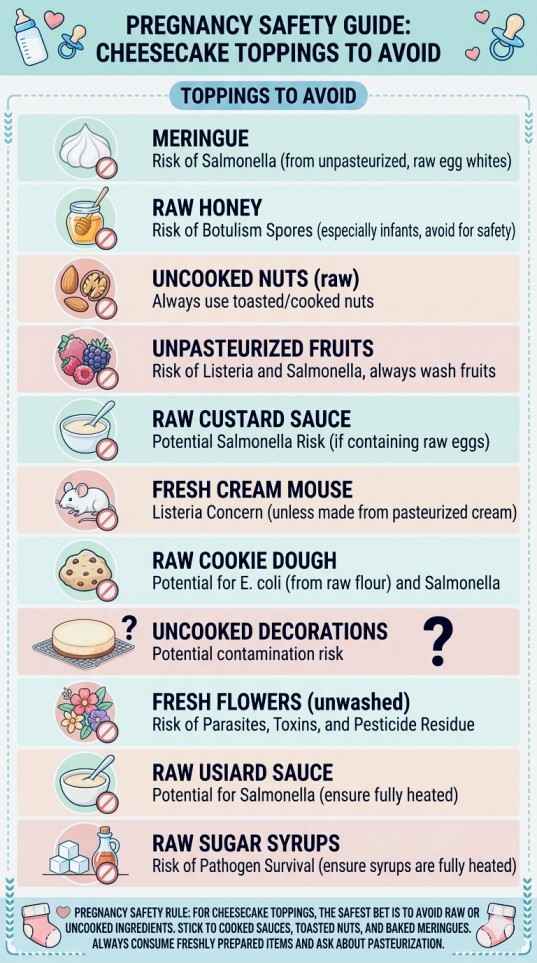
Most people focus on the main ingredients of cheesecake, such as eggs, cream, or milk; however, the toppings can sometimes pose hidden risks.
1. The Topping Trap
While the cheesecake base may be perfectly safe, the garnish on top can include bacteria.
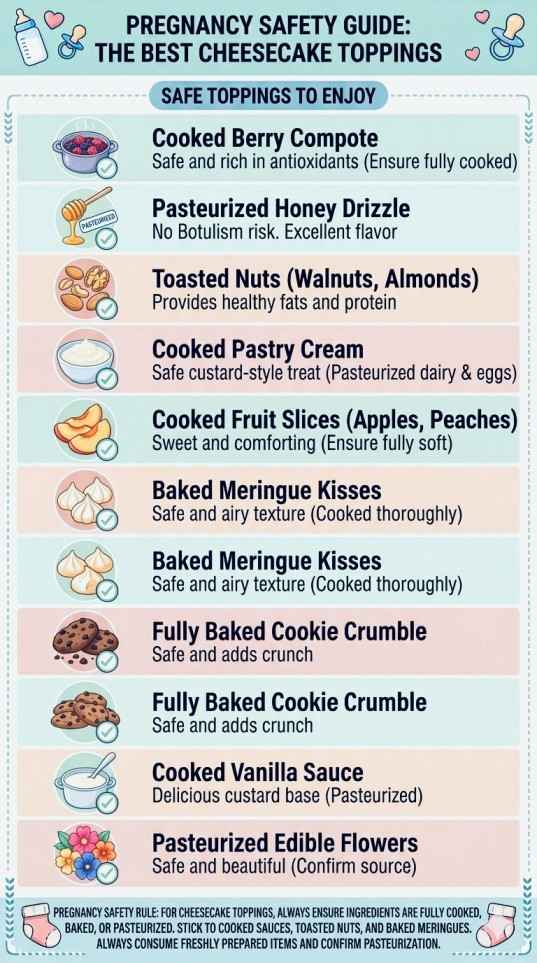
According to the NHS, it is necessary to wash all the fruits and vegetables thoroughly to remove the Toxoplasma parasite, which is especially found in soil and leads to toxoplasmosis. In crowded places like restaurants, the raspberries can’t be washed properly. In order to stay safe, you can go for cheesecake options that include cooked fruit compotes or sauces.
If your cheesecake is topped with a fluffy, toasted “cloud,” then don’t eat it, as it is created from raw egg whites. It is safe to skip such cheesecakes.
The Best Toppings for a Pregnancy-Safe Treat
2. The 2- Hour Storage Rule
Food safety isn’t just about the ingredients; it is also about the temperature.
According to the FDA, the danger zone for bacterial growth can take place at a temperature of 4°C to 60°C. At temperatures between 4°C and 60°C, bacteria such as Listeria and Salmonella can multiply every 20 minutes.
If you are pregnant and going to a party, then it’s better to avoid cheesecake there, as it has been out for more than 2 hours, so the possibility of bacteria is high.
If you are eating outdoors, ensure to eat cheesecake straight from the refrigerator before it is served because the high temperature outside can also be a reason for bacterial growth.
Why Crust Safety is Essential?
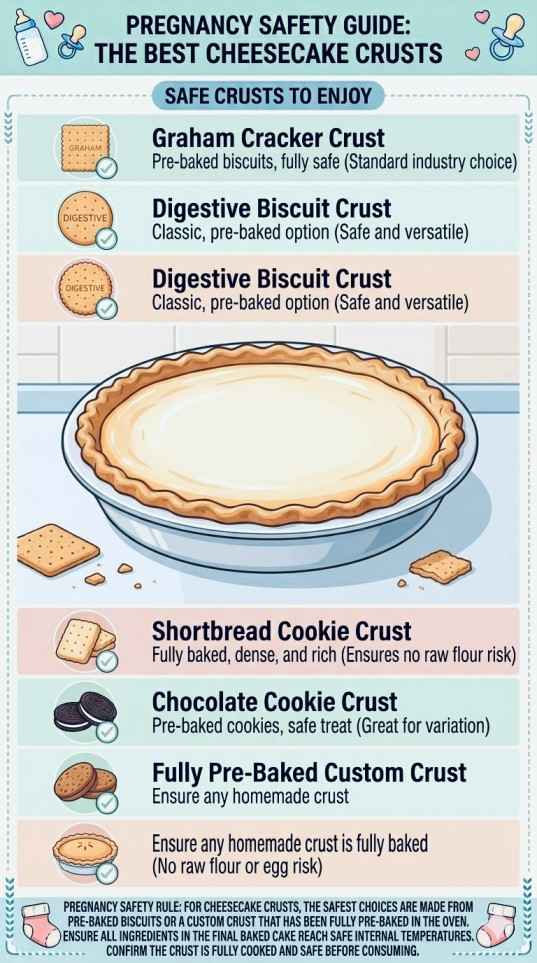
When we talk about cheesecake safety, the main focus is always on dairy items; however, we must also look at the crust. Most cheesecakes’ crusts are made from graham crackers or digestive biscuits, which are completely safe as they are pre-baked; however, the crusts that are made from raw flour or homemade cookie dough are risky. Because raw flour includes germs like E. coli or Salmonella.
So if you’re making a cheesecake at home, make sure the flour you used for the crust is fully baked before adding the filling. However, for a commercial cheesecake, always eat one that includes pre-baked cracker crumbs as a crust.
Eating Cheesecake in the First vs. Third Trimester
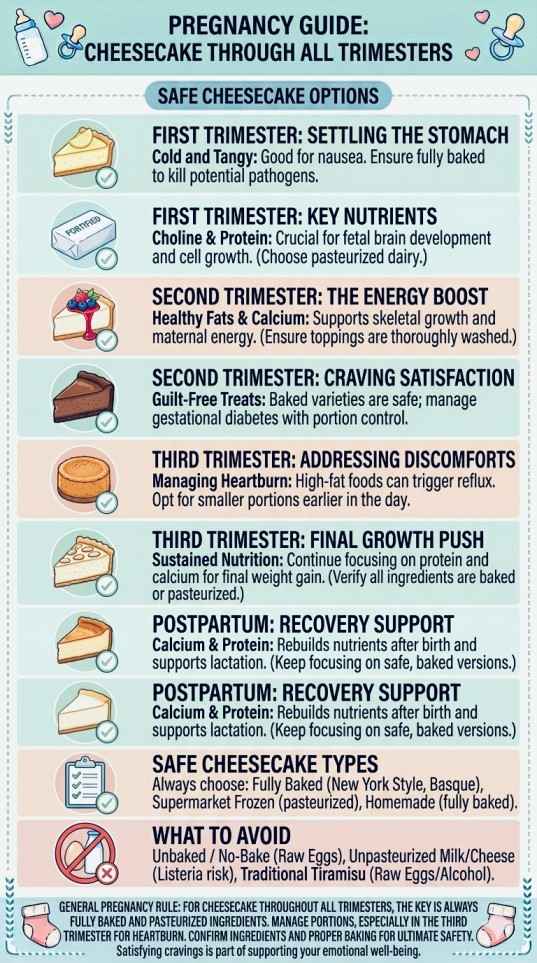
Your body reacts differently with every food item during pregnancy in all stages. During the first trimester, many women experience morning sickness, making it preferable to choose lighter options like a cold lemon tart or plain cheesecake instead of heavier, greasy meals. However, in the third trimester, the body is pressing against the stomach, which leads to heartburn and acid reflux. If you eat cheesecake at that time, it can slow down digestion and relax the esophageal sphincter. However, timing also matters; if you eat cheesecake at night, it can lead to a restless, reflux-heavy night, so it is important to eat it earlier in the day rather than right before bed.
To further explain what happens when you eat cheesecake during each trimester, I have created the following image:
What you need to know when eating cheesecake Abroad?
If you are traveling, don’t assume the same safety standards of cheesecake as you know in your country or at home. In many parts of Europe, like France and Italy, farmhouse cheesecakes can include raw, unpasteurized milk to provide great traditional flavors.
While a common person can eat it safely, if you are pregnant, the risk of Listeria is quite high. When you go abroad, make sure the dairy ingredients in cheesecakes are pasteurized, so always check the label.
If you are eating cheesecake on Mexico or Central America streets, then always ask when it is taken out from the refrigerator because the longer the cheesecake is out, the more risk of bacterial growth on it.
Hidden Additives like Gelatin and Stabilizers
To achieve a perfect set without baking many commercial cheesecakes, use stabilizers. The most commonly used is gelatin, as it gives the perfect texture to cake. Gelatin is completely safe in pregnancy, as it is an animal-derived product. However, some people are allergic to gelatin; in this case, you need to avoid cheesecake that contains it. Always read the labels.
Additionally, some low-fat or light cheesecakes use carrageenan or xanthan gum; both are approved by the FDA as safe for pregnancy. However, in sensitive individuals, it can cause minor bloating and gas.
How to Store Leftover Cheesecake Safely?
Food safety doesn’t only depend on what ingredients there are or how long it is placed in the refrigerator. If you are saving a slice for later, then it is important to place it in the refrigerator within 2 hours. Always store your cheesecake in an airtight container or wrap tightly. Avoid placing it near food items to keep the cheesecake from absorbing odors. To keep it fresh for the next day, store it on the middle or top shelf, away from raw meats and unwashed vegetables. Aim to consume any leftovers within 3 days.
Cheesecake Alternatives for High-Risk Pregnancies
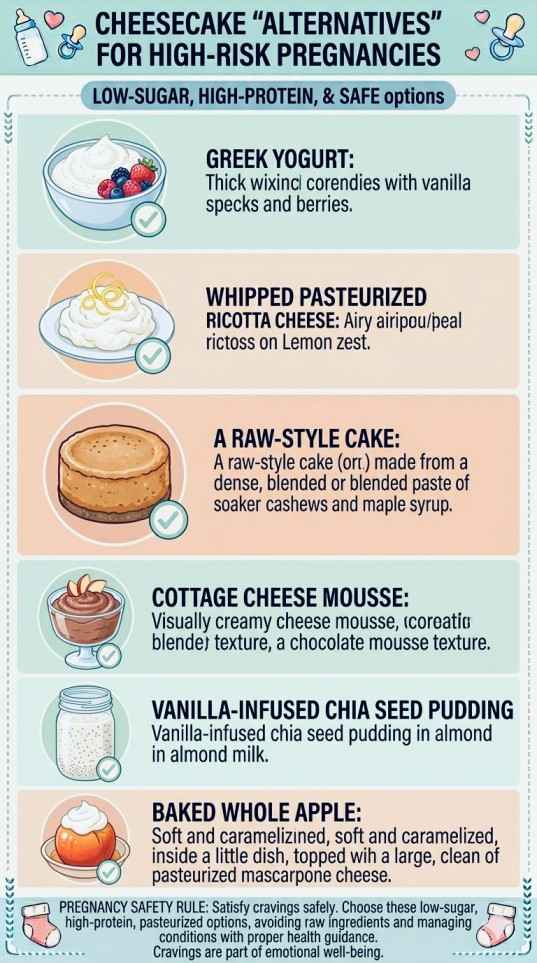
If you are facing complications in pregnancy and want to avoid cheesecake, then I have some alternatives for you that are based on low sugar, high protein, and safe, pasteurized ingredients:
- Greek Yogurt Bowls: For this you just need to mix Greek yogurt with vanilla and berries.
- Whipped Ricotta: For this take, use pasteurized ricotta topped with lemon zest.
- Cashew “Cream” Cake: Just take soaked cashews and blend them with maple syrup.
- Cottage Cheese Mousse: Use blended smooth with cocoa or fruit.
- Chia Seed Pudding: Vanilla-infused chia seeds in almond milk.
- Baked Apples: Warm fruit topped with a dollop of pasteurized mascarpone.
Specialized Diets like Gestational Diabetes, Keto and Vegan
Gestational Diabetes & Keto: If you’re a diabetic patient and monitoring blood sugar is necessary for you, then cheesecake is actually a “better” dessert; it is rich in high fat and protein content, slowing the absorption of glucose.
- Artificial Sweeteners: The FDA has approved Aspartame, Sucralose (Splenda), and Stevia as safe for pregnancy.
- Warning: Avoid saccharin, as it can cross the placenta and remain in fetal tissue.
Is Cheesecake Nutritionous during Pregnancy?
When we examine cheesecake from a nutritional perspective, it presents a mixed bag of benefits and drawbacks. Cheesecake does contain essential building blocks for your baby, like high sugar and fat, so it can be considered a calorie-dense treat rather than a nutrient-dense staple.
Here is the detailed breakdown of how its components actually affect fetal development:
- Calcium for Bone Density: The main ingredient in cheese cake is cream cheese and eggs. They provide calcium. When you eat cheesecake in the 3rd trimester, the need for calcium can be managed because at that time the baby’s skeleton demands a high amount of calcium.
- Protein for Tissue Growth: Another important ingredient used in cheesecake is dairy products, which offer complete proteins. These amino acids help in building a baby’s organs, muscles, and the placenta itself.
- Vitamin A: Cheesecake is a good source of vitamin A, as it includes full-fat dairy and eggs. Vitamin A is important for the development of the baby’s eyes, skin, and immune system.
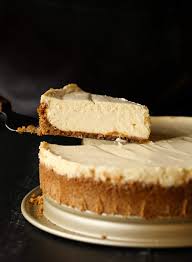
Is there any Potential Risks of Eating Cheesecake?
Like Any other food item cheesecake do have some drawback as follow:
The Sugar Spike: Traditional cheesecake is full of refined sugar. High glucose levels cross the placenta. This causes the baby’s pancreas to work excessively to produce insulin, which can lead to increased birth weight and potential metabolic issues in the child later on.
Saturated Fats: Babies require fat for brain development, as the brain is composed of about 60% fat. They particularly benefit from omega-3 fatty acids.
Empty Calories: Since cheesecake is an energy-dense food item, it can lead to rapid weight gain. It is not a replacement of whole foods that are rich in vitamins and fiber.
To get full nutrition in pregnancy, you can use Greek yogurt or ricotta for higher protein and lower fat. Use crushed walnuts or almonds to get a boost of omega-3s. Eat fresh raspberries or blueberries to get antioxidants and fiber.
Safe DIY Recipe for Pregnancy Cravings
If you want to eat cheesecake but have anxiety about it, then go for No-Egg Instant Cheesecake:
- Whisk 200g pasteurized cream cheese and add 50g Greek yogurt to it.
- Then add 2 tbsp of honey and 1 tsp of vanilla extract.
- Now fold in whipped cream (pasteurized).
- Serve over crushed graham crackers. No eggs, no heat, 100% safe.
What if I already ate Cheesecake that need to be avoid in Pregnancy?
First, don’t panic, as a single occasional slice of cheesecake won’t cause any infection.
- Identify the Source: Was it a major chain? If so, you are likely fine.
- Monitor for Symptoms: Listeria symptoms include fever, muscle aches, or severe diarrhea.
- Consult Your OB-GYN: If you find any symptoms as mentioned above, urgently visit your gynecologist.
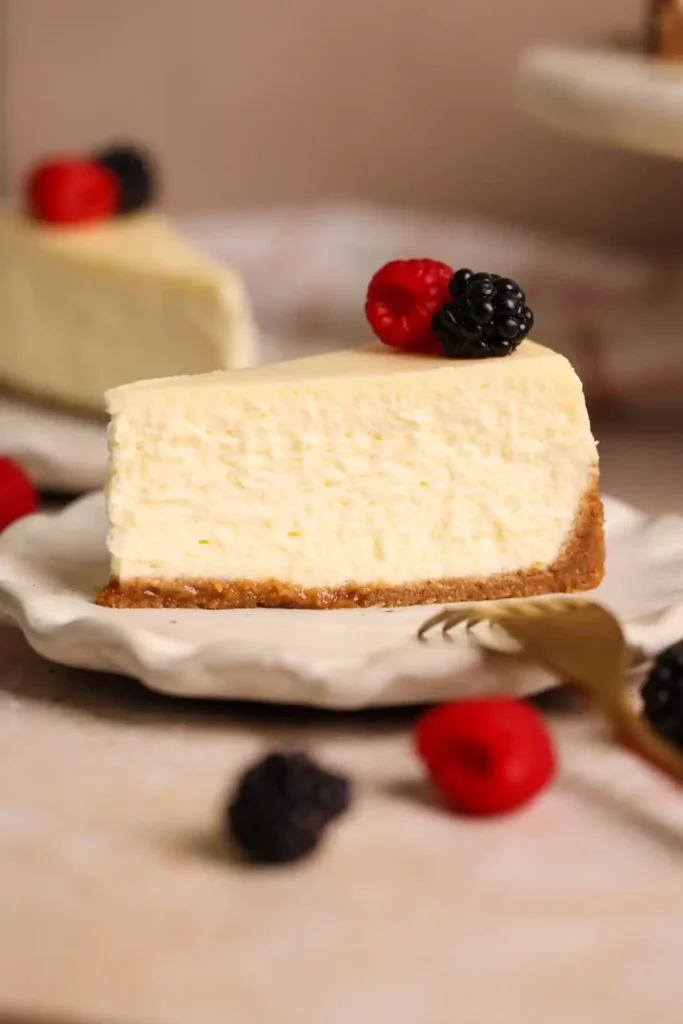
Frequently Asked Questions (FAQ)
1. Can pregnant women eat Philadelphia cheesecake?
Yes, a pregnant woman can eat Philadelphia cheesecake, as it is made from pasteurized milk and cream. It doesn’t contain the risk of listeria.
2. Is no-bake cheesecake safe during pregnancy?
No-bake commercial cheesecake is safe during pregnancy because they use pasteurized ingredients and avoid raw eggs; however, avoid no-bake homemade versions, as they contain raw, unpasteurized egg whites or yolks.
3. Can I eat cheesecake from the grocery store while pregnant?
Yes, supermarket cheesecakes, like frozen or chilled ones, are highly regulated and use heat-treated dairy and pasteurized egg products. They are completely safe to consume in pregnancy.
4. Is the egg in baked cheesecake safe for pregnancy?
Yes, the egg in baked cheesecake is completely safe because the cake is baked at a temperature of 71°C (160°F) or higher, which kills bacteria like Salmonella.
5. Can I eat Cheesecake Factory cheesecake while pregnant?
Yes, because the Cheesecake Factory uses pasteurized dairy and eggs in their recipes. They are made in a controlled environment, which makes them completely safe to consume.
6. Does cheesecake contain listeria?
Yes, when it is made with unpasteurized milk or has been stored improperly.
7. Can I eat mascarpone or ricotta cheesecake while pregnant?
Yes, you can eat mascarpone or ricotta cheesecake while pregnant; make sure the mascarpone or ricotta is pasteurized. In countries like the US, UK, and Canada, brands use pasteurized items.
8. What should I do if I accidentally ate cheesecake with raw eggs?
First of all, don’t panic, as the risk is very low. However, do monitor symptoms like fever, vomiting, or diarrhea. If you have a high fever or severe dehydration, contact your healthcare provider immediately.
9. Can I eat cheesecake with fruit toppings during pregnancy?
Yes, you can eat cheesecake with fruit toppings during pregnancy, but make sure the fruits are properly washed. You can also go for cooked fruit compotes or glazes.
10. How long can cheesecake sit out before it becomes unsafe?
You should never keep cheesecake at room temperature for more than 2 hours. According to the USDA, the bacteria can multiply rapidly in the “Danger Zone” (4°C–60°C), so it is important to keep it in the refrigerator till you eat.
Conclusion: Can pregnant women eat cheesecake
In conclusion, yes, you can eat cheesecake while pregnant as long as you follow simple safety rules of baked and pasteurized ingredients. Avoid traditional cheesecakes, as they contain raw eggs. Also avoid restaurant-baked ones, as they contain risk of Salmonella or Listeria. Commercial cheesecakes are perfectly safe in pregnancy. Make sure you follow the 2-hour rule at home if you have cheesecake leftovers.
The Safety Checklist:
- Is it baked? (NY Style, Basque, or Japanese) Safe.
- Is it pasteurized? (Supermarket frozen or boxed) Safe.
- Is it unbaked or a mousse? Ask about eggs.
- Are the toppings washed? Always verify.
Also Read: Can You Eat Subway While Pregnant? The Ultimate 2026 Safety & Nutrition Guide
Medical Disclaimer: This content is for informational purposes only and does not replace professional food safety or health advice. Always follow local food safety guidelines and consult a qualified expert if you have specific concerns about food handling or illness prevention.
Official References for Verification:
