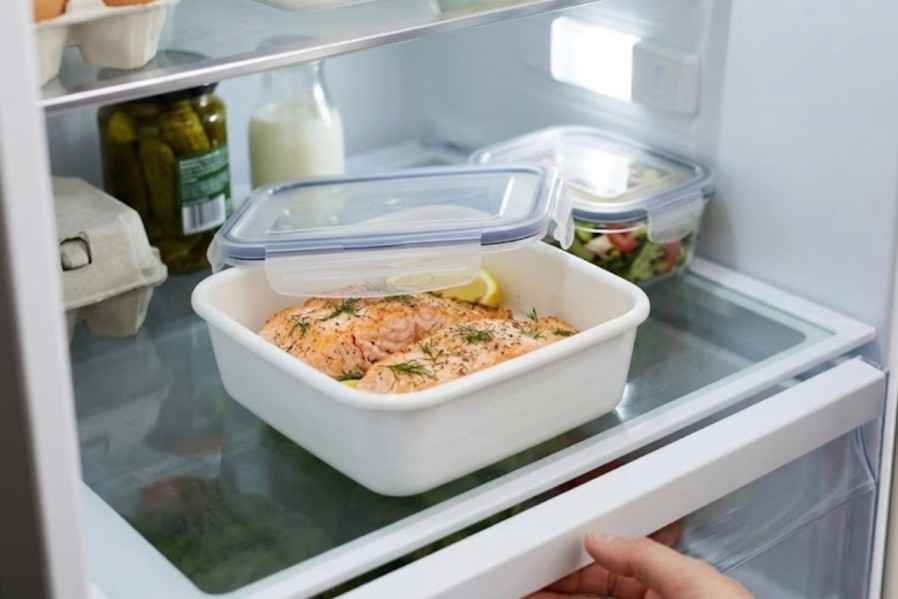
Cooked salmon can easily last for 3 to 4 days in the refrigerator, especially when you store it properly in an airtight container at or below 40°F (4°C). To keep salmon fresh and safe to eat, make sure to let it in the refrigerator within 2 hours after cooking. If you want to store it for a long time, you can freeze it, as freezing extends its shelf life for several months.
How Long Does Salmon Last in the Fridge?
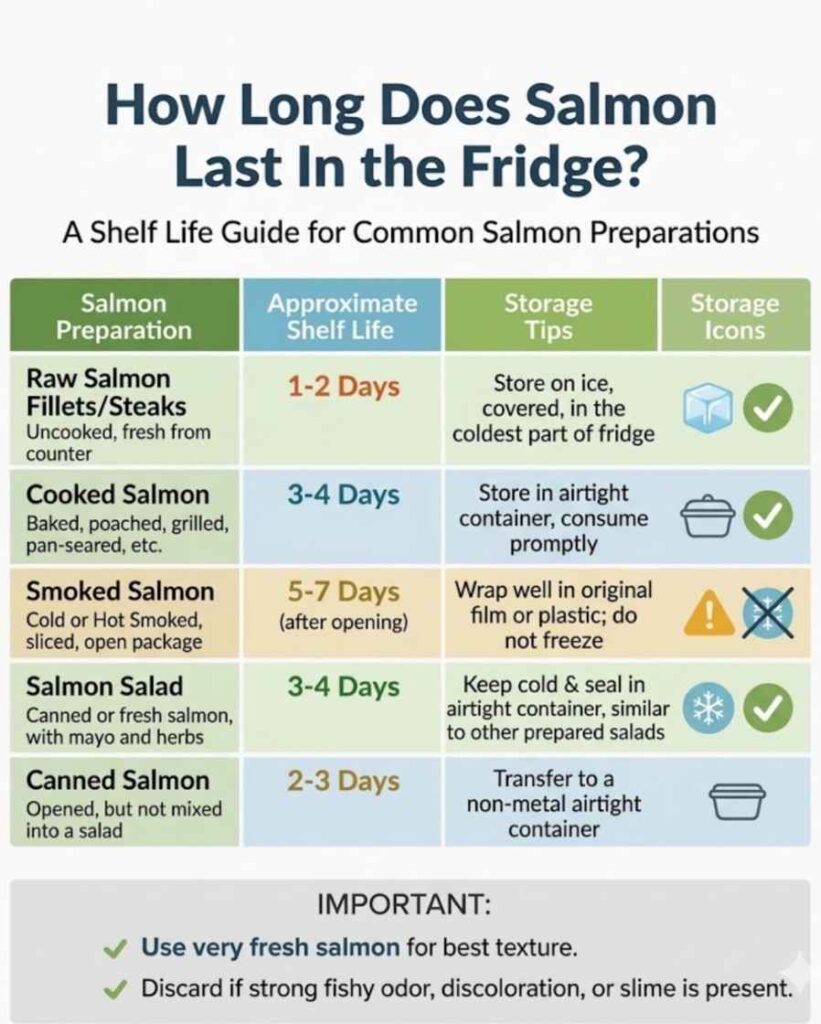
Fresh salmon can last up to 1 to 2 days in the refrigerator when it’s stored properly and at or below a temperature of 40°F (4°C). Salmon do have a short timeframe because these fish are highly moist and full of protein, which makes them more attractive to bacterial growth as compared to other food items. If you plan to eat salmon within 1 to 2 days, then it is recommended to freeze it, as this way you can preserve its quality for a longer period.
How Long Does Raw Salmon Last in the Fridge?
Raw salmon can usually last for 1 to 2 days in the refrigerator only if it is stored properly. You can keep it in original packaging or convert it into an airtight container and then place it in the coldest part of the refrigerator where the temperature is stable, like on the bottom shelf. Note if the fish smells, has a slimy texture, or has dull coloration; it may be a sign it is spoiled. To avoid such issues, it’s recommended to cook salmon as soon as possible after purchase.
How Long Does Cooked Salmon Last in the Fridge?
Cooked salmon can usually last for 3 to 4 days in the refrigerator only if it stores properly in an airtight container. It should be cooled to room temperature in 2 hours of cooking before placing it in the refrigerator. This will help in preventing bacterial growth and preserving the fish in sense of flavor and texture, but cooked salmon needs to be checked for spoilage signs too, like an off smell, dryness, or a slimy surface, before consuming.
How Long Does Smoked Salmon Last in the Fridge?
Smoked salmon has a longer shelf life as compared to raw or cooked salmon because it involves a curing and smoking process. An unopened smoked salmon can last until it gets expired when refrigerated, whereas the opened smoked salmon can last from 3 to 5 days in the fridge. It needs to be placed in original packaging or in an airtight container. However, it is important to always check if it develops. unusual odor, discoloration, or slimy texture discard it immediately.
Also Read: How Long is Tuna Salad Good For? Safety & Storage Standards
8 Major Factors That Affect Salmon’s Shelf Life
After understanding how long a salmon can stay fresh in a refrigerator, now let’s look at factors that affect a salmon’s shelf life:
- Storage Temperature: Temperature plays an important role when you keep salmon at or below 40°F (4°C); it slows down the bacterial growth.
- Time Since Purchase: Freshness does play an important role, like if you buy a fresh salmon, it will last longer in the fridge too.
- Packaging: Storing salmon in airtight containers or vacuum-sealed packaging helps in reducing air exposure, which can extend shelf life.
- Handling Practices: Using clean utensils, hands, and surfaces helps in keeping salmon free from spoilage and less bacterial interaction.
- Moisture Levels: Excess moisture can promote bacterial growth; in order to keep salmon safe, always do proper drainage or wrapping.
- Type of Salmon: Raw, cooked, and smoked salmon all have different shelf lives due to their processing method.
- Storage Location in Fridge: Store salmon in the coldest place in the refrigerator so the fish can get a stable temperature; this will help in making shelf life better.
6 Ways on How to Store Salmon Properly
- The first step is using an airtight container; use plastic wrap or foil when refrigerating salmon, as these elements help in preventing air exposure.
- Once you’ve stored salmon properly in a container or wrapper, then place it in the coldest part of the fridge, like at or below 40°F (4°C).
- Make sure to keep raw salmon away from other ready-to-eat food items to avoid any kind of bacterial growth.
- To maintain proper hygiene, place salmon on a plate or tray.
- For cooked salmon, it is advisable to let it cool at room temperature for 2 hours before refrigerating.
- Before refrigerating, mark the date on the box in order to track freshness and avoid eating spoiled fish.
Can You Freeze Salmon?
Yes, you can freeze salmon, as it helps in extending shelf life. Raw salmon can be frozen for 2 to 3 months for best quality, whereas cooked salmon can also be frozen, but the texture of the fish can change a little after thawing.
The best way to freeze salmon is to wrap it in plastic wrap or aluminum foil and then place it in a freezer-safe bag or container to prevent freezer burn.
Make sure to remove as much air as possible; this will help in preventing taste and texture. Last, label the package by writing a date in order to track time.
How to Thaw Salmon Properly Tips
- The first step is to move frozen salmon to the fridge and then let it thaw overnight for defrosting.
- Place the sealed salmon in a bowl of cold water, changing the water every 39 minutes while it thaws.
- Thaw salmon in its packaging or a sealed bag to prevent water absorption and contamination.
- Make sure to never thaw salmon at room temperature to keep it safe from bacterial growth.
- Once you’re done thawing, cook or eat the salmon within 1-2 days for best taste.
How to Identify Spoiled Salmon?
Following are the steps to identify when salmon goes bad:
- Fresh salmon has a mild and ocean-like smell, so if your salmon produces a sour, ammonia-like, or rotten odor, it is surely going bad.
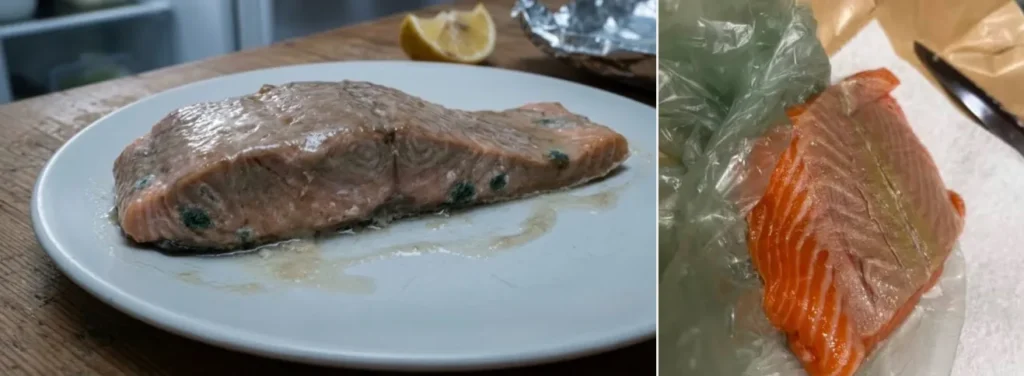
- Fresh salmon usually has a bright pink, orange, or red color, so if you notice the color appears dull, grayish, brown, or yellowed, then the salmon is spoiled.
- If you notice a thin slimy coating on the surface of salmon, then it’s a sign of bacterial growth and spoilage. Fresh salmon mostly looks moist and then slippery.
- Fresh salmon is firm to touch. If the flesh easily falls apart or feels overly soft, it may no longer be safe to eat.
- If you notice any fuzzy growth, dark patches, or unusual markings, it means the salmon has gone bad.
- Cooked salmon that dried out excessively or developed crusty edges may have been stored too long or improperly.
- If you notice the salmon taste sour, bitter, or otherwise unusual, it is a strong indicator it has gone bad.
Can I eat 5-day-old cooked salmon?
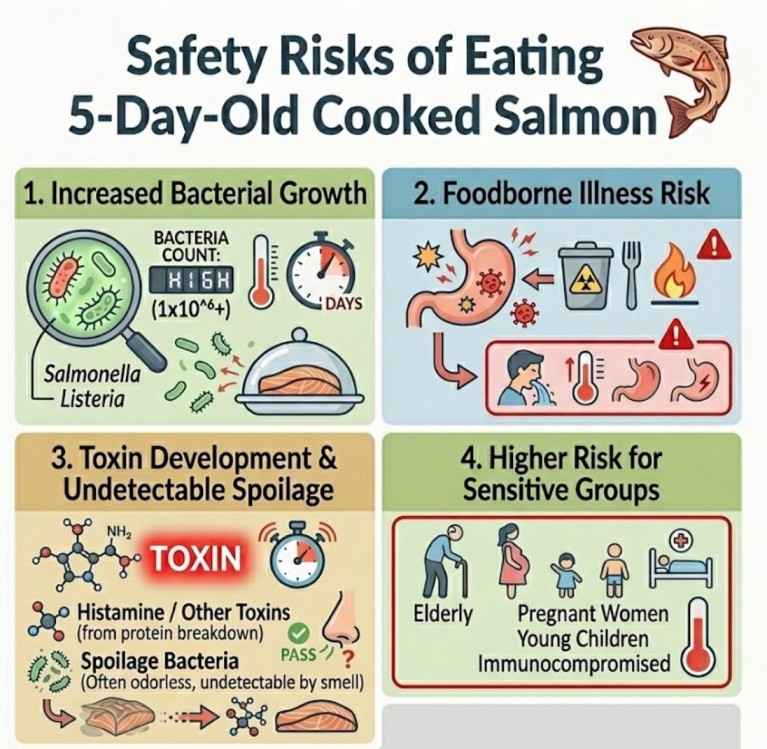
It is not recommended to eat cooked salmon after 5 days; it may look fine and smell normal, but it has crossed the safety window. Here is the breakdown of why:
1. The “3–4 Day Rule”
According to the FDA and USDA food safety guidelines: Cooked fish is safe to consume for 3 to 4 days when stored in a refrigerator at or below 40°F. However, at day 5 there is a risk of foodborne illness increasing significantly.
2. Hidden Dangers (The “Invisible” Spoilage)
Sometimes a fish looks completely fine from inside, like it tastes and smells normal, but there can be some hidden dangers.
- Pathogenic Bacteria: Bacteria like Listeria and Salmonella can multiply to dangerous levels without changing the taste, smell, or appearance of the fish.
- Heat-Resistant Toxins: Some bacteria produce toxins when they grow. Even when you reheat salmon at high temperatures, these toxins stay and can make you sick.
3. Symptoms of Food Poisoning
If you decide to risk it, you may experience:
- Nausea and vomiting
- Abdominal cramps
- Diarrhea
- Fever
4. Sensitive Groups
All these sensitive groups, like children, pregnant women, and older adults, are at high risk for foodborne illness from over-stored seafood.
When you have doubt about the spoilage of salmon, then throw it out, as it is better to deal with several days of food poisoning.
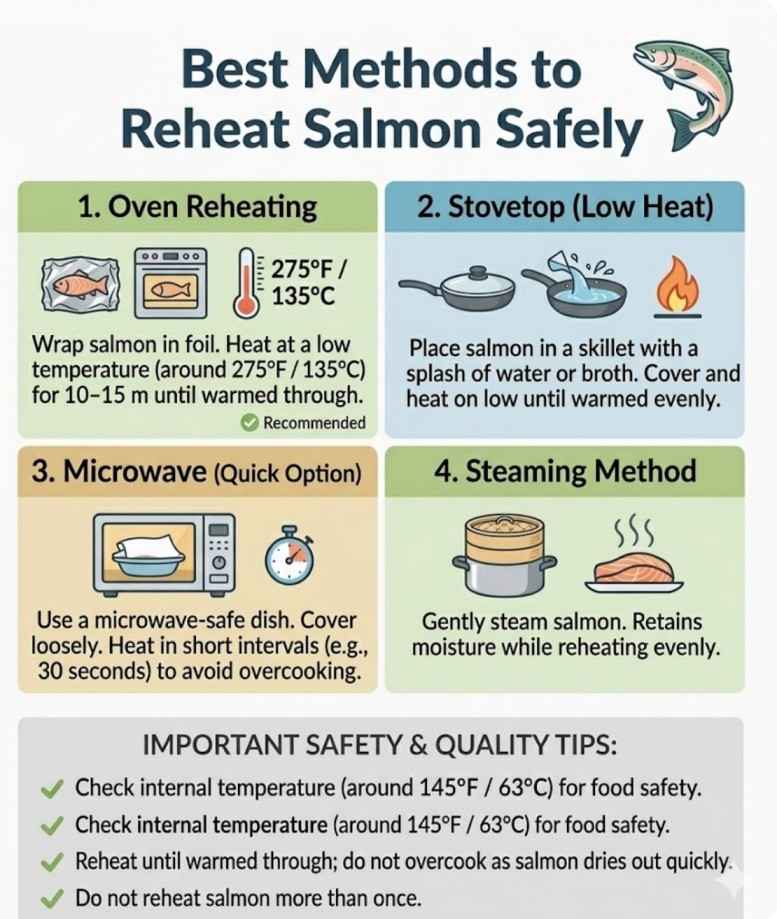
Complete Reheating Guide
In order to maintain moisture and safety, reheat salmon to an internal temperature of 165°F (74°C) by using the following methods:
- Oven (Best Result): Wrap salmon in foil with a broth and then heat it at 275°F (135°C) for 10–15 minutes.
- Stovetop: Place salmon in a skillet with some light sauce or broth and cover it with a lid and heat on low.
- Steaming: You can also steam salmon to restore moisture while heating it through.
- Microwave: Use a covered, microwave-safe dish. Heat in short intervals (30 seconds) at medium power to avoid a rubbery texture.
Cut large salmon pieces into small portions before reheating to make sure they warm evenly without drying out the edges.
Frequently Ask Questions by People
When Is It Better to Throw It Than Taste It?
If the salmon has been in the fridge for 5 days or left out for more than 2 hours showing signs of spoilage like smell, slime, or mold, then it’s better to throw it than do a taste test.
When does salmon go bad?
If you notice the salmon smells like sour or ammonia or has a slimy or tacky surface texture and discoloration like turning gray, dull, or developing dark spots, then it is a sign it has completely gone bad.
Can I eat salmon after 5 days in the fridge?
No, it is not recommended to eat salmon after 5 days in the fridge even if it smells fine. The bacteria, like Listeria, already take place in it, which will cause food poisoning if you eat it.
What should I do if I accidentally ate 5-day-old salmon?
Don’t panic and monitor if you are facing any symptoms like nausea, fever, or stomach cramps over the next 24 to 48 hours. Stay hydrated. If the symptoms become serious, then immediately go to the healthcare provider.
What are the symptoms of salmon poisoning?
Common symptoms that take place by eating spoiled salmon include nausea, vomiting, diarrhea, stomach cramps, and fever. You may notice these symptoms within an hour or even after 1 to 2 days.
How long should I eat salmon immediately after cooking?
You can eat salmon immediately after cooking for best quality and safety or refrigerate it within 2 hours once cooked if you want to eat it later.
How can salmon be safely stored for best results?
Make sure to store it in an airtight container, plastic, or foil wrap tightly to prevent air exposure and better shelf life. Avoid placing them near ready-made food items.
Can I keep smoked salmon up to two days before eating?
Yes, you can keep smoked salmon up to 3 to 5 days in the fridge before eating.
What matters more: expiration dates or use-by dates?
The “Use-By” date is a safety deadline for the retailer and doesn’t mean the product is expired. An “expiration” date is similar. However, once you open the package or cook the fish, for raw salmon the day limit is 1 to 2 days, and for cooked fish the limit is 3 to 4 days, which takes priority over a later date on the label.
Where should I place salmon for best quality in the fridge?
For better shelf life while preserving quality, you can put salmon at the coldest part of the refrigerator.
How long does thawed or defrosted salmon last?
Once fully thawed in the refrigerator, you can eat cooked salmon within 1 to 2 days.
How long does vacuum-sealed salmon last?
If it is raw and vacuum-sealed from the store, follow the “Use-By” date. Once the seal is broken, treat it as fresh raw salmon (1–2 days).
Can I cook raw salmon a week after its use-by date?
No, raw salmon can’t be cooked after its limit date because it is highly perishable. Cooking it will not destroy any bacteria when the fish has already gone bad.
Is Raw Salmon Still Good After 3 Days in the Fridge? Unlikely.
No raw salmon can be good to use for 1 to 2 days; after this limit, it enters the danger zone for spoilage.
Can I eat salmon “medium rare”?
Many chefs do prefer salmon medium-rare for texture. According to the USDA, it recommends an internal temperature of 145°F (63°C) to make sure all the bacteria are killed. The sensitive age group (including pregnant women and the elderly) should always stick to the 145°F guideline.
Can I freeze salmon that has already been cooked?
Yes, you can easily freeze salmon by wrapping it properly. It stays safe for 2 to 3 months, as freezing increases the shelf life.
Is it safe to eat salmon cold?
Yes, it is safe to eat cold salmon as long as it was cooked at a temperature of 145°F (63°C) and stored properly in the fridge for 3 to 4 days.
Does the “2-Hour Rule” change in hot weather?
Yes. If the room temperature is above 90°F (32°C), the safety window drops from 2 hours to 1 hour, which means bacteria can multiply faster even in heat.
What is that white stuff that appears on salmon when I cook or reheat it?
That white stuff is known as albumin; it is considered a harmless protein that squeezes out of the muscle fibers. It is completely safe to eat; however, it can be a sign that the salmon is cooked quickly and at a very high temperature.
Final Thoughts on Salmon Safety
Understanding how long cooked salmon lasts in the fridge is very important, as it helps prevent foodborne illnesses, and you can easily enjoy the meal without any fear. Salmon is full of nutrition, as it is a rich source of protein, and its moisture content makes it the best choice for people; however, it is also a main target of bacteria if it isn’t handled with care.
All you need is to stick with the 3- to 4-day rule, store it in an airtight container, and place it in the coldest place in the refrigerator; this will preserve the salmon’s taste and save it from bacterial growth. Don’t eat salmon on day 5 because this is crossed from safety limits; even if you don’t find any spoilage signs physically, there will be bacteria like listeria taking place.
Quick Checklist for Success:
- Refrigerate within 2 hours of cooking.
- Store at or below 40°F (4°C) in an airtight container.
- Consume within 3 to 4 days for safety.
- Reheat to an internal temperature of 165°F (74°C).
By following these professional food safety standards, you can confidently prepare, store, and enjoy your salmon dishes without the guesswork.
Official References
USDA (United States Department of Agriculture): “Cooked leftovers can be kept in the refrigerator for 3 to 4 days. After that, the risk of food poisoning increases.” Source: USDA FSIS – Leftovers and Food Safety
FDA (Food and Drug Administration): “Store fresh fish, shellfish, and other seafood in the refrigerator (40°F/4°C or below) until you are ready to use them. Use fresh fish within 1 to 2 days; store cooked fish for 3 to 4 days.” Source: FDA – Selecting and Serving Fresh and Frozen Seafood Safely
Medical Disclaimer: This content is for informational purposes only and does not replace professional food safety or health advice. Always follow local food safety guidelines and consult a qualified expert if you have specific concerns about food handling or illness prevention.
