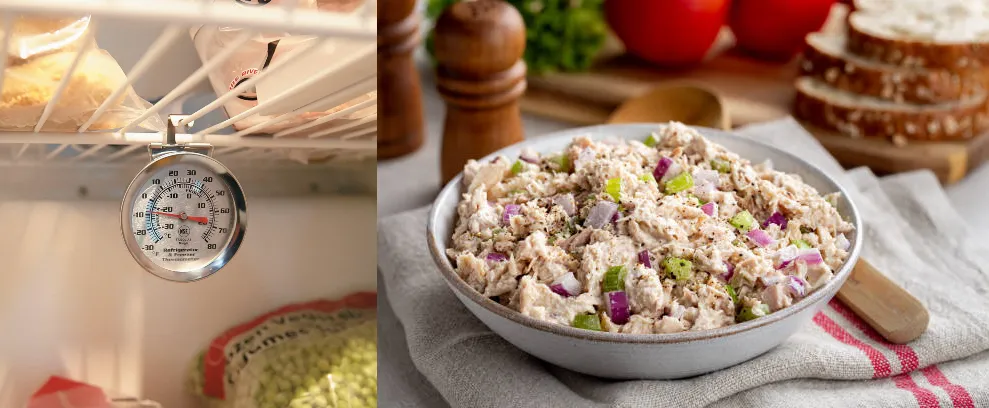
Quick Answer: According to the FDA Food Code, the highest temperature allowed for cold holding tuna salad is 41°F (5°C) or below. Any temperature above this limits safety and enters the food danger zone.
When we talk about famous salads people eat on a daily basis, tuna salad is on the top of the list; however, it also comes with food safety requirements checks, as tuna salad contains protein-rich fish and moisture-heavy ingredients, so salad can be harmful if not stored at the recommended temperature.
Whether you are making it at home, in a restaurant, or serving it at an event, you need to carefully manage proper cold holding. Understanding what the highest temperature allowed for cold-holding tuna salad is can help you to stay safe from foodborne illness, maintain quality, and stay compliant with food safety standards.
What Does “Cold Holding” Mean in Food Safety?
Keeping prepared food at a safe low and recommended temperature once prepared and before serving is known as “cold holding.”
Instead of cooking or reheating the food, this process focuses on:
- Keeping a safe temperature
- Slow down bacterial growth
- Provide freshness and safety
For ready-to-eat food items like tuna salad, cold holding plays an important role because they don’t need any cooking steps.
Why This Matters for Tuna Salad
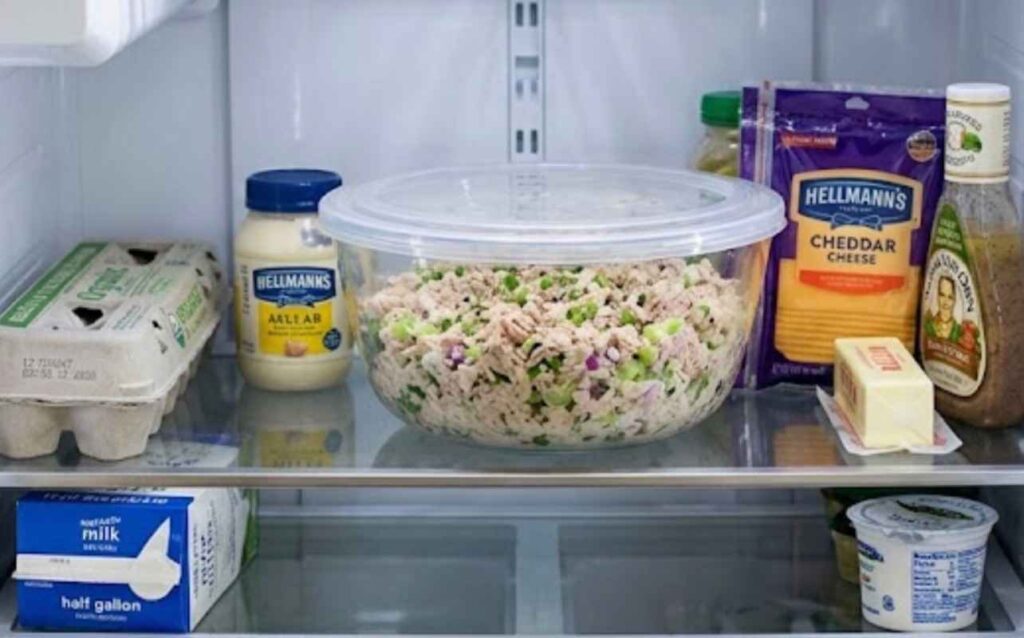
When we talk about temperature changes, some food items like tuna salad are considered extremely sensitive. Even a small increase in temperature above safe limits can lead to bacterial growth. This is the reason why knowing the right highest temperature allowed for cold-holding tuna salad is important for food safety and quality.
Why Tuna Salad Is Considered a High-Risk Food
Tuna salad is classified as a temperature control for food safety due to its components like protein (tuna), moisture vegetables, sauces, and neutral pH environment. All these can make a condition that works best for bacterial growth if not stored properly.
Ready-to-Eat Food With No “Kill Step”
Unlike any other food dishes, tuna salad can be consumed without any further cooking or reheating, which means there is no chance of eliminating bacteria. As a result, the bacteria inside it remain active, so temperature control is important for safety.
Common Bacteria Linked to Tuna Salad
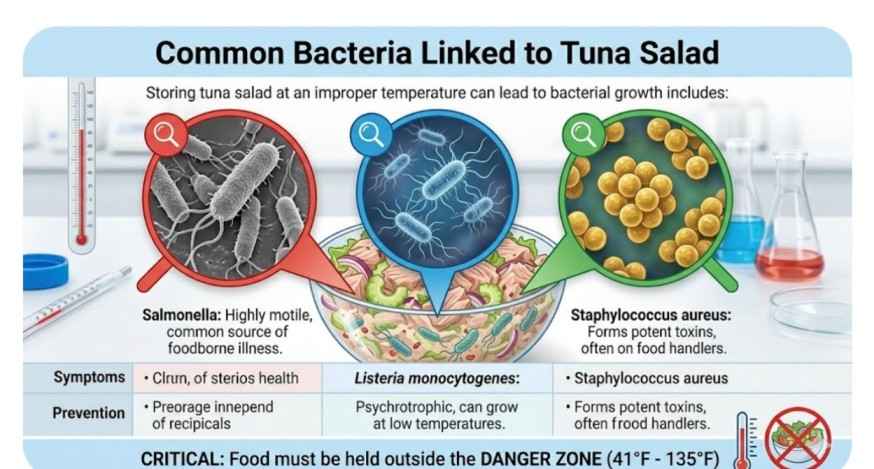
Storing tuna salad at an improper temperature can lead to bacterial growth, including:
- Salmonella
- Listeria monocytogenes
- Staphylococcus aureus
All these bacteria can lead to serious health issues like food burn even when the food is looking completely fine.
Why 41°F (5°C) Is the Safety Limit (Science Explained)
The 41°F threshold is based on bacterial growth, as at low temperatures bacteria can grow, and above this point they also start growing. This is why keeping a correct
Understanding the maximum temperature allowed for cold-holding tuna salad is determined by a strict limit rather than a flexible range.
The Temperature “Danger Zone” Explained
The danger zone is the range where bacterial growth becomes multiple rapidly:
- 41°F to 135°F (5°C to 57°C)
At this range the microbial growth accelerates, increasing the likelihood of contamination over time.
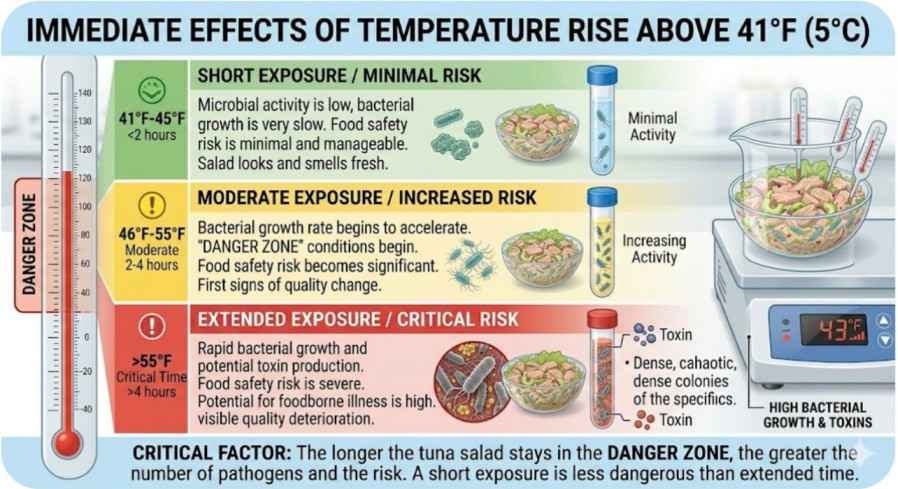
Immediate Effects of Temperature Rise Above 41°F
If the tuna salad exceeds 41°F, it can increase microbial activity; food safety can be at risk. It also depends on how long tuna stays at the temperature. However, a short exposure can be managed, but bacterial growth increases the danger. To understand more please read the chart below:
Why 44°F Is NOT Safe (Even Though It Seems Close)
A small change in degrees can seem normal, but food safety limits are strict at 44°F because bacterial growth becomes more active, food safety decreases, and risk compounds over time. This is why even a small change in temperature needs to be avoided.
FDA Guidelines and Where They Apply
According to food safety requirements, the cold food items like tuna salad should be placed at a temperature of 41°F (5°C) or below. These guidelines apply to every food sector, whether it’s a restaurant, catering services, cafeterias, grocery stores, or institutional kitchens. Most food stores, or institutions, adopt this standard temperature to avoid any risk of illness.
Cold-Holding Tuna Salad at Home vs. Food Service
At Home:
- Keep the refrigerator at ≤ 40°F (4°C)
- Monitor storage duration
In Food Service:
- Maintain strict ≤ 41°F control
- Conduct routine temperature checks
- Follow regulatory compliance

How Long Can Tuna Salad Be Safely Held at 41°F?
If you store tuna salad at a correct temperature that is at or below 41°F:
You can easily eat it for 3 to 4 days. Remember to keep it in the refrigerator consistently. However, the quality of ingredients may decline with time.
What Happens If Tuna Salad Goes Above 41°F?
Food safety risk depends on two factors that are temperature level and exposure time.
Short Exposure (Under 2 Hours): Usually Still Safe: Can be safe if cooled quickly; however, risk remains relatively low.
Extended Exposure: Risk Rises Quickly: Microbial growth can increase rapidly; this can make the food unsafe quickly.
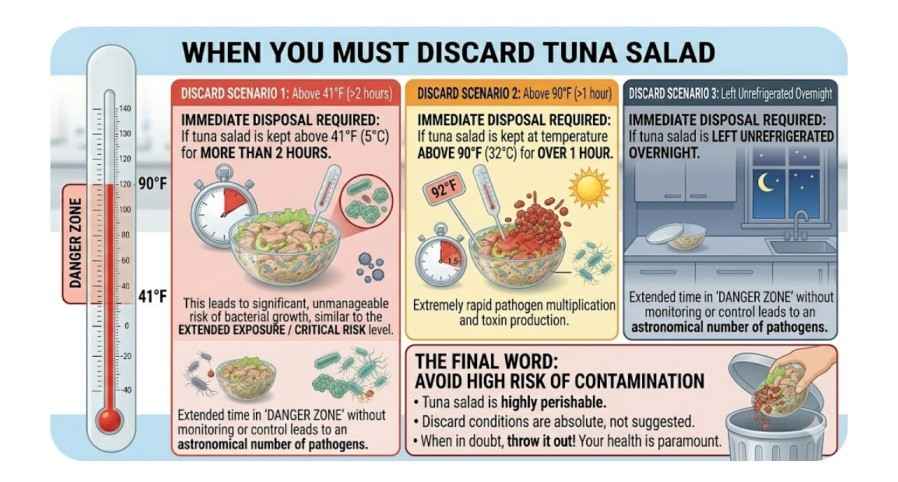
When You Must Discard Tuna Salad
Immediate disposal is required if you kept tuna salad above 41°F for more than 2 hours. If you keep tuna salad at a temperature above 90°F (32°C) for over 1 hour. You need to discard tuna salad if it is left unrefrigerated overnight. All these temperature conditions can lead to a high risk of contamination.
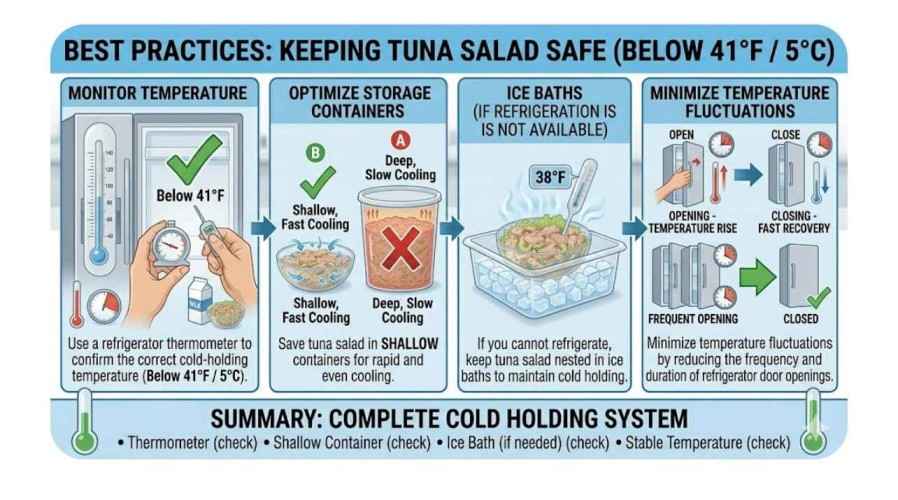
Best Practices to Keep Tuna Salad Below 41°F (5°C)
To make sure the tuna salad has a safe cold holding:
- Use a refrigerator thermometer
- Make sure to safely store tuna salad in shallow containers
- If you can’t refrigerate it, then keep it in ice baths.
- Minimize temperature fluctuations
All these practices can help in keeping safe conditions and also align with the recommended temperature for holding tuna salad.
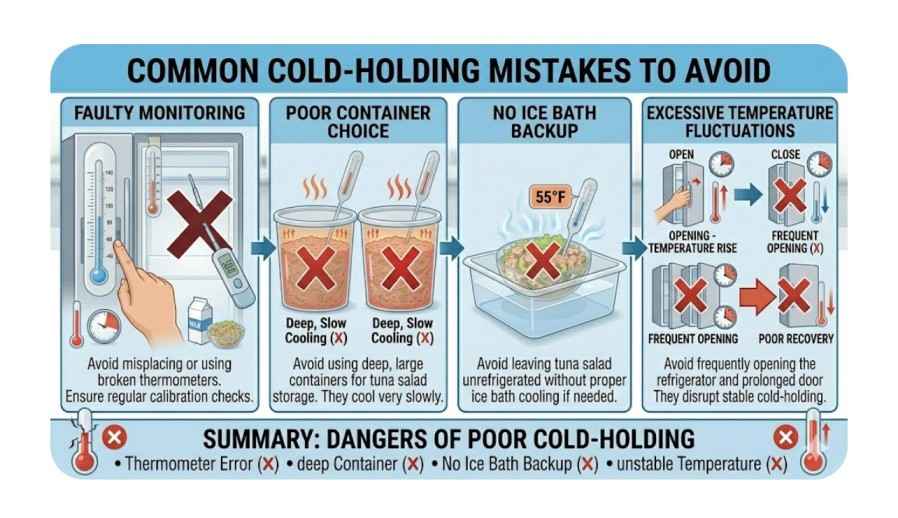
Common Cold-Holding Mistakes to Avoid
In order to stay safe from food illness caused by bacteria, avoid common mistakes:
- Leaving tuna salad outside for a long time
- Placing tuna salad in overcrowded refrigeration units
- Skipping temperature checks
- Using a deep container that doesn’t let the cooling go inside
- Assuming all temperatures are safe just because the salad is in the refrigerator
Why Cold Holding Tuna Salad Is a Must for Food Safety
Cold holding is a must when it comes to tuna salad because it is a ready-to-eat, highly perishable, and extremely sensitive to temperature changes. To keep it safe and fresh for a long time, you need to keep it at a proper and recommended temperature, which can reduce the risk of bacterial growth and the risk of foodborne illness. It is very important to understand what the highest temperature allowed for cold-holding tuna salad is to ensure food safety and maintain food quality.
ServSafe Exam Prep: Cold Holding High-Risk Foods
If you are studying for your ServSafe or food handler certification, this question is a common exam staple. Remember these fundamental rules for cold holding:
- Always monitor internal temperatures
- Never mix fresh food with old food
- The 7-Day Storage Rule
Kitchen Best Practices: Keeping Chilled Foods Safe at Home and School
To maintain a safe kitchen or pack a risk-free school lunch for your children, implement these habits:
- Use Ice Baths Properly: If displaying tuna salad on a salad bar or at a family gathering, place the food pan inside a deeper container filled with ice. Ensure the ice comes up to the level of the food in the pan.
- Air Circulation Matters: Do not overload refrigerators. Chilled air must be able to circulate freely around containers to maintain a consistent 41°F environment.
- Insulated Lunch Boxes: For school or picnics, always pack tuna salad sandwiches with at least two frozen gel packs to replicate commercial cold-holding environments until lunchtime.
Frequently Ask Questions by People
What temperature is dangerous for cold-holding tuna salad?
If you keep tuna salad at temperatures above 41°F (5°C), then it can enter the food safety “danger zone,” where the number of bacteria can double. The danger zone is in the temperature range of 41°F to 135°F (5°C to 57°C). You can’t consider food safe for a long time at this range.
What is Quick Cooling?
Quick cooling is the process of rapidly lowering the temperature of cooked or prepared food to safe levels. Food must be cooled from 135°F to 70°F within 2 hours, and then from 70°F to 41°F within an additional 4 hours. This helps prevent bacterial growth during the cooling process.
Is pre-chilling the ingredients a good idea?
Yes, pre-chilling ingredients is a good practice. Using cold ingredients helps reduce the overall temperature of tuna salad, which also keeps the salad from entering the danger zone.
How do foodborne illnesses affect clients and businesses?
Foodborne illnesses are serious and have major impact on both consumers and businesses. A person experiences symptoms like nausea, vomiting, diarrhea, or more severe health complications. If you have a business and a client gets foodborne because of it, then this can lead to legal issues, loss of reputation, customer trust damage, and financial losses.
How do improper cold holding temperatures threaten food safety?
Improper cold holding temperatures threaten food safety because they allow bacterial growth. When a food item like tuna salad isn’t kept at or below 41°F, the bacterial growth multiplies with time, which leads to the risk of foodborne illness even if the salad is looking completely fine and normal in sense of taste, smell, and appearance.
How long does it take to cool from 135°F to 70°F safely?
Food should be cooled from 135°F to 70°F within 2 hours; consider it as a part of the safe cooling process. This is the main step, as it helps in reducing bacterial growth even before continuing to cool the food down at the recommended temperature of 41°F.
Is reheating tuna a good idea?
Reheating tuna salad isn’t a best practice and not even recommended because it contains cold, ready-to-eat ingredients. If you reheat the salad, it can affect the texture and quality. Reheating won’t remove the bacterial growth that takes place at unsafe temperatures.
What are the factors that impact cold holding of tuna salad?
Several factors affect cold holding, including:
- Refrigerator temperature and consistency
- Type of storage containers (shallow or deep)
- Frequency of opening the fridge
- Different temperature (especially in catering or events)
- Initial temperature of ingredients
- Air circulation inside the storage unit
How to reheat tuna safely?
If tuna is a part of your main dish and not a part of a salad, you can reheat it to an internal temperature of 165°F (74°C). However, if you are considering too much tuna salad, then it isn’t recommended.
What is the 2-hour rule?
The 2-hour rule means you can’t leave a perishable food item outside for more than 2 hours. If you leave and then refrigerate tuna salad at the recommended temperature, it is still unsafe, as bacterial growth already takes place in 2 hours.
What is the 1-hour rule (high-heat environments)?
The 1-hour rule applies when food is exposed to temperatures above 90°F (32°C). In such environments, perishable foods like tuna salad should not remain out for more than 1 hour. After that, the risk of bacterial growth becomes significantly higher, and the food should be discarded.
Can you eat 5-day-old tuna salad?
Well, it depends on how you store the tuna salad. For example, if the tuna salad has been placed continuously in the refrigerator at the recommended temperature, which is 41°F (5°C) or below, it may still be safe for up to 3 to 4 days. On day 5 it is generally not recommended to eat even if it looks completely fine and smells fine; the bacterial growth takes place after day limits, which can lead to foodborne illnesses.
What happens if you push the temperature safety limit?
If you keep tuna above 41°F (5°C) for a long time, then it can lead to multiple bacterial growths, which can cause foodborne illness. Even the salad looks completely normal.
How to know if tuna salad has gone bad?
Following are some signs tuna salad shows when it goes bad:
- It smells sour or unpleasant
- The texture became slimy or watery
- There is a change in color.
- There is an off or bitter taste
- Visible mold (rare but possible)
If you observe any of these signs, you should discard the tuna salad right away.
How long can you keep canned tuna in the fridge after opening?
Once you open the canned tuna, transfer it into an airtight container and store it in the refrigerator properly. Make sure the refrigerator temperature is at or below 41°F (5°C), as this way tuna can easily last for 3 to 4 days.
Unused canned tuna vs. tuna salad: Which one spoils faster?
The reason why tuna salad spoils faster is its perishable ingredients like mayonnaise, vegetables, and seasonings. A plain opened tuna can lasts longer as compared to tuna salad.
How long does tuna salad last after meal prep?
Tuna salad can last up to 3 to 4 days only if you store it properly at a temperature of 41°F (5°C) or below. After this time limit it surely goes bad due to the increased risk of bacterial growth.
What reduces the shelf life of tuna salad?
Several factors can shorten tuna salad’s shelf life:
- Storage above 41°F (5°C)
- Change in refrigerator temperature
- Unwashed utensils or hands lead to bacteria
- Using low-quality or near-expiry ingredients
- Leaving it in the room for hours
- Improper airtight storage
Can I freeze tuna salad for longer shelf life?
Yes, it is possible to freeze tuna salad; however, it’s not recommended, as the ingredients like mayonnaise can easily separate and also change texture when you take it out from the freezer. Freezing can extend the shelf life of any food item; however, it’s not good for food items like salad, so it’s better to freeze plain tuna rather than prepared tuna salad.
What makes a tuna salad recipe safer and tastier?
A safer and tastier tuna salad recipe typically includes:
- Fresh ingredients
- Properly chilled
- Not overly wet
- Correct seasoning for flavor
- Immediate refrigeration after preparation
Keeping ingredients cold and handling food hygienically improves both safety and taste.
What are the best ways to enjoy tuna salad?
Tuna salad can be enjoyed in several ways:
- As a part of sandwich or wrap
- Put it on toast or crackers
- Eat it with fresh greens
- Use it in lettuce cups for a low-carb option.
- Use it as a good filling for stuffed vegetables like tomatoes or avocados.
How long will tuna salad last in the fridge if it is made with mayonnaise?
If you add mayonnaise to tuna salad, then it can last for 3 to 4 days only at the recommended temperature that is at or below 41°F (5°C). Mayonnaise does have a stable shelf life, but when it is mixed with the other ingredients that are wet and watery, it becomes perishable and should be consumed within this timeframe for safety and quality.
What is the maximum time allowed to cool tuna salad?
A time-temperature-controlled food item like tuna salad needs to be cooled from 135°F to 70°F within 2 hours. To cool it completely, add it and store it at 41°F or below within 6 hours.
What happens if tuna salad reaches 45°F?
If tuna salad reaches 45°F, it has entered the temperature danger zone. You must either rapidly cool it back down to 41°F within 2 hours or consume/discard it within the 4-hour window depending on how long it has been exposed.
What is the cold holding temperature for the UK and Europe?
While the US FDA Food Code mandates 41°F (5°C) or below, the legal maximum cold-holding temperature in the UK is 8°C or below, though most food safety teams use an operational target of 5°C for high-risk items.
Conclusion: What is the highest temperature allowed for cold holding tuna salad?
The highest temperature allowed for cold holding tuna salad is 41°F (5°C) or below. Keeping this temperature is necessary, especially for a food item like tuna salad, as it is a perishable, ready-to-eat food that can be a major source of bacteria if not stored properly. When you put tuna at the recommended temperature that is at or below 41°F, it slows down the bacterial growth and also reduces the risk of food-borne illnesses. Whether you are making tuna salad at home or in a restaurant, make sure to follow food safety recommendations.
Tuna Salad Temperature Checker
✓ Safe Cold Holding
This is the absolute highest temperature allowed for cold holding tuna salad under the FDA Food Code.
Medical Disclaimer: This content is for informational purposes only and does not replace professional food safety or health advice. Always follow local food safety guidelines and consult a qualified expert if you have specific concerns about food handling or illness prevention.
