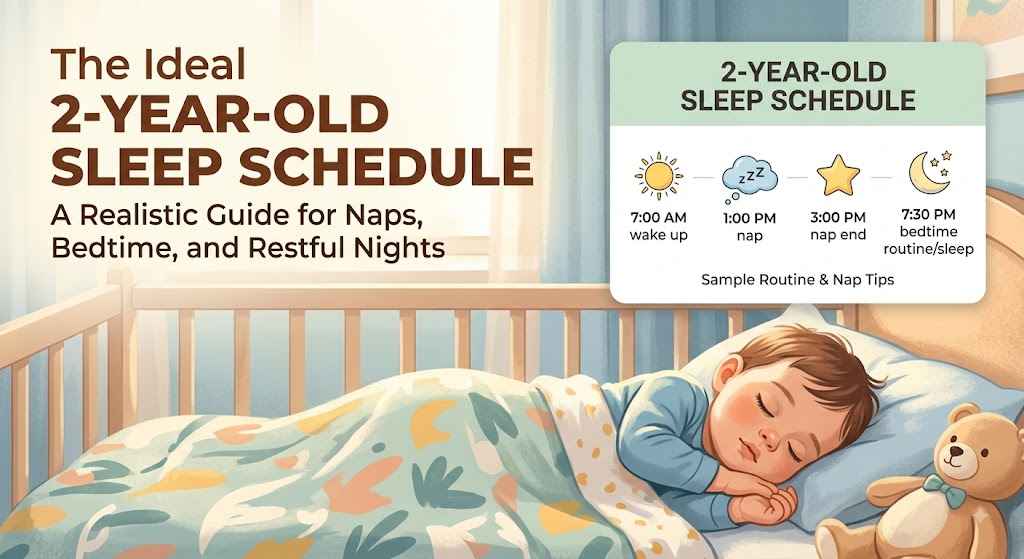
Quick Answer: A typical 2 year old sleep schedule includes 11-14 hours of total sleep per day, typically broken down into 10-12 hours of nighttime sleep and one afternoon nap of 1.5-2 hours. Most 2-year-olds do well with wake windows of 5 to 6 hours. A typical day looks like this: Wake up around 6:30 am. Afternoon nap from 1:00 pm to 3:00 pm. Consistent bedtime between 7:30 pm and 8:00 pm Establishing a steady, soothing bedtime routine of 20-30 minutes helps prevent common toddler sleep regressions and bedtime stalling.
Parenting is a beautiful journey; it comes with new challenges and experiences. One of the most common things parents face is the sleep phase of kids. When you master a 1-nap routine, your 2-year-old suddenly starts to say no to afternoon sleep, your 3-year-old starts making bedtime a battle, or your 4-year-old drops their nap entirely and gets overtired in the evening; we all experience these things.
There are many parenting platforms on the internet that give simple schedules and fail the moment they take place in real life, like day care changes, early morning wake-ups, or sudden nap strikes. In this guide we will break down the wake windows, age-to-age schedule, nap transition protocols, and step-by-step troubleshooting to make sure the toddler can have 10 to 14 hours of good sleep needed for their healthy development.
Toddler Sleep Needs by Age: At-a-Glance Comparison
Before adjusting the kid’s sleeping routine, it is very important to understand what the total sleep duration needed is, so below is a short table that shows how sleep shifts from age 2 to age 4.
| Age Group | Total Daily Sleep | Nighttime Sleep | Daytime Nap Duration | Ideal Wake Windows | Primary Sleep Transition |
|---|---|---|---|---|---|
| 2-Year-Olds (24–36 mos) | 11–14 hours | 11–12 hours | 1.5–2.5 hours (1 nap) | 5–5.5 hours | Consolidating 1 solid afternoon nap |
| 3-Year-Olds (36–48 mos) | 10–13 hours | 10.5–12 hours | 0–1.5 hours (1 nap or quiet time) | 5.5–6 hours | Transitioning from nap to Quiet Time |
| 4-Year-Olds (48–60 mos) | 10–12 hours | 10–12 hours | 0 hours (1 hour quiet rest) | 6–12 hours (Full day) | Dropping afternoon nap completely |
2-Year-Old Sleep Schedule: Mastering the 1-Nap Routine
When toddlers turn 24 months, they all make the transition to a single afternoon nap; it’s very common among them. The age 2 milestone comes with cognitive development, language explosions, and boundary testing, which often cause confusion in parents, and they mistake a temporary change in nap for a readiness to drop the nap fully.
A 2-year-old toddler needs 5 to 5.5 hours of awake time before taking an afternoon nap and another 5 to 5.5 hours of time between nap and bedtime. If a parent pushes these wake-up windows too far, it can lead to three main things, such as overtiredness and triggering cortisol spikes, which is why many toddlers stay awake all night. To avoid this issue, here is a sample chart as follows for you:
| Time Block | Activity / Milestone | Sleep Physiology & Management Focus |
|---|---|---|
| 7:00 AM | Wake Up & Morning Routine | Open curtains immediately. Morning sunlight exposure suppresses melatonin and anchors the circadian rhythm. |
| 7:30 AM | Breakfast | High-protein breakfast to stabilize blood sugar levels after overnight fasting. |
| 8:30 AM – 11:30 AM | Active Morning Play | High-energy physical movement (outdoor play, sensory play) to build “sleep pressure” (adenosine buildup). |
| 11:30 AM | Lunch | Serve lunch at least 45–60 minutes before naptime so digestion settles. |
| 12:15 PM | Pre-Nap Wind Down | 15-minute routine: diaper change, sleep sack/pajamas, 2 books, dim lighting, white noise on. |
| 12:30 PM – 2:30 PM | Afternoon Nap | Cap at 2.5 hours max. Sleeping past 2:30 PM will directly steal sleep pressure from bedtime. |
| 2:30 PM | Gentle Wake-Up & Snack | Offer a balanced afternoon snack (e.g., banana, complex carbs) to keep energy steady. |
| 2:45 PM – 6:30 PM | Afternoon Activities & Dinner | Secondary wake window. Keep evening environment low-stimulation after dinner. |
| 6:45 PM | Bedtime Routine Starts | Bath, teeth brushing, dim lights, final stories. Avoid screens 1 hour before sleep. |
| 7:30 PM | Bedtime (Lights Out) | Expect toddler to drift off within 15 to 20 minutes. |
The 2-Year-Old Nap Regression: Don’t Drop the Nap Yet!
When toddlers turn 24 to 30 months, many parents face the 2-year sleep regression, a phase in which you will find the child standing in the crib, shouting or playing for an hour during scheduled nap time. Some people make the mistake of dropping the afternoon nap of a child at age two so they can sleep at night; however, this is not a solution.
How to Handle the 2-Year Nap Strike?
To handle a 2-year-old’s night regression, you can do three things. The first one is leaving the toddler in a dark and safe sleep space where there is completely silence for 75 minutes. If they don’t sleep, the physical peace of place will prevent the evening burnout.
The second is if they skip the nap completely in the day, then start the bedtime 30 to 45 minutes earlier to prevent chronic over-tiredness.
At age 2, the teething and language bursts also take place, so make sure you check for these in the child.
3-Year-Old Sleep Schedule: The Transition Phase
When a child turns 3 years old, it becomes the most challenging sleep year for parents because some children still need a daily 90-minute nap, while others start facing bedtime battles if they sleep in the daytime.
Option A: The 3-Year-Old Who Still Naps
If your child falls asleep easily at nap time and still falls asleep within 20 minutes at bedtime. Keep it the same. You just need to cap the nap length on orders to ensure a safe night’s sleep.
| Time Block | Activity | Schedule Adjustments |
|---|---|---|
| 7:00 AM | Wake Up | Consistent morning wake time. |
| 1:00 PM – 2:15 PM | Capped Nap | Cap nap at 60 to 75 minutes max. Wake them by 2:15 PM at the latest. |
| 2:15 PM – 7:30 PM | Afternoon Wake Window | Requires a longer 5.5 to 6-hour wake window before bed. |
| 8:00 PM | Bedtime | Bedtime shifts slightly later to account for daytime nap. |
Option B: The 3-Year-Old Dropping the Nap (Quiet Time Schedule)
If your 3-year-old toddler takes 45 minutes to fall asleep at night but then stays awake for hours or wakes up suddenly at 5:00 AM, then it means the daytime is the cause. It is time to transition to quiet time.
| Time Block | Activity | Schedule Adjustments |
|---|---|---|
| 7:00 AM | Wake Up | Standard start to the day. |
| 1:00 PM – 2:00 PM | Independent Quiet Time | Resting in bedroom with quiet toys, audiobooks, or puzzles. |
| 2:00 PM – 6:30 PM | Afternoon Play & Dinner | Longer awake stretch; watch for overtired cues around 5:30 PM. |
| 7:00 PM | Bedtime (Shifted Earlier) | Move bedtime 1 hour earlier (7:00 PM instead of 8:00 PM) to make up for lost daytime sleep. |
4-Year-Old Sleep Schedule: Quiet Time & Night Consolidation
When toddlers turn 4, they fully drop the afternoon nap. A 4-year-old toddler’s daily need for 10 to 12 hours should now happen in one consolidated block at night.
| Time | Routine / Activity Block | Purpose & Strategy |
|---|---|---|
| 7:00 AM | Morning Wake Up | Ensure child gets up at the same time daily to preserve night drive. |
| 7:30 AM – 12:30 PM | Preschool / Active Play | High physical and cognitive activity block. |
| 12:30 PM – 1:30 PM | Lunch & Transition | Begin slowing down pace after lunch. |
| 1:30 PM – 2:30 PM | Quiet Time Rest Period | Non-negotiable 60-minute physical rest window in their bedroom. |
| 2:30 PM – 6:00 PM | Afternoon Play & Family Dinner | Light physical activity, homework, or creative play. |
| 6:45 PM | Bedtime Routine | Wind-down sequence (bath, reading, quiet conversation). |
| 7:30 PM | Bedtime (Lights Out) | Child sleeps 11.5 hours straight overnight. |
How to Do a Successful Quiet Time Routine
The transition from a daily nap to a quiet time is considered a major shift for both parents and toddlers. When you replace a nap with a structured quiet time, it will help in preventing the late-afternoon burnout, provide the child’s brain and body a sensory break, and keep a predictable rest window in the daily schedule. The following is a complete step-by-step framework you need for a successful Quiet Time routine.
1. Set Up Clear Visual Boundaries
Toddlers don’t have a strong concept when it comes to time, so if you tell the child to stay in the room for an hour, it will lead to many questions. To avoid it, you need a cue to enforce the rule, like providing them a color-changing clock. Explain to the child a simple rule: When the light is red, it’s the quiet time, and when the light is green, it means the quiet time is over, and you can come out from the room.
If your toddler knows how to come out from the crib fully or can even come out from the room, then close the bedroom door so they can’t come out.
2. Create an Exclusive “Quiet Time Only” Toy Rotation
If your child has access to all the toys during the daytime, then sitting alone in their room at night can be a boring thing for them. For this you can introduce dedicated activities at that time. Pack a plastic tote with low-stimulation, safe, independent activities. The best quiet time activities include picture books, sticker activity books, reusable water reveal pads, large floor puzzles, and child-safe music players. Swap the activities in a few days so the child doesn’t get bored.
3. Keep the Sleep-Promoting Environment
Even if your major goal is to not force sleep on a child, you still need the environment that supports physical relaxation and nervous system down-regulation. Keep the room lights dim; play soft audio like brown noise, rain sounds, or gentle instrumental music; and make sure their favorite stuffed animals, blankets, or pillows are near the bed.
4. Build Duration Gradually (The 14-Day Method)
If you expect a child to jump from taking a nap to sitting for 60 minutes, then it can lead to immediate resistance. You can build the stamina over two weeks by following these steps:
| Timeline | Target Duration | Strategy |
|---|---|---|
| Days 1–3 | 15–20 Minutes | Set the clock/timer for 20 minutes. Praise them heavily as soon as the light turns green. |
| Days 4–7 | 30–35 Minutes | Add 5–10 minutes. Introduce a new audiobook or fresh activity bin halfway through. |
| Days 8–11 | 45 Minutes | Extend the time block. If they protest, remind them: “Check your clock, it’s still Quiet Time until it turns green.” |
| Days 12–14+ | 60 Minutes | Reach the full 1-hour standard rest window. |
5. Master the “Silent Return” for Boundary Pushers
The child tests this boundary in the first week, and how you react when they leave the room is how quickly they adapt, so make sure you avoid bargaining, raising your voice, or engaging in lengthy conversations. Take them to the room peacefully and ask if it’s the quiet time. I will see you when the light turns green. If they try to come out 10 times, then repeat the same return 10 times.
What to Do If They Fall Asleep in Quiet Time?
It is very normal among toddlers to fall asleep on the floor or even on the bed during a quiet time, especially in the first few weeks when they start dropping afternoon naps. If you see they slept at 2:00 in the afternoon, then wake them up after 30 minutes. When they fall asleep during quiet time in a day, push the bedtime 30 minutes later.
Troubleshooting Common Toddler Sleep Battles
When schedules go off track, use this diagnostic matrix to pinpoint the cause and fix it immediately:
| Symptom / Sleep Issue | Primary Root Cause | Clinical Solution & Action Plan |
|---|---|---|
| Taking 60+ minutes to sleep at night | Daytime nap is too long or ends too late in the afternoon. | Cap the nap: Limit daytime sleep to 60 minutes and ensure wake-up from nap occurs by 2:00 PM max. |
| Waking up at 4:30 AM – 5:30 AM | Overtiredness at bedtime OR going to bed too early without a nap. | Adjust Bedtime: If skipped nap, move bedtime 30–45 mins earlier. If taking long nap, cap the nap by 30 mins to build night pressure. |
| Middle-of-the-night party (awake 1–2 hrs) | “Split night” caused by inadequate awake pressure before bed. | Extend pre-bed wake window: Push bedtime back by 30 minutes or shorten daytime nap by 30 minutes. |
| Bedtime tantrums and stalls | Melatonin suppression from screens or overtiredness cortisol spike. | Eliminate screens 2 hours before bed. Implement a visual bedtime routine chart with clear boundaries. |
| Refusing to stay in bed (bed transition) | Lack of physical boundary after moving from crib to toddler bed. | Silent Return Method: Quietly and calmly walk child back to bed every time they leave without speaking or engaging. |
Special Circumstances: Daycare & Preschool Schedules
One of the major problems parents face is the daycare nap mandates. Preschools enforce a mandatory 2-hour nap for all children up to age 4, which can completely disturb the home bedtime routine. You can manage this by doing the following steps:
Push Home Bedtime Later: If the 3.5-year-old child has a mandatory 2-hour nap at daycare from 1:00 PM to 3:00 PM, then do not attempt a 7:30 PM bedtime because the wake window needs bedtime to be 8:30 PM or 8:45 PM.
Request “Quiet Rest” Instead: Talk with daycare staff so that your child needs a quiet time of 30 minutes instead of a 2-hour sleep.
Run “Zero Nap.” Schedules on Weekends: If your child drops naps at home on weekends, then use an earlier bedtime (7:00 PM) on Saturday and Sunday so they catch up on overnight sleep.
Medical Disclaimer: The information in this article is for educational and informational purposes only and is not a substitute for professional medical or pediatric advice, diagnosis, or treatment. Every child’s sleep needs and developmental milestones vary. Always consult your pediatrician or a certified sleep specialist with any questions regarding your toddler’s health, sleep patterns, or bedtime routines.
Frequently Asked Questions About Toddler Sleep
What time should a 2, 3, or 4-year-old go to bed?
The ideal bedtime routine for toddlers at the ages of 2 to 4 is between 7:00 PM and 8:00 PM. If your child still takes an afternoon nap, then the bedtime will lean closer to 8:00 PM. If your child drops the day nap, then you need an earlier bedtime that is between 6:45 PM and 7:15 PM.
How do I know if my 3-year-old is ready to drop their nap?
Your 3-year-old toddler is ready for nap drop in the daytime if they show two or more of these signs for 3 to 4 consecutive weeks: They take 40 to 60 minutes to fall asleep in a day nap or skip it. Taking a nap can lead to bedtime being pushed past 8:30 PM or 9:00 PM. They start waking up in the morning before sunrise.
Should I wake my toddler up from a nap if it goes too long?
Yes, if you allow toddlers to nap longer than 2.5 hours, it reduces sleep pressure at nighttime, leading to bedtime struggles, night waking, or early morning wake-ups.
Summary for Experts & Final Plan of Action
Transitioning the toddler sleep schedule takes patience and incremental changes so you can try the schedule change for at least 10 to 14 days before making additional changes.
- Protect the 2-Year Nap: Treat resistance to napping at age 2 as a temporary regression, not a loss of daytime sleep.
- Limit the 3-Year Nap: Keep naps to 60-75 minutes to preserve early bedtimes and prevent night battles.
- Establish 4-Year Quiet Time: Move away from naps by using scheduled quiet time blocks and visual cues such as OK-to-wake clocks.
