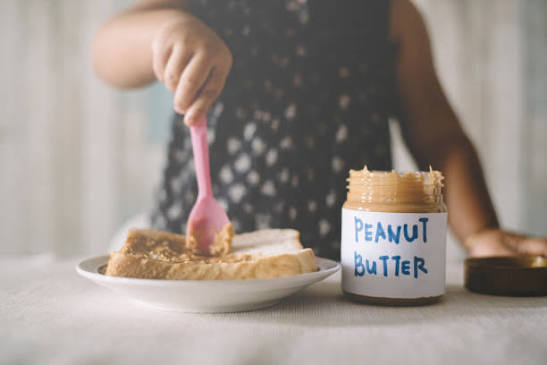
Quick Answer: To introduce peanut butter safely, start around 6 months of age by whisking 1/4 teaspoon of smooth, unsalted peanut butter with warm water, formula, or breast milk until completely thin and runny. Never serve thick peanut butter directly, as it poses a severe choking hazard. Offer a small taste early in the day when your baby is healthy, and observe them closely for 2 hours for signs of allergic reactions like hives, swelling, or vomiting. Once safely introduced, serve about 2 teaspoons of thinned peanut butter 2 to 3 times per week to maintain tolerance and help prevent a lifelong allergy.
When you introduce solids to kids, you may look for the safest option and pay attention to the options that come with allergies, like peanut butter. Learning how to introduce peanut butter to baby is one of the most vital milestones in the early nutritional development of a baby.
For years parents have been advised to delay introducing food items that have a risk of allergies until toddlerhood. According to the recent guidelines of global pediatricians, if you introduce peanut protein to a child early and on a regular basis, it will be the most effective way to prevent a lifelong allergy.
In this comprehensive guide we will cover the underlying immune science, clinical risk, preparation techniques according to age, precise maintenance schedules, and what safety protocols you need so the baby can start a solid journey independently.
The Immunological Science: Why Early Exposure Prevents Peanut Allergy
The change in infant feeding guidelines is based on an understanding of how the immune system of a child develops tolerance to foreign proteins.
The LEAP Trial Breakdown
In 2015, the landmark Learning Early About Peanut Allergy (LEAP) trial was published in the New England Journal of Medicine, changing forever the global pediatric nutrition guidelines. This trial includes hundreds of high-risk infants broken into 2 distinct groups: one is peanut-avoided until age 5, and the other is one where they are eating peanuts regularly starting between 4 and 11 months of age. The results were clear: infants who have it early have an 81% reduction in the development of peanut allergies by age five compared to the avoidance group.
Dual-Allergen Exposure Hypothesis
The immune system gut mucosa is made to understand if the ingested protein is safe, building oral tolerance. When peanut butter goes into the body from a broken skin barrier, like skin inflamed by moderate-to-severe infant eczema, the immune system considers the protein an attacker, which triggers sensitization.
Introducing peanut protein into the digestive tract in early days, the immune system recognizes the protein safely before skin exposure triggers an allergy.
Risk Assessment Matrix: When to Start (4 Months vs. 6 Months)
Every baby is different, so they don’t follow the exact same timelines. According to the National Institute of Allergy and Infectious Diseases (NIAID), there are three main risk categories so parents know and understand where or when they can introduce peanut protein to kids. The risk categories are as follows:
High Risk (Severe Eczema, Existing Egg Allergy, or Both): If your child is in this category, then introduce peanut protein as early as 4 to 6 months of age. Always consult your pediatric allergist before offering any peanut products. They may recommend some tests like serum IgE or skin prick or even an in-office oral food challenge.
Moderate Risk (Mild-to-Moderate Eczema): You can introduce peanut protein around 6 months of age. Introduce it at home once the infant shows developmental readiness for complementary foods.
Low Risk (No Eczema or Known Food Allergies): Introduce freely at 6 months of age with standard first foods. Always introduce it during the mealtime routine.
Critical Safety Protocols & Choking Hazard Guidelines
Peanut protein is extremely beneficial for immune health; however, it is in a whole shape or in concentrated states, which can lead to choking hazards in small kids.
SAFETY WARNING: Avoid giving them a whole peanut, peanut halves, or crushed peanut pieces if they are under 5 years old. Avoid offering a toddler unthinned peanut butter directly. Avoid peanut butter that contains honey if your baby is under 12 months because honey comes with an infant botulism risk.
Safe Home Introduction Checklist
Make sure the baby is feeling well; never introduce an allergen if the baby has a viral infection, fever, diarrhea, or an eczema flare-up. Give it to them the first time in a day after a morning nap, then observe for 2 hours.
Offer a drink of breast milk or formula first; don’t serve it directly. Don’t test the allergen by rubbing it on baby skin.
Product Comparison: Selecting the Safest Peanut Formats
Parents can choose from many commercial forms of peanut butter available on the market. Use this breakdown to compare safety, convenience, and cost.
| Format | Nutritional Highlights | Safety Considerations | Target Age |
|---|---|---|---|
| Thinned Smooth Peanut Butter | High in healthy monounsaturated fats, protein, and vitamin E. | Must be thoroughly whisked with warm liquids to remove stickiness. | 6+ Months |
| Defatted Peanut Flour / Powder | Concentrated protein source; easily mixes into purees and cereal. | Virtually fat-free; requires mixing into other nutrient-dense foods. | 4+ Months |
| Dissolvable Peanut Puffs (e.g., Bamba) | Convenient for self-feeding; builds fine motor skill confidence. | Check labels for added sodium; stale puffs become gummy and pose a hazard. | 6+ Months |
| Infant Allergen Mix-In Packets | Pre-measured, standardized daily allergen dosages. | Expensive compared to natural food alternatives; highly processed. | 4 to 6 Months |
Age-by-Age Preparation Techniques & Starter Recipes
It is important to understand how to introduce peanut butter in baby meal plans, but you also need to know what the perfect age is to do it and how to include it in baby food.
4 to 6 Months: Early Introduction Purees
If your infant is at any early stage where they are not masters at picking up finger foods, then you can give them peanut butter by adding it into 1 to 2 tbsp of warm milk or boiled water. Mix it with the help of a fork properly until it fully disappears in water. If the baby is used to solid food like rice or grain oatmeal, then add a spoonful of peanut flour in it.
| Age & Stage | Timeline Milestone | Feeding Goal | Weekly Protein Target |
|---|---|---|---|
| Day 1 | First Exposure | Offer 1 tiny taste (1/4 tsp diluted mix); observe closely for 2 hours | ~0.25 g |
| Days 3–7 | Gradual Increase | Offer 2 additional times, building up to a full 2 tsp diluted serving per meal | ~2 g total |
| Month 5 | Early Maintenance | Serve 2 times per week mixed into single-grain cereal or warm liquid purees | ~4 g total |
| Month 6 | Full Maintenance | Transition to 2–3 regular feedings per week to reach the target protocol | 6 g total / week |
6 to 9 Months: First Solids & Palmar Grasp
At this phase babies use their palms to grab soft items or get food from spoons. You can mash a ripe banana and make it smooth with the help of a fork, then stir half a teaspoon or even less in 1 tablespoon of water. You can also roll finger foods like avocado spears, ripe mango slices, or steamed pear wedges in some peanut flour. Offer peanut puffs; make sure the puff can easily dissolve when in contact with saliva.
| Age & Stage | Timeline Milestone | Feeding Goal | Weekly Protein Target |
|---|---|---|---|
| Month 6 (Week 1) | Texture Transition | Offer thinned peanut mash or coated fruit spears 2 times this week | ~2 g total |
| Month 6 (Weeks 2–4) | Puff & Mash Integration | Alternate between dissolvable puffs, fruit mashes, and coated finger foods | ~4 g to 6 g total |
| Months 7–8 | Established Maintenance | Maintain 2–3 regular feedings per week across varied finger-food formats | 6 g total / week |
| Month 9 | Pre-Pincer Transition | Serve thicker mashes and soft finger strips 3 times weekly to prep for pincer grasp | 6 g total / week |
9 to 12 Months: Developing Pincer Grasp
At this stage babies start using their index finger and thumb to pick small pieces. For this you can first toast a slice until it gets crispy, then spread a thin layer of peanut butter into the edges. Cut it into small pieces that a baby can easily grab. Another way is you can add 1 teaspoon of smooth peanut butter into a vegetable broth.
| Age & Stage | Timeline Milestone | Feeding Goal | Weekly Protein Target |
|---|---|---|---|
| Month 9 (Week 1) | Pincer Skill Intro | Offer thin toast strips or soft bite-sized cubes drizzled with peanut sauce 2 times this week | ~2 g to 4 g total |
| Month 9 (Weeks 2–4) | Self-Feeding Integration | Serve small bite-sized pieces for independent pincer-grasp feeding across 2–3 meals | 6 g total / week |
| Months 10–11 | Texture Progression | Expand to savory peanut-sauced veggies, toast squares, and soft baked goods 3 times weekly | 6 g total / week |
| Month 12 | Toddler Prep | Maintain 3 regular weekly exposures using varied bite-sized table foods to keep exposure consistent | 6 g total / week |
12 to 24 Months: Toddler Transition
At this stage babies transition from thin layers to thick layers of food, so you can give them creamy or smooth peanut butter on whole-wheat bread, pancakes, or waffle strips. Avoid giving them whole peanuts.
| Age & Stage | Timeline Milestone | Feeding Goal | Weekly Protein Target |
|---|---|---|---|
| Months 12–14 | Spread & Chunk Intro | Transition from thinned spreads to thin layers of creamy peanut butter on toast, pancakes, or soft waffle strips 2–3 times weekly | 6 g total / week |
| Months 15–18 | Chunky & Sandwich Intro | Introduce thin layers of chunky peanut butter or half-sandwiches cut into quarter squares; continue offering peanut-sauced noodles and baked goods | 6 g total / week |
| Months 19–23 | Advanced Texture Mastery | Serve standard peanut butter spreads, soft nut bars, and mixed-texture meals 3 times weekly to maintain routine diet exposure | 6 g total / week |
| Month 24+ | Whole Nut Practice | Maintain routine intake; begin carefully supervised split-peanut chewing practice only if toddler displays advanced chewing skills and can sit calmly | 6 g total / week |
The Maintenance Protocol: Dosage and Weekly Targets
If you introduce peanut, once it doesn’t provide permanent protection. Consistent and long-term exposure is important to maintain tolerance level in the immune system in whole childhood.
| Protocol Stage | Condition / Requirement | Next Action Step |
|---|---|---|
| Step 1: First Exposure | Successful test dose completed | Monitor baby closely for 2 hours post-feed |
| Step 2: Symptom Check | No allergic symptoms observed | Clear baby to transition to regular diet inclusion |
| Step 3: Maintenance Phase | Initiate Weekly Protocol | Target 6 grams of peanut protein / week total |
| Step 4: Routine Schedule | Divide into 2–3 exposures per week | Serve ~2g peanut protein per dose (~2 tsp PB) |
The Weekly Quantitative Goal
According to the clinical trials, you can give 6 grams of peanut protein per week, divided into 2 to 3 meals. To make a perfect dose with no food weighing you down, you can use the following conversions.
- Smooth Peanut Butter: 2 level teaspoons (~2g protein)
- Defatted Peanut Powder: 2 level teaspoons (~2 g protein)
- Dissolvable Peanut Puffs: 21 individual Bamba puffs
Identifying Allergic Reactions & Emergency Protocols
If you recognize the signs or an allergic response, you will be able to act calmly instead of getting hyper. The allergic reaction can last for some minutes to even 2 hours.
The Mild to Moderate Signs
Skin reactions like hives and small localized red welts near the mouth or face are even on the skin. Mild swelling around the face, eyelid, or cheeks. Sudden nose or eye rubbing, sneezing, and clear nasal discharge. Sudden vomiting or abdominal pain.
Action Plan: If you see any signs from above, then stop giving peanut items to the baby immediately and wipe the mouth and hand. Go to the doctor immediately.
Severe Reaction Signs (Anaphylaxis)
It includes noisy, labored breathing, persistent wheezing, stridor, or even a harsh, persistent cough. Other signs include swelling of the tongue, visible throat tightness, difficulty swallowing saliva, pale skin, bluish lips/nail beds, sudden limpness, extreme lethargy, and repeated, severe, and projectile vomiting.
Emergency Protocol: if you notice any signs from above, immediately go to the doctor.
Related Medical Concerns: Peanut Oil, FPIES, and Tree Nuts
When parents start giving allergens to children, they often have a question in mind: Is peanut oil safe for infants with peanut allergies? Well, highly refined peanut oil comes from high-heat chemical processing, which completely removes all allergenic proteins, so the refined peanut oil is considered safe and can be tolerated by even the individual who has peanut allergies.
However, cold-pressed, unrefined, and gourmet peanut oils still contain active proteins, which can trigger severe allergies.
Are peanuts classified as tree nuts?
No, they aren’t considered tree nut infants; they are botanically legumes that grow underground, while other items like walnuts, almonds, cashews, pecans, and pistachios grow on trees.
According to the research, 25% and 40% of individuals allergic to peanuts can also be allergic to any other nuts too.
What is Food Protein-Induced Enterocolitis Syndrome (FPIES)?
FPIES is an uncommon, non-IgE-mediated food allergy that can only affect the gastrointestinal tract. It is not like classic peanut allergies that cause skin reactions; however, FPIES triggers severe and continuous vomiting and watery diarrhea in 1 to 4 hours. This delayed reaction resulted in dehydration.
Comprehensive Troubleshooting & Parent FAQs
What if my baby refuses the texture of thinned peanut butter?
Mix peanut flour into purees that babies already love, like applesauce, mashed sweet potato, or warm cereal. You can also offer dissolvable peanut puffs, which will provide the same protein and flavors with an appealing, crisp texture.
Should I get an allergy test before starting peanuts at home?
If your family and baby don’t have any history of eczema or other food allergies, then you can introduce the allergens to them from time to time, not daily. You can also go for a test so you don’t feel stressed later.
What should I do if I miss a few weeks of maintenance?
If your baby is on peanut protein for the first time without any allergic reaction, then you can continue the maintenance schedule at their next meal. Give them a thin portion continuously 2 to 3 times in a week.
Summary Action Checklist for Parents
Mastering how to introduce peanut butter to baby diets comes down to following this simple action plan:
| Step | Action Item | Key Detail / Target | Check |
|---|---|---|---|
| 1 | Assess Risk Category | High Risk: Consult doctor at 4–6 months. Low/Mod Risk: Start at home around 6 months. |
[ ] |
| 2 | Select Safe Formats | Choose 100% smooth, unsalted, honey-free peanut butter or defatted peanut flour. | [ ] |
| 3 | Thin Thoroughly | Whisk peanut butter with warm breast milk, formula, or water until watery and smooth. | [ ] |
| 4 | First Test Exposure | Serve a 1/4 tsp test portion early in the morning when baby is completely healthy. | [ ] |
| 5 | Observe Closely | Watch baby closely for 2 hours post-feed for any mild or severe reaction signs. | [ ] |
| 6 | Build Maintenance Routine | Serve ~2g peanut protein 2–3 times weekly to reach the target of 6g total per week. | [ ] |
Medical Disclaimer
This content is for informational and educational purposes only and does not constitute medical advice. It is not intended to replace professional pediatric care, diagnosis, or treatment. Always consult your pediatrician or a board-certified allergist before introducing primary food allergens, especially if your infant has severe eczema or existing food allergies.
