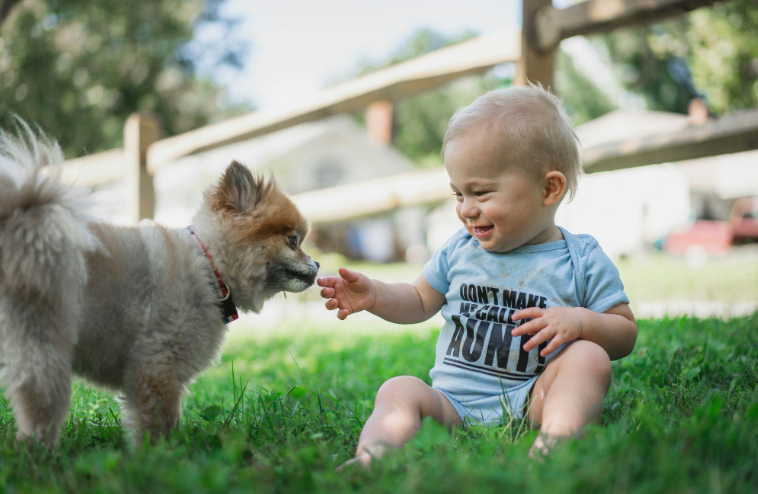
Bringing home a family dog can be exciting for children. They may imagine games in the backyard, walks around the neighborhood, and a new companion waiting for them after school. What they may not understand yet is that living with a dog also requires patience, boundaries, and responsibility.
Children do not need to become expert dog handlers before a pet arrives. They do, however, need a few clear rules about how dogs communicate and what responsible care looks like. Teaching those lessons early can make the transition easier for the child, the dog, and the rest of the household.
A Dog Is a Family Member, Not a New Toy
Young children can understandably approach a new dog with enormous enthusiasm. They want to hug, touch, follow, and play with the animal constantly. From the dog’s perspective, that level of attention can become overwhelming.
Before bringing a dog home, explain that animals need personal space and quiet time just as people do. Children should learn not to disturb a dog while it is sleeping and to respect situations when the animal moves away rather than following it.
This is also a good opportunity to explain that dogs have different physical abilities. Some run effortlessly, while others may be older, recovering from injuries, or living with mobility limitations. Walkin Pets provides dog wheelchairs designed to support animals with mobility challenges, offering a useful real-world example of why children should learn to interact with the dog they actually have rather than expecting every pet to move or play in exactly the same way.
Learn What “Leave Me Alone” Looks Like
Children often assume that a dog that is not barking or growling is happy with an interaction. Canine communication is considerably more subtle.
Dogs can show discomfort through changes in posture, attempts to move away, turning the head, avoiding interaction, or becoming unusually still. Children do not need to memorize every possible signal, but they can learn one valuable rule: if the dog is trying to leave, let it leave.
Adults should supervise interactions, particularly with younger children. The responsibility for interpreting the dog’s behavior cannot be placed entirely on a child.
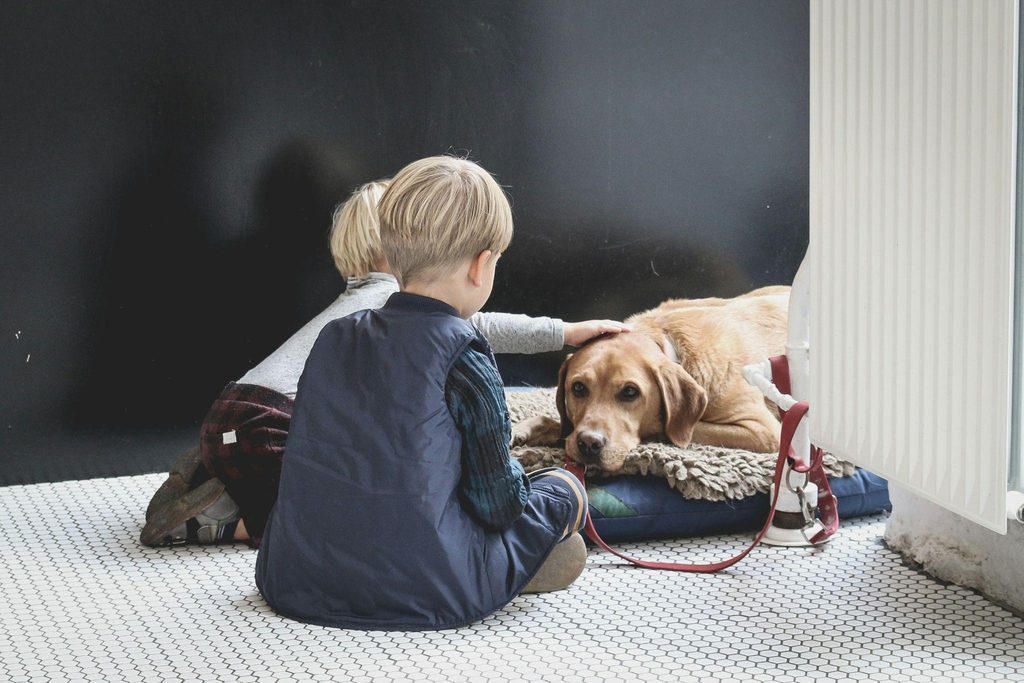
Creating a designated resting area also helps establish a physical boundary. When the dog goes there, children can learn that this is a place for uninterrupted rest.
Gentle Handling Has to Be Taught
Children are still learning how much force to use when interacting with the world around them. What feels like an enthusiastic hug to a child can feel restrictive to a dog.
Show children how to stroke the dog gently and which interactions should be avoided. Pulling ears or tails, climbing on the dog, grabbing fur, and trying to ride a large dog should be clearly off limits.
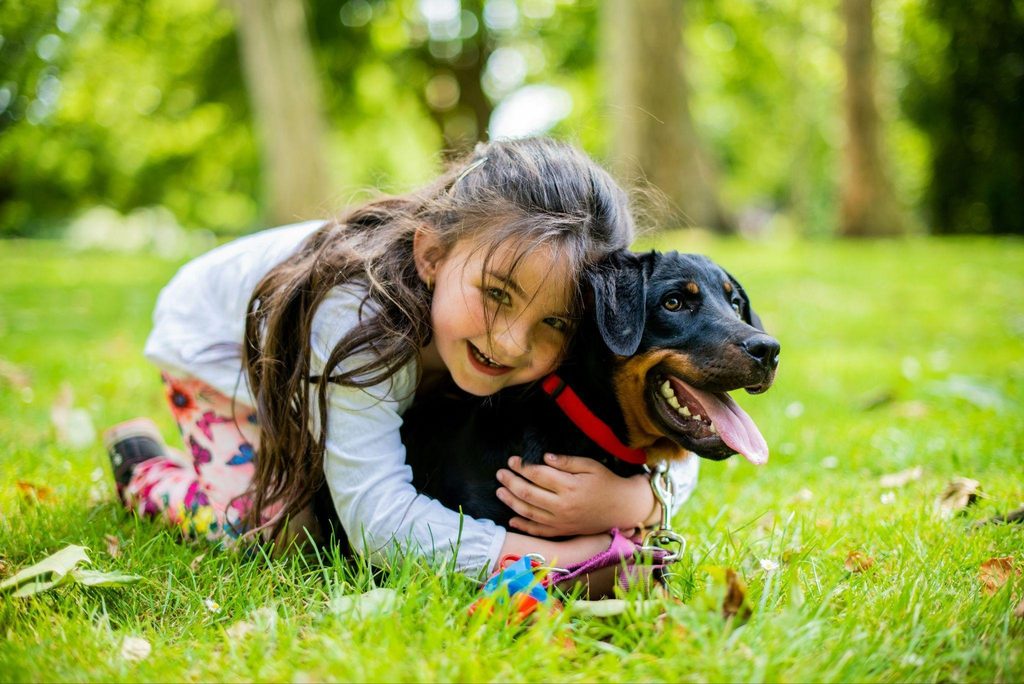
It is equally important to avoid forcing affection. Not every dog enjoys being hugged, and individual animals can have very different preferences about physical contact.
Children can develop a much better relationship with a pet when they learn to notice what the dog enjoys rather than assuming affection must happen in a particular way.
Responsibility Should Match the Child’s Age
Promises to “do everything” for the new dog are common before the pet arrives. In practice, adults remain responsible for ensuring the animal receives proper food, exercise, veterinary care, training, and supervision.
A younger child might help fill a water bowl with supervision or put toys back in their designated place. Older children may be able to assist with feeding, grooming, training, or walking depending on the dog’s size, temperament, and the child’s maturity.
Small, repeatable responsibilities are more valuable than assigning a child a complicated list that quickly becomes unrealistic. The objective is to build consistency and teach that animal care continues even when someone would rather be doing something else.
Food Requirements Gear Rules
Mealtimes can create confusion when children do not understand what dogs can and cannot eat.
Establish a simple household rule that children should not give the dog human food without asking an adult first. This prevents well-intentioned sharing from becoming a problem and makes it easier to keep the dog’s diet consistent.
Children should also understand that a dog eating its own meal should be given space. Food bowls should not become toys, and children should not repeatedly approach, touch, or tease an animal while it is eating.
These rules are easier to establish from the beginning than to introduce after problematic habits have already developed.
Walking the Dog Is More Than Holding a Leash
A family walk can look simple, but managing a dog outdoors requires attention and physical control.
Before allowing a child to take responsibility for the leash, adults should consider the dog’s size, strength, behavior, and reaction to other animals or distractions. A child who can comfortably walk a calm small dog may not be capable of controlling a large dog that suddenly pulls toward something interesting.
Children can initially participate alongside an adult, learning how walks work without being given responsibility they are not ready to handle.
They can also learn basic outdoor etiquette: keep the dog appropriately controlled, respect other people and animals, and clean up after the pet.
Training Works Better When Everyone Uses the Same Rules
Dogs can become confused when different family members expect different behavior. One person allows jumping on the sofa, another prohibits it, and a child secretly rewards begging at the dinner table.
Before the dog arrives, the family should agree on basic household rules.
Decide where the dog can go, what commands will be used, who handles feeding, and which behaviors will be encouraged. Children can participate in simple training sessions so they understand that good behavior is taught through consistency rather than punishment.
This gives children an active role while reinforcing an important lesson: caring for an animal involves communication and patience.
