
Quick Answer: No. Social media claims about whole cockroaches or intentional bug fillers in chocolate are false. However, because cocoa beans are dried outdoors, harmless, microscopic insect fragments can naturally end up in raw cocoa. Standard bars average ~8 invisible micro-particles—well below the FDA limit of 60 fragments per 100 grams.
When it comes to eating something that is sweet in nature and easily affordable, the first thing that comes to mind is chocolates. People of all ages, from child to elder, love chocolate and consume it on a daily basis. Chocolate has been a part of our life for centuries. Mostly people go for normal chocolate, while people who avoid sugar go for the dark one. Recently a hype is creating a buzz on social media about finding cockroaches in chocolate, which is quite shocking, but when it comes to food safety, everyone gets a little curious.
Many people love chocolate and have the question in mind: are there cockroach in chocolate? Or how these tiny insects get into the chocolate and how it affects the health of an individual, hygiene, and manufacturing standards. The claim isn’t so real as it seems because the presence of visible insects is very rare in chocolates; microscopic fragments are more common than most people realize. In this article we will go over the details starting from how cockroaches get into chocolate, what FDA have to say about it, whether there are any health concerns, and the process many manufacturers use, which can lead to cockroaches in chocolate, so you have all the information to decide if the claim is true or false.
A Brief History of Chocolate and Insect Contamination
Before moving forward to social media claims, let’s first look at the history of chocolate and insects to understand everything better. For centuries chocolate has been a part of everyone’s life; it has been produced for ages, back to ancient Mesoamerican civilizations.
However, most of the chocolate companies came into existence after the Industrial Revolution, when the farming of cacao took place and expanded globally. When the evolution of the chocolate industry takes place, the food safety experts start paying attention to how cacao crops are stored in open fields in tropical climates and in warehouses where insects live. By insects experts doesn’t mean the whole insect; they show concerns that during the making of chocolate, maybe tiny parts of insect shells, legs, or antennae ended up in it.
Although this wasn’t considered a safety concern, or any health issues occurred. It was a very common part of agricultural harvesting. In the modern world, where there are safety standards, advanced machinery, and modern processing systems, the risk of insects in chocolate is reduced; however, they cannot completely eliminate every insect part in chocolate, which appears occasionally due to the nature of crop-based foods.
What Are Insect Fragments in Chocolate?
The term “insect fragments” does not mean the whole insect but tiny microscopic pieces of insects that most humans can’t find with the human eyes. They may be exoskeleton particles, legs or wings, antennae, and small body segments.
These are just small parts, and it doesn’t mean or be related to cockroaches in chocolate in any sense. Instead, they are just trace remnants that accidentally enter the chocolate in its harvesting or making process. The FDA explicitly accounts for unavoidable agricultural defects in its Defect Levels Handbook, setting an allowable action threshold of up to an average of 60 insect fragments per 100 grams of chocolate before a product is considered adulterated. Why? They can’t remove microscopic insect parts by any chance physically, as it is impossible to do it without destroying the chocolate completely in the making process.
The presence of tiny insect fragments is generally not a concern and is safe for most people. However, individuals who are allergic to insects, particularly cockroaches, may experience health issues. This is because cockroaches share proteins with dust mites and shellfish.
Global Regulations and Studies on Insect Fragments in Chocolate?
According to a PubMed study analysis, unsweetened chocolate commonly contains tiny insect fragments, approx. 23 fragments per 100 grams, whereas some raw samples contain higher fragment counts; however, finding intact, whole insects inside factory-made chocolate bars is exceptionally rare due to fine-mesh filtering and heavy mechanical grinding.
According to another study of PubMed, modern DNA testing can find the insects in the chocolate easily by just detecting insect DNA like cockroach even when it is just a small part of it in chocolate or any other food. The research also confirms the presence of insect fragments in chocolate is completely harmless in nature.
According to a recent report by ABC News, some people who are allergic to chocolate actually get reacted to insect fragments too, like the cockroach parts, in chocolate. A popular allergist, Dr. Morton Teich, said, “These little pieces of insect fragments can cause allergic reactions, like hives, itching, cramps, and migraines in people who are allergic to insects.” According to allergist reports, an average commercial bar of chocolate typically contains roughly 8 insect fragments—well beneath the FDA’s regulatory limit of 60 fragments per 100 grams.
On the other hand, the EU food authority and safety don’t allow insect fragment contamination in any food items. Like edible insects, they can be used as ingredients and need to be written on the label and go through a thorough safety test. There is no blanket tolerance for random insect parts in chocolate under EU novel food regulation. If a chocolate company is using insect-based ingredients, it should come from an authorized insect species and have to be clearly mentioned in the label of the chocolate to save individuals from any side effects who are allergic to insects or insect-based food items.
According to a 2025 study by Taketoshi et al. published in Foods, they created a method by using Visible-Near-Infrared Single-Pixel Imaging (Vis‑NIR SPI) to detect insect particles in chocolate. The process includes 100 chocolate sample testing, mainly including small insect parts, and gets 99% accuracy, so don’t worry about the whole insect in chocolate, as it is very unrealistic; however, for insect parts, there are now methods available for it.
How Do Insect Fragments Get Into Chocolate? (Factors explained)
Even if a chocolate company has strict hygiene controls, there is a possibility of occasional contamination, as it is very natural. Most insect fragments, particularly those related to the rumor of cockroaches in chocolate, are added to the chocolate during the manufacturing process, before the chocolate is sent to the factory.
The cacao beans are removed from the tree and go to harvesting. During the harvest, the pods are broken open and the beans are fermented and even sun-dried. Perhaps bugs get in during this process and hide inside stored snacks. Most farmers try to control insects in the processing area, but this is not sufficient because there are always insects in the agricultural field. Some people believe that insects end up in chocolate due to circumstances that occur before the chocolate reaches the manufacturers.
Processing and Transport
After harvesting the cacao beans, they were then transported to the processing area. The ongoing transport of cacao beans takes place for a long period of time, and it moves from one warehouse to another, so the risk of insects in beans increases. Even when cacao beans are transported with fully sealed packs, the environmental dust, insect shells, and particles from storage areas still reach the cacao beans. This is a very natural practice, and we can’t consider it as a careless one because this is how transporting agriculture works worldwide. When the small parts of insects enter cacao beans, they remain there even if the beans get roasted, ground, and refined; however, they can be reduced through significant processing.
Factory Hygiene
Insects are also found in open or whole-space places like factories. Many food factories follow a strict rule to control process, sanitation schedules, and safety inspections. However, not a single industry in the world can claim there is no insect in the factory, especially in large global operation areas. Still, a whole cockroach in chocolate is not a real claim because the industries do invest in closed-system machinery, automated processing, continuous cleaning, air filtration systems, and quality assurance testing, so there is no chance of a whole insect in a piece of bar.
How Chocolate Manufacturers Minimize Contamination?
In order to control the insect particles in chocolate, many manufacturing companies follow strict rules, including strict hygiene and quality control. While small trace fragments may still be present in chocolate, they try hard to reduce them:
| Stage | Action & Technology Used | Purpose / Contamination Controlled |
|---|---|---|
| 1. Bean Pre-Sorting | Vibrating screens, blowers, and hand-sorting | Removes large agricultural debris, dirt, and whole insects before processing. |
| 2. Roasting | High thermal treatment (105°C–140°C) | Sterilizes beans and destroys pathogens (e.g., Salmonella) and bacteria. |
| 3. Winnowing | Air-suction classifiers and shell crackers | Blows away lightweight outer husks and insect shells, leaving clean inner cocoa nibs. |
| 4. Refining & Grinding | Heavy industrial roller mills and conching machines | Grinds remaining matter to under 30 microns (smaller than human tongue perception). |
| 5. Industrial Filtering | Rare-earth magnets, inline fine sieves, and X-ray systems | Captures trace metal bits, hard particles, and micro-debris before molding. |
| 6. Packaging | Automated flow-wrapping in sealed, temperature-controlled facilities | Prevents post-production pest infestation or humidity exposure. |
Ethical, Environmental, and Sustainability Considerations
Chocolate production and the issue of insects intersect with broader ethical and environmental issues:
Fair trade and sustainable, environmentally friendly programs are the source of cacao for many manufacturers. With proper handling, they reduce the risk of insect particles in chocolate.
Insect fragments are a part of the agricultural process naturally. But to remove them from chocolate, many pesticides or harsh processing are needed, which could harm the environment. Many manufacturers use low-level contamination; it is eco-friendly in nature.
Some manufacturers that use insect protein or cricket flour as a protein source in the chocolate mentioned it on the label too; they don’t hide or intentionally put insects like cockroaches in the chocolate.
Choosing ethically produced chocolate encourages sustainable farming, environmental protection, and safer manufacturing practices.
Health Implications: Are They Dangerous?
General Safety: Small particles of insects, including parts of cockroaches, are commonly found in chocolate because of the manufacturing, transport, and agricultural processes. According to the FDA, a certain number of insect fragments in a single bar of 100 grams is allowed, as this isn’t harmful or has any side effects on most of the individuals.
Allergies and Sensitivities: The insect particles in chocolate are considered completely safe according to many food authorities; however, if you are allergic to insect proteins or even cockroaches, dust mites, or shellfish, the allergies can trigger after consuming a chocolate that includes an insect particle. The most common symptoms include hives, itching, or digestive discomfort.
Long-Term Exposure: There is no scientific research, and evidence claims the long-term consumption of chocolate that contains any insect particle can cause severe health issues or even death. According to regulations, there is no harm in eating chocolate regularly; the harm of insect fragments is very little and even zero in healthy individuals.
Who Is More Likely to React to Insect Fragments?
If you are someone who already has allergies related to cockroaches or dust mites, then your body will react to insect fragments in chocolate. This is because your digestive system gets triggered by insect proteins even in a tiny amount. For example, if you are allergic to cockroaches and accidentally eat a chocolate bar that contains a tiny particle of cockroach, it will still trigger reactions in your body, like asthma or skin reactions, because trace fragments in chocolate could activate the immune response.
If you are someone who has a dust mite allergy, as dust mites are similar to the protein found in insects, then you will also face side effects after consuming chocolate that contains dust mites.
These mentioned reactions are very rare but mild in nature but many chocolate consumers never face such issues but if you have these types of allergies then always read the product labels carefully and consult with a doctor if you face any issue.
| Risk Level | Target Group | Primary Biological Trigger | Potential Symptoms & Immune Response |
|---|---|---|---|
| High | Individuals with diagnosed Cockroach or Dust Mite Allergies | Cross-reactive muscle proteins (Tropomyosin and Arginine Kinase) | Oral allergy syndrome, hives, skin itching, wheezing/asthma flare-ups, or stomach cramps. |
| Moderate | Patients with severe Shellfish / Invertebrate Allergies | Shared invertebrate pan-allergens across crustaceans and arachnids/insects | Mild to moderate allergic response (itching, localized skin redness, mild digestive discomfort). |
| Low | People with Eosinophilic Esophagitis (EoE) or severe gut sensitivities | Hypersensitive esophageal/gastrointestinal tract reacting to trace protein antigens | Localized digestive irritation or inflammation (extremely rare from microscopic amounts). |
| Zero | General Healthy Consumers | None (protein broken down by stomach acid and digestive enzymes) | Completely harmless; processed as standard dietary protein with zero health risk. |
Consumer Tips: How to Choose and Store Chocolate Safely
While the insect particles in chocolate are safe for many individuals, you can take extra steps to ensure the chocolate they eat is safe and high quality:
- Always buy chocolates from well-known and reputable brands, and make sure the packaging is completely sealed and undamaged. Keep it in a cool and dry place. Avoid placing chocolate in the kitchen area.
- Always check the expiry date of the chocolate, as some chocolate gets expired, and insects may take place in it.
- Avoid chocolates that look damaged from outside or have unusual particles.
- If you have a cockroach or dust-mite allergy, make sure to check the label before buying that chocolate. Avoid chocolate that doesn’t have ingredient details and allergen information.
Myths vs Reality: Debunking Viral Claims
The most trending topic on TikTok and other social media platforms claims that chocolate is filled with cockroaches and gets viral, but this is completely fake and wrong. Chocolate goes through many processes; it is impossible to find a whole cockroach in it. The health authority, like the FDA, allows a limited number of insect fragments in chocolate – obviously not the whole cockroach. This limit is completely based on research that insect particles aren’t harmful.
Many sites are promoting the false claim that whole cockroaches have been found in chocolate, which is entirely unrealistic given the multiple stages chocolate undergoes in production. However, there are…
Insect fragments can naturally occur in chocolate due to field contamination or the inherent processing of cocoa beans. These fragments are not intentionally added by any company.
Many people are searching for this question: are there cockroaches in chocolate? The answer is obviously no, while chocolate having trace insect fragments is common worldwide. There are some methods that show chocolate has small particles of insects, which is completely safe to consume. So finding a chocolate with a whole cockroach in it is a complete myth.
Medical Disclaimer: The information provided in this article is for educational and informational purposes only and is not intended as medical advice, diagnosis, or treatment. Always seek the advice of a qualified healthcare provider or allergist with any questions you may have regarding a medical condition or allergic reaction.
Insects in Chocolate: Myth vs. Scientific Fact
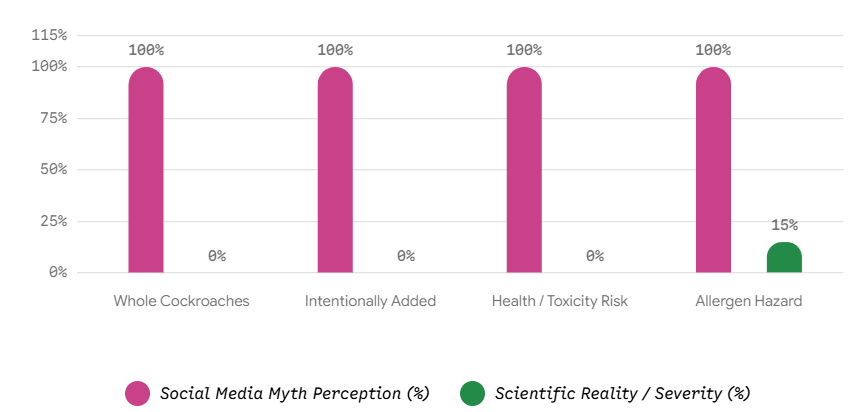
Frequently asked questions by people on cockroach in chocolate
Q1: Are cockroach parts actually in chocolate?
No, that’s not the whole truth; mostly fragments found in chocolate come from field insects instead of cockroaches.
Q2: Can eating chocolate with fragments make me sick?
No chocolate with fragments makes you sick if you aren’t allergic to insects.
Q3: Why doesn’t the FDA ban all fragments?
Complete elimination is agricultural and mechanically impossible without destroying the raw cacao beans. The FDA sets strict legal upper limits to ensure these harmless trace particles remain far below levels that could pose health risks.
Q4: Are organic chocolates free of fragments?
No, they aren’t free from fragments, but the organic methods reduce chemical exposure.
Q5: How many fragments are allowed in chocolate?
According to the FDA guideline, a small amount of fragments can be safe if found in 100 grams of bar.
Q6: Can children consume chocolate safely with fragments?
Yes, children can consume it safely, as fragments are microscopic and non-toxic.
Q7: Can insect fragments trigger allergies?
Yes, if you are allergic to insects, then eating an item that includes fragments does trigger allergies.
Q8: Are dark chocolates more prone to fragments?
Slightly higher prevalence in some studies, but still within safe limits.
Q9: How can I identify a high-quality chocolate brand?
Check for certifications like GMP, ISO, or Fair Trade, and manufacturer transparency.
Q10: What should I do if I see visible insect parts?
Instead of posting online, report to the manufacturer and local food safety authority as soon as you can.
Official Refrence and Sources
- FDA Food Defect Levels Handbook
- Official FDA directory detailing maximum allowable natural defects for chocolate and cocoa liquor.
- 21 CFR 110.110 – Natural or Unavoidable Defects in Food
- The Code of Federal Regulations establishing legal action levels for unavoidable agricultural impurities.
- FDA Compliance Policy Guide (CPG Sec. 515.700)
- Specific guidance document on regulatory enforcement regarding insect and rodent filth in chocolate.
- Codex Alimentarius Standard for Chocolate Products (CXS 87-1981)
- International Food Code standards maintained by the FAO and WHO covering hygiene and quality criteria for global cocoa production.
