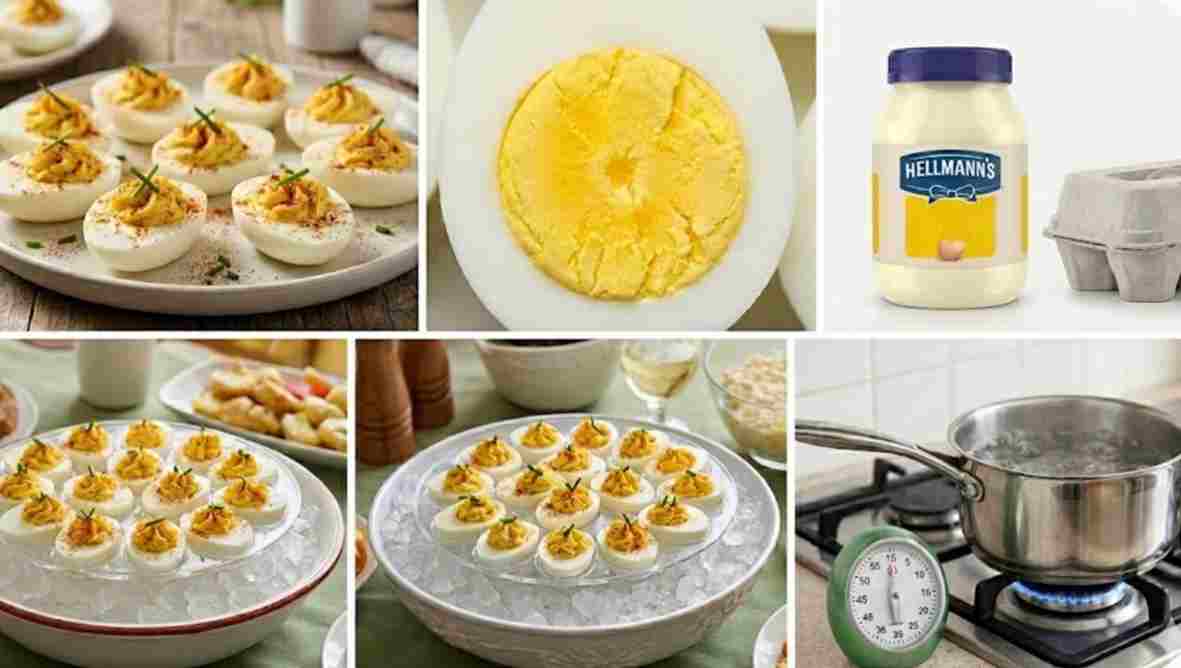
Short answer: Yes, you can eat deviled eggs while pregnant, provided the eggs are hard-boiled until both the yolks and whites are completely firm, and they are made with pasteurized mayonnaise. Store-bought mayo is safe, but avoid homemade versions made with raw eggs to protect against Salmonella.
Pregnancy is a beautiful journey that is full of excitement and anticipation. You may have many questions in mind, like what you eat and if that food is safe to consume. Suddenly, food takes a central place in your daily life.
If you are standing in front of a buffet at a holiday party, family picnic, or baby shower, staring down a platter of appetizers and thinking, “Can you eat deviled eggs while pregnant?” you are not alone.
This guide covers egg safety, ingredient dangers, how to spot safe options, and how to prepare this protein-packed snack at home.
Why Food Safety Matters More During Pregnancy
To understand why a small appetizer needs to follow a strict guideline, you need to understand how pregnancy impacts your natural defenses.
During pregnancy the immune system becomes fragile, which makes your digestive system more vulnerable to pathogens like bacteria, viruses, and parasites. When you come into contact with foodborne illness while pregnant, you may face two main issues.
Maternal Complications: Extreme vomiting and diarrhea can cause acute dehydration, electrolyte imbalances, and physical exhaustion. In rare cases it leads to high fever and stress that trigger premature labor and contractions.
Fetal Complications: When an aggressive bacterium crosses the protected placental barrier, even if a mother just has a normal flu, the baby’s immune system will catch it too, and it can’t fight, leading to severe developmental complications or loss of pregnancy. Because of these issues, you need to understand the food safety standards.
The Two Major Risks: Salmonella and Listeria
When we talk about the safety profile of deviled eggs, food safety experts and regulators such as the FDA (Food and Drug Administration) and the CDC (Centers for Disease Control and Prevention) focus on two dangerous bacteria that are Salmonella enteritidis and Listeria monocytogenes.
1. The Salmonella Threat (Undercooked Yolks)
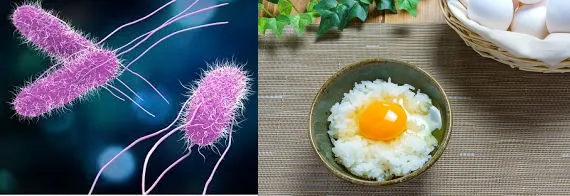
Salmonella is a bacteria commonly found in poultry products like raw or undercooked eggs. Unlike many other types of bacteria, they just live inside eggshells. Salmonella goes inside egg yolk even when the hen is completely fine. If you consume any kind of raw, runny, soft-boiled, or “jammy” egg yolks in pregnancy, there is a chance you are introducing salmonella to the body. Additionally, salmonella rarely crosses the placenta or infects babies directly.
However, it does have some indirect risks, like vomiting, diarrhea, and abdominal cramping, which lead to dehydration later and result in stimulating premature labor contractions in rare cases.
Salmonella can only be destroyed at high heat, so in order to be safe from this bacteria, you need to cook eggs completely.
2. The Listeria Threat (Temperature Abuse and Cross-Contamination)
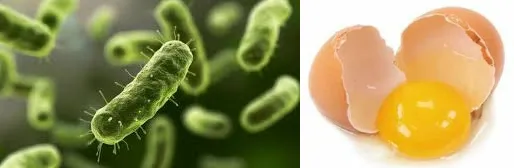
While Salmonella concern is just related to eggs, Listeria can take place in any food or environment, so it can also make the deviled eggs risky if not stored in a proper way. Listeria monocytogenes is a hardy bacterium found in soil, water, and some animals.
Listeria can easily grow in any environment and multiply too, especially at cold temperatures, even if a food item is stored in a refrigerator that works properly. It easily stays on food that is eaten cold, pre-prepared, or left out at room temperature for many hours.
Listeria infection is extremely dangerous for pregnant women, as they are 10 times more vulnerable to listeria compared to a normal person. Listeria can easily cross the placenta, which makes the situation worse, and a pregnant woman faces complications like miscarriage, stillbirth, premature delivery, or life-threatening infections in the newborn baby, such as meningitis or sepsis.
To kill listeria, you have to heat the food item at a very high temperature until steaming hot. Avoid food items that are left outside and uncovered for hours, like on buffet lines.
Deconstructing the Ingredients: What is Safe?
Well, a standard recipe for deviled eggs is based on hard-boiled egg yolks mixed with other ingredients like mayonnaise, mustard, relish, and various seasonings. To understand, can you eat deviled eggs while pregnant? Safely, we must look at all ingredients carefully.
| Ingredient Component | Preparation Requirement | Safety Purpose |
|---|---|---|
| The Egg Yolk | Must be fully solid and chalky (boiled for 10–12 minutes). | Pathogen Control: Eliminates Salmonella by ensuring the core reaches 160°F (71°C). |
| The Mayonnaise | Must be made from commercial, pasteurized eggs. | Contamination Prevention: Avoids the high Salmonella risk associated with raw, unpasteurized scratch-made yolks. |
The Eggs: Finding the Solid Line
The foundation of the dish is completely based on hard-boiled eggs. If eggs still have a liquid, creamy, or glossy yolk, this indicates they have not been cooked to a temperature of 160°F (71°C), which is crucial for killing bacteria.
The yolks that are completely pale yellow, dry, and crumbly or chalky in texture are safe to eat during pregnancy; on the other hand, soft-boiled eggs, poached eggs, soft-scrambled eggs, or any egg where the liquid yolk is unsafe during pregnancy.
The Mayonnaise: The Pasteurization Pivot
The main ingredient used in this dish is mayonnaise, and the possible danger takes place in pregnancy. The traditional mayonnaise is made from an emulsion of oil, vinegar, and raw egg yolks.
The commercial mayonnaises found at grocery marts and stores are completely safe to consume because they are made from pasteurized liquid eggs. Pasteurization is a process of heating the eggs to a precise temperature for a specific period to kill all harmful bacteria. This process makes the products completely safe to consume in pregnancy.
On the other hand, homemade mayo that is found at restaurants or buffets is totally unsafe, as it includes raw, unpasteurized farm-fresh eggs, which leads to a risk of Salmonella in pregnancy.
Add-ins and Garnishes
Other ingredients like mustard and vinegar are completely safe to consume, as they are acidic in nature, which makes it difficult for bacteria to stay.
- Relish and pickles are completely safe, as they are sourced commercially in pasteurized jars.
- Paprika and dried herbs are also safe because they come from storage containers that are clean.
The Safe vs. Unsafe Environmental Checklist
What you choose to eat in pregnancy is also a matter of how the food is cooked. Since deviled eggs are completely safe in pregnancy, the temperature does play an important role when we talk about bacteria.
According to the USDA, the danger zone has the temperature range between 40°F and 140°F (4°C and 60°C). In this environment, bacteria don’t kill; instead, they double in numbers even in 20 minutes.
| Scenario / Location | Safety Status | Rationale & Actionable Advice |
|---|---|---|
| Freshly Made at Home | Strictly Safe | You have complete control over the boiling time, the cleanliness of your counters, and the source of your commercial mayonnaise. Eat immediately or refrigerate right away. |
| Commercial Pre-Packaged | Generally Safe | Factory-sealed containers found in the refrigerated aisle of major supermarkets use pasteurized ingredients and strict temperature logs. Check expiration dates carefully. |
| Open Deli Counter Display | High Risk / Avoid | Even if prepared safely, open display cases are prone to cross-contamination from shared utensils, varying temperatures, and long exposure to air. |
| Backyard Picnics & BBQs | High Risk / Avoid | Outdoor environments offer no temperature control. If a platter sits out in the sun or heat for more than an hour, bacteria can multiply exponentially. |
| Sit-Down Restaurants | Proceed With Caution | Before ordering, ask your server directly: “Is your mayonnaise store-bought/pasteurized, or do you make it fresh in-house using raw eggs?” If they are unsure, order a different appetizer. |
Step-by-Step Guide: How to Make Pregnancy-Safe Deviled Eggs
If you crave this classic snack, the best and safest way is to make it at home. Follow this recipe and sanitation protocol to guarantee a zero-risk, nutrient-dense treat.
Step 1: Procurement and Inspection
First go to the grocery store and purchase a carton of fresh, grade-A eggs from the refrigerator. Before buying, look at all the eggs to ensure that they aren’t cracked or leaking and that there is no dirt on the shells. Because of these eggs, bacteria can easily take place.
Step 2: The Perfect Hard-Boil Technique
To remove the risk of egg bacteria like Salmonella, you need to go for the boiling method that guarantees a fully set core.
Take a pan, add eggs to it, and fill the pan with water, then cover the tops of the eggs by at least one inch. Place the pan over high heat and let the water boil. Once you see it boil, turn off the burner and let the eggs remain in it for 12 minutes.
On the other hand, take a bowl and fill it with cold water or ice cubes, and transfer the eggs into this bowl. Leave them submerged for 10 minutes. This temperature change stops the cooking process instantly and shrinks the eggs slightly inside the shell, making them significantly easier to peel.
Step 3: Sanitary Peeling and Mixing
Before touching the eggs, wash your hands completely with warm water and soap for just 20 seconds or even a minute. Also make sure the utensils like your cutting board, knife, and mixing bowls are completely washed.
Take out the eggs from the cold and crack them on the cutting board, peel the shell, and wash the eggs again in warm water.
Slice the eggs accordingly with the help of a clean knife. Carefully take out yolks in a separate bowl and mash them with the help of a fork until they turn into a fine, uniform, crumbly powder. Look at the yolks carefully; there should be no dark, wet, or shiny areas.
Add commercially pasteurized mayonnaise with a little amount of yellow or Dijon mustard, a splash of pickle juice or apple cider vinegar, and a pinch of salt. Whisk until a smooth texture appears.
Step 4: Storing and Serving
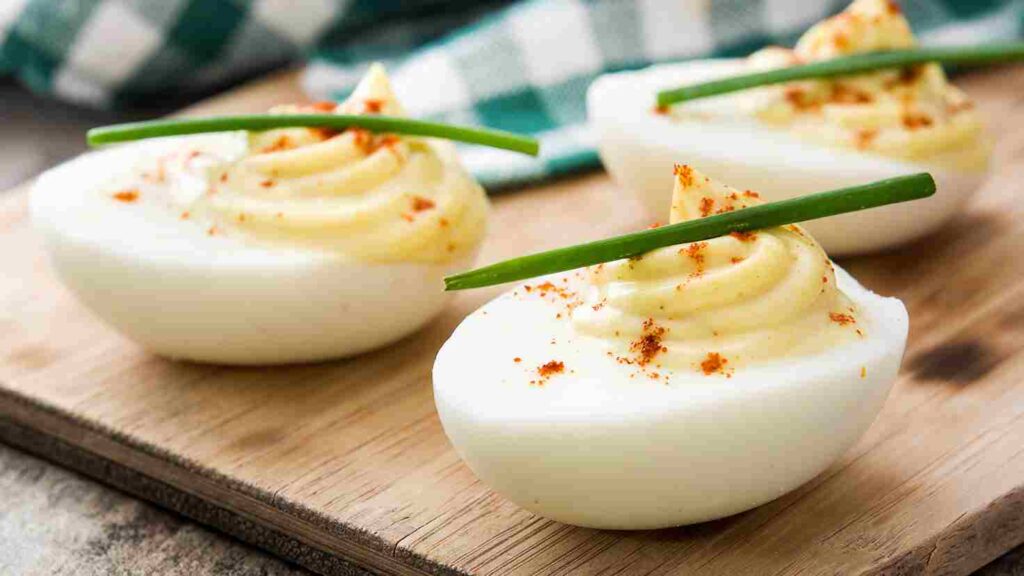
Lastly, spoon or pipe the smooth yolk mixture back into the firm egg white halves and sprinkle some paprika over the top for garnish.
If you’re not consuming eggs immediately, then make sure to put them in a plastic container and place them in the coldest part of your refrigerator, not at the door. You can easily eat them in 3 to 4 days.
The Nutritional Powerhouse: Why Eggs Matter in Pregnancy
It is best to focus on food safety rules while pregnant; however, if you already have existing allergies, then it is better to consult a healthcare provider first. Eating eggs offers a massive array of developmental benefits for your baby.
| Nutrient | Fetal Development Mechanism | Maternal Health Benefit | Culinary & Safety Takeaway |
|---|---|---|---|
| Choline(~150mg per large egg) | Neural Tube Closure: Essential for early spinal cord development. | Placental Function: Enhances nutrient transfer across the placenta. | Don’t skip the yolk! 100% of an egg’s choline resides in the yolk. White-only omelets lose this benefit entirely. |
| Vitamin B12(Cobalamin) | Myelination: Builds the protective sheath around fetal nerve fibers. | Anemia Prevention: Works with folate to produce healthy red blood cells. | B12 is heat-stable during normal boiling or frying. Hard-boiling for 10–12 minutes preserves this nutrient perfectly. |
| Vitamin D(The Sunshine Vitamin) | Skeletal Mineralization: Directs calcium and phosphorus absorption to form the fetal skeleton. | Bone Density Protection: Prevents the fetus from leaching calcium from the mother’s bones. | Eggs are one of the few natural food sources of vitamin D. Opt for pasture-raised or UV-enriched eggs, which can have 3x to 4x higher levels. |
| Iron(Heme & Non-Heme) | Oxygenation: Critical for building the fetal blood supply and supporting organs. | Volume Expansion: Supports the mother’s 50% increase in blood volume during pregnancy. | Pair hard-boiled eggs with vitamin C-rich foods (like sliced bell peppers or a squeeze of lemon on spinach) to drastically boost iron absorption. |
| Lutein & Zeaxanthin(Carotenoids) | Ocular Development: Accumulates in the fetal retina to build a healthy macula and visual acuity. | Maternal Eye Health: Protects maternal retinas from oxidative stress and strain during pregnancy. | These antioxidants are highly bioavailable in eggs because they are packaged alongside the healthy fats in the yolk, making them incredibly easy for the body to absorb. |
| High-Quality Protein(6.5g per egg) | Tissue Construction: The literal building blocks for every single cell, muscle tissue, and organ the fetus grows. | Satiety & Blood Sugar: Slow-burning protein prevents dangerous blood sugar spikes and crashes. | To eliminate foodborne illness risk, cook eggs until both the white and the yolk are entirely firm (160°F or 71°C). |
What to Do If You Accidentally Ate an Unsafe Deviled Egg?
First, don’t panic, as such mistakes happen. If you recently attended and ate a deviled egg and realized it when you came home, then do the following things.
Monitor Your Body Close Range
If your body interacts with salmonella, then you will notice symptoms like vomiting in just 6 to 72 hours. However, if your body interacts with listeria, you won’t know this in hours; it may take weeks or even months. Keep a close eye out for any of the following warning signs: nausea, persistent vomiting, severe abdominal cramping, watery or bloody diarrhea, sudden fever (even a low-grade fever above 100.4°F / 38°C), chills, muscle aches, persistent fatigue, stiff neck, confusion, or a loss of balance.
Contact Your OB-GYN or Midwife
If you take my opinion, don’t wait for symptoms to occur; instead, go to the prenatal healthcare provider. It explains when and where you eat unsafe dishes.
Your provider will keep a record of this, and if your body shows any signs of infections, they will immediately take a blood test to find bacteria.
If a Listeria infection is detected early, doctors usually give a course of pregnancy-safe intravenous antibiotics to clear the infection from the system and stop it from bypassing the placental barrier to reach your baby.
Smart Party Alternatives for Pregnant Guests
If you’re already pregnant and invite other pregnant guests for a party or gathering, then the best thing you can do is give them safe food so they won’t worry about any bacteria. Here are some safer party alternatives. Hot, Freshly Grilled Foods: Hamburgers, sliders, or chicken skewers made at a hot grill are safe because a high temperature destroys bacteria instantly.
Hard Cheeses: Avoid soft cheeses like Brie, Feta, and Blue Cheese, as they carry Listeria risks. Go for hard cheeses like cheddar, Swiss, Gouda, and Parmesan, as they are completely safe from bacteria.
Baked Appetizers: Go for spinach artichoke dip served bubbling hot from the oven, baked soft pretzels, and cooked bruschetta toppings that offer delicious flavors with zero raw-ingredient risks.
Fresh Fruit Platters (Thoroughly Washed): Wash the melons, berries, and grapes and cut them equally. This snack is also safe in pregnancy. Avoid pre-cutting of fruits, as there will be a risk of bacteria.
Also Read: Can You Eat Eggs Benedict While Pregnant? Safety Guide & How to Order
The Alternative Mayo Safety Guide (Vegan, Avocado, and Kewpie)
Modern grocery shelves are full of mayonnaise alternatives, and it makes pregnant women curious if it is a safe choice.
- If you find vegan mayo, e.g., Just Mayo or Vegenaise, at the store, then you can buy it, as the making process doesn’t include any eggs, so the risk of salmonella is removed.
- If you find avocado oil mayo (e.g., Primal Kitchen at the grocery store), then it’s also completely safe because it is made from pasteurized egg yolks.
- If you find Japanese Kewpie Mayo at a grocery store, it uses only pasteurized egg yolks (no whites) for a richer texture, so it is safe in pregnancy.
Specific Product & Brand Safety Check
When people are curious about safety, they usually search for brands that are 100% safe. Here is a quick-reference list as follows:
- Safe Retail Brands (Pasteurized): Hellmann’s/Best Foods, Duke’s, Kraft, Sir Kensington’s, and Trader Joe’s organic mayo jars.
- Safe Restaurant Chains: Subway, Jimmy John’s, and major fast-food chains are completely safe, as they use commercial, shelf-stable, pasteurized mayonnaise packs for safety and shelf life.
- What to Ask Local Bistros: Ask, “Is your aioli or mayonnaise made fresh in-house with raw eggs, or is it commercially prepared?”
Medical Disclaimer: The information provided in this article is for educational and informational purposes only and should not be construed as professional medical advice, diagnosis, or treatment.
Frequently Asked Questions (FAQs)
1. Can I eat deviled eggs made with Miracle Whip while pregnant?
Yes, Miracle Whip is entirely safe to eat during pregnancy. Because it is manufactured commercially and not a traditional raw-egg mayonnaise. It is also made from pasteurized liquid eggs and heated ingredients, meaning there is no risk of Salmonella or Listeria.
2. Is store-bought deviled egg potato salad safe during pregnancy?
Well, it completely depends on how it’s packed and stored. If the potato salad is sealed and found at a grocery store, then it is completely safe; however, if you find it at an open deli counter display case, then avoid it.
3. Can I use pasteurized carton eggs to make homemade mayo for deviled eggs?
Yes, always go for liquid carton eggs that are explicitly labeled as pasteurized, as they are completely safe in pregnancy.
4. What happens if I eat a deviled egg with a slightly soft yolk while pregnant?
If the egg yolk is soft or liquid, it means there is still a risk of Salmonella exposure. If you consume it, then keep calm, drink plenty of water immediately, and look for symptoms for the next 72 hours. If you experience vomiting, diarrhea, severe stomach cramps, or a fever, contact your OB-GYN right away to prevent dehydration.
5. How long can deviled eggs safely stay in the fridge during pregnancy?
Homemade, pregnancy-safe deviled eggs need to be stored in an airtight container in the top place of the refrigerator at a temperature at or below 40°F/4°C, and you can eat them safely in 3 to 4 days. Do not eat leftovers after this time limit, as Listeria bacteria can slowly grow and multiply even in a cold, refrigerated environment.
6. Can you eat restaurant-made deviled eggs while pregnant?
When you are ordering deviled eggs at the restaurant or at any brunch spot, make sure to ask, “Is your mayonnaise or filling base made fresh in-house using raw eggs, or do you use a commercially prepared brand?” If they said it was made with raw eggs, avoid eating the dish.
7. Is commercial Kewpie mayo safe for making deviled eggs during pregnancy?
Yes, commercial Kewpie mayonnaise bought at standard grocery stores is safe.
8. Are vegan deviled eggs a safer option for pregnant women?
Yes, vegan deviled eggs are exceptionally safe regarding Salmonella risks. Because vegan versions use plant-based alternatives like chickpeas, potatoes, or tofu and egg-free mayonnaise, there is zero risk of egg-borne Salmonella.
9. Why does the 2-hour rule matter so much for deviled eggs?
The USDA said the “Danger Zone” temperatures lie between 40°F and 140°F, where foodborne bacteria like listeria can double in every 20 minutes. Since deviled eggs are already a cold appetizer, keeping them outside for more than 2 hours can trigger food poisoning as the bacteria take place.
10. Does adding vinegar or mustard to deviled eggs kill bacteria?
No, the acid in vinegar and mustard is not strong enough to make undercooked eggs safe. You can only consider them as safe ingredients, not something that makes eggs safe.
Official Food Authority References
- U.S. Food and Drug Administration (FDA) – Egg Safety Guidelines
- Source to link/cite: FDA What You Need to Know About Egg Safety
- Centers for Disease Control and Prevention (CDC) – Pregnancy Food Safety Matrix
- Source to link/cite: CDC Safer Food Choices for Pregnant Women
- USDA Food Safety and Inspection Service (FSIS) – The 2-Hour Danger Zone Rule
- Source to link/cite: USDA FSIS Shell Eggs from Farm to Table
