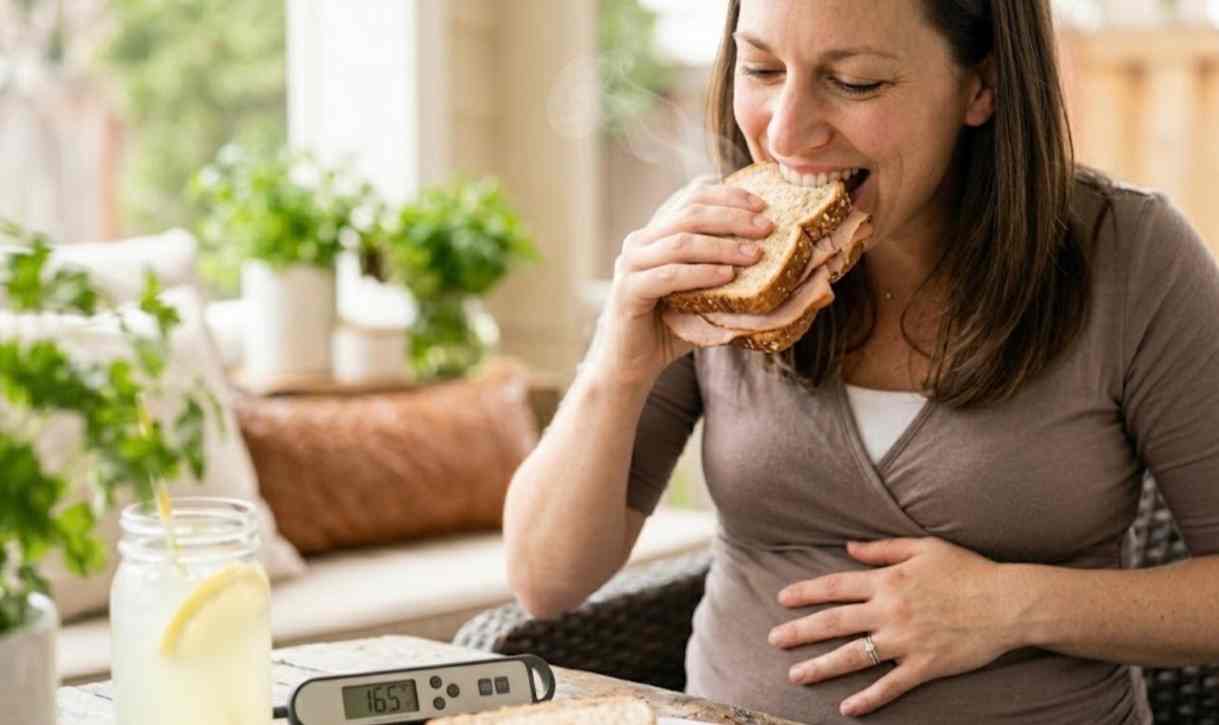
Quick answer: No, you should not eat cold deli meat or lunch cuts while pregnant due to the risk of Listeria monocytogenes contamination. However, deli meat is entirely safe to eat if it is heated to an internal temperature of 165°F (74°C) or until it is steaming hot immediately before serving to kill any live bacteria.
Pregnancy comes with happiness yet stress about what to eat or what to avoid. If you’re craving a classic turkey sub or stacked ham sandwich, you might be wondering the following: Can you eat deli meat while pregnant? Well, the answer is definitely no; you should never think to eat standard, cold deli meat straight out of the fridge.
While many women out there love to eat the quick deli counter sandwich, especially at lunchtime, pregnancy changes the rules. Cold meat items do have bacteria called “listeria,” which makes serious risks and complications in pregnancy. But that doesn’t mean you need to completely cut the deli items out of your life for the next nine months.
In this guide, we will explain why cold deli meats are off-limits, why listeria is so dangerous, and what cooking methods you can use to safely satisfy your sandwich cravings.
Why Cold Deli Meat is a Specific Pregnancy Risk
When you become pregnant, the body goes through a massive hormonal shift that suppresses the immune system.
This is a very natural process that helps in preventing your body from rejecting your growing baby; however, there are also some side effects. Your body becomes more vulnerable to foodborne illnesses. Normal cases of food poisoning include temporary stomach aches, but in pregnancy certain foodborne pathogens can be devastating. When we talk about cold meats, the primary concern is a bacterium called Listeria monocytogenes.
The Listeria Factor: A Unique Threat
Listeria is not an average food bacteria like Salmonella or E. coli, which only make you sick and just stay in the digestive tract. However, listeria works differently.
Other bacteria stop growing when you properly refrigerate the food item; however, Listeria has the ability to still grow and multiply in cold temperatures like 34°F to 40°F.
If you eat a food item that contains listeria in pregnancy, then this bacteria can cross the intestinal wall into the bloodstream, and then it can go directly from the placenta to the baby even when you as the mother have no symptoms.
According to the data from the Centres for Disease Control and Prevention (CDC), a pregnant woman is 10 times more likely to get a Listeria infection than a normal person.
How Listeria Risks Shift by Trimester
The First Trimester: Organogenesis & Early Pregnancy Loss
During the first 12 weeks the baby is undergoing organogenesis, which is a major period where all major organs and body structures form.
If listeria crosses the placenta barrier in this sensitive stage, it disrupts the early development of the baby’s organs and body by cutting the blood supply to the fetus.
In the first trimester, if the listeria infection becomes severe, there is a chance of miscarriage or early pregnancy loss. Many people think the symptom, like fatigue or morning sickness, is because of the first trimester, not listeria, as you can’t detect listeria without a blood test.
The Second Trimester: Placental Vulnerability
When you enter into the second trimester (weeks 13 to 26), the placenta is fully formed and works as the baby’s life support system.
Listeria can easily attach to and infect the placenta itself (causing chorioamnionitis), leading to a weakened amniotic sac, resulting in premature rupture of membranes (PROM) or late-stage miscarriage.
The Third Trimester: Preterm Labour & Neonatal Infection
When you enter the third trimester (week 27 until delivery), the risk of listeria is very high. Since the baby is born completely at this stage, the baby has good chances of surviving the infection. The existence of listeria triggers acute preterm labor or stillbirth. If a baby is born while listeria is still in the mother’s body, then the baby likely has neonatal listeriosis, a severe systemic infection that requires immediate care in the Neonatal Intensive Care Unit (NICU) for sepsis or meningitis.
How Do Deli Meats Become Contaminated?
People have a common misconception that listeria is found in turkey, ham, or roast beef. The contamination rarely happens in the initial cooking at the processing plant. Instead, it occurs after cooking but before packaging.
Listeria can easily grow in cool environments too. Listeria can be found in industrial deli slicers, countertops, conveyor belts, unhygienic knives, and local grocery delis.
If a properly cooked turkey is handled by unwashed utensils, then the bacteria can easily go into the turkey and even multiply if you refrigerate the food.
The Potential Consequences
While interaction with listeria is rare, if it goes inside a pregnant woman, there are several complications like miscarriage, premature delivery, stillbirth, and severe newborn infections. At first the symptoms can be very normal, like flu fever, muscle aches, fatigue, or a mild headache. People usually can’t detect it is happening because of listeria; pregnant women have to go for a medical test to diagnose it.
| Risk Element | Why It Matters During Pregnancy |
|---|---|
| Pathogen Type | Listeria monocytogenes (capable of crossing the placental barrier). |
| Growth Environment | Thrives and multiplies at standard refrigeration temperatures (under 40°F). |
| Contamination Point | Cross-contamination from deli slicers and preparation surfaces after the meat is cooked. |
| Maternal Symptoms | Often completely silent or identical to a mild, passing flu. |
| Fetal Impact | High risk of miscarriage, stillbirth, preterm labor, or severe newborn illness. |
How Do Doctors Detect Listeria During Pregnancy?
If you are worried that you ate something with listeria and are dealing with sudden flu-like symptoms after eating a cold deli meat item, then your healthcare provider will ask you to do a basic test to check if there is listeria or not.
1. The Gold Standard: The Blood Culture Test
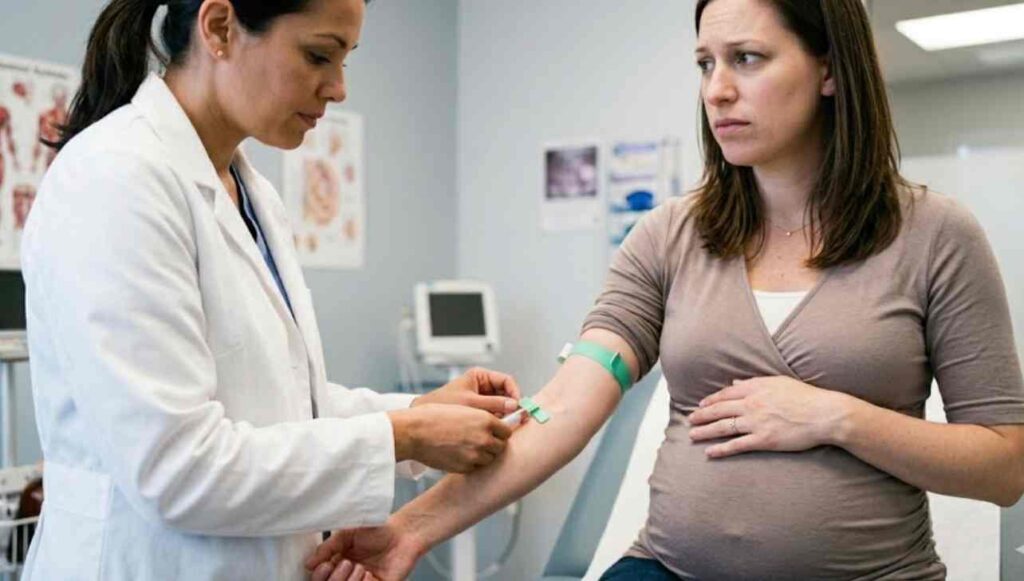
Listeria won’t be detected by doing a stool or urine test. It is a unique bacterium that directly goes from the digestive tract into the bloodstream; the doctor goes for a blood culture test.
They take a few drops of blood from your arms and send it to the microbiology laboratory directly. The laboratory put your blood test into culture bottles designed to mimic the human body’s conditions. If the listeria is present in your blood, then it will surely multiply in 24 to 48 hours, which triggers a positive lab alert.
This blood test will give confirmation to your OB-GYN so they can give immediate high-dose, pregnancy-safe intravenous (IV) antibiotics to protect your placenta.
2. Secondary Context-Specific Testing
If you have severe physical symptoms, the doctor would go for secondary diagnostic steps:
If your blood test comes back positive, the doctor will do another test called amniocentesis. They will just use a thin, ultrasound-guided needle to safely test a small sample of your amniotic fluid. This fluid will tell if the infection crosses the placental barrier or not, so they will do treatment according to it.
In rare cases when a mother experiences severe neurological signs, such as a stiff neck, balance issues, or severe confusion, the doctor goes for a spinal fluid test to completely rule out Listeria-induced meningitis.
To check more how Listeria reacts in the body, doctors track the overall white blood cell levels to see how the immune system is actively fighting an infection.
What Happens If a Pregnancy Listeria Test is Positive?
Getting to know that the test comes back positive can be stressful; however, don’t panic. The proper clinical roadmap can replace panic with a clear plan of action. Listeria is a bacterial infection, and it responds well to targeted medical intervention if diagnosed early.
1. The Immediate First Line of Treatment: High-Dose Antibiotics
When the test comes back positive, the medical team will give immediate antibiotic therapy. They won’t give pregnant women oral pills because listeria infection requires an aggressive approach to protect the placenta.
Treatment begins in a hospital setting with IV antibiotics. This will make sure the medication is reaching the bloodstream where listeria stays and stop it from crossing the placental barrier.
The doctor also gives high doses of ampicillin or penicillin G. These antibiotics help to kill listeria and are completely safe to use in all stages of pregnancy.
If a mother is sensitive to these antibiotics, then the doctor will give the combination of trimethoprim-sulfamethoxazole (TMP-SMX) or erythromycin. TMP-SMX needs to be avoided in the first trimester due to folate antagonism but is a primary alternative later in pregnancy for penicillin-allergic patients.
2. Continuous Fetal Monitoring
When the listeria infection is getting treated, an OB-GYN or maternal-fetal medicine (MFM) specialist will monitor the baby’s health carefully. They use high-resolution ultrasounds to monitor fetal movement and overall health. Doctors also use heart-rate monitoring belts to measure the baby’s heart rate.
The Safety Standard: The Steaming Hot Rule
If you are pregnant and craving a deli meat sandwich, then the only main thing that can make it safe is the steaming hot temperature. If you heat the food item properly, you don’t have to skip the dish totally for nine months in pregnancy. Simply change the temperature and follow the steaming-hot temperature rule recommended by the FDA, CDC, and USDA. The rule turns the high-risk food choice in pregnancy into a completely pregnancy-friendly one.
The Science Behind 165°F
The reason why cold cuts aren’t safe in pregnancy is not because they’re meat but because of the presence of Listeria monocytogenes, a resilient bacterium that can survive and multiply easily at room temperature or even in the refrigerator. This bacteria is found at deli slicers. However, Listeria can’t survive at a very high heat.
To make meat completely safe in pregnancy, which might have listeria in it, you need to heat the deli meat to an internal temperature of 165°F. At this recommended temperature the bacteria are destroyed completely in seconds, and the meat is safe to eat during pregnancy.
What Steaming Hot Actually Means (And What It Doesn’t)
To stay safe in pregnancy while fulfilling the craving, you need to understand the difference between warming food up and properly sanitizing it with heat.
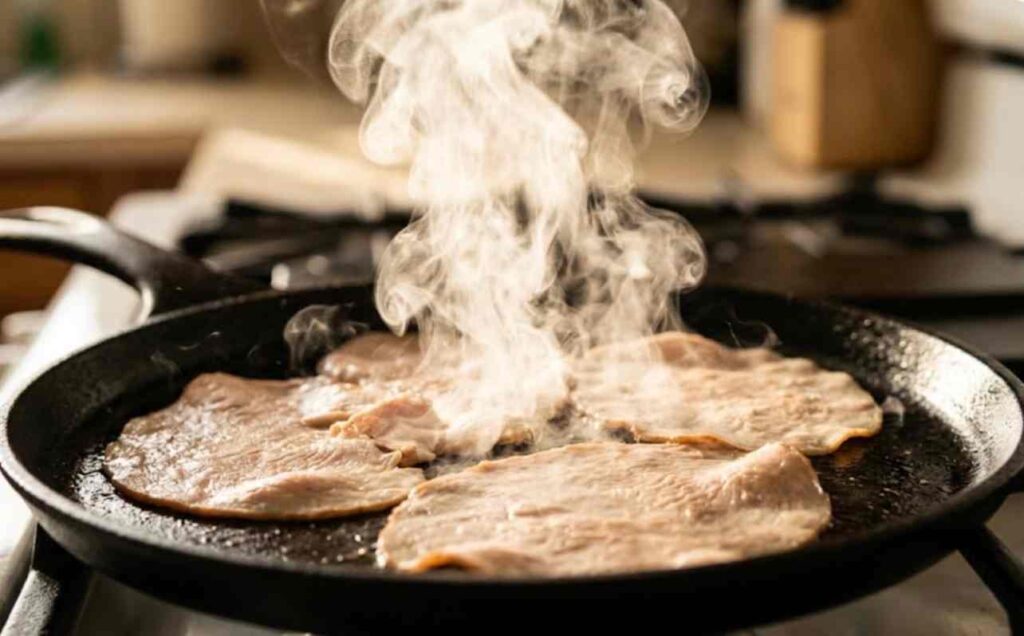
What is it? The meat should be heated until you see visible steam from the center or use a digital food thermometer and put it in the center; it has to show 165°F. Once you confirm the temperature, let it cool for some minutes before you eat.
What is it not? If you are thinking of putting the turkey sandwich in the microwave and heating it for 15 seconds, then it is still not safe. Similarly, a standard toasted sandwich from a local sub shop is simply warmed and has its bread crisped; however, this does not mean the sandwich is safe to consume.
Step-by-Step: How to Safely Reheat Deli Meat
Once you understand the temperature needed to make deli meat sandwiches safe, the next step is to consider which cooking methods you can use.
Method 1: The Stovetop Skillet (Recommended)
This is considered one of the most reliable methods to heat the meat without making it dry out.
- Place a frying pan or skillet over medium to high heat, then add a teaspoon of water, broth, or butter (whatever you prefer) in the pan to create moisture.
- Now add the deli slices into the pan.
- Cook them for 2 to 3 minutes, changing sides too, until you see steam coming out of the slices.
Method 2: The Microwave Blast
Microwaves do work fast; however, they can heat the meat unevenly, which can be dangerous in pregnancy because there is a possibility the bacteria survive. Let’s look at how we can safely heat meat in a microwave.
- Place the deli meat on a microwave-safe plate, then cover the meat with a damp paper towel. This will help to trap the moisture around the meat and create a steam-chamber effect.
- Now let the meat microwave for 45 to 60 seconds or more, depending on your microwave’s wattage.
- Take it out and look to see if the meat is steaming; if not, place it again for some seconds before adding it to the sandwich.
Method 3: The Oven Bake
This method is perfect for making hot and baked subs at home.
- First you need to preheat the oven at 375°F.
- Now add them to the sandwich with deli meat inside. Make sure the deli meat is a little out of the sandwich instead of buried inside.
- Bake the sandwich for 8 to 10 minutes until the meat is sizzling, steaming, and heated completely.
| Cooking Status | Risk Level | Action Required |
|---|---|---|
| Straight from the Fridge | High Risk | Do not consume. Listeria can actively grow and multiply at these standard refrigeration temperatures. |
| Warm / Toasted Bread Only | Unsafe | Do not consume. The surface of the sandwich is warm, but the internal meat hasn’t reached the bacterial kill zone. |
| Steaming / Measured at 165°F | 100% Safe | Safe to enjoy. The high heat has completely eradicated any potential foodborne pathogens. |
Ordering Safely Right at the Deli Counter
When you order a meat sandwich from a grocery store or restaurant deli counter, then you have to be extra cautious, especially in pregnancy, because the commercial deli counters are a main spot where cross-contamination takes place. You can’t just order a sandwich from this place and assume it is safe.
However, you can easily walk away with a perfectly safe meal by understanding what to ask the staff.
What to Tell the Staff at Fast-Casual Sub Shop
Don’t feel scared while asking something that is important for you and the baby’s health when you are at the counter. Most food service workers happily hear what you want to say and make changes, so when it’s time to order, do give them direct instructions.
Hi, I’m pregnant, and I want a deli meat sandwich. To make it safe, please heat the meat alone until it is steaming hot and has an internal temperature of 165°F. Please microwave or grill the meat by itself first before adding it to my sandwich.
Why this matters: If you just simply ask them to toast the sandwich, the bread will be crispy and the cheese will melt too; however, the sandwich will still be unsafe because of the meat that won’t get heated properly inside a sandwich.
Also Read: Can You Eat Subway While Pregnant? The Ultimate 2026 Safety & Nutrition Guide
Jersey Shore, Local Delis, & Food Trucks?
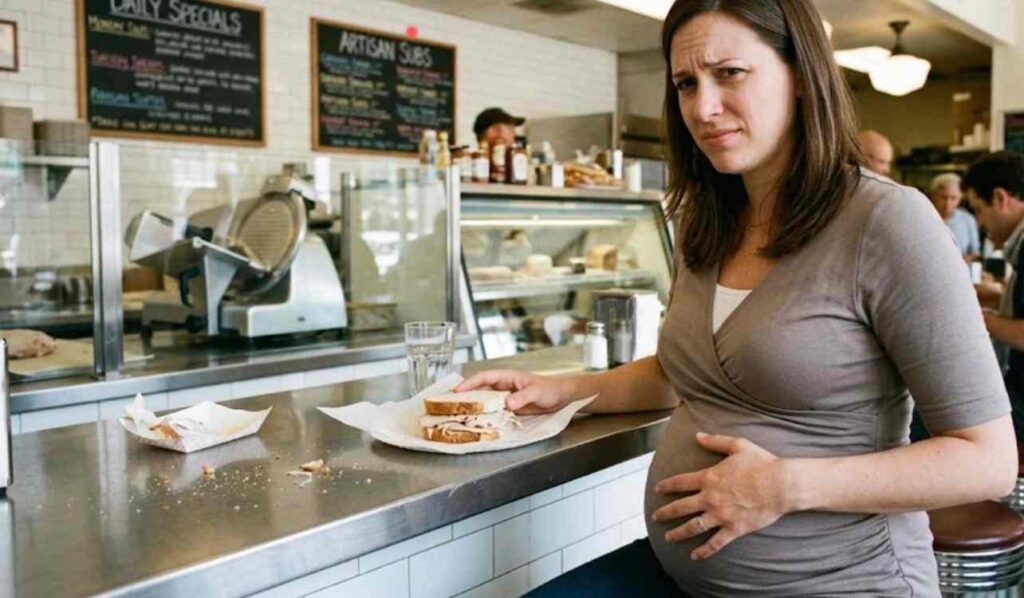
Local delis are the riskiest places when we talk about listeria cross-contamination because the industrial machines can’t be washed every single day. Skip getting a cold sandwich from there. If they have a hot grill menu, then go for options like a hot Philly cheesesteak, a hot pastrami melt, a grilled reuben, or a classic breakfast egg-and-bacon sandwich, as they are safe during pregnancy and cooked at a high temperature.
Party Platters, Buffets, & Office Lunches
If you are at an event like a catered work meeting, a baby shower, or a backyard picnic and there are pre-made sandwich platters, the safe way is to avoid them completely because the food platter sandwiches stay at room temperature for a long time, so the chances of listeria are high. Instead, look for the hot buffet options or take your own meal, like fresh chicken salad or a plant-based wrap, before going to the event.
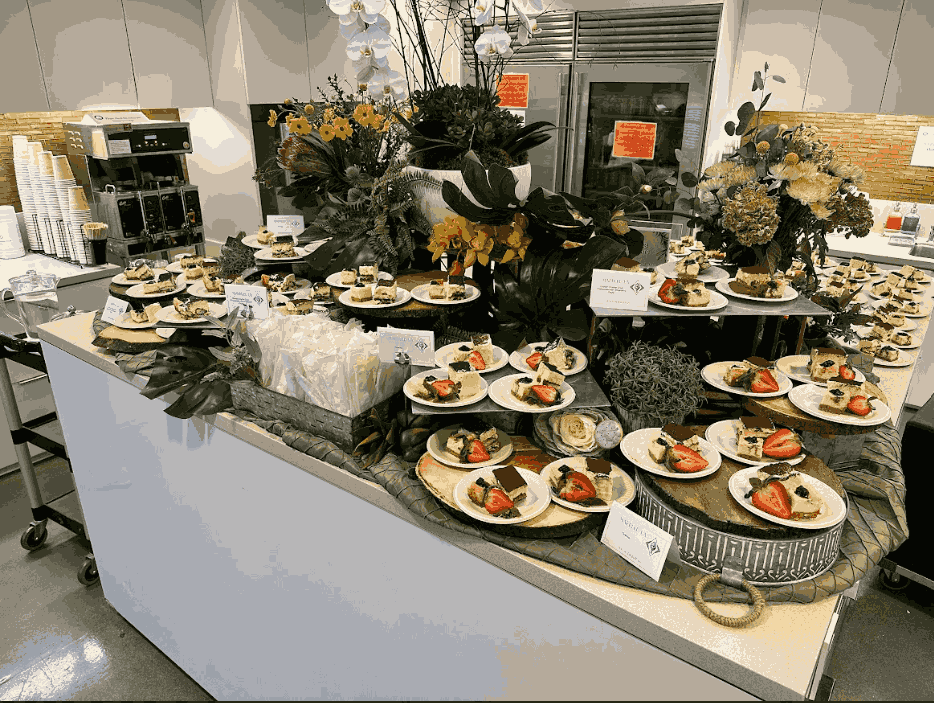
2. Inspect the Counter Setup in Real-Time
You may find my advice a little creepy; however, it is important for your and the baby’s health in pregnancy. When you are waiting for your order, take a quick look at the deli display case and preparation area. Look for the following three safety indicators.
Separate Prep Areas: Check the hygiene protocols first; look if the staff is using different gloves or surfaces while handling raw meat.
The Slicer Factor: Listeria can easily survive at cold temperatures in industrial slicers. If you are buying sliced meat by the pound and want to heat it later at home, then ask the staff if they have a freshly cleaned slicer or opt for pre-packaged. Go for vacuum-sealed brands instead, as they have a low cross-contamination risk as compared to open-air-displayed ones.
Condiment and Topping Safety
At the sandwich counter, condiments like mayo and mustard and fresh toppings like lettuce and tomatoes sit in an open container for the whole day. The staff use the same tongs for everything, so if you want toppings, make sure to ask the staff to add toppings before toasting the sandwich on high heat, or you can also skip high-risk raw toppings like alfalfa sprouts to make the meal completely safe.
Quick Counter Decisions: What to Do
To keep your choices straightforward when ordering on a busy afternoon, use this quick checklist:
Types of Deli Meats to Avoid vs. Eat with Caution
In pregnancy the deli counter can feel like a maze of mixed signals. You have a question in mind: are all the lunch meats made equally, or can one be riskier than the other? The truth is different types of meats have different risks based on how they are handled. To make sure you order with confidence and safely, let’s break deli items down into three distinct categories: those you need to avoid completely, those that require extra heating, and the safest alternatives.
1. High-Risk: Deli Items to Avoid Completely
Following are the specific items you need to skip fully, as they can have listeria or other bacteria that won’t be destroyed by cooking them at home.
Pre-Made Deli Salads (Ham, Chicken, Egg, or Tuna Salad): Don’t buy these from any open deli display case. Because all these items sit in the same cold place for hours or even days and include multiple ingredients mixed with mayo, listeria will surely be there because this place is perfect for its growth.
Refrigerated Pâtés and Meat Spreads: Avoid meat-based spreads and pâtés completely; however, you can use the canned or shelf-stable versions of these products, which are perfectly safe to eat.
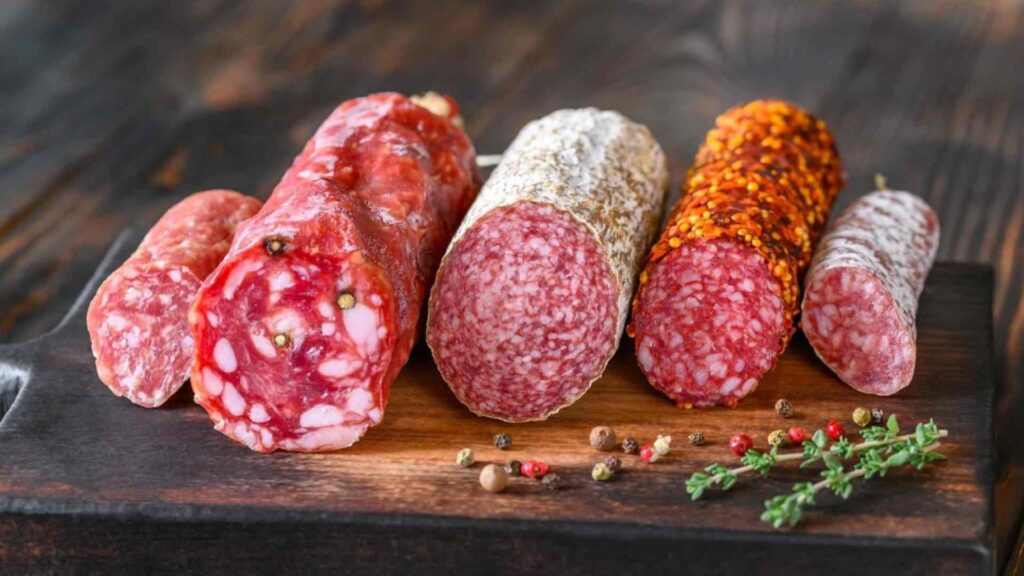
Dry-Cured, Uncooked Salumi (Prosciutto, Pancetta): These meat items aren’t cooked; they are cured and air-dried. This makes them a perfect place for Listeria and toxoplasmosis. Skipping them raw is the safest bet.
2. Medium-Risk: Eat ONLY with Strict Caution (Must Be Heated)
These meats are the base of a classic sandwich, so you don’t need to completely avoid them; instead, go make the meat heat for 165°F and never eat it cold.
Standard Sliced Cold Cuts (Turkey, Ham, Roast Beef, Chicken): It doesn’t matter if you get these items from a grocery counter or pull them from a prepackaged plastic tub; they still contain bacteria, like listeria, from commercial slicing machines or while being handled. Heating them is compulsory.
Hot dogs and bologna: These are pre-cooked but can still get contaminated when they are packaged. They should be boiled, grilled,, or microwaved until they are piping hot in the middle.
3. Low-Risk: The Most Secure Alternatives
If you want to eat a quick sandwich at lunchtime and don’t want the hassle of whipping out a skillet to steam, then these choices are best for you.
Freshly Cooked, Whole Meats: Use leftover chicken breast, roasted turkey, or roast beef as a sandwich base; they have less risk as compared to commercial deli slices.
Canned Meats (Tuna or Chicken): Use canned tuna or chicken, shelf-stable and sealed. You can throw them in tuna salad at home and make a quick meal. Just be sure to eat tuna in moderation because it has mercury levels. Plant-Based Deli Slices: Choose vegan or vegetarian lunch meat substitutes, as they don’t carry the same risk of Listeria as animal products.
How to Store a Deli Meat Sandwich Safely During Pregnancy?
Another food safety precaution you have to take when you’re pregnant is to store it at the right temperature after you cook it. Listeria can live and even multiply at regular refrigeration temperatures, so you can’t take any chances.
If you plan to eat the sandwich later, then follow these must-storage rules to completely remove bacterial growth.
1. The Golden Rule: Keep It Deconstructed
If you’re prepping sandwiches for later, then never keep a sandwich with deli meat in the fridge, as there will be moisture between the bread, condiments, cheese, and meat, which can be a good place for bacteria to grow and multiply.
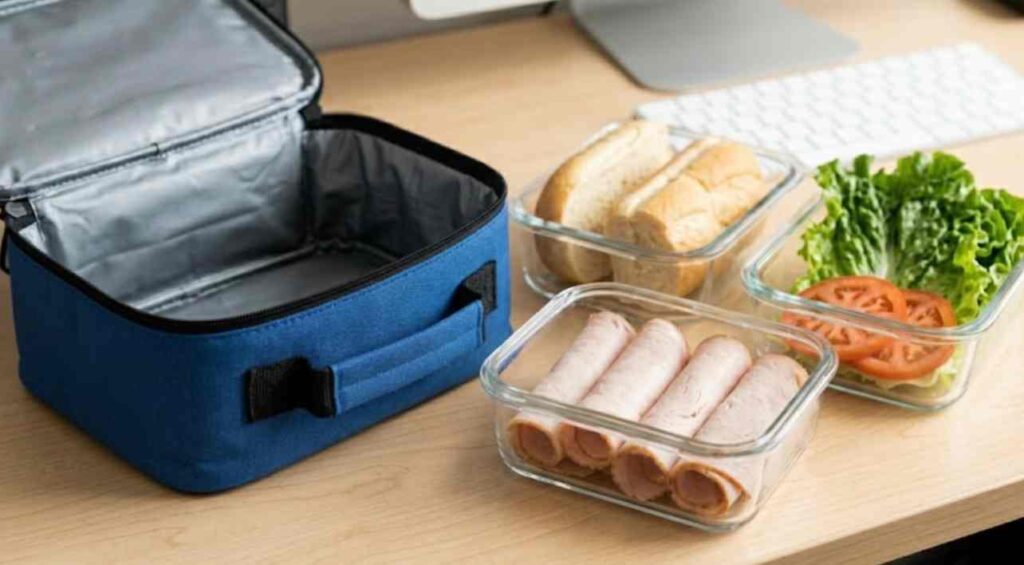
Store deli meat separately in an airtight or leak-proof container, then keep it in the coldest part of the refrigerator, like at the back of the bottom shelf. When you want to eat the sandwich, heat the meat separately at 165°F, then add it in a sandwich with other fresh vegetables.
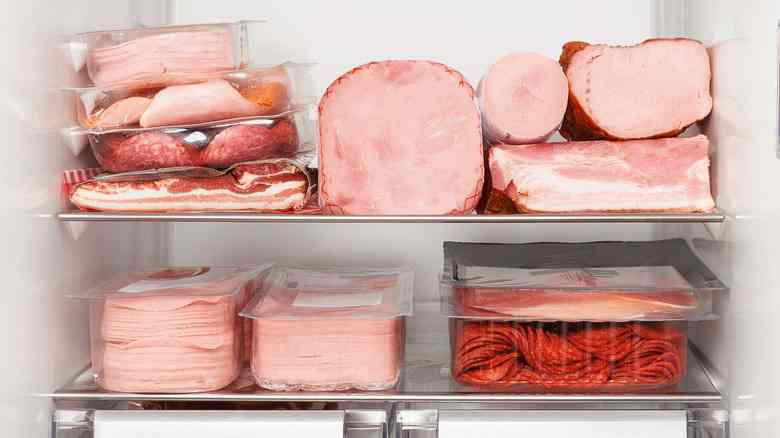
2. Handling Leftover Hot Sandwiches
If you ordered a big hot panini or successfully heated up a sub, ate it, and want to store the remainder, you can do the following things.
The 2-Hour Window: Remember cooked deli meat must be refrigerated within two hours of being heated. If it sits out on the kitchen counter for hours, then throw it, as bacteria might make a place for themselves.
The Reheating Rule: When you are ready to eat the remaining sub, make sure to reheat it again until it’s steaming hot. Never eat cold leftovers.
3. Maximum Fridge Timelines
Deli meat doesn’t have a long shelf life. Even if the expiration date on the packaged tub is good for a month, don’t take risks during pregnancy, as the date only works if it’s not open. Once you open the tin, the countdown begins.
- Fresh Deli Counter Slices: You can eat them within 3 to 5 days of purchase (always heating to 165°F first).
- Opened Pre-Packaged Tubs: You can eat them within 3 to 5 days once the seal is broken.
- Unopened pre-packaged tubs: You can store them in the fridge until the official manufacturer’s expiration date.
Kitchen Prep & Cross-Contamination Safety
When it comes to making deli meat safe during pregnancy, another thing you need to look at is cross-contamination because listeria can live in unwashed kitchen surfaces, so before handling the meat, you need to follow strict hygiene protocols. Consider cold deli meat the same as raw chicken until it hits the 165°F steaming hot threshold. It should never be in your hands, utensils, or other ready-to-eat foods.
1. The Surface Shield: Cutting Boards & Counters
Never place cold deli slices onto a cutting board when you plan to use the same board for cutting unwashed salad greens, bread, or fruit. Instead, use another board for high-risk items.
Contain the Package Juices
The liquid inside a meat package is a major source of surface contamination. Make sure the juice won’t drop into the dish towels or surrounding food items.
The Slicing Knife Rule
To cut pepperoni or salami at home, make sure to use a clean knife that isn’t used for anything else. Always wash the used knife with hot water and use it further.
2. The Personal Barrier: Hand Hygiene
Sometimes your hand can also be the culprit that moves bacteria around a kitchen.
The Pre- and Post-Wash: Always wash your hands for 20 seconds before prepping the lunch, or if you cut the meat item, then wash your hands again.
Avoid the kitchen tour: When you cut the piece of cold turkey or ham, don’t directly open the refrigerator, the kitchen faucet, your cell phone, or the sandwich bread bag; first, wash your hands.
3. The Appliance Trap: Slicers & Can Openers
If you frequently prepare food at home, then there are two specific kitchen tools that need extra attention when working with deli items:
Home Deli Slicers: If you have a food slicer at home, then make sure it is dismantled and sanitized after every single use because the industrial deli slicers aren’t cleaned properly and become the source of Listeria outbreaks.
Can Openers: If you are using canned tuna or chicken as an alternative to deli meat, then make sure to wash your hands properly before opening the can and store it in the refrigerator at the coldest place.
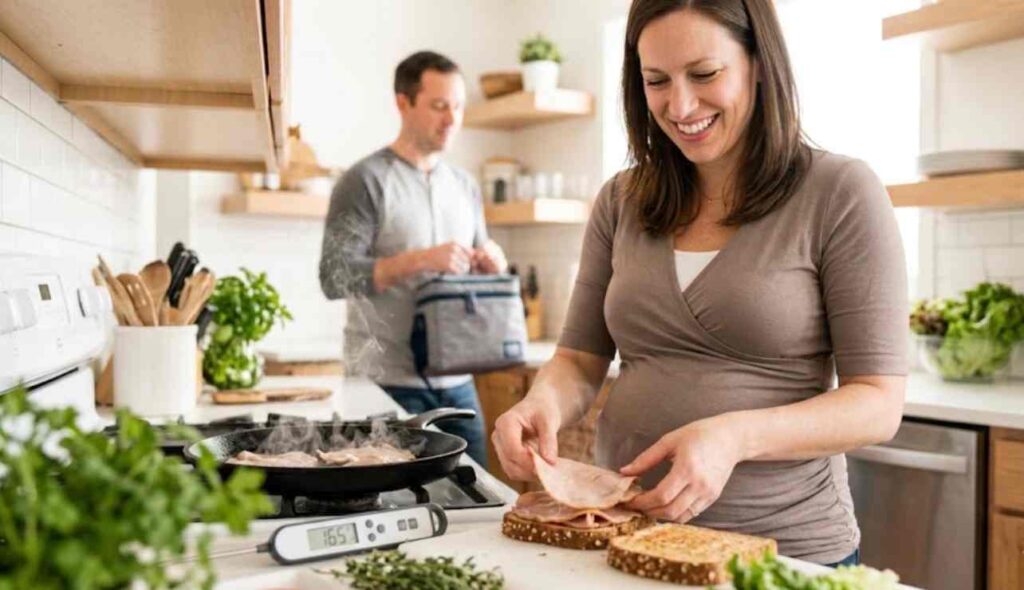
Keep this scannable kitchen layout checklist in mind during your next lunch prep:
The Best Alternatives to Deli Meat During Pregnancy
Here are the best alternatives to swap into your lunch routine today.
1. Freshly Cooked, Whole Meats (The Leftover Strategy)
You can use grilled chicken or turkey breast as a replacement for deli meat. The next time you prepare lunch, grill an extra chicken breast or roast an extra turkey breast. Once they are cooled, slice them and store them properly in the refrigerator. Use them in sandwiches the next day; these alternatives will give you the same sandwich experience as sliced turkey from the deli with zero listeria issues.
You can also store homemade roast beef or flank steak, as they are perfect for wraps and safe to consume in pregnancy.
2. High-Protein Seafood Options
Another alternative is you can go for tuna or salmon salad; for this, just open a tuna or salmon can, mix it with a little mayo and celery, and eat it immediately. You can eat this fresh to avoid the risk of listeria.
If you are avoiding fish in pregnancy, then you can also use canned chicken; shred it and use it in wraps or sandwiches, as it doesn’t need cooking and you can make a quick meal.
3. Vegetarian & Plant-Based Swaps
Brands like Tofurky or Field Roast offer vegetarian deli slices made from soy or wheat gluten. These items are completely safe in pregnancy since they are not animal meat products, so they don’t have the same listeria risk.
You can eat chickpeas, tuna salad, and just mashed chickpeas mixed with mayonnaise, a splash of lemon, and diced pickles; this mixture mimics the classic deli salad without the risk of listeria.
You can also eat beautiful hummus and roasted vegetable wraps. Just add hummus with roasted zucchini, bell peppers, and spinach in a wrap and eat it.
4. Dairy & Egg Classics
Take bacon and heat it until it becomes crunchy. Add fresh tomatoes, lettuce, and avocado on toasted bread; this bacon sandwich will give you the same feel as a deli meat sandwich.
Another alternative is a classic grilled cheese, a caprese sandwich, which includes pasteurized fresh mozzarella, tomatoes, pesto, and balsamic; or a sharp cheddar and apple slice sandwich.
Another alternative to a deli sandwich, you can go for fresh egg salad. Boil a few eggs at home, mash them up fresh, and add them in sandwiches.
What Global Food Authorities Say About Deli Meat and Pregnancy
Major regulatory health authorities agree on the same point to avoid cold cuts completely unless they are heated to 165°F.
According to both the FDA and the CDC, pregnant women need to avoid eating hot dogs, luncheon meats, cold cuts, and fermented or dry sausages unless they are heated to an internal temperature of 165°F or steaming hot.
According to the USDA, the use of a digital food thermometer is compulsory to make sure listeria is killed.
According to the NHS, pregnant women need to be cautious with cold-cured meats like salami, prosciutto, pepperoni, and chorizo.
Medical disclaimer: The information provided in this article, including food safety guidelines, charts, and alternative swaps, is for educational purposes only. It is not a substitute for professional medical advice, diagnosis, or treatment.
I Accidentally Ate Cold Deli Meat While Pregnant: What Should I Do?
First take a deep breath; if you just ate a cold turkey sub at a party and then realized you didn’t follow the heat rule, don’t panic.
While the consequences of a Listeria infection can be severe, it doesn’t mean you get a Listeria infection by eating a single meal. Listeria can be a dangerous bacteria in pregnancy; however, the chances of getting it aren’t 100%, as the commercial lunch meats are free from it. Here is your immediate, logical action plan:
1. Mark the Date on Your Calendar
Listeria is different from other bacteria; the symptoms of it don’t show quickly; they can start showing in some hours. The bacteria can multiply in 70 days, and then you will face physical signs. Mark the date of the exposure in your mobile calendar or write it on a note.
2. Monitor for Specific Symptoms
You don’t need to go to the emergency room when you eat the meat and feel completely healthy; instead, monitor your health for some days or even a month if you face mild flu-like symptoms like low-grade fever, unexplained muscle aches or joint pain, chills and fatigue, or severe headaches.
3. Know When to Contact Your OB-GYN
If you notice the mentioned symptoms, contact your healthcare provider immediately. Inform them you are pregnant and you eat deli meat meals on this date. They will quickly take action and do the proper blood culture tests and start you on preventative antibiotics.
Is Premium or Organic Deli Meat Safer for Pregnancy?
A common misconception is that many people think that buying deli meat from premium organic markets, spending extra on all-natural brands, or choosing no nitrates added can remove the risk of listeria. Unfortunately, Listeria doesn’t have any concern for the organic labels.
An Environmental Threat: Listeria isn’t a chemical or an artificial additive in meat. It is an environmental bacterium that lives in physical objects like factory packaging lines, shipping crates, and commercial slicing blades.
Equal Exposure: If a premium, 100% organic, grass-fed turkey breast is used on an industrial deli slicer, then the listeria can easily go in the product from the slicer.
The Nitrate Variable: In fact, some natural or nitrate-free deli meats use celery powder as a natural preservative, which can sometimes be less uniform at inhibiting bacterial growth over long periods than conventional curing methods.
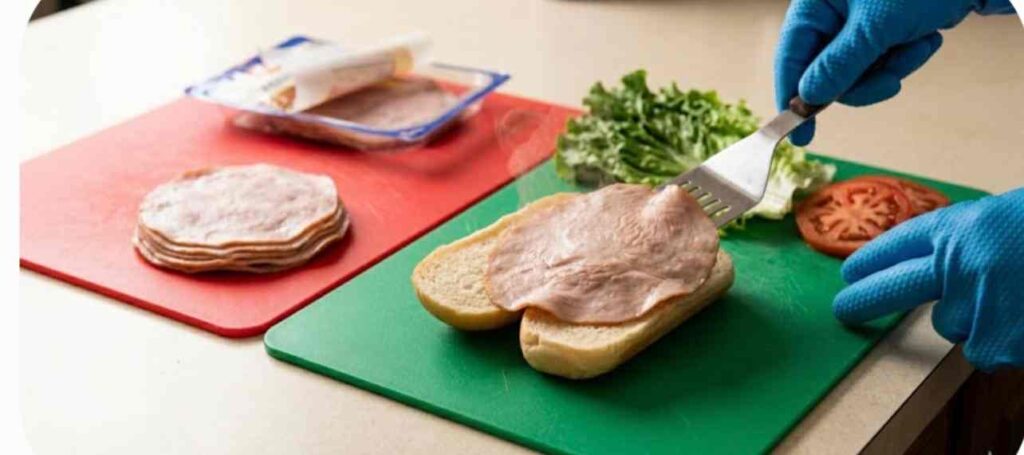
When Can I Safely Eat Cold Cuts Again?
You can safely eat it every day once the baby is born because the main concern with cold cuts includes the risk of bacteria, and in pregnancy it can cross the placenta barrier and even harm the baby. After the baby is born, the immune system will rapidly return to its normal baseline, so the risk of listeria can be that much.
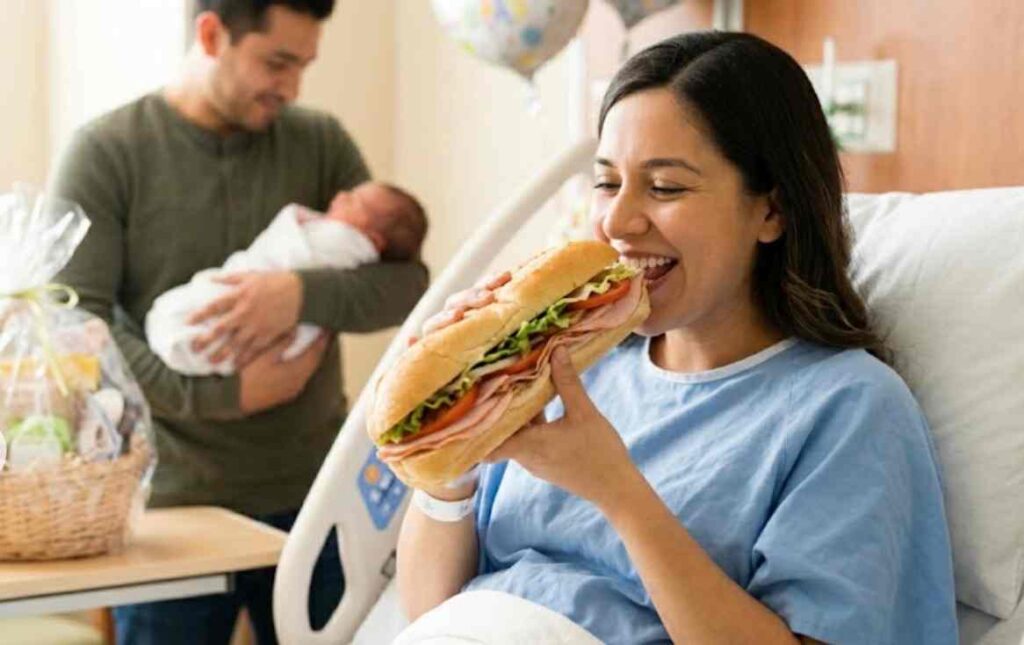
Many pregnant women order a giant, cold Italian sub or a piled-high turkey sandwich even in the hospital delivery room from the menu. You can also ask the family members or your husband to bring a sandwich from the local deli counter on their way to the postpartum recovery room!
Frequently asked questions on Can you eat deli meat while pregnant?
Why is Listeria more dangerous during pregnancy than at other times?
In pregnancy the immune system suppresses itself, which makes the defense system low, and you become more vulnerable to bacteria like listeria and salmonella. A normal woman won’t face that many issues if listeria enters the body; however, a pregnant woman faces severe complications.
Does toasting a sandwich at a sub shop kill Listeria?
No commercial sandwiches are just heated to crisp the bread and melt the cheese; this process never heats the cold meat inside the sandwich properly.
How long after eating contaminated food do Listeria symptoms start?
Listeria is tricky and different from all other bacteria. Mild symptoms can occur in 3 days; however, it can take 70 days, more than 2 months, for this bacteria to multiply and become harmful.
Does Listeria cause standard stomach flu symptoms like vomiting?
No, a listeria infection isn’t like other bacterial ones, like Salmonella or E. coli, which only cause food poisoning. The main sign of listeria in pregnancy is a mild, passing, seasonal flu. Other common symptoms are low-grade fever, chills, fatigue, and muscle or joint aches even when you don’t feel an issue in your stomach.
Is pre-packaged deli meat safer than fresh meat sliced at the deli counter?
Yes, pre-packaged deli meat is a safer option as compared to fresh meat sliced at the deli counter because the commercial deli counter slicers stay in the same environment for hours, which makes it a perfect place for listeria.
On the other hand, factory-sealed, vacuum-packed tubs (like Oscar Mayer or Applegate) are sliced and sealed instantly in highly sterile facilities; they even use pregnancy-safe antimicrobial spray. It is still recommended to heat both at 165°F before consumption.
Can Listeria grow inside a cold refrigerator?
Yes, Listeria can multiply easily at a cold temperature under 40°F. This is the reason why open packages of deli meat aren’t recommended to eat after 3 to 5 days even if they are staying in the refrigerator.
Are nitrate-free or all-natural cold cuts safer for pregnant women?
No, the nitrate-free, organic or premium labels refer to how the animal was raised and how the meat is preserved chemically; however, they don’t protect the meat against listeria. An organic slice of turkey has the same risk as a budget brand if eaten cold.
Can I eat cold pepperoni or salami if it is cured?
No, because dry-cured and fermented meats like salami, pepperoni, prosciutto, and chorizo are air-dried, not cooked, so they do contain the risk of listeria.
Wait Until After Your Pregnancy or Take Precautions
If you want to eat deli meat before delivery, then you have to follow strict precautions. Never think the toasting can make the sandwich safe. Either wait until postpartum to enjoy your favourite cold subs or make a sandwich at home by heating the meat at a high temperature until it is extremely hot. If you want to eat outside, ask the staff to heat the meat separately before adding it in the sandwich.
How can I be sure meat is safe to eat?
Heat the meat to the temperature of 165°F to make sure it is safe. Use a digital food thermometer; place it in the thickest part of the meat or in the center. If the thermometer is showing you the same temperature or you see visible steam coming out of the meat, then it is safe to consume.
What about hot dogs and bacon during pregnancy?
Hot dogs aren’t safe cold and need to be boiled, grilled, or microwaved until bulging and steaming hot through to the center. Bacon is completely safe in pregnancy if you cook it completely and make it crispy. Avoid limp or undercooked bacon.
Is it safe to eat meat from livestock that were given antibiotics?
Yes, because regulatory food agencies (like the FDA and USDA) have strict rules to ensure that any antibiotics given to livestock have cleared the animal’s system before the meat can be processed for consumer markets. However, still to make it safe, you need to heat the meat.
How to enjoy deli meat safely?
To enjoy the deli meat safely in pregnancy, you can do the following things. Keep the cold meat separately from other sandwich items like bread, cheese, and fresh veggies.
- Cook the meat slices at a temperature of 165°F. Wash your hands before and after handling the meat for 20 seconds.
- Add sizzling, steaming hot meat directly onto your bread and enjoy your sandwich immediately!
