
Quick answer: What happens if you eat too many cherries? Well, eating too many cherries can cause digestive issues like bloating, gas, stomach cramps, and diarrhea. The main reason is cherries are high in fiber, fructose, and sorbitol, a natural sugar alcohol that acts as a laxative. While 1 cup is a safe daily serving, eating 2 or more cups can cause acute digestive distress.
The Digestive Science (Why Cherries Cause Gut Distress)
While cherries are full of nutrition and antioxidants, eating them in an unlimited amount can disturb your stomach, and you may face issues like stomach pain, gas, or an urgent trip to the bathroom. This happens because your body reacts to three main components cherries have, including sorbitol, fructose, and dietary fiber.
To understand more of what happens if you eat too many cherries, here is an exact biochemical breakdown as follows:
1. The Sorbitol Laxative Effect
Cherries have a compound called sorbitol that passes largely intact into the large intestine, and then it exerts an osmotic effect, meaning it works like a sponge that draws excess water from body tissue. Eating cherries in normal amounts can’t be harmful; however, if eaten in high amounts, it causes loose bowel movements and leads to water-induced diarrhea.
2. Fructose Malabsorption and Fermentation
Cherries are also full of fructose, which is a natural sugar, while the small intestine has specific transporter proteins to absorb fructose; however, it can’t absorb a high amount of fructose easily. When you eat cherries in large quantities, you hit the limit of fructose malabsorption. The unabsorbed fructose goes into the colon, where it interacts with the gut microbiome.
This bacteria feeds on the sugar through fermentation. As the bacteria ferment this high amount of fructose, it produces a significant volume of byproduct gases, resulting in abdominal bloating and sharp, painful gas.
3. The FODMAP Factor and IBS Triggers
Cherries are classified as a high FODMAP fruit, meaning they contain short-chain carbohydrates that can be difficult for the gut to process. Due to their high levels of sorbitol and fructose, cherries can trigger symptoms in individuals with Irritable Bowel Syndrome (IBS) or those with a sensitive gut.
4. Soluble and Insoluble Fiber Overload
A single cup of cherries contains 3 grams of dietary fiber, which is essential for digestion; however, this can sometimes also be a drawback. Cherries contain both soluble and insoluble fiber, so when you eat them in high amounts, the double dose of fiber works in a wrong way. The insoluble fiber speeds up muscle contractions in your intestines, and then it combines with the osmotic water from the sorbitol, leading to stomach cramping and diarrhea.

Cherry Pit Toxicities (Cyanide Myths vs. Reality)
We know eating too many cherries at once can cause digestive issues; however, there is also a rumor on the internet that says cherry pits are highly toxic and can cause fatal poisoning.
To understand if it’s even correct or not, let’s just look at what happens if you swallow a cherry pit and how the body reacts.
1. The Compound: Amygdalin
Like apricot, apple, plum, and peach seeds, cherry pits also contain a natural plant compound called amygdalin. In medicine it is known as a cyanogenic glycoside. When this compound goes into the stomach, it converts into hydrogen cyanide (HCN), a potent toxin that prevents body cells from using oxygen properly.
2. Swallowed Whole vs. Chewed Pits
If you accidentally swallow a whole cherry pit, then you don’t need to panic, as the toxic compound in it will remain inside because our stomach acid isn’t that strong to break the pit. Secondly, it will just come out from the body in poop without causing any trouble, as there is no cyanide.
3. The Lethal Threshold: How Many Pits Are Dangerous?
Cyanide is very toxic; our body possesses natural metabolic pathways that safely detoxify any small trace of cyanide into a harmless compound, which can go out through urine. Toxicity only takes place when you eat cherries in large quantities. A single gram of crushed cherry seeds can have 1.5 to 2.5 milligrams of hydrogen cyanide.
In adults, 0.5 to 3.5 milligrams of cyanide are poisonous. This means if you accidentally allow 3 to 20 crushed cherry kernels in your body, it can be a life-threatening situation.
The most common cause of accidental cherry poisoning is the cherry smoothie. Yes, you heard it right. If you are making a cherry smoothie and adding it into a high-powered commercial blender without taking out the pits first, then they will crush too and release the amygdalin directly into your drink. So it’s important to always pit your cherries thoroughly before blending.
4. Symptoms of Cyanide Poisoning to Watch For
If an adult or kid chews or swallows multiple cherry pits, then first of all, don’t panic. Just look for the symptoms; the mild ones usually take place in 15 to 30 minutes and include headache, dizziness, rapid heart rate, shortness of breath, restlessness, anxiety, nausea, and vomiting. However, if you notice rare symptoms like low blood pressure or seizures, which are quite rare, then immediately go to the doctor.
Metabolic and Kidney Risks
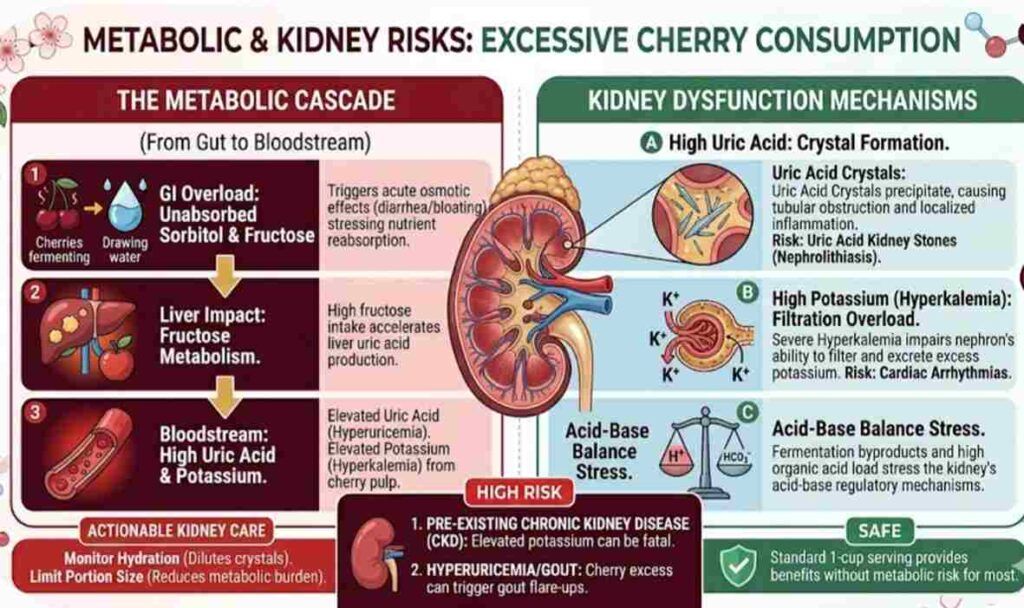
While the short-term side effects of eating a lot of cherries usually cause temporary bathroom emergencies, they do have extreme health risks if the person is already facing metabolic conditions like diabetes or structural conditions like chronic kidney disease (CKD).
1. Blood Sugar and Insulin Spikes
A most common reason why people buy so many cherries is their relatively low glycemic index (GI). Sweet cherries have a GI score of around 62, whereas tart cherries have a much lower 22.
However, this volume can completely change if you eat unlimited cherries in a day, turning the low glycemic index snack into a high glycemic load event.
As we already discussed earlier, cherries are rich in fructose; however, it cannot be used by cells as glucose. In fact, it is only processed by the liver. When a massive amount of fructose hits the liver, it makes the liver overwhelmed. It also causes a sudden rise in blood glucose and metabolic stress on the liver.
For people who already have Type 1 or Type 2 diabetes, these sudden spikes can cause dangerously high blood sugar, making it very difficult to manage daily blood sugar levels.
2. Hyperkalemia Risks (Kidney Health)
A rare yet severe risk of eating unlimited cherries is the potassium content. Yes, you heard it right; cherries do have potassium. A single cup of cherries includes 342 milligrams of potassium. For a healthy person, the high intake of potassium leads to many benefits, like lower blood pressure, supports nerve function, and regulates fluid balance. The kidney naturally flushes it out. However, for a person who has kidney problems like chronic kidney disease (CKD), their kidneys don’t have the capacity to filter out excess minerals efficiently.
In this situation, when you eat too many cherries and your kidneys can’t clear the potassium, the mineral begins to pool in your bloodstream. This condition is known as hyperkalemia.
While potassium is responsible for regulating electrical impulses to your heart muscles, when it becomes excessive, it does have some side effects like muscle weakness, numbness, acute nausea, cardiac arrhythmias, and, in severe cases, sudden cardiac arrest.
3. The Hidden Danger: Concentrates and Extracts
Fresh cherries are safer as compared to black cherry concentrates, tart cherry juices, and wellness extracts.
A single 2-ounce shot of tart cherry juice can have the nutrition of 100 cherries; however, it is not good for a person who already has existing health problems like kidney vulnerabilities or diabetes because these supplements contain high amounts of potassium and pure sugar.
How Much is Safe? Definitive Intake Guide
To prevent stomach issues while getting full benefits like reaping the exceptional antioxidant and anti-inflammatory properties, you need to know how much tolerance your body has. The exact amount of cherries that leads to side effects is different for every individual, and it is based on gut sensitivity, body weight, and pre-existing medical conditions. To understand more properly, let’s look at the chart below:
| Consumption Tier | Quantity (Cups / Grams) | Approx. Cherry Count | Potential Side Effects & Risk Level |
|---|---|---|---|
| 1. The Healthy Sweet Spot | 1 Cup (~140g) | ~21 Cherries | Zero Risks: Provides optimal doses of Vitamin C, potassium, and anthocyanins without bloating. |
| 2. The Caution Zone | 2 Cups (~280g) | ~42 Cherries | Low-to-Moderate Risk: Safe for robust digestive systems; may cause mild gas or stomach rumbling in sensitive individuals. |
| 3. The Danger Zone | 3+ Cups (~420g+) | 60+ Cherries | High Risk: Highly likely to trigger acute abdominal cramping, osmotic bloating, and watery diarrhea. |
If you already have Irritable Bowel Syndrome (IBS), Small Intestinal Bacterial Overgrowth (SIBO), or general fructose malabsorption, you can eat less than half a cup of cherries. Avoid eating cherries on an empty stomach, as it will lead to diarrhea.
Pediatric Guidelines: How Many Cherries Are Safe for Kids?
Since toddlers have smaller and developing gastrointestinal tracts, they have less space to process carbohydrates as compared to adults, so give them cherries in small amounts only. Here is a clearer chart according to age.
| Age Group | Safe Serving Limit | Maximum Threshold (Before Diarrhea) | Safety Protocol |
|---|---|---|---|
| Infants (6–12 months) | 1 to 2 tablespoons (pureed) | 1/4 Cup | Must be completely pureed, skinless, and pitted. |
| Toddlers (Ages 1–3) | 4 to 6 cherries | 1/2 Cup | Must be pitted and sliced horizontally into quarters. |
| Young Kids (Ages 4–8) | 1/2 Cup (~10 cherries) | 1 Cup | Must be pitted and sliced in half. |
| Older Kids (Ages 9+) | 1 Cup (~21 cherries) | 1.5+ Cups | Standard adult portions are generally tolerated. |
Critical Child-Safety Bullet Points for Parents
If you are a parent and your kids love cherries and one of them accidentally swallows a pit, then don’t worry; just use this quick checklist.
The Choking Hazard Reminder
Since a cherry pit is small, it can easily pass from a child’s intestine, but it is a best practice to remove pits first before giving cherries to the child, especially if they are under 4. Never serve whole cherries to toddlers.
If they swallowed a whole pit
Don’t panic; take a deep breath. Your child is fine because human stomach acid doesn’t have the ability to break down pits. It will just pass by the stomach through poop in just 24 to 48 hours.
If they chewed and swallowed a pit
If a child chews and swallows a pit, the small amount of cyanide in it will easily be detoxified by the liver. However, if a toddler chews and swallows many pits together, then monitor them closely. Look for symptoms such as rapid breathing, dizziness, vomiting, or lethargy; go to the doctor immediately.
Managing a Fruit Crash
If your child eats a large bowl of cherries, then expect loose stool, heavy flatulence, and mild stomach grumbling, as these are very common reactions. Keep them hydrated or give them oral rehydration solutions. Avoid giving them more cherries or any juices until their gut settles down.

How to Recover from a Cherry Overdose?
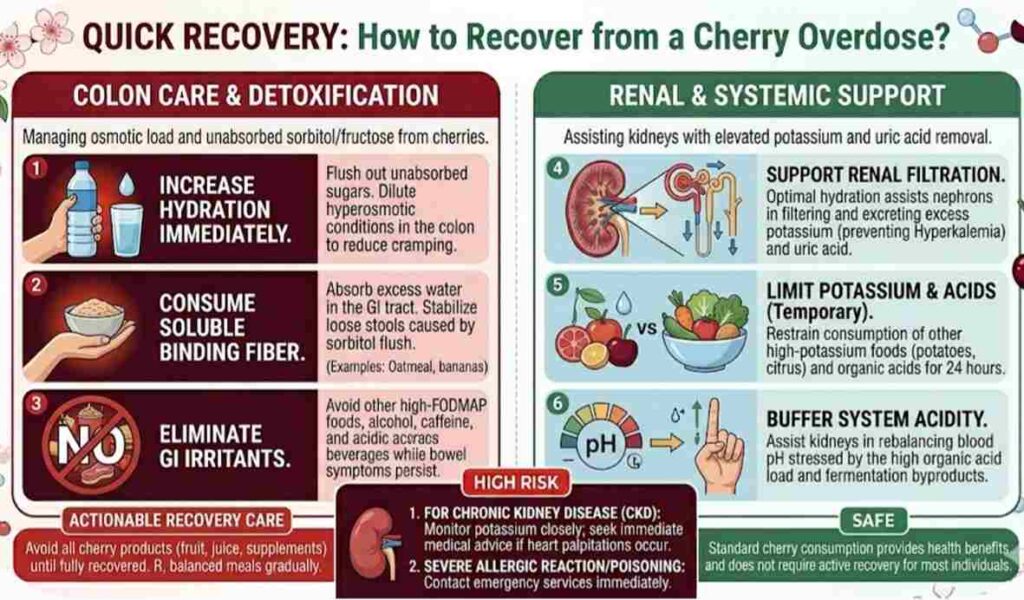
If you are reading this while facing painful, distended stomach, loud gut rumbling, or sudden diarrhea After eating a large bag of cherries, don’t worry; you can take the following steps:
1. Strategic Hydration
When you eat cherries in large amounts, the sorbitol in them draws water into your colon, leading to diarrhea. In this condition, stop drinking ice-cold water, as it could result in more cramping. Do drink plenty of water, but the normal one or a low-sugar electrolyte solution is best.
Avoid drinking fruit juices, sodas, or sports drinks that are sweetened, as they are high in fructose and artificial additives, until your gut gets stable.
2. Sip Herbal Teas to Relax the GI Tract
Some herbs have natural compounds that work as antispasmodics, meaning they have the ability to relax the GI tract.
Peppermint Tea: It has an active ingredient called menthol, which has a calming effect on the wall of the intestine that helps in reducing the intensity of severe stomach cramps.
Ginger Tea: Ginger accelerates gastric emptying and helps to stop nausea or the heavy feeling that comes from eating so many cherries.
Fennel Tea: Fennel seeds help to reduce bloating and help gas pass smoothly through the system.
3. Utilize Light, Active Movement
When your stomach is filled with gases like hydrogen and methane, you may feel lying down will help; however, it can make the condition worse as the gas becomes trapped in the upper digestive tract. So instead of lying, go for a 15- to 20-minute walk; this will help the gas to come out faster from your system.
4. Implement a Temporary Low-FODMAP Reset
To make your digestive system calm, you need to modify what you eat for the next 24 hours. Avoid food items that are high in fiber. Stick to simple and easy-to-digest items like rice, baked chicken breast, crackers, or broth until your bowel movements return to normal.
Nutritional Comparison (Sweet vs. Tart Cherries)
Well, many people think all cherries are the same, but they aren’t. The side effects of a cherry depend on which variety you eat, whether it is a fresh one like Bing or Rainier or a tart cherry such as Montmorency; this one is used in juice, dried fruit, or supplements.
Understanding the nutritional differences helps pinpoint exactly why each type presents unique risks when overconsumed.
| Nutritional Component (Per 1 Cup) | Sweet Cherries (Raw, Pitted) | Tart / Sour Cherries (Raw, Pitted) |
|---|---|---|
| Calories | ~97 kcal | ~51 kcal |
| Total Carbohydrates | 25 grams | 12 grams |
| Sugar Content | 20 grams | 10 grams |
| Dietary Fiber | 3.2 grams | 2.1 grams |
| Potassium | 342 mg | 268 mg |
| Vitamin C | 11% DV | 12% DV |
| Vitamin A | 2% DV | 26% DV |
Can You Die from Eating Too Many Cherries?
Definitely not; you won’t die by eating too many cherries, but you may face disturbances in your stomach, like experiencing a highly uncomfortable night of severe stomach cramps, bloating, and intense diarrhea. All this is normal when you eat something unlimited. However, these symptoms are not life-threatening.
The Two Critical Medical Exceptions
While cherries themselves won’t kill you, there are two specific conditions where massive overconsumption or improper preparation can become dangerous:
As we already discussed in the medical risks section, a single cup of cherries contains 342 mg of potassium, which is harmful for a person who already has
Chronic Kidney Disease (CKD) or kidney failure issue. Having too much potassium in the body can cause hyperkalemia, which results in cardiac arrhythmias and, in extreme, unchecked cases, sudden cardiac arrest in rare cases.
While swallowing a pit won’t kill you, chewing and then swallowing 3 to 20 cherry kernels can become a lethal dose of cyanide, and obviously no one chews pits.
How Many Cherries is Too Many?
A small cup contains 21 cherries, or 140 grams, which makes it a safe limit for daily consumption. This is best if you want cherry benefits with zero risk or side effects.
If you eat 2 cups (approx. 42 cherries) daily, then it can be harmful for some individuals who already have fructose sensitivities or irritable bowel syndrome (IBS). They will face loud gut rumbling, mild bloating, and gas.
If you eat an overload amount of cherries, like 3 or more cups (60+ cherries), this will cause a heavy dose of the laxative sorbitol in the body, and you will face issues like urgent, watery diarrhea and painful stomach cramps within a few hours.
Select options above to calculate the digestive workload.
What Official Food and Health Authorities Say
According to the United States Department of Agriculture (USDA) Dietary Guidelines, the recommended amount of daily fruit consumption is 1.5 to 2 cup equivalents of fruit per day. A single cup of cherries is enough for you.
According to the Food and Drug Administration (FDA), standardized nutrition labeling defines a single reference serving size of fresh cherries as 1 cup (approx. 140 grams). Eating multiple in a day can count as an overdose.
According to the American Heart Association (AHA), for a small fruit like grapes or cherries, they define a single standard serving as roughly 20 to 22 pieces.
Also Read: What happens if you put too much Epsom salt in a bath? Safe Limits & Side Effects
Frequently Asked Questions (FAQ)
1. Can eating cherries make your poop dark or red?
Yes, cherries are high in dark red pigments called anthocyanins. When you eat a large amount of cherries, the body absorbs all these pigments, resulting in dark red or purple stool; however, this is completely normal, and the colour will be back in 24 to 48 hours.
2. How long do cherry bloating and diarrhea last?
For a normal and healthy individual, symptoms like bloating, gas, and diarrhea will last anywhere from 4 to 12 hours.
3. Are cherries safe to eat on an empty stomach?
If you have a sensitive stomach, then eating too many cherries can lead to cramping or diarrhea. Because the components in cherries, like sorbitol and fructose, hit your intestines rapidly. To avoid such issues, eat cherries with a handful of walnuts or some Greek yogurt.
4. Can you eat cherry stems?
No, you should not eat cherry stems intentionally; however, if you swallow one accidentally, then don’t worry, it’s completely harmless and passes through the digestive system easily.
5. Why do cherries make my throat itch or tingle?
It’s not common; however, if someone faces itching in the mouth or swelling while eating raw cherries, then they may have Oral Allergy Syndrome (OAS); it is a food allergy syndrome.
While these symptoms aren’t worse, if you experience hives, wheezing, or throat tightness, seek immediate medical attention.
Medical Disclaimer: The information in this article is for educational purposes only and should not be used as medical advice. If you or your child are experiencing severe stomach pain, persistent vomiting, or symptoms of an allergic reaction or poisoning, please consult a healthcare professional or contact emergency services immediately.
Scientific & Regulatory References
- U.S. Department of Agriculture (USDA): DietaryGuidelines.gov
- U.S. Food and Drug Administration (FDA): FDA.gov
- American Heart Association (AHA): Heart.org
- American Kidney Fund (AKF): KidneyFund.org
- National Center for Biotechnology Information (NCBI / PubMed): NCBI.NLM.NIH.gov
