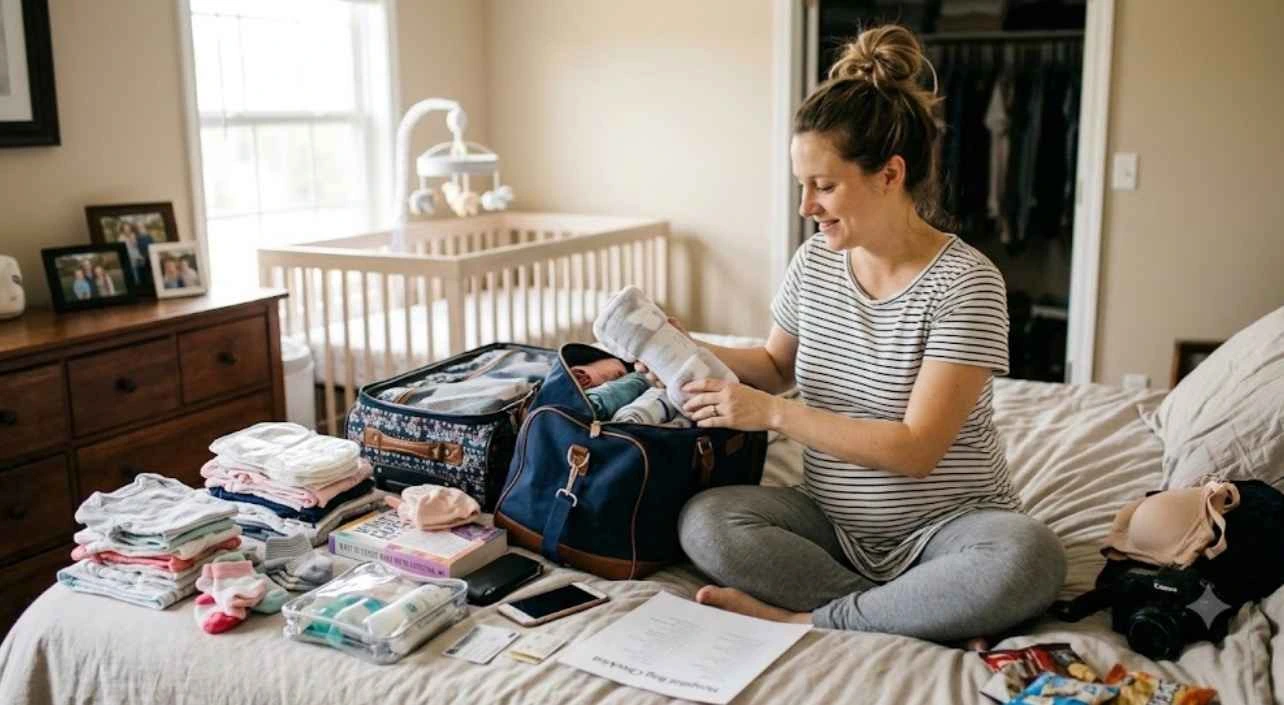
Quick answer: A basic hospital bag checklist should focus strictly on comfort, recovery, and baby essentials. The absolute must-pack items to grab are your ID and insurance card, a 10-foot phone charger, basic toiletries and lip balm, slip-on shoes, a loose outfit for mom, and an installed infant car seat.
When you are pregnant, you go through many ups and downs; however, you get experienced in it with time, but if we talk about the delivery time, usually many new parents-to-be don’t know what they should take at the last moment when going to the hospital. For this reason, they search for hospital bag checklists on the internet, so if you are also in this phase, then you aren’t alone.
If you ask people what to buy while going for delivery, they may say you need to pack three different designer organic swaddles, a portable white noise machine, and a multi-step luxury skincare routine, but the truth is you don’t need a big luggage bag for all aesthetic products. The hospital itself provides 80% of Mum’s physical recovery gear.
Overpacking will just stress the partner. In this article we will look at what items are actually needed in the bag you are taking to the hospital for delivery and how to organise each so you actually find the item right away when you need it.
The “Three-Bag” Packing Strategy (How to Actually Organize)
If you follow what people suggest to take and the list of 50 items available on the internet, you will end up with one massive black hole suitcase. Imagine you are in active labor and you need lip balm and ask your partner or relative to take it out from a giant suitcase. They will get confused and stressed because everything will be mixed like a mountain of nursing pajamas, baby swaddles, and postpartum diapers, and they can’t find it.
To make your birth experience stress-free, you need to pack everything organized in three separate, smaller bags.
- Bag one will have your ID, insurance card, and the 10-foot phone charger and labor comfort items.
- Bag two will have comfortable postpartum clothing, a lightweight robe, maternity leggings or ultra-loose joggers, toiletries for your first post-birth shower, and your own postpartum care upgrades.
- Bag three will have 2 changes of clothes & pajamas, a massive stash of high-protein snacks, going-home outfits, a car seat blanket, and a seat.
What the Hospital Already Provides (Save Your Trunk Space)
If you look at corporate registries, there will be options to buy a $50 “postpartum recovery kit,” five different brands of newborn diapers, and your own medical supplies. However, you have to keep in mind a hospital isn’t a hotel; it is a medical facility, which means all these things will be provided by them once the baby is born.
During the time of entry you already paid for these supplies in the form of delivery fees, and anything they open in your room is yours to keep. Following are the things the hospital supplies, so you don’t need to buy or take them to the hospital in a bag with you.
For Mom: Your Postpartum Recovery Suite
The first 48 hours of postpartum recovery need some heavy-duty medical care. The nurse will stock your bathroom with the following essentials so you don’t need to buy anything.
Mesh Underwear: They don’t look attractive, but they are the best for Mother. Mesh underwear is stretchy, breathable, and made to hold big pads without ruining anything.
Giant Maxi Pads: After delivery you will face heavy bleeding called “lochia.” The hospital provides massive, ultra-absorbent pads perfect for those first few days.
Perineal Ice Packs (“Ice Diapers”): These are heavy, crackling, and popping ice packs made to fit in mesh underwear so you will feel relief on swollen, sore perineal tissue.
A Squirt Bottle (Peri Bottle): You can’t wipe with toilet paper after doing a vaginal delivery. The hospital will provide you a basic plastic bottle; however, as I recommended to you earlier, take an angled one for comfort.
Dermoplast Pain-Relief Spray: It is a numbing spray used for soothing perineal tears, stitches, and general soreness.
Tucks Witch Hazel Pads: Cooling witch hazel pads can help in reducing swelling and soothing hemorrhoids.
Hospital Gowns & Non-Slip Socks: You will bleed and sweat more during the first 24 hours after delivery, so wear the hospital’s gowns and grippy socks.
For Baby: The Newborn Essentials
Your newborn needs little things to survive in the first few days at the hospital.
Standard Newborn Diapers & Wipes: You don’t need to pack diaper packets; the hospital drawer has newborn-sized diapers and sensitive-skin wipes.
Formula & Bottles: If you plan to formula-feed (or need to supplement), The hospital will give ready-to-feed formula bottles and sterile nipples.
Donor Breast Milk: If your milk hasn’t come yet, then the hospital also has the donor breast milk facility to fulfill a baby’s needs.
Basic Receiving Swaddles: There is a basic classic pink-and-blue striped hospital blanket excellent for tight and secure swaddling.
Nasal Aspirator (Bulb Syringe): Newborns need a nasal aspirator as they have very congested nasal passages; it helps to clear amniotic fluid. For this, the hospital gives a medical-grade rubber bulb.
Baby Wash & Comb: For the first baby bath, the hospital will provide a mild baby soap and a tiny, soft baby brush/comb.
When it’s the time of checkout, take all pads, underwear, tampons, and sprays. Clean the baby’s bassinet drawer of diapers, wipes, and the bulb syringe. Take it all, as you paid for everything.
Best hospital bag checklist for labor and delivery
Most online checklists treat birth as one size fits all; however, as women, we all know normal birth, like recovering from vaginal birth, and abdominal surgery, like a C-section, need different things.
To make the list useful for every pregnant woman, I have divided it into three sections. First you will have comfort basics that every mom needs; the second chart is based on natural delivery, and the third one is on operation.
The Comfort Basics (For Both Delivery Types)
No matter how you deliver, these are your non-negotiable sanity-savers.
| Pack This | Why It’s a Lifesaver (The Raw Truth) |
|---|---|
| 10-Ft Phone Charger | Hospital outlets are notoriously far from the bed. |
| Slip-On Grippy Shoes | Your feet will swell heavily from IV fluids. You need wide slides so you don’t have to bend over. |
| Dark-Colored Robe | The ultimate outfit for easy skin-to-skin contact, quick nursing access, and hiding leaks. |
| Lip Balm & Hair Ties | Hospital air is desert-dry. These are the #1 most forgotten items by first-time moms. |
| Simple Toiletries | Toothbrush, paste, face wipes, and dry shampoo to help you feel human again. |
If You Are Having a Vaginal Delivery
Your recovery is all about soothing perineal soreness, stitches, and swelling.
| Pack This | Why It’s a Lifesaver (The Raw Truth) |
|---|---|
| Angled Peri Bottle | The hospital bottle is straight and awkward. An angled neck lets you spray and clean yourself comfortably. |
| Witch Hazel Foam | Standard flat pads slide around. Foam clings directly to your maternity pad for instant cooling relief on stitches. |
| Loose, Dark Joggers | You will be wearing bulky pads. High-waisted, loose pants hold everything in place without pressing on your sore pelvic floor. |
If You Are Having a Scheduled (or Likely) C-Section
Your recovery is all about protecting your fresh abdominal incision from friction, pressure, and rubbing.
| Pack This | Why It’s a Lifesaver (The Raw Truth) |
|---|---|
| High-Waisted Underwear | Standard waistbands rub directly against your incision. You need seamless, high-waist boy shorts that sit above your belly button. |
| Loose Housedresses | For the first week, you want absolutely zero waistbands or elastic bands pressing on your stomach. |
| Sturdy Nursing Pillow | Acts as a physical shield. It supports the baby’s weight so they aren’t resting directly on your healing stitches while feeding. |
The Breastfeeding & Chestfeeding Prep List
Let’s be honest, not everyone wants or is able to breastfeed, and that is 100% okay. If you plan for formula milk, then skip this section. You don’t need to pack bottles, sterilizers, or pump gear; the hospital will provide the ready-to-use formula and sterile nipples for your entire stay, as we discussed earlier.
However, if you are planning on breastfeeding or pumping the first few days, it can be challenging. Following is the list of what you need to pack for days of feeding.
2-3 Nursing Bras or Tanks (Underwire-Free)
After birth your breasts will swell and the milk will begin to come in 3 to 5 days, so don’t wear underwire bras, as they put pressure on breast tissues that are already sensitive; it can block the milk and cause a painful infection called mastitis. Stick to nursing bras.
Organic Nipple Butter (Lanolin-Free)
During the first week after delivery, the nipples are tender, cracked, and sore because the body is experiencing latching. At this stage go for plant-based, organic nipple balms that have ingredients like olive oil, beeswax, or calendula because an organic one is sticky, and you have to wash it every time before you feed the baby.
Silver Nursing Cups
- These work as tiny hats for your nipples, but they are very beneficial.
- Pure silver is antimicrobial, antibacterial, and anti-inflammatory.
- Once you take breast milk, place the caps on nipples and tuck them into a bra. They will create a physical shield.
Reusable Breast Pads
When you become a mother for the first time, the body doesn’t know how much milk to make at first, which leads to sudden leaking. Reusable bamboo breast pads are soft and gentle; they will stick to cracked nipples and hurt to peel off.
Breast Warm/Cold Therapy Packs
When the milk comes out the first time After delivery your breasts will feel rock-hard, swollen, and hot. Cold therapy packs help in reducing the swelling, inflammation, and throbbing pain. A warm therapy pack helps in stimulating milk flow and making latching easier.
What to Pack for the Baby (Keep it Simple!)
For the first 2 days the baby is naked and just needs a simple diaper, snuggled directly against your bare chest for skin-to-skin contact. You just need the following things:
Going-home outfits (Two sizes): Pack one newborn and one 0-3 month size outfit for the baby. Choose outfits that have kimonos to avoid rubbing their fresh umbilical cord stump.
Car blanket seat: When you are taking a baby home, you need this. Also keep the pediatrician’s contact information when going home.
The Infant Car Seat: Before going to the hospital, make sure you have installed the baby car seat properly. The staff will check the car seat before they discharge you.
The Partner or Support Person Checklist
The main focus of every list revolves around Mom and the baby, but let’s be real, your partner also needs some essentials to sleep properly while you are on the hospital bed. The hospital chair is quite uncomfortable, and if your partner is completely exhausted, starving, or uncomfortable, they can’t support you at 100%.
The following list isn’t luxury but a survival tool for a supportive person in the hospital.
Comfortable Sleeping Clothes & Your Own Pillow
Hospital pillows are wrapped in plastic, so every time the partner tries to sleep, it will slip and sound like a bag of chips. For this reason, bring a comfy pillow from home with a dark cover and make sure it’s lightweight.
Changes of Clothes & Basic Toiletries
Labor just lasts for 24 to 28 hours, and you go into postpartum recovery for another two days. Your partner needs to brush their teeth, change clothes, and wash their face, so make sure you pack a toothbrush, deodorant, face wash, a clean t-shirt, and clean underwear.
A Massive Stash of High-Protein Snacks & Cash
Hospital cafeterias work for short hours; they aren’t open the whole time. If you go into labor at 11:00 PM, your partner will stay for hours starving, so make sure your bag also has high-protein snacks (jerky, nuts, protein bars, and bagels).
The Sibling Packing List (For the Big Brother or Sister)
If you have older children who can’t go a day without you when you go into labor, it’s a major transition. Whether they are staying at grandparents’ or a friend’s or coming to see you at the hospital recovery room, prepare a sibling bag. Pack the 10 following items in a small backpack by week 36 so whoever is watching old kids can grab it and go.
- Kids are messy and don’t follow a strict routine when Mom isn’t around. Pack comfortable clothes that are easy to wear plus extra underwear and socks.
- Sleeping away from Mom and Dad can be uncomfortable for kids and trigger bedtime anxiety. Make sure you pack their favorite sleep sack, stuffed animal, or blanket; it is non-negotiable for a peaceful night.
- Buy a small toy or sleep-time storybook, wrap it, and place it near the new baby. When older kids come, give it to them from the new baby; it will build positivity and a good relation.
- Toddlers get bored in the hospital room while you are resting, so keep a charged tablet with their favorite movies already downloaded and headphones so they feel relaxed and stay diverted.
- If they are coming to the hospital to take you home, then capture some cute family moments and pack a “Big Brother” or “Big Sister” shirt that is easy to slip on.
- Make sure the kids’ small bags have necessary things like a small wet bag with their toothbrush, toothpaste, hairbrush, and any specific lotions or medications they take daily.
- Provide the person where kids are staying a printed paper that has all the routines, such as naptime, bedtime routine, emergency contact numbers, etc., for wherever the children are staying.
- Avoid packing toys that will get lost in places. Pack “Water Wow” books, sticker sheets, or magnet pads.
- An empty-handed toddler can be easily bored in the hospital, so pack their favorite go-to snacks and a water bottle.
- If your child struggles with separation anxiety, then pack a t-shirt of yours in their bag so they can have it when they miss you.
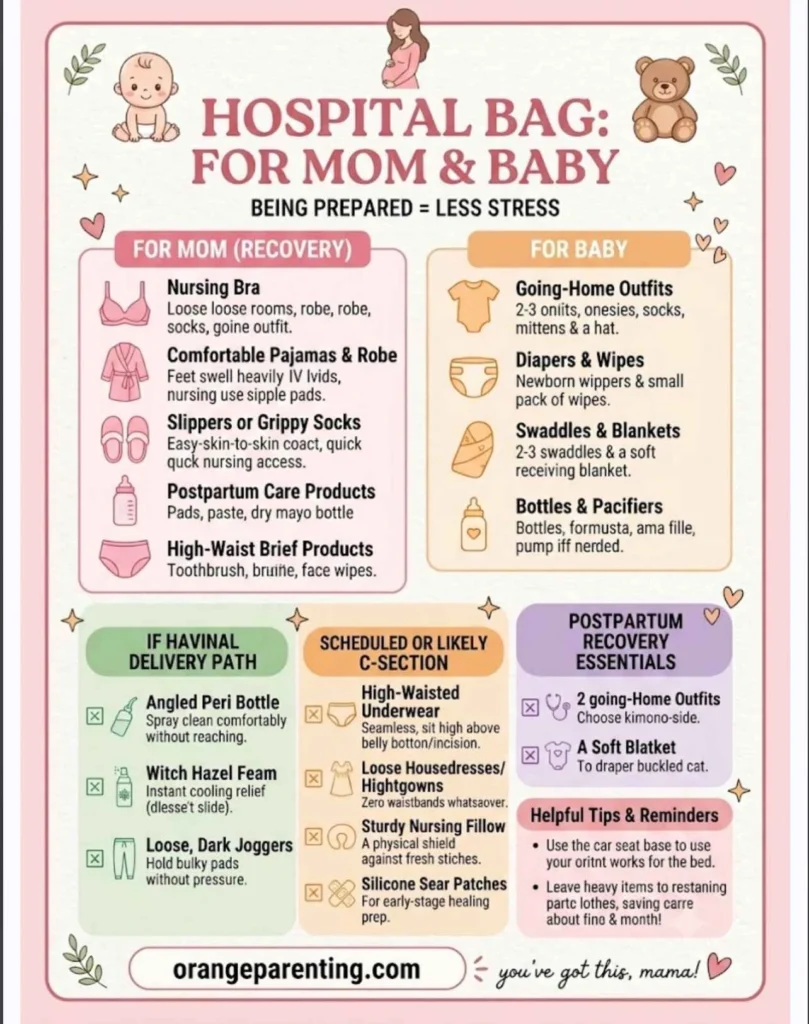
Printable Hospital Bag Checklist
The “What NOT to Pack” List (Save Your Sanity)
The secret of a stress-free hospital stay is small packing. When you take things that you can easily have in a hospital, the medical room becomes crowded.
Before you close the bags, make sure you remove any useless items as follows:
Your Own Breast Pump: Avoid taking it to the hospital, as they will provide a highly efficient, medical-grade pump that even works faster than yours.
Fancy Baby Clothes: Your newborn baby doesn’t need cute photoshoot outfits, tiny shoes, or complex overalls. They stay naked in a diaper and have skin-to-skin contact with you.
White or Pastel Clothing/Robes for Mom: Postpartum bleeding (lochia) is extremely heavy and can even cause stains on clothes, so make sure you don’t bring light-colored pajamas. Stick to black, navy blue, or dark charcoal gray to avoid stain-visibility fear.
Scented Lotions, Perfumes, or Body Sprays: Newborn babies have sensitive senses of smell. They are ok with Mother’s scent or environment but not deodorants or body washes, so make sure to avoid these.
When to Pack Your Hospital Bag?
One of the most common mistakes first-time parents make is they think they have a long time to pack, but it’s not true. While your official due date is helpful, babies are never born on the exact date. Labor can happen when you least expect it, and the main thing you want is your partner running around the house at 2:00 AM trying to find your toothbrush while you are having intense contractions.
To save you and your partner from the last-minute stress of packing, here is the exact timeline you should follow.
Pack the bag before weeks 35 to 36 so you can peacefully go when the labor starts suddenly.
Don’t wait until you are in labor to check the latch system in your car. At 35 weeks, install the infant car seat base or ask the certified Child Passenger Safety Technician (CPST) to install it for more safety.
There are some things you can’t pack before or in week 35 because you use them daily, like makeup, a toothbrush, a phone, and a wallet. For this, prepare a quick checklist and keep these things in the same place so in an emergency you can just add them in a bag.
Frequently Asked Questions (FAQ)
1. Can I pack and wear my own pajamas or gown during labor?
Yes, you can. While the hospital gives a standard hospital gown, if you prefer your own clothes, look for a dedicated “labor and delivery gown” that has opening features at the back and shoulders. Make sure to keep everything that is dark due to heavy bleeding, which will take place after delivery.
2. Do I need to bring my own breast pump to the hospital?
In many cases, no. If the baby needs a pump during your stay at the hospital, they will provide you with one. The only condition you need to pack a pump is to get guidance on it from the hospital’s lactation consultant.
3. Will the hospital let me leave if I don’t have a car seat?
No, according to many countries’ laws, you can’t leave the hospital if you don’t have a vehicle that has an installed infant car seat. Make sure your car seat base is securely installed in your car by week 35 or 36.
4. How many days will I actually stay in the hospital after giving birth?
The length of your stay is completely based on the type of delivery and recovery time you need.
- Vaginal Delivery: You can stay for 24 to 48 hours (1 to 2 nights) if there are no complications.
- C-Section Delivery: You can stay from 72 to 96 hours (3 to 4 nights) so you heal properly.
Always check with your specific hospital and insurance provider, as policies can vary.
5. What is the one thing almost every first-time mom forgets to pack?
The two main things are extra-long phone chargers and heavy-duty lip balm. Hospital rooms are air-conditioned and dry; that’s why you need a lip balm. Additionally, the hospital beds are placed in the center of the room so the charging place is far away from your hand.
6. Can I wear makeup or nail polish during labor?
Yes, you can if you love and feel confidence. Many modern moms are doing this. However, make sure the mascara is waterproof, as you will be emotional when becoming a mom. Avoid wearing dark nail polish or acrylic gel nails.
7. What should I wear on the car ride home from the hospital?
Pack things that are loose, soft, and in a dark color. Many first-time moms feel their belly is still big, like they are in six months of pregnancy, so don’t keep tight jeans; always keep maternity leggings, loose joggers, or a flowy maxi dress when going to the hospital.
