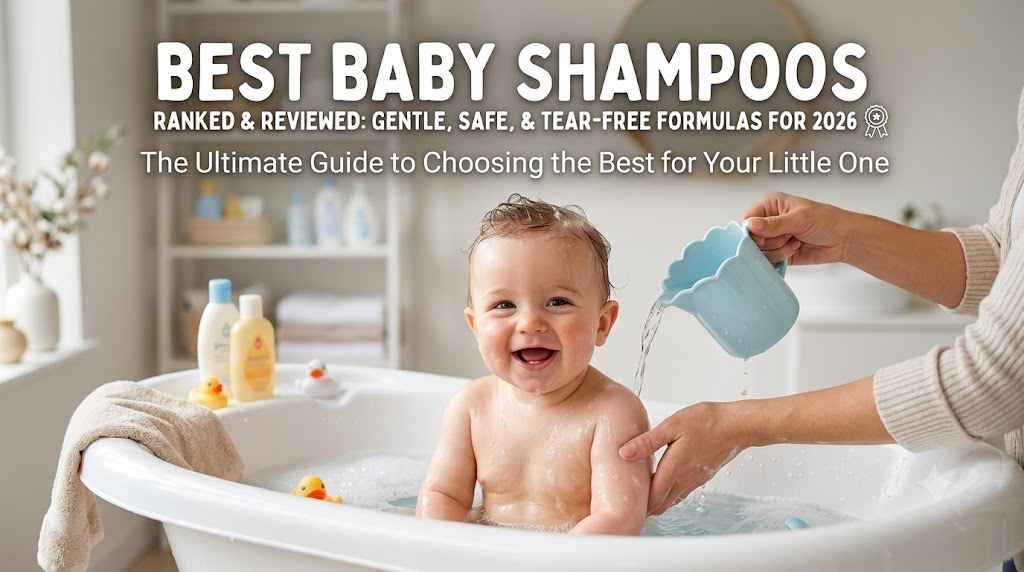
Quick Answer: The best baby shampoo overall is Babo Botanicals Sensitive Baby Shampoo & Wash because of its clean, EWG-Verified, plant-based formula. For babies with eczema, CeraVe Baby Wash & Shampoo is the top dermatologist-recommended choice, while Mustela Foam Shampoo is best for treating cradle cap.
Parenting is a beautiful journey where we experience and learn many things, from understanding what foods are nutritious for kids to finding the best shampoo and wash for baths. When a new parent goes to the shop to buy baby shower essentials, they get confused by seeing a wall of pastel bottles, confusing chemical names, and competing promises.
One brand says it’s natural, another claims it’s tear-free for bedtime, and a third targets sensitive skin, and they all sound appealing, so you’re not sure which one to grab. But always choose a safe formula that won’t strip your skin of natural moisture or cause painful eczema flare-ups.
To help you in making a right decision, I have added 30 top-tier brands in detail, from evaluating their chemical ingredients and real-world parent performance to bottle ergonomics. Whether you are looking for just the best baby shampoo, something to soothe a toddler’s dry scalp, or a budget-friendly option, then this guide will give you everything needed as a parent.
The Structural Flaws of Legacy Formulations: Why Classic Baby Soaps Underperform
For a long time pharmacy shelves have been full of brightly colored baby soaps that work on a single marketing angle that is absolute mildness. For generations parents have been taking these products home, thinking they are safe for skin. However, according to the research on the infant’s outermost layer of skin, it reveals there is a major disconnect. Many soap and shampoo formulas are based on cheap, outdated chemical configurations that can clean everything, but they can also introduce hidden stressors to an infant’s developing skin system.
The Anesthetic Side of “Tear-Free” Marketing
Many companies also claim a shampoo won’t bring tears to eyes at bath time, but not everyone understands the underlying chemistry. A newborn baby’s ocular surface has an approximate neutral pH value of 7.0 to 7.4 based on natural alkalinity; this means they cause sudden stinging when they get in contact with the eyes. To prevent this feedback, companies use different chemicals.
They use older formulas by just using heavy doses of specific ethoxylated compounds. These are mild and desensitize the nerve pathways on the surface of the eye.
While this formulation prevents a crying response, it also takes away the natural eye’s alarm system. In some cases these microscopic quantities of harsh soap sitting on the cornea lead to dry patches or irritation.
The modern clean label brands utilize pure, non-ionic surfactants like Lauryl Glucoside, which are completely clean and don’t sit on the eyes, which is a good thing. This is the reason why you need to check every soap label, especially for children.
The Proprietary Scent Loophole: A Regulatory Black Box
The fresh baby scent is the main culprit of unexplained infant skin flare-ups. When the label ingredients include “fragrance” or “parfum,” it represents a collection of undisclosed components. It means a single scent profile contains several synthetic chemicals.
To keep a scent present in a bottle even when it opens, brands use stabilizing plasticizers, most notably diethyl phthalate (DEP). These chemicals are very harsh on baby skin. Since the baby’s skin is more sensitive as compared to adults’, repeated exposure can cause frequent triggering of contact dermatitis or chronic cradle cap inflammation.
Industrial Degreasers & Slow-Release Stabilizers
To make soap shelf life long, legacy products traditionally use heavy industrial compounds. Aggressive Foaming Agents (SLS and SLES) are heavily based on Sodium Lauryl Sulfate because it is very cheap and can cause immediate, thick lather. However, it can take away the essential fatty acids that keep an infant’s skin barrier intact.
The Red-Flag Check: When reviewing an ingredient panel, actively scan for Quaternium-15, DMDM Hydantoin, Imidazolidinyl Urea, or Diazolidinyl Urea. These ingredients are designed to be very stable for a long period of time in a bottle. But modern brands replace these old-fashioned preservatives with safe plant-based alternatives like sodium benzoate or potassium sorbate.
Standalone Baby Shampoo vs. 2-in-1 Baby Wash: Which Do You Actually Need?
The industry norms are very much based on all-in-one or two-in-one washes because they are easy, but it’s not the best strategy for every developmental stage or hair texture. “Because this is more about the ingredients in products instead of labels. Choosing the right format can keep the scalp hydrated and reduce dryness.
When to Use a Dedicated Baby Shampoo: While 2-in-1 washes are good, they are balanced as body-first products. Kids-only shampoo is designed for kids, so they use a different surfactant profile that accommodates their unique density and oil production of hair follicles.
Management of Persistent Cradle Cap: It is a buildup of natural sebum and skin cells. A 2-in-1 wash design to moisturize the skin often doesn’t have specific keratolytic agents needed to manage it. Shampoos created for cradle cap include plant-derived acids or enzymes that lift debris without affecting the fontanelle of the scalp.
Managing High-Density or Texture-Rich Hair: When babies shift into the toddler phase (18 months+), the hair density, texture, and curl pattern become more complex. A multipurpose wash can’t provide the necessary slip and detangling agents that help in managing hair. Dedicated shampoo makes sure to clean the scalp completely without making the hairs rough.
Some babies are sensitive to lipid-rich emollients found in body washes, so if your babies develop small or non-itchy bumps after a shower, it means the body wash is harsh for their hair follicles; switch to lightweight, dedicated shampoo.
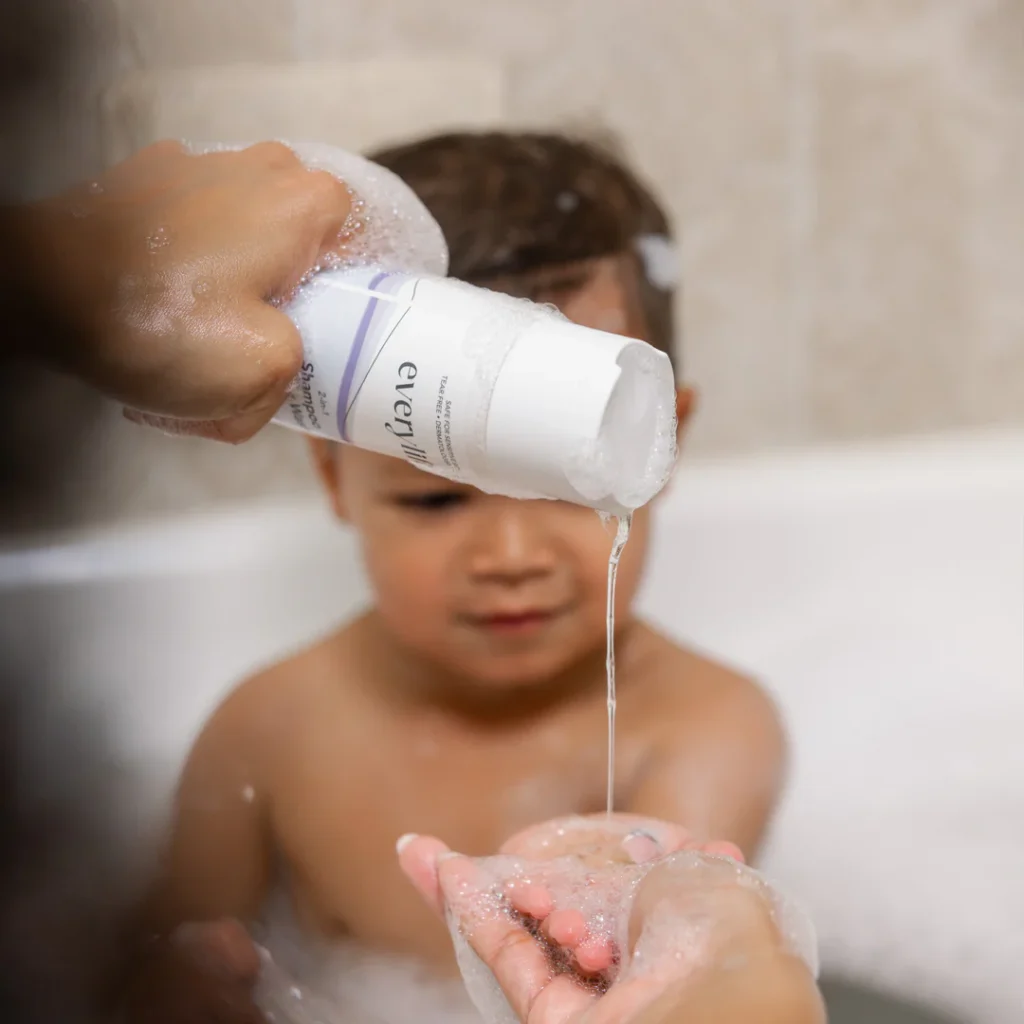
When to Choose an All-in-One Wash?
For the first year once a baby is born, less is more because the newborn’s skin barrier is still developing. Using a single, high-quality 2-in-1 wash is the safest option to maintain skin health.
The first priority is to keep a newborn’s skin’s moisture. The 2-in-1 washes are designed to clean the body. Since these are made from superfatting agents such as natural oils and butters, they help deposit the moisture back into the skin as they cleanse. By using just one product on a baby, you are reducing the exposure to many ingredients, which is important in the first year.
Dedicated shampoos are still not the best choice as compared to 2-in-1 washes because they can be too efficient sometimes.
If a baby has active eczema or extreme dryness, a 2-in-1 product helps in reducing bath time, which is helpful in the situation because prolonged exposure to eczema can lead to transepidermal water loss (TEWL).
Deep-Dive Reviews: The Best Baby Shampoos and Washes of 2026
1. Babo Botanicals Sensitive Baby Shampoo & Wash
It is EWG-Verified; the 100% plant-based matrix includes organic calendula, watercress, and meadowsweet extracts. Free from sulfates, soy, dairy, gluten, and common nut oils. It cleans the hairs effectively, perfect for infants who have hyper-reactive or dry skin. It comes in a broad-bottomed, highly stable bottle. The only drawback is it is a premium product, so it is rarely stocked in traditional grocery stores; you need to order online.
2. Honest Co. Truly Calming Lavender — Best Value & Scent
It is based on natural plant-derived cleansers like coco-glucoside and also infused with the original lavender oil and chamomile extract. Honest Co. Truly Calming Lavender is easily spread on the scalp. The natural lavender oil in it gives a sensory aroma after a bath. It comes in a smooth-clog pump dispenser, easy to handle during a bath. While the product is very natural, it can still trigger sensitivities in infants who have cracked skin or active eczema.
3. Hello Bello Extra Gentle — Best Budget-Friendly Local Pick
It is fragrance-free and a hypoallergenic blend made with allergen isolation, like being free of gluten, soy, dairy, and peanuts, and works best for parents who are avoiding products having these. It has a thinner liquid texture as compared to other premium brands, but it completely removes dirt and easily runs with water. Hello Bello Extra Gentle now comes with a one-handed pump top, which is easily manageable by parents.
4. Aveeno Baby Healthy Start Nourishing Newborn Wash — Best for Infants (0–6 Months)
It is a soap-free and ultra-mild liquid barrier wash that is rich in natural oat kernel extract and helps to protect newborn fragile skin lipid structure. It gives a milky cleanse that helps in reducing dryness or peeling for newborns in the first few weeks of life. It comes in a standard squeeze-and-tilt bottle that is handled easily by parents. There is a heavy presence of oats, which can cause irritation for families who want gluten-free products.
5. Mustela Foam Shampoo for Newborns — Best for Cradle Cap
It includes 99% natural-origin ingredients, depending on avocado Perseose; it also protects the skin barrier and includes 99% mild, non-drying surfactants (like coco-glucoside) mixed with a low dose of salicylic acid. It makes the scalp soft and flake away the scabs related to cradle cap. Mustela Foam Shampoo for Newborns comes in a premium foam-pump container that can be easily handled. While it is good for cradle cap clearing, it lacks the conditioning elements needed for toddler hair.
6. CeraVe Baby Wash & Shampoo — Best for Eczema-Prone Skin
It is based on a formulation of three essential ceramides (1, 3, and 6-II), hyaluronic acid, and vitamin E. All these ingredients help in repairing the damaged skin barrier. CeraVe Baby Wash & Shampoo is free from parabens, sulfates, and fragrances. According to many doctors, it is best for eczema because it deeply hydrates the skin barrier and reduces dry, rough, or cracked skin. Since it is based on heavy inclusion of barrier-repairing means, it can’t lather deeply.
7. Pipette Baby Shampoo & Wash — Best Clean Science
It is based on 100% plant-derived squalene, which mimics vernix, the natural coating that blankets babies in the womb. It works best for babies with dry skin. It comes in an easy-to-use pump dispenser in the bottle. While Pipette Baby Shampoo & Wash is fragrance-free, it still has a raw vegetable-squalane scent, which some parents don’t like.
8. Cetaphil Baby Wash & Shampoo — Best All-Around Clinic Staple
It is infused with organic calendula extract, glycerin, and vitamins B5 and E. It combines dermatologist-backed chemical bases with gentle botanical soothing agents. It saves the skin from irritation and keeps the hairs shiny and soft. It comes in a textured, contoured squeeze bottle. Cetaphil Baby Wash & Shampoo is used by many people in every region; however, it contains a very mild, formulated, allergen-free fragrance, so some parents skip it.
9. Aquaphor Baby Wash & Shampoo — Best for Dry Scalp
It has a simplified soap-free formula that includes light chamomile essence and provitamin B5 to soothe skin surfaces. It helps in preventing moisture loss on the scalp. Aquaphor Baby Wash & Shampoo is available in a large, convenient pump bottle that can be handled easily on a bath shelf.
10. Vanicream Foaming Wash for Baby — Best for Hyper-Reactive Skin
It is completely free from fragrance, dyes, parabens, lanolin, formaldehydes, gluten, and common botanical extracts that are responsible for reactions. It is one of the safest options for babies with sensitive skin. It cleans the skin completely without the need for any chemical ingredient. It comes in an integrated foaming pump top. Since it is free from conditioning oils or botanical extracts, it can cause baby hairs to be a little dry, so make sure you pair it with conditioner.
11. Weleda Baby 2-in-1 Calendula Shampoo & Body Wash — Best Premium Cream Wash
It is a deeply creamy formulation that includes calendula flower extract mixed with sweet almond oil and fair-trade sesame seed oil. It works like a cleansing milk instead of soap; it keeps the newborn hairs safe from getting frizzy and dry. Weleda Baby 2-in-1 Calendula Shampoo & Body Wash comes in an inverted, flexible squeeze tube. Since it heavily relies on sweet almond oil, if your kid or any other member has tree nut allergies, avoid it.
12. Baby Dove Sensitive Skin Care Wash — Best Mass-Market Moisture
The formulation of this Baby Dove is 100% skin-natural nutrients, similar to ones that occur naturally in the skin’s barrier. It is completely hypoallergenic, tear-free, and fragrance-free. It replenishes the skin’s moisture levels up to 24 hours post-bath, which makes it a perfect choice for babies who have dry skin. It comes in a sturdy, wide-base pump bottle, which is easy to use. However, the texture is very thick, like lotion, so it will take time to cleanse.
13. Babi Mild Ultra Mild Head & Body Wash — Best Newborn Import
It is a bioganic-certified daily wash that utilizes natural wheat germ extract mixed with a strictly pH-balanced surfactant base. It is mild on newborns and keeps the infant hairs smooth and manageable without any use of silicone compounds or synthetic coatings. Babi Mild Ultra Mild Head & Body Wash is available in sleek, tall pump bottles that work for a single hand too. Since it is imported from Asia, it is not available everywhere in Western big-box stores.
14. Johnson’s Top-to-Toe Hair & Body Baby Wash — Best Quick-Rinse Legacy Pick
It is based on the classic No More Tears formula that is completely 100% free of sulfates, parabens, phthalates, and synthetic dyes. Johnson’s is very lightweight and water-soluble; it is not greasy, so a baby’s skin can take it down easily. The modern version of this brand includes a wide pump top that is easy to strike down on with an elbow or forearm if your hands are completely occupied. However, it is still formulated with a nostalgic legacy scent, so we can’t call it fragrance-free.
15. Mothercare All We Know Baby Shampoo — Best Standalone Hair Pick
The formula of dedicated shampoo includes natural olive oil extracts and deeply soothing chamomile elements. It is different from 2-in-1 washes because it targets hair strands directly. It cuts through cradle cap grease cleanly, which prevents tangling in fine hairs and gives shiny hairs without weight. It comes in a flip-top squeeze, and only a pump can work for a baby. However, you should avoid using it as a full body wash on a baby, as it reduces the fats needed to prevent the baby’s body from dry patches.
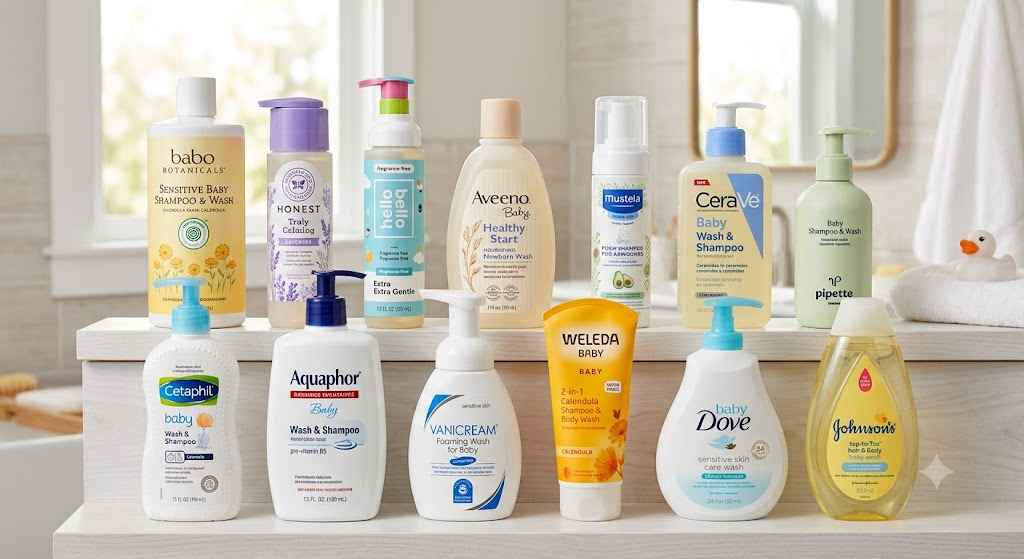
Other Brands that are also recommended for Babies
| Brand | Target Skin/Hair Type | Core Surfactant / Active | EWG Risk Tier | Bottle Mechanism | Key Distinction |
|---|---|---|---|---|---|
| Noodle & Boo Extra Gentle | High-Density / Textured Hair | Milk Protein & Almond Oil | Low-Medium | One-Handed Pump | Luxury salon-scented finish; ultra-detangling |
| Earth Mama Simply Non-Scents | Hyper-Reactive / Newborn | Organic Calendula & Coconut Oil | Verified (Lowest) | Foaming Pump Top | True castile soap base; zero synthetic fillers |
| Burt’s Bees Baby Bee Fragrance-Free | Dry Skin / Cradle Cap | Soy Proteins & Aloe Bark | Low Risk | Standard Squeeze | Natural lipid replenishment; very thick texture |
| Sebamed Baby Wash Extra Mild | Alkaline-Prone / Rashes | Sugar-Based Tensides | Low Risk | One-Handed Pump | Specifically tuned to an exact healthy skin pH of 5.5 |
| California Baby Super Sensitive | Eczema / Chemical Allergies | Decyl Glucoside & Aloe | Verified (Lowest) | One-Handed Pump | Completely free of common dairy, soy, or nut cross-contaminants |
| Alaffia Everyday Shea Baby | Coily / Curly Textures | Unrefined Shea Butter & Neem | Low Risk | One-Handed Pump | Deeply moisturizing; supports fair-trade West African cooperatives |
| Dr. Bronner’s Baby Unscented | Minimalist / Multi-Use | Organic Coconut & Jojoba Oils | Low Risk | Flip-Top Squeeze | Highly concentrated pure castile soap; requires diluting |
| Attitude Baby Leaves 2-in-1 | Normal / Sensitive Skin | Blueberry Leaf Extract | Verified (Lowest) | Standard Squeeze | Plant-and-mineral based; excellent antipollution properties |
| SheaMoisture Raw Shea Chamomile | Thick / Curly Hair | Raw Shea, Chamomile & Argan | Low-Medium | One-Handed Pump | High emollient load; prevents post-bath hair shrinkage |
| Thinkbaby Shampoo & Body Wash | Sun & Outdoor Exposure | Formulation-Safe Synthetics | Verified (Lowest) | Standard Squeeze | Developed under strict premium scientific safety standards |
| Babo Botanicals Eucalyptus Smooth | Congestion / Cold Season | Eucalyptus, Bush Iris & Mint | Verified (Lowest) | One-Handed Pump | Therapeutic comforting vapors; organic plant base |
| Mustela Gentle Cleansing Gel | Normal to Dry Skin | Avocado Perseose | Low Risk | One-Handed Pump | Biodegradable formula; classic hypoallergenic french scent |
| Puracy Citrus Grove 2-in-1 | Eco-Conscious / Budget | Coco-Glycinate & Sea Salt | Low Risk | One-Handed Pump | Available in high-volume, waste-reducing refill pouches |
| Fairy Tales Rosemary Repel | School-Age Toddlers (Lice) | Rosemary, Citronella & Tea Tree | Low-Medium | One-Handed Pump | Clinically targeted to naturally repel school-yard head lice |
| Live Clean Baby Tearless | Budget Eco-Friendly | Chamomile, Lavender & Aloe | Low Risk | Flip-Top Squeeze | 97% plant-derived everyday retail staple |
The Ultimate Parent’s Buyer’s Guide: How to Choose a Baby Shampoo
When you are a parent choosing bath products for a baby, you don’t look at the packaging that has cartoons on the label but find a shampoo whose formula protects the baby’s skin and lets bath time be stress-free. For this, you need to know skin biology, packaging ergonomics, and real value metrics.
Scalp Conditions: Matching Formulas to Skin Biology
As we discussed earlier, the baby skin barrier is 30% thinner as compared to adults, meaning it loses moisture and reacts with the environmental triggers. Always choose shampoo based on the formula that works with your baby specific scalp chemistry.
1. Cradle Cap (Seborrheic Dermatitis): This condition includes an oily, yellowish, crusty scale on the scalp that takes place due to overactive sebaceous (oil) glands often influenced by maternal hormones combined with natural yeast called Malassezia.
If your baby has cradle cap, then avoid using heavy outwash products that have sweet almond or shea butter bases. Look for a lightweight foaming formula that includes mild keratolytic agents such as low-dose salicylic acid or avocado extracts, which soften the flakes.
2. Infant Eczema and Atopic Dermatitis: This condition takes place when the skin barrier fails, leading to raw, cracked, intensely itchy patches. Always look for the formulas that include colloidal oatmeal, ceramides, or hyaluronic acid. Also make sure the product has the National Eczema Association (NEA) seal and is 100% fragrance-free.
3. Normal Skin: Infant skin that is dry occasionally, but there are no breakouts or flaking that takes place. Make sure to buy a shampoo that has non-ionic surfactant bases like Decyl Glucoside or Coco-Glucoside. The formulation needs to have a pH of 5.5 to 7.0 so the moisture level is balanced.
The “One-Handed Pump” Rule: Bath Time Ergonomics
When parents are in a busy shower and the baby is already not sitting properly, a complicated bottle of shampoo or body wash can be stressful, so you have to look for such stuff that is way too open.
| Packaging Style | Operational Reality | Safety Status |
|---|---|---|
| Wide-Base One-Handed Pump | You strike the pump with an elbow, palm, or forearm. The bottle remains stable on the ledge. | Maximum Safety |
| Flexible Inverted Squeeze Tube | Requires you to pick it up, flip a cap, and squeeze with two hands while balancing the child. | High Risk |
| Standard Push-Disk / Flip-Top Cap | Slippery, soapy fingers struggle to pop the disk open. The bottle often falls into the tub. | High Risk |
The Ultimate Red-Flag Checklist: Ingredients to Avoid
When shopping for baby shampoo or body washes, always read the label at the back of the bottle. If you find any of the following chemical compounds, skip that product.
- Synthetic “Fragrance” or “Perfume”: It is a major one containing 3,000 secret chemical compounds, like endocrine-disrupting phthalates, which lock fragrance onto skin.
- Formaldehyde-Releasing Preservatives: If the label has these chemicals, DMDM Hydantoin, Quaternium-15, Imidazolidinyl Urea, and Diazolidinyl Urea, skip the product.
- Harsh Sulfates (SLS & SLES): If the label has sodium lauryl sulfate or sodium laureth sulfate. Avoid the product.
- Ethoxylated Surfactants (PEGs & Polysorbates): If the product has ingredients like PEG-80 Sorbitan Laurate or Polysorbate-20, they are often found in brands that have tear-free products.
- Methylisothiazolinone (MI) & Methylchloroisothiazolinone (MCI): If the label has these chemicals, avoid AD; they are extremely harsh on babies’ sensitive skin.
Why can’t I use adult shampoo on baby hairs?
It can be common for you to accidentally take your own shampoo while you are in the shower with the baby; however, it is not recommended because the adult formulas are fundamentally mismatched with infant biology. If you use adult shampoo on a baby, it will burn their eyes and cause chemical irritation and dryness in the scalp. To understand more on this topic, let’s look at the factors.
1. The pH Level Matrix
Your skin is protected by a thin and acidic film called the acid mantle. Adult skin pH is 4.5 to 5.5, so adult shampoos don’t have any effect on them; however, infant skin has a pH of 6.5 to 7.0. When you apply adult acidic shampoo to a baby’s scalp, it reacts and causes irritation, leading to bacteria exposure, rashes, and extreme dryness.
2. The “Tear-Free” Nerve Reflex
Adult shampoo is highly perfidious; they use surfactants that burn babies’ eyes immediately. Babies can’t shut eyes like adults quickly while running the shampoo on their scalps because their corneal blink reflex is still under development. Baby shampoo manufacturers understand this, so they formulate their formula with ultra-mild, non-ionic surfactants.
3. Skin Thickness and Absorption Rates
Infant skin is thinner than adults’, and shampoos that are for adults contain synthetic fragrances, artificial dyes, and strong preservatives such as parabens or methylisothiazolinone, which isn’t suitable for baby skin and causes allergies and chemical dermatitis.
4. Over-Stripping Essential Sebum
Adult shampoo is made to take out natural hair oil. Babies have almost zero sebum until they hit puberty, so if you use adult shampoo on them, it won’t just clean the hairs; it will dry out the hair follicles completely, leading to an itchy scalp and causing conditions like cradle cap and eczema.
What is the recommended bathing and hair washing frequency for newborns versus older toddlers?
New parents get surprised when they learn bathing babies, less is always more because the infant’s skin is very thin and doesn’t produce the same oils as adult skin; over-bathing can lead to eczema and chronic dryness. The ideal time for a baby bath varies from a newborn to an active and mobile toddler.
Newborns (0 to 3 Months): The Minimalist Phase
At this stage the baby isn’t dirty; they aren’t playing in dirt or sweating heavily. The bathing time can be 2 to 3 times a week. You can wash their hairs once a week unless the baby has active cradle cap flare-ups. Focus on washing the baby from top to tail, then use a warm, damp washcloth to wipe down the face, neck folds, hands, and diaper area daily. Never submerge a newborn in a tub of water. Stick to sponge baths.
Sitters & Crawlers (4 to 12 Months): The Transitional Phase
When babies start crawling, they get dirty while playing on the floor or exploring new solid foods. Stick to 3 to 4 baths a week and hair washing 1 to 2 times a week. Only use baby soap on the areas where there is dirt, like the diaper area, hands, and food-covered neck folds. For other body parts use plain warm water.
Older Toddlers (1 to 3+ Years): The Daily Mess Phase
Toddlers love to explore, so they run, sweat, dig in the dirt, and get their hands dirty while eating. Toddlers need a daily bath; however, it also depends on the season. The hair wash time can be 2 to 3 times a week. Make sure there is no overwashing, as it leads to tangled strands and an itchy scalp.
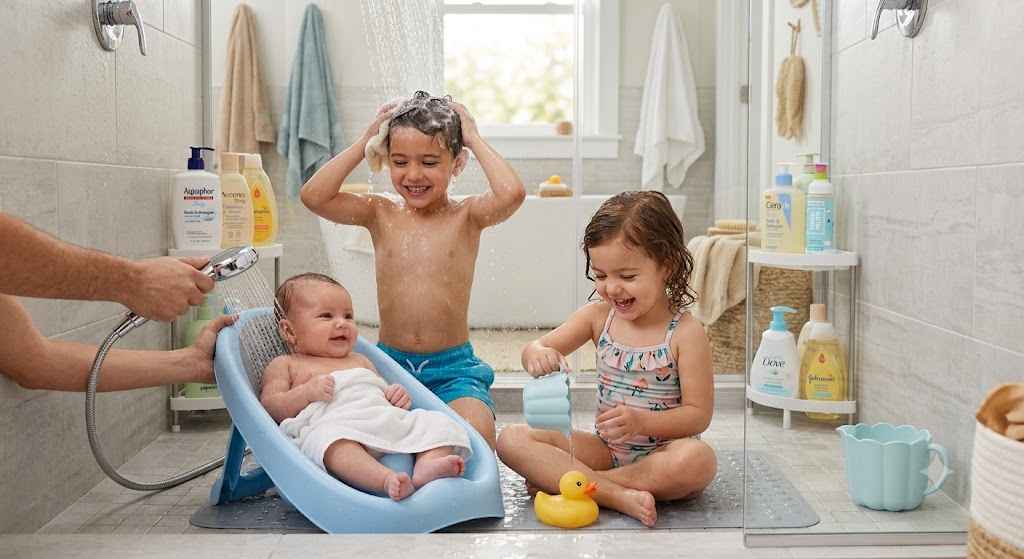
What are the best tips for washing a baby or toddler’s hair without causing eye irritation?
Washing a baby or toddler’s hair can look easy and be a relaxing task until the water or soap gets into their eyes accidentally. Once the child faces the burning sensation, deep-seated fear of hair washing can take place. The secret of tear-free washing is a combination of physical positioning, sensory redirection, and having the right tools.
1. The Physical Positioning Techniques
Controlling the tilt of a child’s head can be a perfect mechanism so the shampoo doesn’t go on the face. If your toddler can’t sit long in the tub and moves, then add a colorful sticker, a glowing toy, or a fun picture on the ceiling directly above the tub that has “Keep your eyes locked on the dinosaur until I say all clear” written on it. This way they will keep the eyes close.
While washing hair, give your baby forearm support so the water passes easily. Use your hands to scoop warm water over their scalp.
2. Low-Cost Mechanical Tools That Work
If those tips aren’t working alone, then you can also use these low-cost mechanical tools, which can create a highly effective physical barrier against water.
| Tool | How It Helps | Best For |
|---|---|---|
| A Dry Washcloth | Fold a small, dry washcloth into a thick rectangle. Have your toddler hold it firmly against their eyebrows like a sweatband whenever you rinse. It instantly catches any stray drips. | Toddlers who want control |
| A Bath Visor / Cap | A flexible, silicone, brimmed hat that slips snugly onto the crown of the child’s head. It funnels all water outward and away from the face, acting like an umbrella. | Toddlers with intense water fear |
| A Contoured Rinse Pitcher | A specialized plastic pouring pitcher equipped with a soft, flexible rubber edge that conforms perfectly to the shape of your child’s forehead, creating a temporary watertight seal. | All ages |
3. The Step-by-Step “No-Panic” Hair Wash Routine
To keep things calm, use the following steps.
Step 1: Use a damp washcloth to wet the baby hairs, starting from the back of the neck and then moving slowly upward. Do not pour water directly onto the top of the head yet. Always apply a dime-sized amount of shampoo.
Step 2: Rub the tear-free shampoo on your palm first, then massage it on the baby’s scalp gently.
Step 3: Before rinsing, use your dry thumb to wipe remaining suds away from your forehead; clear the area near your eyes.
Step 4: Guide your child to look at the ceiling target. Pour warm water slowly from the forehead hairline backward toward the spine. Use a dry towel immediately.
Interactive Baby Shampoo & Wash Finder
Filter options by age, skin condition, and safety preferences to find your match.
How to Overcome Existing Bathtime Fears? For toddlers
If your child is terrified of hair washing, then you have to desensitize them to the sensation of water on their head. Let them play with plastic dolls during the day; give them a little water and let them practice washing the doll’s hair so they know it is an easy process, not a terrifying one.
Also give them a dry hand towel so they can dry the doll after washing it. Tell them to wipe the eyes the second they feel water is over them.
The Bath Time “Grab List” Blueprint
| Category | Must-Have Item | Primary Functional Purpose | Pro-Parent Placement & Strategy |
|---|---|---|---|
| The Wash Station | Best Baby Shampoo & Wash | Cleanses thin infant hair and skin folds without stripping essential lipids. | Place on a flat, stable edge within arm’s reach. Ensure the pump nozzle faces your dominant hand. |
| Contoured Rinse Pitcher | Funnels water backward over the crown to prevent soap drips from stinging eyes. | Keep it sitting inside the tub basin while filling so it is warm and ready to scoop. | |
| Two Cotton Washcloths | Cloth 1: For gentle body wiping. Cloth 2: Folded dry to act as an eye shield. |
Drape them over the dry edge of the tub. Never leave them floating in the basin where they get cold. | |
| Safety Devices | Silicone Faucet Cover | Cushions the sharp metal bath spout to prevent accidental head and spine impacts. | Slide firmly over the main water spout before your child enters the water. |
| Non-Slip Rubber Mat | Provides mechanical traction for slippery, wet toddler feet and sitting infants. | Suction firmly to the bottom of the tub basin prior to filling it with water. | |
| The Exit Strategy | Hooded Terry-Cloth Towel | Instantly wraps the child post-bath to prevent rapid evaporation chill. | Spread open flat on your changing pad or toilet lid right next to the tub for a fast transition. |
| Fresh Diaper & Cream | Secures the child immediately after drying before any post-bath accidents happen. | Stack cleanly underneath your open towel along with a fresh set of pajamas. | |
| The Secret Weapon | The “Shield” Washcloth | (For baby boys) Prevents warm-water contact from triggering an unexpected spray. | Keep a spare washcloth floating in the warm water; drape it loosely across his lap the moment he sits. |
Medical Disclaimer: The information shared here is based on personal parenting experiences, product research, and general public knowledge. It does not constitute professional medical advice, diagnosis, or treatment.
References and Scientific Sources
If you are a parent or healthcare provider looking to review the clinical data behind our recommendations, please consult these primary pediatric, dermatological, and regulatory studies:
Pediatric Bath and Scald Safety Standards
- Bath Time Safety Tips on Pediatrics Northwest.
- AAP Infant Water Safety and Drowning Prevention Guidelines.
- NEA Product Directory.
- EWG Skin Deep® Cosmetics Database.
