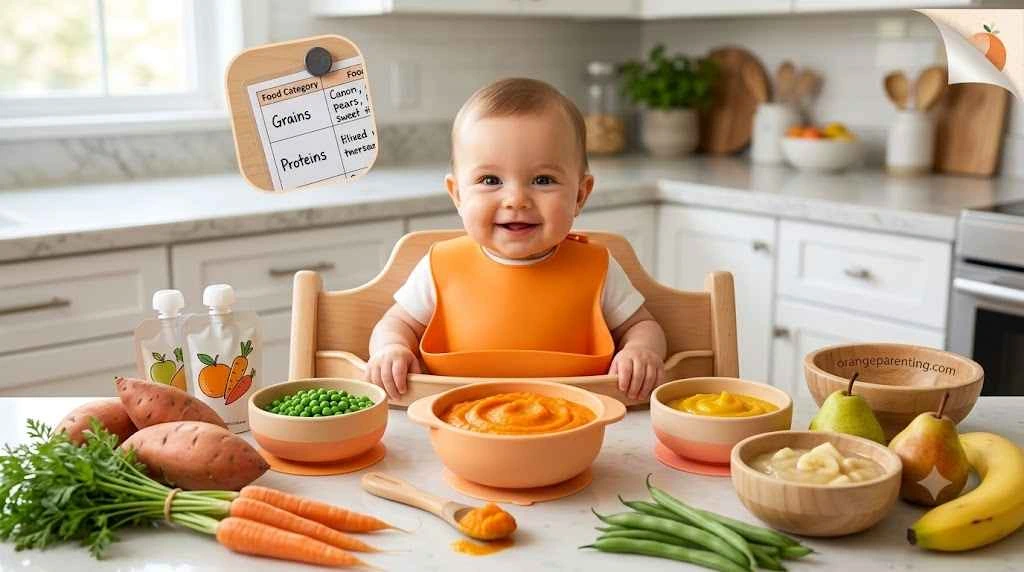
Quick answer: A healthy 7 month baby food chart includes 2–3 small solid meals daily alongside 24–32 oz of breast milk or formula. Focus on iron-rich staples like fortified oatmeal, pureed meats, and mashed vegetables. Gradually transition from smooth purees to fork-mashed textures over four weeks, introducing one new food at a time to monitor for allergies.
When you become a parent, you learn many things, from a baby crawling to sleep to food; everything changes and works according to the newborn. When babies turn 7, they are likely to become experts at swallowing and ready to taste a wide range of food with different flavors and textures. Breast milk and formula are still the main sources of nutrition; however, solids also play an important role in baby development.
In this guide we will look completely at the food items that are actually recommended to a 7-month-old baby, a 7 month baby food chart with each week’s separate menu, and what portion is suitable for a baby, so let’s start.
Sample Daily Routine for a 7-Month-Old
At this age babies don’t follow a strict schedule; the main source is still milk feeds. However, you can balance it with solid meals.
| Time | Activity |
|---|---|
| 6:30 AM | Wake up, breastfeed or formula |
| 8:00 AM | Breakfast (Solid food) |
| 9:30 AM | Naptime |
| 11:00 AM | Breastfeed or formula |
| 12:30 PM | Lunch (Solid food) |
| 2:00 PM | Afternoon nap |
| 3:30 PM | Breastfeed or formula |
| 5:30 PM | Dinner (Solid food) |
| 6:30 PM | Bath time & play |
| 7:15 PM | Bedtime feed (Breast/formula) |
| 8:00 PM | Sleep |
Best Foods for 7-Month-Olds
We are following the US diet approach, which is based on iron-fortified cereals, early allergen introduction such as peanut butter, and a mix of purees and soft finger foods.
| Food Category | Options | How to Prepare |
|---|---|---|
| Grains | Iron-fortified oatmeal, quinoa, brown rice | Cook until very soft; blend or mash. |
| Proteins | Chicken, turkey, beans (black/pinto), tofu, egg yolk | Steam/boil until tender; puree or mash. |
| Vegetables | Sweet potato, butternut squash, peas, broccoli | Steam until soft; mash or puree. |
| Fruits | Avocado, banana, pear, peaches, blueberries | Ripe and mashed or pureed. |
| Dairy | Full-fat Greek yogurt (plain/unsweetened) | Serve as is or mixed with fruit. |
4-Week Diet Chart for a 7-Month-Old
| Day | Breakfast | Lunch | Dinner |
|---|---|---|---|
| Mon | Oatmeal | Sweet potato mash | Avocado puree |
| Tue | Rice cereal | Green pea puree | Banana mash |
| Wed | Oatmeal | Butternut squash | Pureed chicken |
| Thu | Banana mash | Carrot puree | Oatmeal |
| Fri | Quinoa porridge | Sweet potato | Pear puree |
| Sat | Rice cereal | Pureed turkey | Avocado mash |
| Sun | Oatmeal | Pumpkin puree | Black bean mash |
Week 2: Adding Variety & Texture
| Day | Breakfast | Lunch | Dinner |
|---|---|---|---|
| Mon | Oatmeal + Peach | Pureed chicken | Mashed peas |
| Tue | Greek yogurt | Quinoa + Squash | Banana mash |
| Wed | Rice cereal | Mashed egg yolk | Sweet potato |
| Thu | Oatmeal + Apple | Pureed turkey | Avocado |
| Fri | Quinoa + Banana | Pureed lentils | Carrot mash |
| Sat | Greek yogurt | Mashed avocado | Pureed chicken |
| Sun | Oatmeal | Steamed broccoli | Pear mash |
You can continue this pattern for week 3; however, make sure to rotate the protein and vegetable sources. Give new food to the baby every time and wait for their reaction.
Week 3: Adding Textures & Proteins
This plan focuses on introducing iron-rich proteins.
| Day | Breakfast | Lunch | Dinner |
|---|---|---|---|
| Mon | Oatmeal + Peach | Pureed Turkey | Mashed Avocado |
| Tue | Greek Yogurt | Egg Yolk (mashed) | Pureed Butternut |
| Wed | Quinoa + Banana | Pureed Chicken | Steamed Broccoli mash |
| Thu | Oatmeal + Apple | Pureed Turkey | Mashed Black Beans |
| Fri | Greek Yogurt | Egg Yolk | Sweet Potato + Chicken |
| Sat | Quinoa + Pear | Tofu mash | Pureed Carrots |
| Sun | Oatmeal + Banana | Pureed Turkey | Mashed Avocado |
Week 4: Diverse Flavors & Routine
This meal plan is Focused on Lumpy and mashed fruits, etc.
| Day | Breakfast | Lunch | Dinner |
|---|---|---|---|
| Mon | Oatmeal + Blueberry | Turkey + Squash | Mashed Black Beans |
| Tue | Quinoa + Peach | Chicken + Broccoli | Egg Yolk + Sweet Potato |
| Wed | Oatmeal + Apple | Turkey + Carrots | Greek Yogurt |
| Thu | Greek Yogurt | Chicken + Peas | Quinoa + Mashed Pear |
| Fri | Oatmeal + Banana | Turkey + Squash | Mashed Black Beans |
| Sat | Quinoa + Apple | Tofu + Broccoli | Egg Yolk + Sweet Potato |
| Sun | Oatmeal + Peach | Chicken + Carrots | Mashed Avocado |
Quick-Reference Grocery Checklist for Parents
When you go for groceries, make sure to buy the following things:
- Look for pantry staples like iron-fortified oatmeal, brown rice/quinoa, olive oil, and avocado oil.
- Look for sweet potatoes, butternut squash, bananas, avocados, frozen peas (thawed), and blueberries.
- Look for chicken breast, turkey breast, firm tofu, eggs, and canned black beans. Make sure they are low in sodium.
- Look for plain, full-fat Greek yogurt (check labels for “no added sugar”).
Important Notes for Parents
Make sure to always steam vegetables like carrots and apples until they become completely soft so they can mash perfectly. Stick to the 3-day rule, like giving the same protein food for 2 weeks and checking the reaction of the baby, then changing the protein source.
Once your baby is comfortable with daily basic foods, experts suggest introducing them to allergens like thinned-out peanut butter or cooked egg. Mix these with the food base so the baby tolerates them well.
Don’t stop giving them milk or formula, as it is a main source of nutrition. Offer a small amount of water after every meal, as it helps in better digestion.
Daily Portion Guidelines for a 7-Month-Old
When babies turn 7 months old, their stomach size is the same as the size of their fist. They need to get the following amount of meals alongside milk.
| Food Category | Recommended Serving Size (Per Meal) | Daily Total Estimate |
|---|---|---|
| Iron-Fortified Cereal/Grains | 2–4 tablespoons | 4–8 tablespoons |
| Vegetables (Pureed/Mashed) | 2–3 tablespoons | 4–6 tablespoons |
| Fruits (Pureed/Mashed) | 2–3 tablespoons | 4–6 tablespoons |
| Proteins (Meat/Beans/Tofu) | 1–2 tablespoons | 2–4 tablespoons |
| Full-Fat Yogurt | 2 tablespoons | 2–4 tablespoons |
How to Calculate Enough (The US Approach)
Unlike a strict rule of a feeding schedule, the UA pediatricians usually recommend a responsive feeding technique.
The Starter Rule: Give your baby just 1 to 2 tablespoons of a single food to check how the baby reacts. If the baby eats it all and looks interested, then give another spoon.
The Full Signals: Remember, as a parent, you are a guider. When the baby is done eating, they will show you some signs, like leaning back in the high chair, rejecting the spoon by turning their head away, and closing their mouth forcefully when you are giving them food and behaving distracted.
The 7-Month Target: By the end of month 7 your main goal is to make the baby comfortable with eating 2 or 3 little meals in a day, or, you could say, 1/4 cup of food total per meal.
Pro-Tip: The Easy-Measure Visual for Parents
- 1 meal = the size of a baby’s clenched fist.
- Daily goal = 24 to 32 ounces of breast milk or formula and 2 to 3 small solid food meals.
- If a baby skips a meal, is not interested in eating, or eats a small amount, then don’t panic; it is very normal when they are testing the taste of every new food item. They are already getting full nutrition from breast milk or formula.
Also Read: The Ultimate Guide to Introducing Solids to Baby: Timing, Foods & More
4 Easy & Nutrient-Dense Recipes for Your 7-Month-Old
Following are some amazing and easy recipes.
1. Creamy Avocado & Banana Mash
This recipe is perfect if you want to introduce healthy fats and potassium to babies. No time will be consumed in cooking.
- Ingredients: 1/2 ripe avocado and 1/2 ripe banana.
- Method: Put both in the same bowl and mash them properly with the help of a fork until a smooth texture appears. If your baby is eating solids for the first time, then add some milk to it to make it thin.
- Why it’s great: Excellent for brain development and easy to digest.
2. Iron-Fortified Oatmeal with Apple Puree
A classic American breakfast that makes sure the baby is getting the needed iron.
- Ingredients: Take 2 tbsp iron-fortified instant baby oatmeal, 1 small apple, and 3 tbsp water or breast milk.
- Method: First boil the apple slices properly, then blend the apple in a blender and prepare oatmeal according to the packet instructions. Lastly, stir apple puree into oatmeal.
- Why it’s great: Apples are rich in fiber, whereas cereals provide iron.
3. Sweet Potato & Turkey Puree
If you are looking for a lunch option that is a mixture of both carbohydrates and needed protein, then this recipe is a perfect fit for your baby.
- Ingredients: 1 small sweet potato and a turkey breast.
- Method: First peel and cut sweet potatoes and steam until they become tender. Cook the turkey completely, then add both potato and turkey in a blender with some water or low-sodium chicken broth so a smooth texture appears.
- Why it’s great: Sweet potatoes are rich in vitamin A, and turkey is a good source of protein.
4. Green Machine Pea & Quinoa Mash
If you want to introduce the superfood grains and greens to babies, then use this recipe.
- Ingredients: 1/4 cup cooked quinoa, 1/4 cup frozen peas, and 1 tsp olive oil.
- Method: Steam the peas, then blend quinoa, peas, and olive oil until a thick, smooth texture takes place.
- Why it’s great: Quinoa is rich in protein and a perfect alternative to traditional rice cereals, providing more nutrition.
Pro-Tips for Successful Cooking
Avoid using microwave hotspots. If you want to reheat a frozen batch of food, then place the container in a bowl with hot water for 5 minutes. Stir completely and make sure to test the temperature of food on your wrist before serving it to a baby.
Life is busy in my country, the US; the parents rely on efficiency. If you are a busy parent, then spend Sunday on cooking the turkey, sweet potatoes, and quinoa. Store them in ice cube trays in the freezer. One cube is equal to 1 ounce, making portion control a breeze.
If you want to introduce a common baby allergen like peanut butter, then add 1/4 teaspoon of unsalted peanut butter to the oatmeal with apples recipe. The baby will surely accept this new flavor.
Understanding Liquid vs. Solid Balance: Why Milk Remains #1
When a baby turns seven months, it is very common for parents to feel worried if the baby is getting enough solid food or not. However, it is also important to remember the infant is already getting enough nutrition from breast milk or formula. Means it is a primary source of calories, healthy fats, and hydration. Introducing solids intended to serve two primary purposes:
Nutritional Bridge: At 7 months the baby’s natural iron starts to deplete, which means they want iron, which is easily obtained from solid food items like iron-fortified cereals, pureed meats, and beans.
Sensory Development: Solids help the baby to learn the mechanics of eating that include flavor and texture. At this stage babies practice moving food from tongue to back, swallowing thicker food, and coordinating their jaw muscles. If your baby eats light solid foods only, then don’t worry; they will eat heavy solid foods too with time.
Consistency Evolution: From Runny to Chunky
How you make the food matter more than how you feed it to a baby means you don’t need to serve the same texture to your 7-month-old baby that you gave them on the first day of introducing solids. A gradual progression helps the baby develop oral-motor skills.
- Week 1 (The Runny Phase): Start by giving baby thin and liquid-like purees. You can easily make a thin liquid by blending cooked vegetables or fruits with some breast milk, formula, or water, whatever you prefer. The thin mixture will be easy to swallow.
- Weeks 2-3 (The Smooth Phase): When the baby has adjusted to liquid purees, you can cut back on the amount of liquid you add, i.e., serve thick purees, like applesauce or yogurt.
- Week 4 (The Chunky/Mashed Phase): At this stage you can introduce baby-mashed food items like bananas, steamed sweet potatoes, or avocado.
Troubleshooting Portion Refusal: Is It Taste or Texture?
If you notice that the baby is refusing to eat or spitting it out, you may think they don’t like the tastes, but it’s actually the texture that’s the main issue. Check for the following:
The Texture Test: Check if the food is too thin or too grainy because some babies hate grainy textures. If that’s the problem, then make the puree smoother.
The Temperature Factor: Sometimes the main reason why babies reject food items is that they are too warm, so make sure you test the food on your wrist before serving.
The Pressure Effect: Another mistake parents make is they force a spoon on a baby’s mouth, which is why they push it away. It’s not because they dislike the food; it’s because of the pressure. Avoid doing this; offer them the same spoon again after 5 minutes.
The 15-Try Rule: According to the experts, a baby can become comfortable with food once they are exposed to it 10 to 15 times. If your baby rejects carrot mash, then don’t offer it on the same day; give that again 3 days after it.
Medical Disclaimer: The information provided in this article is for educational purposes only and is not a substitute for professional medical advice, diagnosis, or treatment. Always consult with your pediatrician before introducing new foods to your baby’s diet, especially if you have concerns regarding allergies, developmental milestones, or specific nutritional needs. Never disregard professional medical advice or delay in seeking it because of something you have read here.
When to Consult a Speech-Language Pathologist (SLP)
Gagging and messy eating are a part of normal milestones, but sometimes a baby needs help with the feeding mechanism, so contact your speech-language pathologist (SLP) or an occupational therapist (OT) when you notice the following symptoms.
- Persistent Gagging: When a baby gags on every meal.
- Aversion to Textures: when a baby refuses every lumpy or chunky food every week or only eats one to two textured foods.
- Swallowing Difficulties: A baby finds it difficult to swallow, showing signs like coughing, choking, or wet-sounding breathing after meals.
- Poor Growth: The baby isn’t gaining any weight.
Meal Prep Efficiency: Homemade vs. Store-Bought
Many busy parents in well-developed countries like the US prefer store-bought pouches for convenience; however, making food for babies at home is more beneficial as compared to store-bought ones. Let’s look at the comparison briefly.
| Feature | Homemade Mashes | Store-Bought Pouches |
|---|---|---|
| Nutritional Quality | High (Fresh, whole-food ingredients) | Variable (Often pasteurized, high heat) |
| Cost | Very Low ($) | High ($$$) |
| Texture Variety | Encourages chewing (mashed/chunky) | Always smooth (can delay oral skills) |
| Control | Full control (no salt, sugar, or thickeners) | Check labels (hidden fillers/additives) |
| Convenience | Prep once/freeze for the week | Immediate (on-the-go) |
Introducing homemade purees and mashes to babies not only gives them a wide range of flavors and textures, but it also helps in preventing picky eating in coming years. You can consider a store-bought one for emergencies but prioritize homemade food for daily meals.
Frequently asked questions by people: 7-Month Baby Food Chart
1. Is it actually possible to keep the high chair clean?
No, chasing perfection is not right at the moment, so stop trying to keep the chair pristine. Invest in floor mats and accept a baby can make the floor dirty; it is a part of their development. Don’t stress out; it’s temporary.
2. My baby spits out everything. Does this mean they hate the food?
No, it doesn’t mean they hate the food because at the age of 7 months they are still understanding the taste and confused by different textures. They aren’t rejecting food; they are experiencing new things.
3. What do I do when my baby reaches for my plate instead of their bowl?
Well, consider it an amazing milestone; if you are eating something that is safe for babies too, then give them a small amount of your meal to try. This will build confidence and make them feel a part of the family at the dinner table.
4. Is the 3-day rule for new foods mandatory?
Yes, it is perfect in modern parenting. If your baby isn’t allergic to any food item and has no history of eczema, then you don’t need to wait 3 days to introduce new food items. If your baby has food allergies, then keep the 3-day rule.
5. Why is my baby’s poop changing so much?
Many people notice when they start introducing solids, there is a change in diapers. You may notice small foods in baby poop like sweet potato or quinoa because they aren’t broken down in the digestive system. Unless the poop is hard like pebbles or liquid, you don’t need to worry.
6. Do I really need to buy expensive baby food makers?
No, you don’t need to buy these; you can just use a simple fork. It will mash a food item finely, or you can also steam the thick food items.
7. How do I handle the mealtime power struggle?
Don’t entertain them while eating, like dancing, singing, or distracting while eating will make them ignore their own satiety cues. Once the toddler is done eating, it means they are done.
8. Can I feed my baby leftovers from our dinner?
Yes, you can. If you are making a spicy and salt-rich turkey, then make sure to take out a baby portion before adding heavy salt or spices. This will save your time to make a separate baby meal.
9. What is the 7-month slump in feeding?
Around 7 months, babies are more interested in the environment than eating. You can call it “look at me, not the food” phase. It is completely normal if they are distracted; however, don’t force them to eat solids.
10. How do I know if they are actually choking vs. just gagging?
These can be a part of fear for parents; however, they both are different. Gagging is loud; a baby will show signs like sputtering and coughing when you feed them solids, whereas with choking, they can’t breathe or make noise. If your baby just makes noises while eating, then they are learning to swallow, so always watch them and don’t overthink anything unless you see these signs.
