Most language apps will get you to “annyeonghaseyo,” “Hello,” “Hi,” or “How are you?” and stop there. Live Korean lessons are what actually move the needle past simple greetings, but finding the right platform is genuinely tricky. Scheduling around time zones, tracking down qualified native speakers, and staying consistent once the novelty wears off are real obstacles. After reviewing dozens of platforms based on tutor quality, flexibility, and how well they support learners from Hangul basics to TOPIK prep, this guide covers the top six options worth your time and money.
The shortlist methodology
Options were ranked by pulling publicly available information from user reviews, platform directories, and official websites, with only those demonstrating a proven track record in language education making the cut.
→ See the full research breakdown
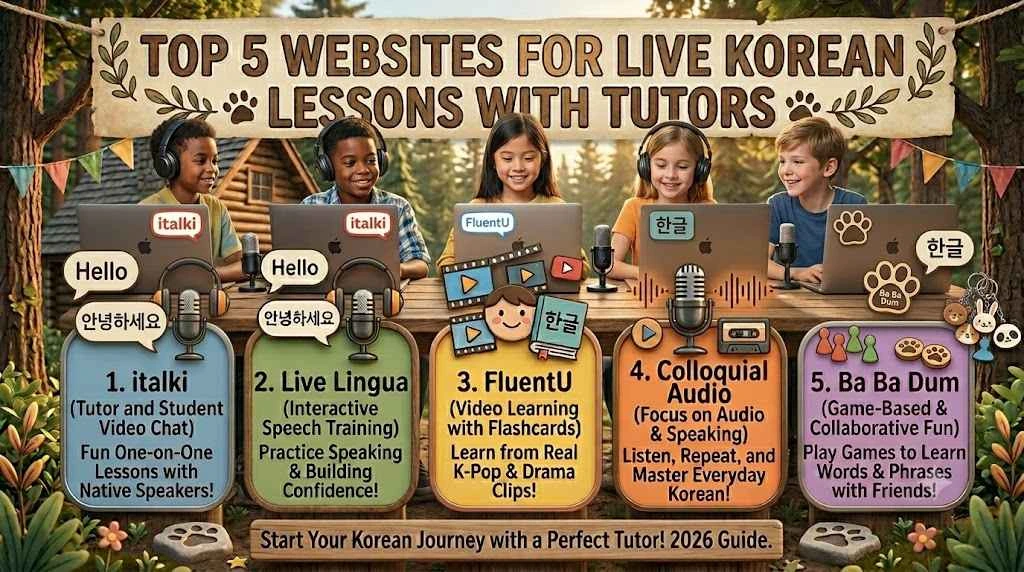
- italki—Best for one-on-one language learning with native speakers
- Live Lingua – Best for personalized online language learning and immersion
- FluentU – Best for language learners seeking immersive video-based education
- Colloquial Audio—Best for language learning audio supplements
- Ba Ba Dum – Best for vocabulary learning through gamified language education
The Cost of Overlooking Live Korean Lessons
Skipping live instruction and relying only on apps creates a ceiling that’s frustratingly hard to break through.
Without real conversation practice, pronunciation drifts and speaking confidence stalls. This hits especially hard at the intermediate stage, where most learners hit a wall and can’t seem to get past it.
Finding qualified native Korean-speaking teachers across different time zones takes real effort, and fitting consistent lesson schedules around a packed workweek adds another layer of friction.
The right platform removes both problems at once. Learners who commit to structured live lessons see measurable gains in lesson completion rates, stronger confidence when they feel genuine progress, and real movement on TOPIK score benchmarks that purely app-based learning rarely delivers.
Top 5 Live Korean Lessons; Specs at a Glance
Note: All data in this table is sourced from review platforms and the official websites of the listed companies.
| Company Name | Years Operating | Headquartered In |
| italki | Since 2007 | Hong Kong |
| Colloquial Audio | N/A | N/A |
| Live Lingua | Since 2008 | Boston, Massachusetts |
| FluentU | Since 2011 | Hong Kong |
| Ba Ba Dum | Since 2014 | Poland |
1. italki—Best for One-on-One Learning with Native Speakers
What Does italki Provide?
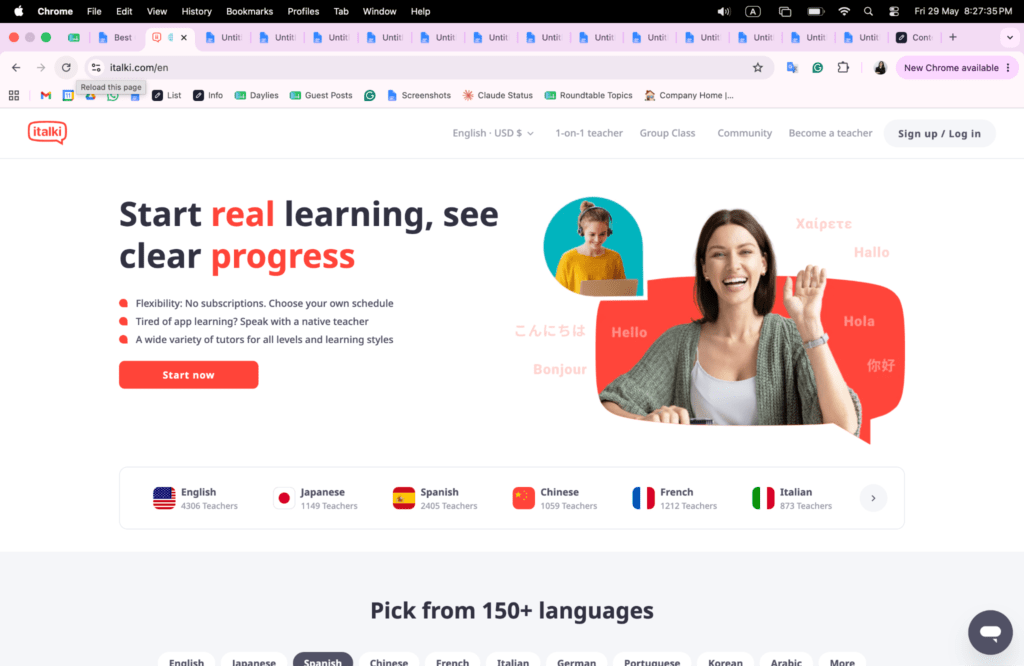
italki connects students with native-speaking Korean tutors for live, one-on-one video lessons, operating across more than 130 languages on a flexible pay-per-lesson model. Learners can browse teachers at https://www.italki.com/en/teachers/korean and filter tutors by specialty, availability, budget, and teaching style. The platform includes both certified professional teachers and community tutors, allowing learners to match their lessons to specific goals. Whether someone is learning conversational Korean for travel, studying for TOPIK, or just starting with Hangul, the variety of tutors here is hard to match on any other platform.
Why Is italki Built for Live Korean Lessons?
italki directly addresses the challenge of finding qualified native speakers across time zones by giving learners access to thousands of tutors worldwide, searchable by schedule and area of focus. That kind of flexibility is rare in live language learning and makes consistent lesson attendance far more achievable for busy adults.
Customer Review Snapshot
Students consistently highlight the quality of live interaction and how much faster their speaking fluency improved compared to app-based study. The pay-per-lesson model is often mentioned as a genuine plus (no locked subscriptions are a big deal for people who travel or have unpredictable schedules). A few reviews note that lesson quality varies between tutors, which is worth keeping in mind when booking your first session.
2. Live Lingua – Best for Personalized Online Language Immersion

What Does Live Lingua Provide?
Live Lingua offers personalized, live lessons in 11 languages delivered by certified native-speaking tutors, pairing that instruction with flexible scheduling and progress tracking. The school also hosts what it describes as the internet’s largest free public-domain language-learning library, covering over 130 languages through ebooks, audio files, and videos. Pricing ranges from $27 to $38 per hour, depending on the language, positioning it as a mid-range option compared to marketplace platforms. The combination of live tutoring and free self-study resources is a genuinely useful setup for motivated learners.
Why Is Live Lingua Built for Live Korean Lessons?
Live Lingua’s model of pairing certified native tutors with a structured free resource library means learners can reinforce live lesson content between sessions without paying extra. That kind of between-lesson support is often what separates learners who plateau from those who actually get to conversational fluency.
Customer Review Snapshot
Reviews consistently mention responsive scheduling and tutor quality. Users describe the experience as feeling more like a boutique school than a mass marketplace (which appeals to learners who’ve bounced off bigger platforms). The accreditation and Entrepreneur360 recognition from 2015 also build real credibility for anyone who’s doing their homework before signing up.
3. FluentU – Best for Immersive Video-Based Language Learning
What Does FluentU Provide?
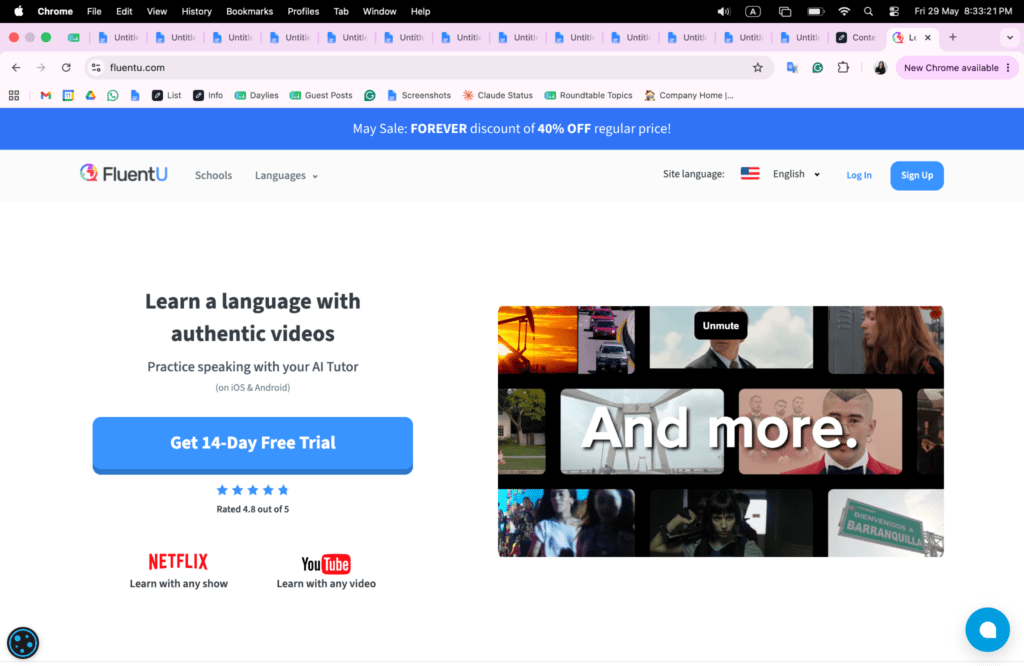
FluentU turns real-world videos, including movies, TV clips, music videos, and news segments, into interactive language lessons across nine languages. The platform pairs authentic content with customizable subtitles, a context-aware integrated dictionary, and clip-review features designed to reinforce vocabulary. One subscription covers all available languages, which is a practical perk for learners studying more than one. The focus on content that native speakers actually consume makes the vocabulary and phrasing feel immediately usable rather than textbook-dry.
Why Is FluentU Built for Live Korean Lessons?
For Korean learners, the ability to study through K-drama clips and K-pop content addresses the cultural immersion gap that many structured courses miss entirely. Learning vocabulary inside real-world context, rather than from isolated word lists, tends to produce stronger retention and more natural conversational recall.
Customer Review Snapshot
Learners who stick with FluentU tend to say they feel much more engaged than with traditional lesson formats. The platform fits naturally into the K-pop and K-drama fanbase, turning existing media habits into actual study time. Some users mention the content library could be deeper for Korean, but the interactive features consistently earn praise.
4. Colloquial Audio – Best for Pronunciation and Listening Supplements
What Does Colloquial Audio Provide?
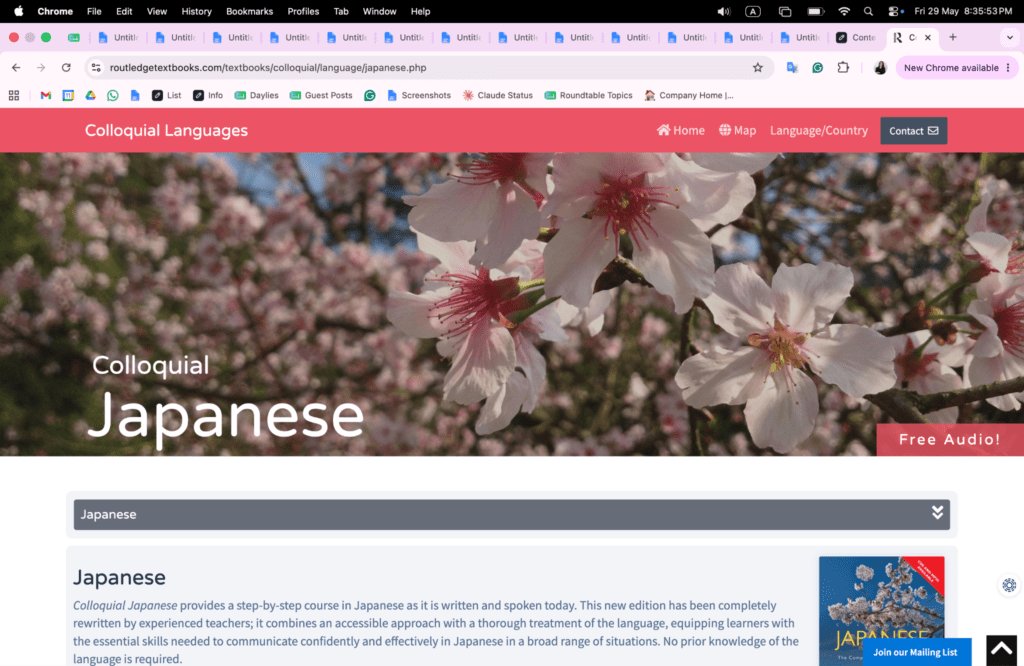
Colloquial Audio is part of Routledge’s Colloquial textbook series, offering MP3 audio downloads recorded by native speakers in more than 70 languages. Each audio pack complements a printed course book, designed to teach the language as it’s spoken and written today rather than in formal or dated registers. The files are available free online to verified textbook users, making them an accessible addition to any structured study plan. For learners working through a self-directed curriculum, the native speaker recordings add a real pronunciation reference that apps often lack.
Why Is Colloquial Audio Built for Live Korean Lessons?
Accurate pronunciation is one of the harder things to self-correct in Korean. Having native speaker audio tied to structured textbook content gives learners a reliable reference point between live sessions. That kind of repeated listening exposure tends to sharpen ear training and reduce the pronunciation drift that often sets in during self-study periods.
Customer Review Snapshot
The Colloquial series has a long-standing reputation among self-directed language learners who prefer structured textbook study. Users value native-speaker recordings as a reliable pronunciation model, especially for learners without regular access to live tutors. The free-access model for existing textbook owners is a practical detail that merits genuine appreciation.
5. Ba Ba Dum – Best for Vocabulary Building Through Game-Based Learning
What Does Ba Ba Dum Provide?
Ba Ba Dum is a completely free, ad-free vocabulary platform covering 1,500 words across more than 20 languages through five different game formats. The games include matching images to spoken words, multiple-choice responses, fill-in-the-blank tasks, word unscrambling, and matching images to written text. Created by award-winning Polish graphic designers with an educational publishing background, the platform balances visual design quality with genuine teaching structure. The no-cost, no-ads commitment is a real differentiator in a space where “free” usually means monetized by other means.
Why Is Ba Ba Dum Built for Live Korean Lessons?
Vocabulary gaps are one of the main reasons Korean learners stall before they can hold real conversations. Ba Ba Dum’s varied game mechanics make repeated exposure to vocabulary feel less like drilling and more like play. That reduction in study fatigue matters for learners who are already juggling live lessons, grammar study, and listening practice.
Customer Review Snapshot
Ba Ba Dum’s industry recognition (Awwwards, FWA, and a Webby Awards nomination) speaks to both its design quality and its standing as a respected educational tool. Users tend to mention how the visual design makes the games genuinely enjoyable rather than tedious (not something you expect from a free vocabulary app). The breadth of language options also gets consistent praise from multilingual learners.
Selection Standards and Verification Process
What to Collect Before You Start
The research began by pulling together a broad longlist of platforms active in live and supplementary language learning. Sources included language learning directories, independent review aggregators, and community forums where learners share firsthand platform experiences. Each platform’s official website was also reviewed to capture service details, pricing structures, and featured use cases. The goal at this stage was breadth, collecting enough candidates to represent the full range of approaches available in online Korean and language learning education.
Eligibility Review: Narrowing Down the Top Prospects
Once the longlist was assembled, platforms without a verifiable public presence were removed. This meant checking whether each option had a real review history, consistent reviews across multiple sources, and transparent service information. Platforms with limited or unverifiable track records in language education were filtered out at this stage. Review patterns were analyzed for consistency, with particular attention paid to whether learner outcomes were mentioned alongside general sentiment.
Testing Assertions for Reliability
Claims made on official platform pages were cross-referenced against what learners actually reported in reviews and community discussions. Where a platform claimed strong tutor quality or flexible scheduling, those claims were checked against the frequency and tone of learner mentions covering those same points. Platforms where marketing claims diverged noticeably from learner experience were noted and weighted accordingly in the final assessment.
Reading the Authority Signals
Platforms with external recognition, including awards, mentions in education-focused publications, and original research or curriculum development, were given additional weight. These signals indicate that a platform’s quality has been recognized beyond its own marketing. Ba Ba Dum’s Awwwards and Webby nominations, Live Lingua’s Entrepreneur360 record, and JapanesePod101’s 18-year publishing history all functioned as authority markers during evaluation.
Looking at Live Korean Lessons Specifically
Each platform was checked for evidence of Korean-specific content, tutor availability, or language learning features directly applicable to Korean learners. This included looking for dedicated Korean teacher listings, Korean-language learning pathways, or community reviews from Korean language students specifically. Platforms with stronger Korean-specific signals, like italki’s large pool of searchable Korean tutors, ranked higher on topic relevance regardless of general platform strength.
How to Match a Live Korean Lesson to Your Use Case
The right platform depends less on which one looks best on paper and more on what your actual learning situation looks like. A K-drama fan building conversational skills needs something different from a professional studying for TOPIK Level 4. Here’s what to check before committing.
- Industry/Domain Experience: Look for platforms with a clear track record in Korean, not just general language learning. Tutor credentials, learner reviews from Korean students, and dedicated Korean content are all signals worth checking.
- Features and Service Options: Match the platform’s format to your learning style. Live one-on-one tutoring, video-based immersion, and game-based vocabulary tools each serve different needs and work best when combined intentionally.
- Pricing Structure: Pay-per-lesson models (like italki) suit irregular schedules, while subscription platforms work better for daily learners. Factor in total monthly cost against expected lesson frequency before deciding.
- Results Measurement: Ask how progress gets tracked. Platforms that support TOPIK preparation or offer instructor assessments give you something concrete to measure improvement against.
- Industry Knowledge and Compliance: For younger learners or workplace programs, check that the platform meets student data privacy expectations and that tutors hold relevant teaching certifications or language instruction qualifications.
Important Points to Remember
Choosing the right platform for live Korean lessons comes down to how well it fits your schedule, budget, and goals. italki leads for flexible one-on-one tutoring with native speakers, while platforms like FluentU and Babba Dum fill important gaps in immersion and vocabulary. Live Lingua suits learners who want a structured school feel. As demand for Korean grows alongside K-culture globally, the range of high-quality live instruction options continues to expand, making now a solid time to commit.
