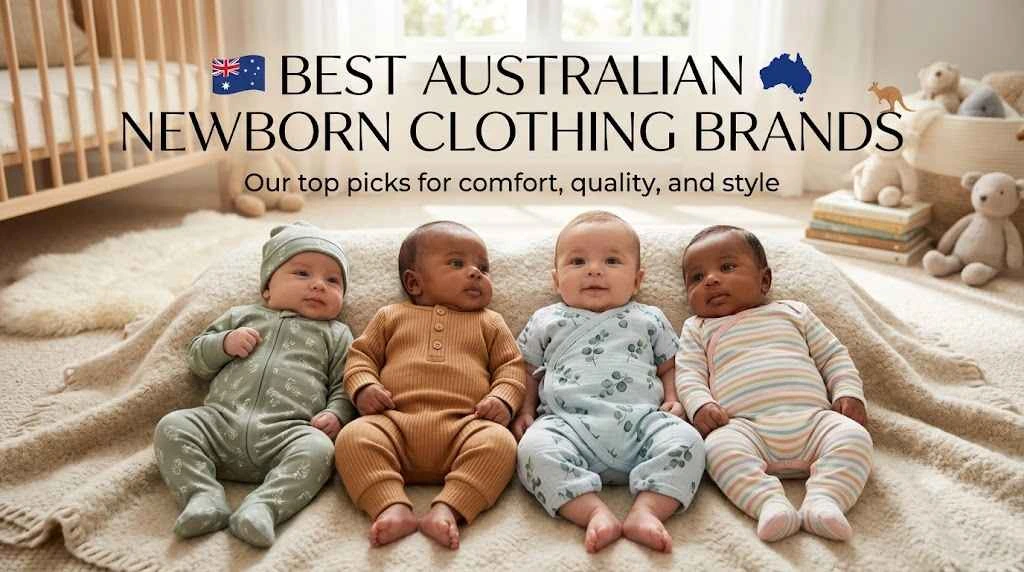
When you’re preparing for a new baby, the Australian market has a lot going for it. Local brands design around the Southern Hemisphere climate, source to local safety standards, and tend to produce for a customer who cares about fabric quality. That narrows the field usefully.
This guide compares the strongest Australian newborn clothing labels across fabric, fit, safety compliance, ethical sourcing, price tier, and availability. The focus is the 0 to 3 month stage, where sizing and skin sensitivity matter most.
What to Look For in Newborn Clothing
Before running through the brands, it helps to fix the criteria. Newborn clothing decisions come down to a short list of practical factors.
Fabric and skin contact. Newborn skin is more reactive than older baby skin, which is why organic cotton, merino wool, and bamboo blends dominate this category. Each has trade-offs. Organic cotton (ideally GOTS-certified) is breathable, soft, and easy to care for. Merino is a natural thermoregulator but typically more expensive and requires gentle washing. Bamboo viscose is extremely soft but is a processed fabric, so look for OEKO-TEX certification to confirm low chemical residue.
Safety and compliance. In Australia, infant sleepwear is governed by AS/NZS 1249, which sets flammability requirements. Look for “Low Fire Danger” labelling on any garment intended for sleep. Broader safety checks include no drawstrings on hoods, secure snap fastenings that don’t create pressure points, and no small components that could detach.
Practicality for 0 to 3 months. You will be doing nappy changes constantly. Envelope necklines (for easy dressing without disturbing a sleeping newborn), front-opening snap fastenings, fold-over scratch mitts, and two-way zip access all reduce friction. Garments without these features become a source of daily frustration fast.
Sizing realities. Australian newborn sizing runs from 00000 (premature) through 0000 (newborn, roughly 0 to 1 month) and 000 (0 to 3 months). Newborns grow quickly, and many skip the 0000 size entirely if they arrive above average weight. It is usually smarter to buy mostly 000 rather than loading up on 0000.
How Australian Climate Shapes Fabric Choice
Australia’s climate varies significantly across regions, and it shapes what fabric actually works at the newborn stage. A cotton singlet bodysuit that suits a Brisbane summer doesn’t cover a Melbourne winter.
The key variable is fabric weight, measured in GSM (grams per square metre). Lighter cotton weaves (muslin, gauze, jersey) suit humid and warm conditions. Heavier knits and cotton waffle sit better in cooler months and southern climates.
The principle that applies everywhere: natural fibres are better at thermoregulation than synthetics. A cotton or merino layer responds to temperature changes in a way a polyester blend does not. For a newborn who cannot regulate their own temperature yet, that matters.
The 5 Best Australian Newborn Clothing Brands
1. 3 Little Crowns
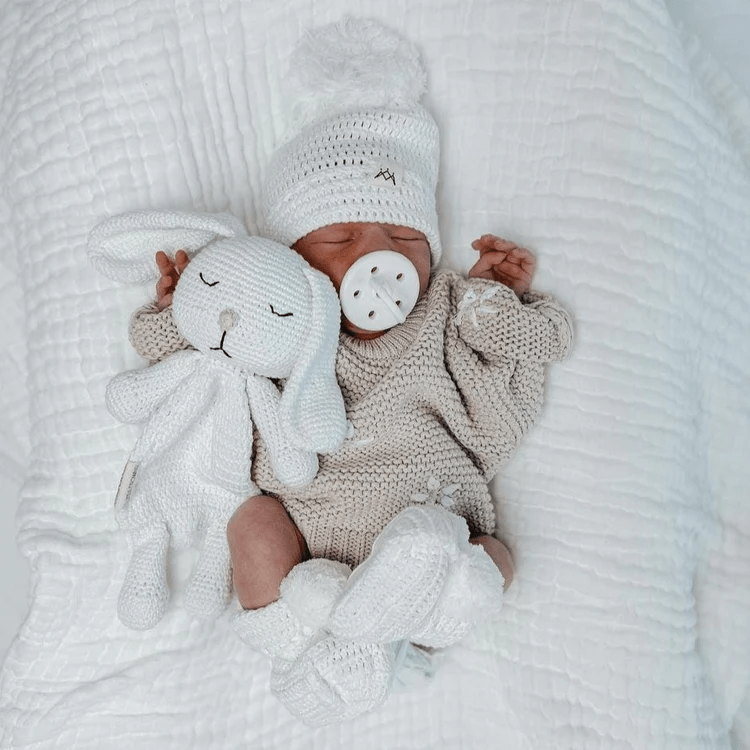
3 Little Crowns is an Australian-owned newborn label focused on cotton knitwear, cotton jersey bodysuits, blankets, and nursery accessories. Its signature is a tonal, neutral palette (think oat, mushroom, stormy blue, and ivory) and coordinated sets designed to be gift-ready.
The fabric focus is 100% cotton across knitwear and babywear lines. Cotton knit pieces like their textured rompers and chunky jumpers suit cooler months and double as layering pieces in variable weather. For the 0 to 3 month stage, the range includes knitted rompers, knitted bodysuits, beanies, and booties, along with organic cotton gauze wash cloths and swaddle blankets.
The brand is best suited to parents and gifters who want coordinated, aesthetically cohesive sets rather than mix-and-match basics. Their gift sets and bundles make them a strong baby shower option. Price sits in the premium tier for individual pieces, though bundles offer better value per item.
Best for: Gifting, styled newborn photos, building a coordinated newborn wardrobe, cooler-season layering pieces.
2. Purebaby
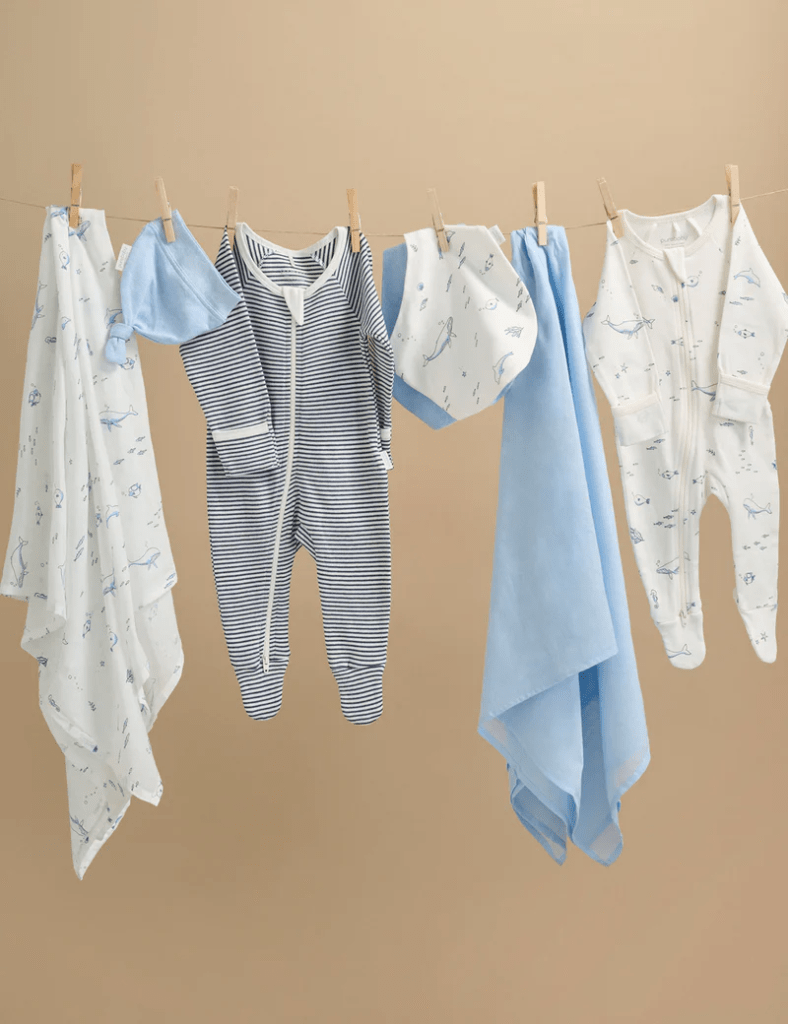
Purebaby is one of the most established names in the Australian organic cotton baby clothing market. Their certification credentials are well-documented: GOTS-certified organic cotton and OEKO-TEX Standard 100 appear across the range.
The trade-off at Purebaby is cost. GOTS-certified organic cotton carries a price premium, and Purebaby sits at the higher end of the mid-range for everyday basics. Where they perform well is in pieces that will be washed heavily and worn constantly. The cotton is durable and holds up to repeated washing better than lighter-weight alternatives.
For newborns, their growsuits (zip-up sleepsuits with fold-over feet and scratch mitts) are a practical staple. Sizing tends to run true to Australian standards. Available through their own stores and website, with stockists nationally.
Best for: Certified organic everyday basics, parents prioritising GOTS credentials, high-wash-frequency items.
3. Aster & Oak
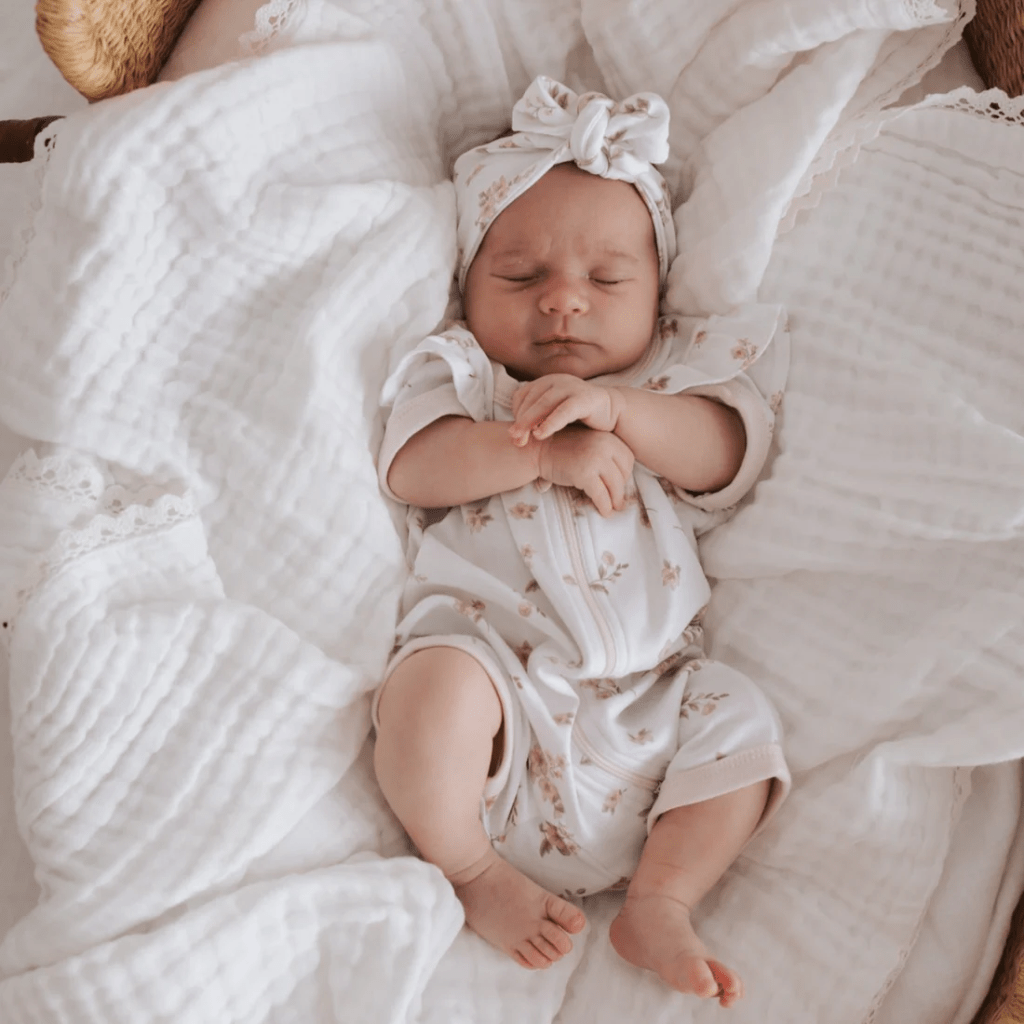
Aster & Oak is an Australian label with a strong ethical sourcing focus. They use GOTS-certified organic cotton and publish their supply chain commitments openly, which appeals to parents who want transparency beyond the label.
The aesthetic leans toward prints and patterns rather than the muted neutral palette of some competitors, which makes them less of a natural fit for the styled-neutral nursery look but a better option for parents who prefer visual variety in the newborn wardrobe.
Sizing is consistent, and the range covers the essentials for 0 to 3 months. Price is mid-range for most items. Available online with Australian shipping.
Best for: Ethically sourced certified organic basics, parents who want supply chain transparency, printed options.
4. Wilson & Frenchy
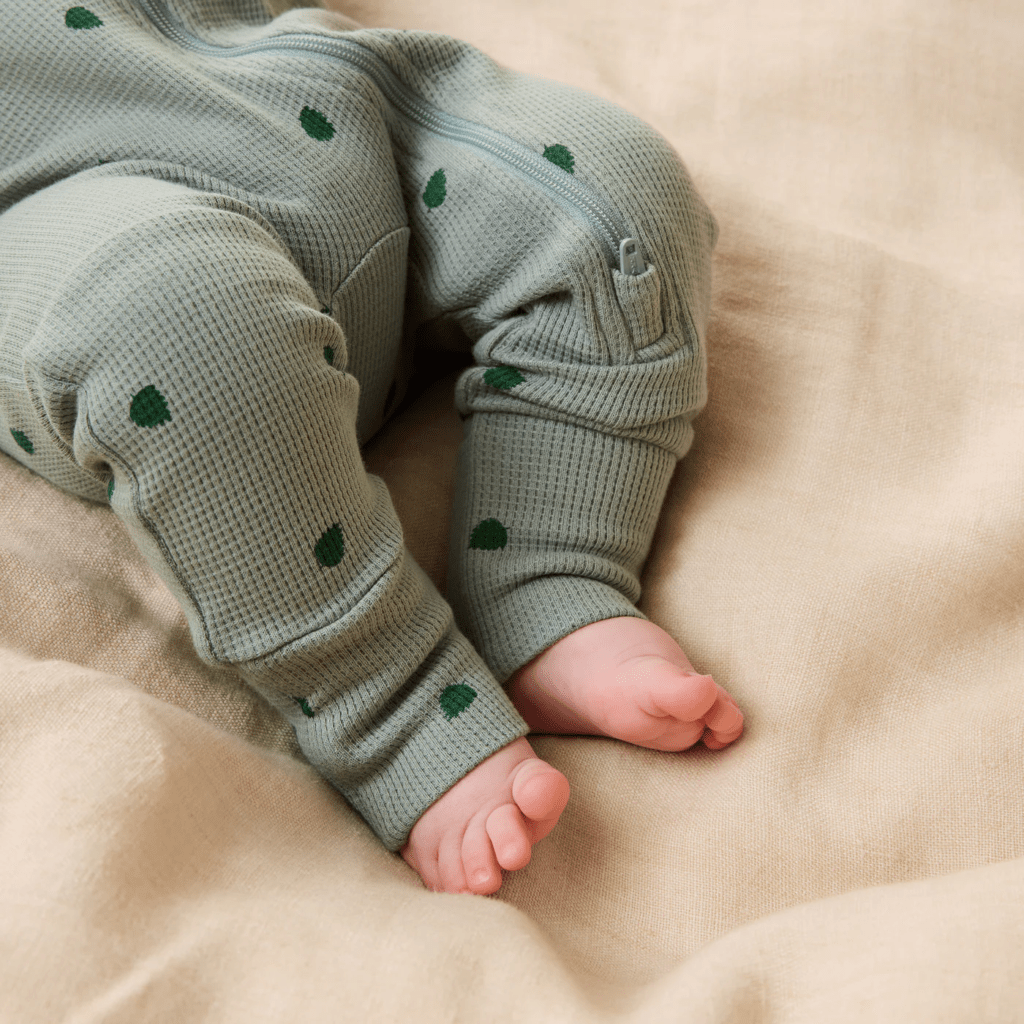
Wilson & Frenchy is an Australian-designed label with a strong design sensibility and a gifting-friendly packaging approach. Fabrics include organic cotton and some OEKO-TEX certified lines.
Their prints are distinctive and leaning slightly more editorial than everyday, which suits the gifting occasion well. For new parents building a working wardrobe rather than buying keepsake pieces, it may feel style-forward over practical. That said, the quality of construction is solid, and pieces are built to last past the newborn stage.
Price sits mid-to-premium. Available online and through select boutique stockists.
Best for: Baby shower gifts, parents who want design-forward pieces alongside practical basics, boutique aesthetic.
5. Jamie Kay
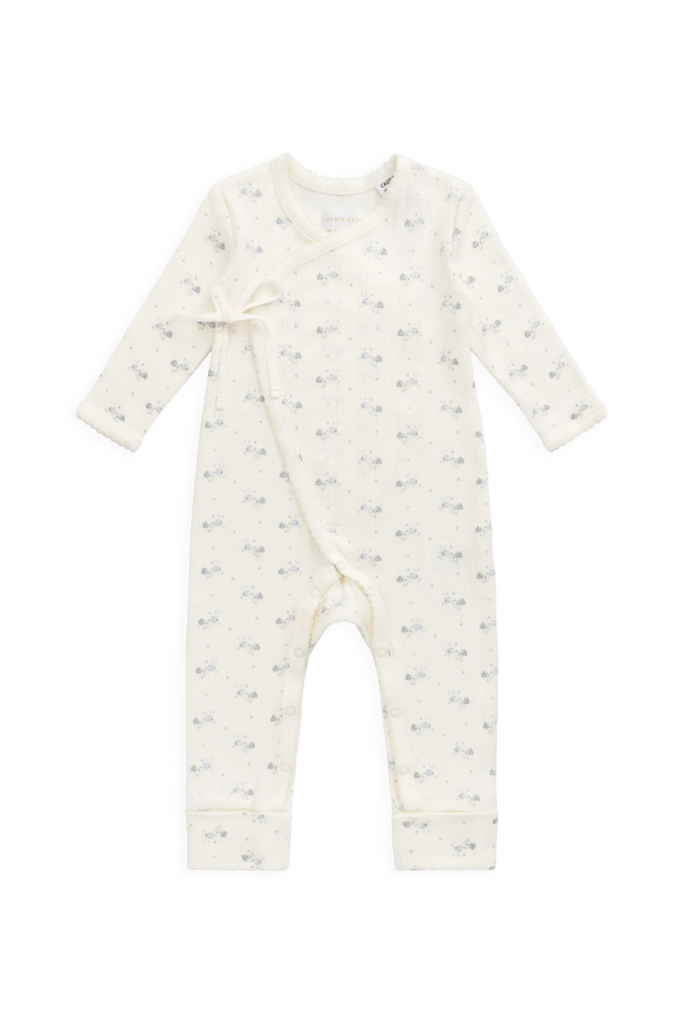
Jamie Kay is a New Zealand-founded label with a strong following among Australian parents. The aesthetic is closely aligned with what many AU premium newborn buyers are looking for: soft neutrals, muted tones, and a considered design sensibility that photographs well.
Fabric across the range is predominantly GOTS-certified organic cotton, with some merino and cotton blend pieces depending on the season. Construction quality is consistently high, and pieces are designed with longevity in mind. Many families use Jamie Kay pieces as hand-me-downs, which shifts the cost-per-wear calculation on the premium price point.
For the newborn stage, the range includes bodysuits, rompers, and knitwear in coordinated colourways. Sizing tends to run slightly generous, which suits the 0 to 3 month stage well. Available online with Australian shipping; some AU boutique stockists carry the range.
Best for: Parents who want premium certified organic pieces with a curated aesthetic, gifting occasions, building a small capsule wardrobe that lasts past the newborn stage.
Matching a Brand to Your Situation
The list above covers a range of tiers and fabric specialties. Here’s how to translate it to your specific situation.
Sensitive or eczema-prone skin. Prioritise GOTS-certified organic cotton or OEKO-TEX certified bamboo. Purebaby and Aster & Oak are the most straightforward starting points. Avoid synthetic blends for pieces that sit directly against skin.
Tight budget. For budget-friendly basics, Best & Less and Target cover the high-wear items. Reserve mid-range and premium picks from Wilson & Frenchy, 3 Little Crowns, or Jamie Kay for the moments that get photographed.
Building a capsule wardrobe for the long-term. Invest in pieces with higher cotton weight and solid construction at the newborn stage. Higher-quality cotton knits and rompers can be passed down or resold, which shifts the cost calculation.
Season of birth. If you are expecting a summer baby (November to February in most of Australia), lightweight cotton jersey and gauze are the priority. Winter babies need a layer system: a cotton bodysuit underneath, a knitted romper or jumper over the top, and a lightweight blanket for added warmth rather than a heavier single layer.
Buying as a gift. Coordinated gift sets from 3 Little Crowns or Wilson & Frenchy come packaged well and remove the guesswork for the gifter. A newborn gift bundle covering a bodysuit, beanie, and booties in matching tones covers most situations cleanly.
Building a Practical Newborn Wardrobe
Most new parents overbuy at the 0000 size and underbuy at 000. A practical starting point for 0 to 3 months:
- 6 to 8 bodysuits or onesies (more if you are not near a washing machine daily)
- 3 to 4 sleepsuits or zipsuits
- 2 to 3 knitted or layering pieces (romper, jumper, or cardigan)
- 2 hats and a set of scratch mitts
- 4 to 6 muslin wraps or swaddles
The mix-by-tier approach works well at this stage. Use accessible basics for high-frequency items and reserve the more considered pieces for the moments that are photographed and remembered. Orange Parenting has detailed guidance on what parents actually use in the first weeks if you want to cross-reference the quantity decisions above.
Putting It Together
The strongest newborn wardrobes at this stage usually combine tiers rather than committing to one label. A GOTS-certified organic cotton everyday piece sits alongside a cotton knit romper for cooler days and a practical zipsuit for overnight. The brands above cover that range.
The criteria that matter most are fabric against skin, practical fastenings, and appropriate weight for your climate and season of birth. Once those are met, the choice between labels comes down to aesthetic and budget. The good news is that the Australian market has solid options at every tier.
