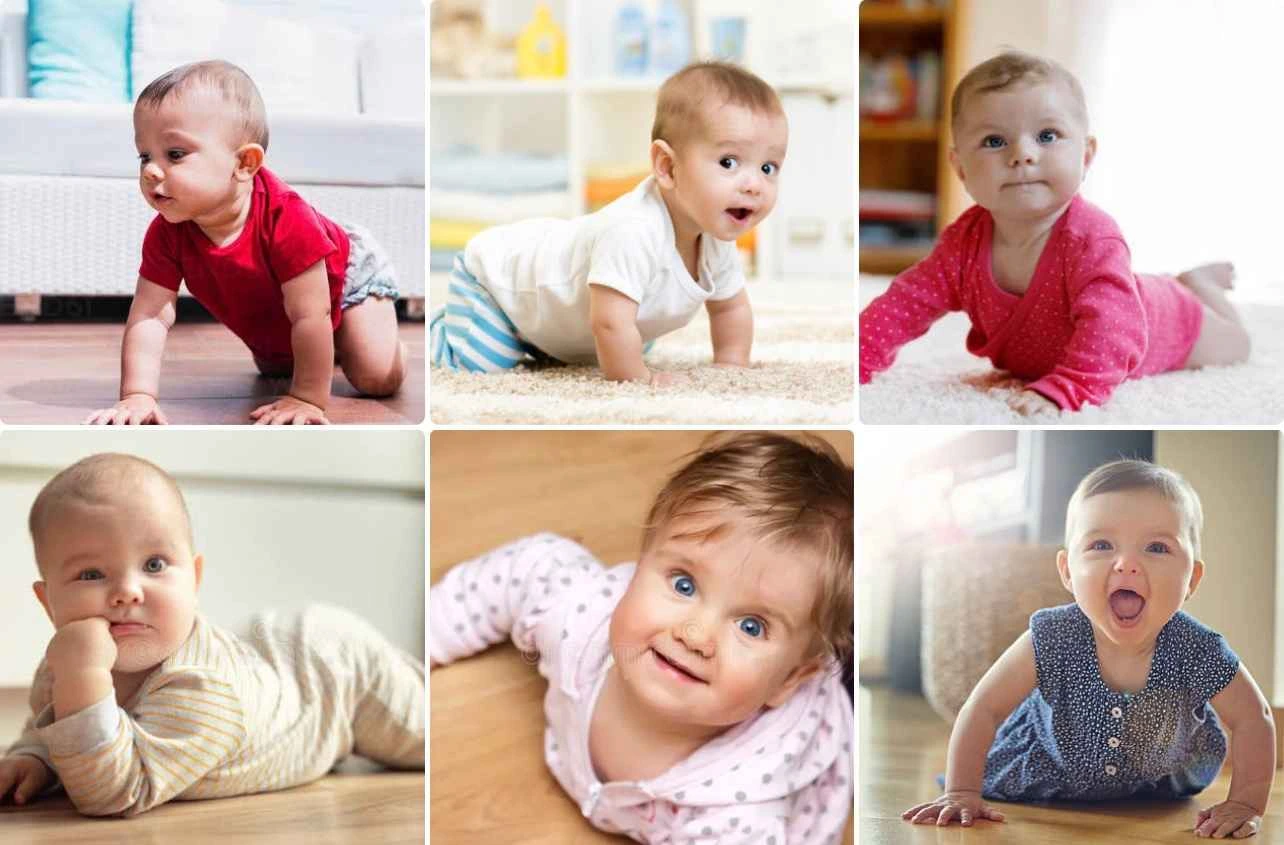
The short answer: Most babies crawl between 7 and 10 months. Some early movers start belly crawling at around 6 months, while others might not master a traditional hands-and-knees crawl until 11 or 12 months. Normal progress means any kind of independent, efficient mobility.
Parenting is a beautiful journey that comes with ups and downs. Some days are best for parents; they learn new things, while other days can be hectic. When you’re scrolling social media and suddenly the feed gets flooded with videos of friends’ babies where a child is starting to crawl, you may feel joy seeing it. You look at the newborn and think about when they will crawl. You may start searching out of curiosity about when do babies start crawling.
Don’t worry; it is completely normal to feel curious about milestones, especially when you see other babies who were born in the same year also crawling. Most of the babies take off on hands and knees at 7 to 10 months of age. However, behind this simple age range there is a complex neurological process and a whole lot of developmental wiggle room.
Whether your baby is currently rocking back and forth on all fours, doing funny backward shuffles, or doing belly crawls In this article I will provide the details of what is happening in their brain and body. We will look deeply on a real timeline, understand different styles of crawling, and share a few physical therapy-backed practices that will help the baby to get moving.
The Official Crawling Timeline
Key developmental milestones from early head control to independent movement
Tummy Time & Pushing Up
Builds neck, shoulder, and core strength necessary for future crawling movements.
Key Milestone: Lifts head up 45–90° and pushes chest off floor with forearms.
Rolling & Pivoting
Gains spatial control and body awareness required to maneuver around floor space.
Key Milestone: Rolls belly-to-back and pivots in 360° circles while on tummy.
The “Army” / Commando Crawl
Pulls body forward across the floor using arms while tummy stays on the ground.
Key Milestone: Rocks on hands and knees; often slides backward before going forward.
Classic Hands-and-Knees
True cross-lateral movement with abdomen lifted completely off the floor.
Key Milestone: Moves opposite arm and leg together smoothly; moves in and out of sit position.
Bear Crawl & Cruising
Advanced variations leading directly into pulling up to stand and furniture walking.
Key Milestone: Crawls with straight arms/legs (bear crawl) and pulls up to stand on furniture.
What to Expect and When?
A baby milestone never takes place in a single night; it is a long process. While every infant has a different internal clock, understanding the phases helps you to track the progress they are making every single day.
The 3- to 6-Month Window: Building the Foundational Strength
In the early months your baby isn’t moving forward; they are just lying.
Head and Neck Control: To move in the whole room, a baby needs to be able to look up and understand the environment. The first step in baby movement is strengthening the upper back muscles.
Pushing Up onto Straight Arms: At the age of 4 to 5 months, you may notice the baby pushing the elbows directly on the floor with straight arms. This action not only opens up the chest but also aligns the shoulders and makes a raw upper-body power needed to manage the weight later.
The Pivot: When babies turn 6 months, they become masters of the belly pivot, meaning they can spin in a circle with the help of their stomachs to reach the toys. However, they aren’t in a crawling phase yet, but this small movement is important for hip mobility.
The 7 to 9-Month Window: The Launchpad Phase
This phase can be exciting and frustrating at the same time, meaning all the puzzle pieces start coming together. This phase is exactly the answer to the question of when babies crawl for the first time.
Rocking on All Fours: In this phase your baby learns how to push up on their hands and knees. Once they reach there, they will spend days rocking back and forth. Don’t consider it a random thing because the kid is actually testing the balance, shifting the center of gravity and building neurological maps for how the joints will handle the weight.
The Infamous Backward Shuffle: Many parents panic when the baby shifts into reverse! Well, you don’t need to panic, as it is a very common step for babies to do before they move forward. The main reason is the arms and upper body of the baby are much more developed as compared to the lower body at this phase. When they pushed off the floor with hands, they likely crawled backward. Once the lower part of the body becomes strong, the child will start trying to use it for crawling.
Planking and Sitting Up: You may see the child is changing positions when they crawl in backwards.
10 Months and Beyond: Confident Mobility
When babies reach this stage, they choose a favorite crawling style and use that to make the boundaries. They can be fast and coordinated and are starting to look at the world.
Transitioning to Pulling Up: Once the master is in forward crawling, their lower part, including hips and core, becomes strong. Your baby will find ways to crawl to the couch; they will use your leg or a table or try to pull themselves into a standing position. Once they reach this milestone, the next thing they try is to walk sideways with the help of furniture.
How to Calculate Adjusted Age for Preemies
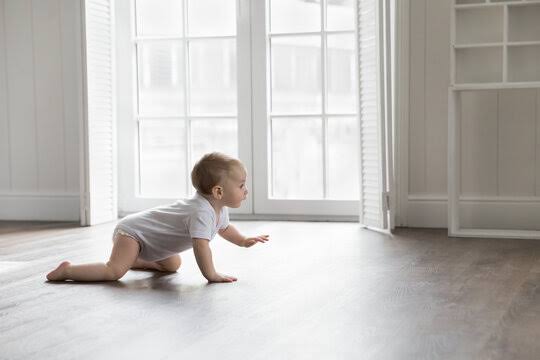
If your little baby arrived earlier and you want to track the crawling age, then use their adjusted age, also known as corrected age, instead of their birth age. If your baby was born premature, then they will take extra time to achieve the same developmental markers.
The Formula:
- Remember not your baby’s actual age in weeks.
- Calculate how many weeks early they were born (based on a standard 40-week pregnancy).
- Subtract the weeks early from their actual age.
Example: If your baby is now 9 months old (36 weeks) but was born early, like 8 weeks, then the adjusted age is 7 months. You should expect them to crawl at 7 months.
Why the CDC Removed Crawling as a Milestone (and Why It Still Matters)
If you are currently searching for baby crawling toys, then I’m sure you did try to get information about them on the Centers for Disease Control and Prevention (CDC) page. However, they removed the crawling information from the developmental milestone checklists during a major update. When the parents search and find nothing, they become curious to know why they did it. Let’s clear up the confusion. They removed it to make a structural change in how the CDC measures data, nothing else.
The Truth Behind the 2022 CDC Update
Before the update, the checklists used a 50% threshold, which meant the milestones were just an average. The problem was that the other 50% of parents with perfectly healthy children became panicked when their babies didn’t hit the mark ‘on time.’ By raising the baseline to 75%, the CDC ensured the checklists only flag clear, actionable delays.
The Skippers: The data also show a percentage of healthy people who don’t show the crawling phase; they go straight from sitting to pulling up to walking.
Alternative Mobility: Some babies also use other methods like bottom-scooting or rolling to get around, which means they don’t hit the hands-and-knees benchmark because of their health. Crawling isn’t assigned to a definitive age bracket under a 75% rule. The CDC removed it to streamline clinical screening.
The Caveat: Why Pediatric Physical Therapists Beg to Differ
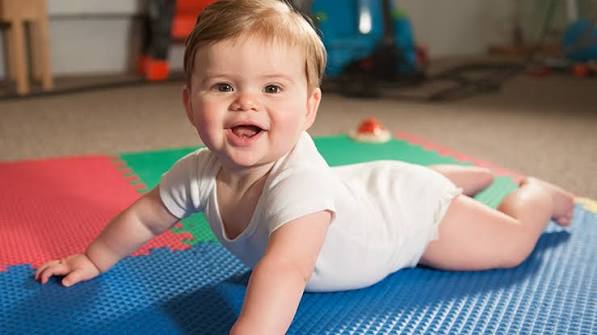
The pediatric physical therapists and neurodevelopmental experts use the CDC checklist as a tracker for crawling through the lens of biomechanics because they consider crawling a golden phase of movement. Even if the baby skips crawling and starts walking directly, they may miss several critical physical advantages:
Bone Density and Joint Alignment: When a baby bears all the weight on all fours, the bones get into shape. It deepens the hip sockets and molds the arches of the wrists and hands, stabilizing the joints for a lifetime of movement.
Core and Shoulder Stability: Crawling also helps in stabilizing the baby’s trunk while moving opposite limbs, which helps in building core strength and also stabilizes the shoulder strength that has a direct effect on the child’s future posture, balance, and ability to sit in a chair for hours.
Hand Strength for Fine Motor Skills: When a baby pushes on the floor, it stretches the ligaments in a baby’s palm, leading to strengthening muscles in the hand. Some kids face difficulty while holding a pencil or scissors; this happens because of a missed crawling phase.
The Hidden Neurological & Cognitive Benefits of Crawling
Many parents see baby crawling as a perfect physical milestone, which is a sign of their tiny baby getting stronger and ready to walk. However, crawling is more than a step toward walking; it is also a sign of brain development.
When parents search for when babies start to crawl, you ask, “When do babies start to crawl?” They aren’t just looking for a change in mobility but also the movement of a child’s brain hemispheres beginning to synchronize on a massive scale.
Cross-Lateral Coordination & Brain Development
The hands-and-knees movement needs a highly motor pattern called a cross-lateral or reciprocal gait, which means the baby moves with their right arm forward and their left knee drives forward at the same time. To set up this pattern, the left side of the brain, which is responsible for the control of the right side of the body, and the right side of the brain, which controls the left side, need to talk with each other at fast speed. This talk leads to a more mature and strengthened corpus callosum.
Consider this corpus callosum a superhighway connecting both sides of the brain. These well-developed highways allow information to traverse between hemispheres efficiently, leading to better handling of tasks like reading comprehension, problem-solving, and emotional regulation in the future.
Spatial Awareness & Binocular Vision
The crawling phase triggers a revolution in how the child uses the eyes completely. Their world is small until they begin to move, but once they start to move, they learn to understand space with the help of eyes.
Visual Accommodation (Near-to-Far Focusing): If you ever watch how children crawl closely, you will see they first place their hands on the floor, then look at a thing they want, like a toy that is placed at a distance in the same room, and then look back down. This continuous observation helps child eye muscles to adjust focal lengths. This is the same habit they will use later to look at the school blackboard or any other thing.
Binocular Vision: When a baby starts crawling, both their eyes work together to help them to calculate the distance.
Vestibular and Proprioceptive Input
When the little one starts exploring the world, their brain gets flooded with huge amounts of sensory data from two biological systems that are hidden: one is the vestibular system and the other is the proprioceptive system.
The Vestibular System (The Inner Ear): This one is located inside the inner ear; it helps in regulating balance and spatial orientation. When a child tilts the head down to move forward or to rock on all fours, the ear fluid shifts, which tells the brain if the head is in relation to gravity, mapping out a sense of balance that underpins walking and running.
The Proprioceptive System (Body Awareness): You can consider it an internal GPS system of the body where the receptors in the baby’s muscles, joints, and ligaments give a signal to the knees when the child’s palm pushes the ground. This tells the nervous system how much force is needed to move a limb and gives the child a sense of understanding where the body parts are in space without the need to look directly.
Decoding the 6 Styles of Baby Crawling
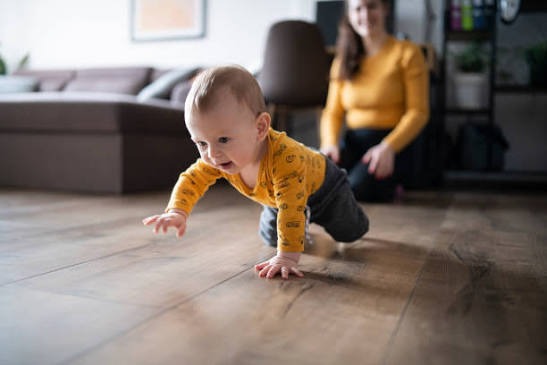
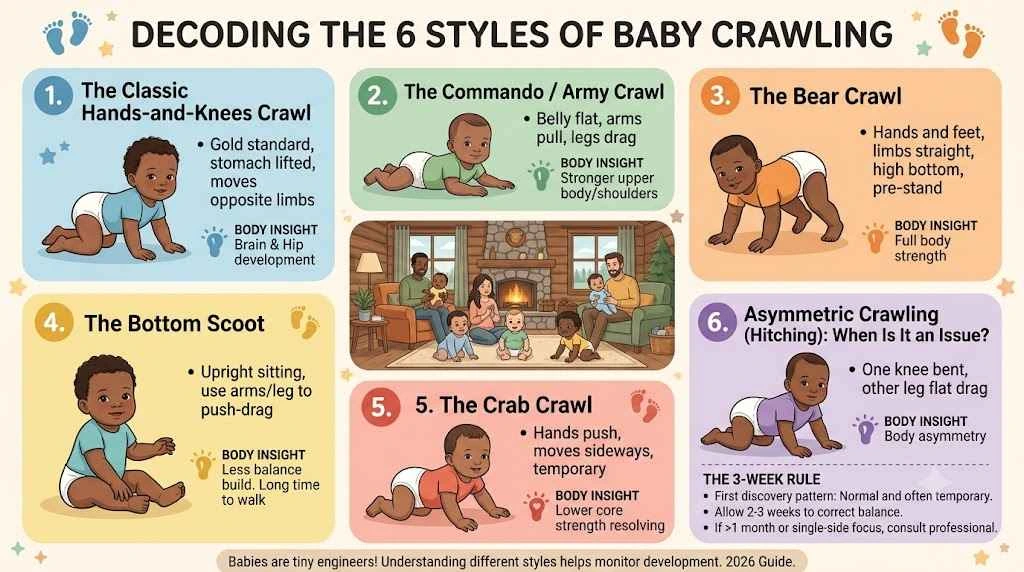
When parents ask when babies start crawling, they may have a picture of a child in mind who is crawling with the help of hands and knees moving on the floor, but in reality, the pattern of mobility is full of creative detours. You can consider babies tiny engineers. They will use the strongest muscles to get from one point to another. Understanding different styles will help you to find how the baby’s body is developing.
1. The Classic Hands-and-Knees Crawl
This is the gold standard of infant mobility. Babies support their weight fully on hands and knees and keep their stomachs lifted off the floor. They move the left arm with the right leg and vice versa. This style gives many benefits to brain hemispheric communication and hip joint molding.
2. The Commando / Army Crawl
Many babies start with this. In the commando or army crawl, the baby lets the belly lie flat on the floor and starts pulling with the help of arms while dragging their legs behind them, which indicates that their shoulders and upper arms are stronger than pelvic muscles.
3. The Bear Crawl
If you see the baby is moving everywhere like a little bear, then you are not alone. This style is commonly seen. In this bear-crawl style, the baby walks on hands and feet, their elbows and knees locked straight, and the bottom is high in the air. Many babies do this crawl before they pull up to stand.
4. The Bottom Scoot
In this style the baby doesn’t get on the stomach; the bottom scooter stays in a fully upright, sitting position. Babies use the arms to push and one leg to drag the bottom across the floor. Kids who do bottom scooting take a long time to walk because they don’t build the same balance that hands-and-knees crawlers do.
5. The Crab Crawl
This crawl style is just like a crab on the beach; a baby uses this specific style to push with the hands but moves sideways. They go backward instead of forward. As we discussed earlier, this backward thing is very common and temporary until the lower core strength resolves.
6. Asymmetric Crawling (Hitching): When Is It an Issue?
There are no main variations that worry parents. Asymmetric crawling or hitching When a baby crawls but doesn’t use his body properly. He keeps one knee bent, which is normal, but drags the other leg flat. If you notice your baby is doing this, then there are three main things you need to understand as follows:
The 3-Week Rule: If it is the first time a baby discovers how to move and does a hitching pattern, then give them some time, like 2 to 3 weeks, because this can be temporary. When they get stronger and understand how to do balance, they will correct this into a symmetrical crawl. However, if they continue to do the hitching pattern for a month or more or if you notice they only use one side of the body to pull, then it is time to take action.
What It Points To: A permanent hitch
It doesn’t mean any muscle is broken, but it does indicate a mild muscle asymmetry or hip tightness takes place on one side of the body. It can be related to neck tightness or hip joints that need a little assistance.
What to do: Book an appointment with a pediatric physical therapist. Because they will examine better about the alignment and give you some activities to do with kids to unlock that tight side.
4 Physical Therapy-Backed Exercises to Encourage Crawling
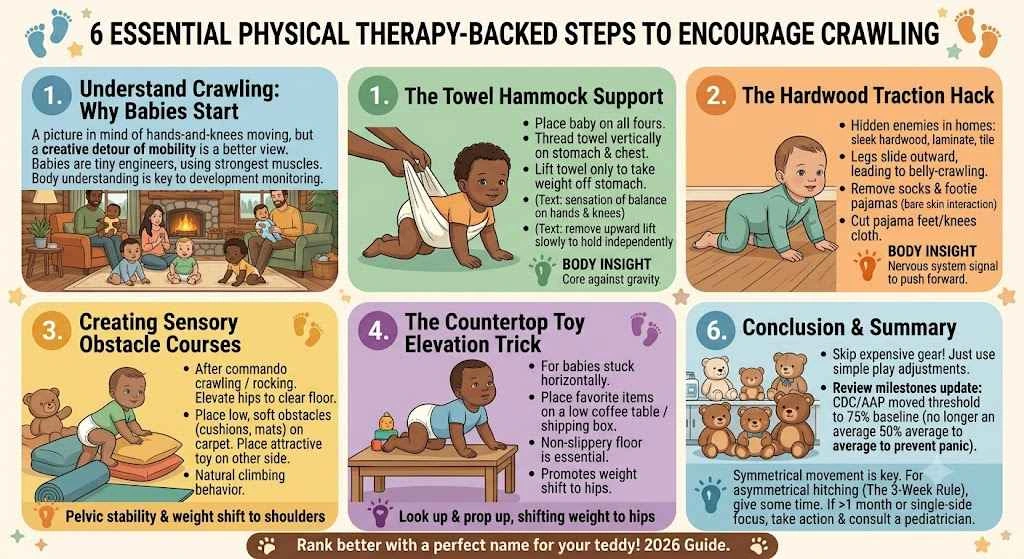
If your baby is struggling to crawl or you are simply thinking, when do babies start crawling, and what can I do to keep my baby? Then you don’t need expensive gear; you can just do some physical therapy-backed play adjustments that give the baby the strength they need for crawling.
1. The Towel Hammock Support
Many babies want to crawl, but due to the lack of core endurance to fight gravity and lift their weight, they aren’t able to crawl. As a parent, how can you help them? Well, take a hand towel and roll it up in length. Place the baby on all fours, thread the towel horizontally on their stomach and chest, and hold both sides of the towel from above. Make sure to lift the towel only to take the weight of the baby’s stomach without pulling their hands and knees off the floor.
You can consider it a supportive suspension bridge where a baby can experience the sensation of balance on hands and knees. When they get stronger, remove your upward lift slowly until they hold the position independently.
2. The Hardwood Traction Hack
Our homes have some hidden enemies for developing babies, like sleek hardwood, laminate, and tile floors. When a baby tries to push knees on a slippery floor to crawl, the legs slide outward, which leads to frustration and forces the baby onto its belly. To avoid slipping, remove the socks or footie pajamas a baby is wearing; this will let the skin interact with the floor. If the room is cold, then you can let the baby have old pairs of footie pajamas and cut the pajama feet knee cloth completely; this will make the pajama a perfect outfit for crawling.
The direct interaction between skin and floor will give the nervous system the signal it needs to dig in, push forward, and hold a solid quad position.
3. Creating Sensory Obstacle Courses
Once you see the baby is doing commando crawling or rocking confidently, they need to learn how to elevate the hips to clear the floor. To make them learn, dispel the low, soft obstacles on the living room carpet. You can use cushions, rolled-up yoga mats, or large throw pillows. Place an attractive toy on the other side of the obstacle, which your baby loves. To reach the toy, your baby will start climbing up naturally over the cushions. This process will be the same as the hands-and-knees crawling that leads to building pelvic stability and moving weight over their shoulder joints.
4. The Countertop Toy Elevation Trick
Many babies get stuck in a horizontal position where they look down and straight ahead, being on their bellies and almost forgetting to push upward. To avoid this issue, put some favorite items of your baby on a low coffee table or even in a sturdy cardboard shipping box. Make sure the floor isn’t slippery so the baby doesn’t slip while on their knees. This idea will force the baby to look up, and they will surely try to reach the toy by propping themselves onto their forearms or hands, leading to a shift of weight on hips.
Crawling and the 8-Month Sleep Regression
When the baby starts learning to crawl, you may notice the side effect of it: their bedtime routine changes. They suddenly start waking up many times in a single night, screaming or fighting at the time of sleeping for hours. You may think it is just a coincidence; however, it is not. In baby progress, we call it “8-month sleep regression,” which takes place when a massive neurological shift happens when babies start crawling.
Why Does Sleep Fall Apart?
While babies learn a difficult motor skill like crawling, their brains produce millions of new neural pathways. The brain consolidates memory and practices these movements at night in a light sleep cycle so the baby is not waking up because they have teething pain or are hungry but because they are firing off signals to crawl. Sometimes parents walk outside, but the baby is rocking on all fours or even found at the corner of the crib at 2:00 am; they are just practicing new skills.
If you find your baby doing these things, don’t put them back and force them to sleep because they will continue doing this every night till the sleep regression ends. Give them 5 to 10 minutes of space, child; after that, if they are still stuck in the corner and crying when you touch them gently, lay them back down flat on their back and leave the room. This regression phase will only last for 2 weeks; when the child learns crawling completely, this will end.
Medical Disclaimer: The information provided in this article, including references to developmental milestones and checklists, is for educational and informational purposes only. It is not a substitute for professional medical advice, diagnosis, or treatment. Always consult with your pediatrician or a qualified healthcare provider regarding any questions you may have about your child’s health or developmental progress. Never disregard professional medical advice or delay seeking it because of something you have read on this website.
When to Worry About Your Baby Not Crawling
It is very natural to see babies of the same age in a playgroup crawling perfectly and your child not, so you feel stressed. Well, let me tell you, there is a massive difference between a baby who is just taking time and a baby who needs a professional evaluation.
When Is It Normal Progress?
It’s not necessary for every baby to do the same crawling style, so if your baby is 10 months old and not doing the classic hands-and-knees crawl and doing commando crawling, like rolling in the whole room to get toys, then they are still crawling.
Sometimes a baby brain simply pays more attention to waving, babbling, or learning to pinch-grasp food over gross motor movement.
Milestones Checklist: When to Consult Your Pediatrician
As you track or understand when babies start crawling, it is very easy to do comparisons. Many parents do it, but let me tell you, it’s a motor development phase, not a race, and healthy children follow diverse paths. However, knowing what the warning signs are and looking professional can make you stress-free. If you notice the following, please contact the pediatrician or a pediatric physical therapist:
No Interest in Mobility by 10–11 Months: The baby is simply not interested, and you don’t see them making any attempt to roll, scoot, drag themselves, or transition into any form of crawl on the floor.
Persistent One-Sided Movement: You see the baby is moving or crawling but just using one side of the body for 3 continuous weeks.
Inability to Sit Independently: Even when the baby enters 9 months, they are sitting properly and collapse forward or to the side.
No Weight-Bearing in the Legs: When you hold the baby upward, they completely cross their legs like scissors.
Things to Avoid to Help a Baby Learn to Crawl
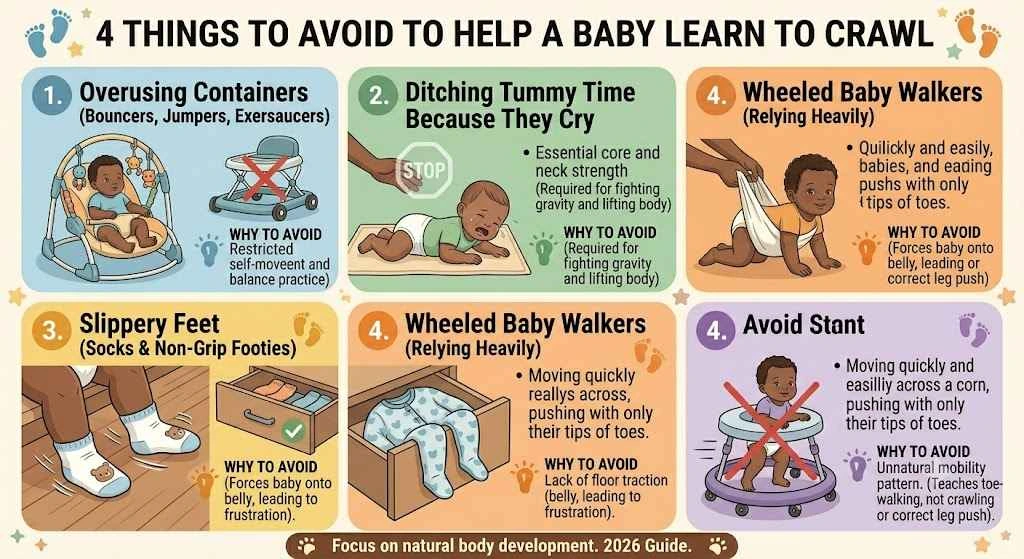
When you think about helping the baby to learn to crawl, there is something you need to stop doing. We always go for the things that keep the baby safe, happy, and entertained, so it is easy to set up roadblocks in their physical progress unintentionally. Make sure to avoid these four common modern parenting pitfalls:
1. Overusing Containers (The Bouncer and Jumper Trap)
Baby containers like activity swings, jumpers, walkers, bouncers, and car seats when used outside the car. While all these things are safe for babies, if a baby spends many hours with these, the baby’s shoulders won’t be able to experience weight-bearing stress, which is necessary for crawling muscle building.
The Fix: I am not saying to get rid of these containers altogether from baby life but to cut down on the use of them for like 15 to 20 minutes twice in a day. A baby should spend a rest day on a flat floor.
2. Ditching Tummy Time Because They Cry
The most difficult thing for parents is to see a child is irritated by their stomach. “A lot of babies cry during tummy time, so parents pick them up immediately. But that frustration is the key to growth; it is how kids build the neck, back, and shoulder strength needed for crawling.
The Fix: Just shorten the tummy time session to 2 to 3 minutes, but do it 5 to 6 times in a day.
3. Leaving Socks and Slippery Footies on Hard Floors
As I mentioned in the exercises section, the hidden enemies of babies are slippery laminate, tile, and polished hardwood floors. A baby that is wearing one-piece footie pajamas will slip right away on the slippery floor. This will make a negative impact on the baby’s mind, and they will link the crawling position with slipping and failing.
The Fix: Keep their knees and feet entirely bare during floor play so their skin can grip the surface.
4. Relying Heavily on Baby Walkers with Wheels
Another mistake parents make is they let the baby on walkers; this puts the infant into an artificial standing position instead of a natural one even before the hips and spine are strong enough. Walkers teach the baby to push off with the help of toes, not heels. This is why many children bypass the entire core-strengthening crawl phase.
The Fix: Avoid giving them walkers directly. Use a heavy and stationary activity table so the babies use their own muscle power when they are ready.
Frequently Ask Questions by People: When do babies start crawling?
Q1: When do babies start to crawl?
Most babies start crawling at 7 and 10 months. Some kids even start it at 6 months, while other healthy babies who don’t do the classic hands-and-knees crawl start crawling at 11 or 12 months.
Q2: What age do babies crawl confidently on hands and knees?
Babies crawl confidently on hand and knees at 9 or 10 months of age. By this point a baby’s upper body is strong enough to lift its belly from the floor.
Q3: When do babies typically start crawling backward instead of forward?
It is very common for babies to move backward between the ages of 7 and 8 months. Parents get worried, but it’s a completely normal biomechanical phase because the lower part of the baby is less strong as compared to the upper one. When babies push the ground with their hands due to their upper bodies, they go backward; however, it can change with time. When the legs get strength, they will figure out how to go forward.
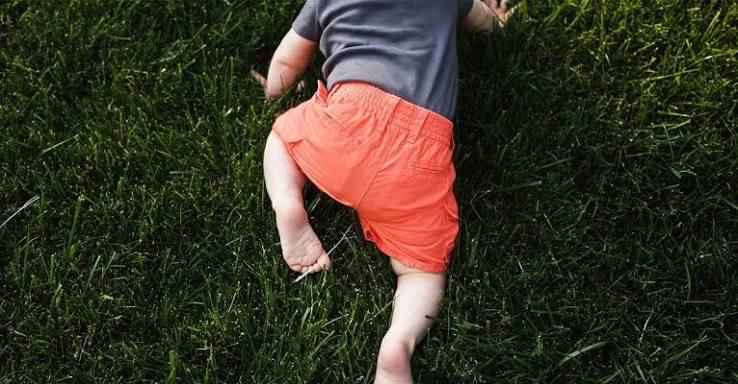
Q4: Does crawling on different textures (like grass or tile) affect their progress?
Yes, because a baby brain depends on sensory feedback to map out movement. Overly plush rugs make it difficult for babies to push against. Putting a baby on a firm play mat, bare grass under supervision, or a smooth wooden floor with bare knees stimulates the nerve receptors in their palms and feet, which accelerates their spatial awareness and body control.
Q5: How do I safely diaper change a baby who has just learned to crawl?
When babies learn to crawl, they want to practice, so they continuously move and don’t stay patient in the same place for a long time. So, to avoid this issue, put the baby on a clean mat on the floor and change the diaper so there is no risk of falling. To keep the baby busy, give them a changing table toy like an empty wipe pack so their mind stays diverted when you are changing the diapers.
Q6: If my baby is in a playpen or container a lot, will it delay their crawling?
When the baby spends more time on bouncers, jumpers, walkers, or activity swings, they get limited to exploring gravity. To make sure the baby hits the needed timeline naturally, limit the use of these containers.
Q7: What are the crawling stages?
Babies don’t just suddenly start crawling when they wake up. The crawling progress has physical stages. Tummy time is the foundation of crawling. Tummy time is 3 to 4 months when the baby just lifts the head and chest. The upper body extension takes place for 5 to 6 months, during which babies are pushing the arms and doing circles on the belly. The quadruped stage takes place in 7 to 8 months when the baby pushes on hands and knees. The directional drift takes place in 8 months when the baby does a backward move before doing a forward one. Lastly, true locomotion takes place in 9 to 10 months when babies master how to move forward and do different crawling styles on the floor.
Q8: Why Does Learning to Crawl Not Always Look the Same?
“Each baby has a different biomechanical blueprint, so learning to crawl is different.” Different babies solve the gravity problem in different ways. A baby with strong shoulders will likely master the army crawl first, while a baby that has highly flexible hamstrings may skip the bear crawl. All these different activities are a way toward walking.
Official Developmental Resources & Further Reading
If you want to dig deeper into motor skill development, tummy time progressions, or the latest pediatric guidelines regarding infant movement, explore these official articles and clinical portals:
- CDC Infant Milestones (9-Month Checklist): Review the official government checklist to see what motor, social, and cognitive behaviors are expected by nine months. You can find this on the Centers for Disease Control and Prevention
- American Academy of Pediatrics (AAP) Movement Guide: Read the formal medical consensus on physical milestones, crawling styles, and when to expect independent movement on the official Healthy Children website
- Nationwide Children’s Hospital Motor Study: Learn about the physiological benefits of crawling, including bilateral coordination, upper body strength, and visual tracking, on the Nationwide Children’s blog
