
Quick answer: What happens if you eat blueberries everyday? Eating it every single day can flood the bloodstream with an antioxidant called “anthocyanins”; it can easily cross the blood-brain barrier, enhance cognitive processing, stimulate nitric oxide production to lower blood pressure, and reduce systemic inflammation. A healthy individual can eat 1 cup of blueberries daily; more than this can be risky.
People all around the world love to eat blueberries and consider them a superfood because they contain vitamins, fiber, and vibrant plant pigments. People add blueberries in morning smoothies, oatmeal bowls, and healthy snacks worldwide. However, the main question that comes to everyone’s mind is what actually happens to your internal biochemistry that takes place in the digestive system when you eat blueberries every day. Is there any limit where it can become a gastrointestinal burden instead of a metabolic blessing?
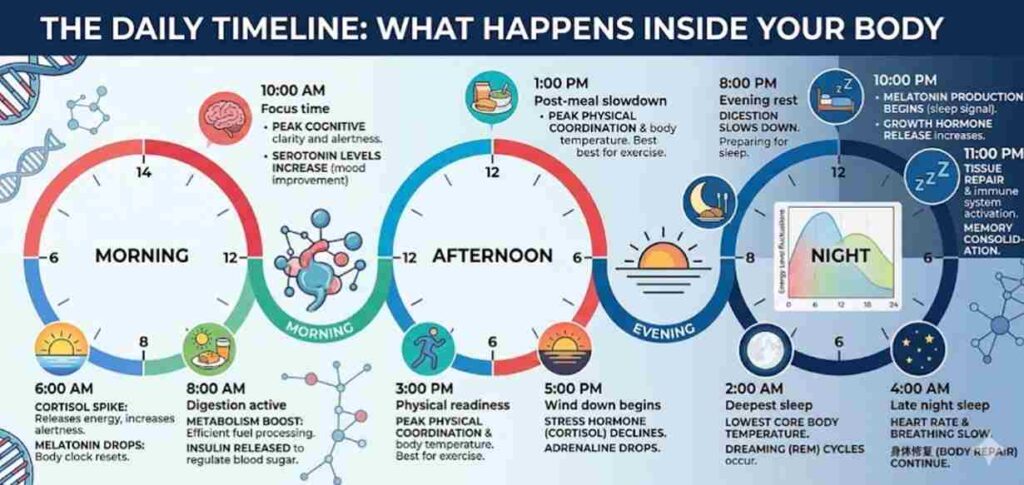
The Daily Timeline: What Happens inside Your Body
When you eat blueberries every day, your body processes them as follows:
1. Hours 1–6: The Post-Prandial Antioxidant Spike
Once you consume blueberries, in some hours the complex plant compound in them breaks down by upper digestive tract. The active antioxidant, like anthocyanins, spikes blood plasma, and as we discussed earlier, this antioxidant can cross the blood-brain barrier, where it stimulates blood flow. Because of this, you may feel suddenly energetic after a breakfast.
2. Days 7–14: Endothelial and Vascular Repair
After a week of consuming blueberries daily, their presence triggers your blood vessels’ endothelial lining to produce nitric oxide at a high level. Nitric oxide works as a molecule that makes muscle tissues surrounding arteries relax and dilate, which later results in clean circulation, less stiffness in arteries, and a healthy blood pressure.
3. Weeks 3–4+: Systemic Anti-Inflammatory & Insulin Optimization
By the end of 3-4 weeks when you consume blueberries daily, the benefits move to cellular levels, meaning the chronic inflammatory biomarkers, such as C-reactive protein (CRP), start decreasing. Additionally, the combination of fiber and the compounds slow down carbohydrate digestion. Blueberries help in improving insulin sensitivity and clearing glucose from the bloodstream efficiently.
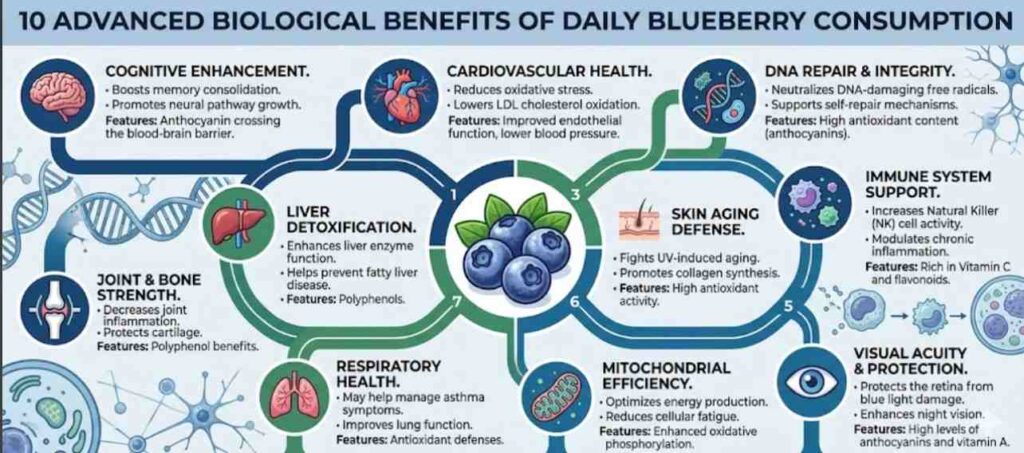
10 Advanced Biological Benefits of Daily Blueberry Consumption
Following are some amazing benefits of blueberries:
1. Accelerated Collagen Preservation
The skin depends on a dense structural protein matrix called “collagen” in order to maintain elasticity and firmness. Blueberries are rich in both anthocyanins and vitamin C, which together work as a powerhouse defense system as they neutralize the matrix metalloproteinases’ (MMPs’) destructive enzymes triggered by heat and pollution, which also affect the collagen. Vitamin C and the antioxidant from blueberries help to keep collagen safe from the inside out.
2. Enhanced Natural Retinal Defense
Our eyes constantly interact with high-energy blue light from digital screens and sunlight, which can cause macular oxidative stress. You may notice the blueberries have unique pigments; well, these selectively accumulate in the retinal tissue. When you eat berries every day, it can improve night vision adaptation, leading to better eye health.
3. Optimization of the Gut Microbiome Archetype
Blueberries work as a premium fuel source for your microbiome. The skin of this fruit is rich in specific prebiotic fibers and complex polyphenols, so when the blueberries pass the digestive system and go into the lower colon, they feed and multiply beneficial bacterial strains like Bifidobacterium and Lactobacillus, which leads to better gut health.
4. Mitigation of Chronic Vascular Internal Pressure
The low-grade internal pressure on filtering organs may stress kidney function. The daily intake of blueberries helps in easing peripheral resistance in minor capillaries. This cleaning helps the filtering organs to process waste without affecting kidney function.
5. Systematic Reduction of Cellular Uric Acid Accumulation
When the body isn’t able to break down specific metabolic wastes, uric acid can stay in the joints, which leads to severe discomfort. As we discuss, the blueberries have both organic acids and vitamin C; they can help the kidney to flush the excess metabolic byproducts, which results in lower baseline uric acid levels in the bloodstream.
6. Stabilized Nighttime Sleep Architecture
Blueberries contain small amounts of natural cofactors that support the brain’s endogenous synthesis of serotonin. When you eat blueberries, it helps in reducing cellular inflammation and physical cortisol in the evening, which results in better sleep.
7. Reinforcement of the Respiratory Immune Barrier
Our lungs and respiratory system are NOT immune to air and pollution. Blueberries work as a shield for the lungs because they contain natural compounds that help in strengthening the respiratory tract’s immune defense. Blueberries also boost the lungs’ natural cleaning system to sweep out dust and pollution. The main antioxidant in berries helps to calm the irritation that occurs from seasonal triggers and dirty air.
8. Improved Cellular Hydration Mechanics
To keep fluids balanced in the cell, the body not only needs water but also requires electrolytes and structured fluid matrices. Blueberries are full of structured, nutrient-dense water with potassium and magnesium ions. This natural structure helps the fluid absorb quickly, hydrating your cells from the inside out.
9. Natural Regulation of Lymphatic Fluid Drainage
Blueberries act as a natural tune-up for your body’s plumbing. They support the natural built-in filtration and lymphatic system to clean up the trapped fluid and cell waste. Blueberries help in better circulation; they also prevent trapped fluid and cell waste.
10. Strengthening of the Micro-Vascular Bone Matrix
As we know, calcium and vitamin D play an important role in bone health; however, the bones also need other nutrients like manganese, vitamin K, and unique polyphenols to resist fractures. These micronutrients are responsible for building and knitting new bone tissue together.
Blueberry Nutrition Profile: What’s Inside 1 Cup?
Here is a nutrition profile chart for a 1-cup serving of fresh blueberries (about 148 grams) as follows:
| Nutrient | Amount Per Cup | % Daily Value (DV)* | Key Benefit |
|---|---|---|---|
| Calories | 84 kcal | 4% | Low-calorie, energy-dense snack |
| Carbohydrates | 21 g | 7% | Provides steady, clean energy |
| Dietary Fiber | 3.6 g | 14% | Supports healthy digestion and gut health |
| Sugars | 15 g | — | Natural fructose (unrefined) |
| Protein | 1.1 g | 2% | Minimal source |
| Fat | 0.5 g | < 1% | Virtually fat-free |
| Vitamin K | 28.6 mcg | 24% | Essential for bone density and blood clotting |
| Vitamin C | 14.4 mg | 16% | Boosts immune system and skin collagen |
| Manganese | 0.5 mg | 22% | Helps the body process carbs and protein |
| Potassium | 114 mg | 2% | Supports healthy blood pressure levels |
The Serving Size Guide: How Many Blueberries Per Day?
To get the full benefits of blueberries without overloading the digestive tract with high organic sugar or excessive roughage, you need to take berries in a moderate amount.
How Many Blueberries Should I Eat a Day?
If you are an adult and following a 2,000-calorie diet, you can eat 1 cup of fresh blueberries per day around 150 grams. This portion limit will give you a perfect dose of micronutrients while keeping glycemic load manageable.
How Many Blueberries Should You Eat a Day? (By Target Group)
The amount of blueberries needed in a day isn’t the same for everyone. It can vary from person to person, so let’s look at it with the help of a chart.
| Target Group / Goal | Recommended Serving | Maximum Threshold | Key Nutritional or Safety Rationale |
|---|---|---|---|
| Standard Adult Wellness | 1 Cup (~150g) | 2.5 Cups | Optimizes long-term cardiovascular, cognitive, and cellular health metrics. |
| Athletic Recovery | 1.5 Cups (~225g) | 3 Cups | High anthocyanin load actively accelerates muscle tissue repair and mitigates oxidative stress post-workout. |
| Blood Sugar Management | 1/2 to 1 Cup | 1.5 Cups | Maximizes vital insulin-sensitizing benefits while strictly capping the total daily fructose load. |
| Infants (Ages 6–12 Months) | 1 to 2 Tbsp (Pureed) | 1/4 Cup | Intended purely for palate development; fruit must be fully pureed and skinless. |
| Toddlers (Ages 1–3) | 1/4 to 1/2 Cup | 1 Cup | Small, delicate intestines will react to high fiber and organic acid loads with rapid bowel transits. |
| Young Children (Ages 4–8) | 1/2 Cup | 1.5 Cups | Supports rapid cognitive development and immune defense thresholds. |
Who Needs to Eat More (Or Is Most At Risk of Overeating It)?
If you are an athlete or fitness enthusiast, then you may be putting on heavy weights, which cause muscle oxidative stress, so eating 1 cup of blueberries won’t be useful. An athlete needs 1.5 to 2 cups of berries; this helps in maximizing the anthocyanin payload, which is compulsory to clear cellular waste and reduce muscle recovery time.
Those individuals who are facing insulin resistance or early-stage pre-diabetes need to eat more berries instead of 1 cup because the specific alpha-glucosidase in berries’ skin helps in improving GLUT4 muscle pathway efficiency.
The Overeating Risk Groups (Who Tend to Cross the Line)
Since the blueberries are sweet and small in size and don’t even need peeling, kids love to eat them, and they overeat them sometimes. However, since the toddlers have a sensitive and short digestive tract, this overdose of blueberries disturbs the stomach and causes sudden osmotic diarrhea and purple diapers.
People do use blueberries in morning smoothies; however, not all berries give the juicy texture. You need a high amount of berries. This way, you drink a massive, multi-cup volume in under five minutes, which may give you an energy boost in the morning, but it also overloads your liver with fruit sugars all at once.
6 Smarter Ways to Enjoy Your Daily Blueberries
Here are six highly bioavailable ways to add them to your family’s daily routine:
1. The Anthocyanin-Boosted Morning Oats
Stir fresh blueberries into freshly cooked and hot oatmeal or overnight chia pudding. The heat from oats will open the berry’s cell walls, making its antioxidants get absorbed quickly by the digestive system.
2. Smart-Paired Healthy Fat Smoothies
Blend a cup of blueberries with half an avocado, raw almond butter, or plain Greek yogurt. All these ingredients will make your morning smoothie be absorbed better.
3. Low-Oxalate Berry Chia Jam
Don’t choose store-bought fruit spreads, as they are high in fructose corn syrup; instead, go for a homemade one. For this, all you need is two cups of fresh blueberries. Simmer them at low heat, add a tablespoon of chia seeds, and add a splash of lemon juice. This will provide jam with the perfect structure needed for whole-grain toast.
4. Savoury Polyphenol Meat Glazes
Blueberries aren’t just restricted to desserts, but they can also be used in meals. Mix fresh blueberries with a splash of balsamic vinegar, rosemary, and garlic. You can eat it with grilled chicken or roasted pork chops.
5. The Toddler-Safe Smash Bowls
For toddlers, you can place half a cup of blueberries into a shallow bowl and use a fork to smash them. Toss this berry mash with a spoonful of cottage cheese or thick kefir; the kid will get a high-protein snack while reducing the risk of choking.
6. Probiotic-Rich Frozen Yogurt Bark
For this all you need is to spread plain or vanilla Greek yogurt on a parchment-lined baking sheet and then add fresh blueberries and chopped walnuts as toppings. Freeze it for at least 2 more hours. Once it is done, take it out and break it into small snack-bark squares; this will give a perfect summer treat, especially to children.
Potential Side Effects of Overindulgence (The Blueberry Binge)
While blueberries do have many benefits if eaten in a moderate amount, if you eat them in high quantity, like a 2-pound carton or multiple large pints in a single sitting, then there will be side effects.
Acute Gastrointestinal Distress
A single cup of blueberries contains 3.6 grams of dietary fiber, whereas if you consume 3 to 4 cups rapidly, the high amount of unabsorbed fiber, combined with natural fruit acids, pushes excess water into the colon, which leads to sudden abdominal bloating, loud gas fermentation, and urgent, loose stools.
Fructose Overload and Sluggishness
While blueberries have a low glycemic index, it doesn’t mean they are sugar-free. When you eat berries in excessive amounts, your liver gets flooded with a high amount of fruit sugar, forcing the organ to process a heavy amount of fructose at once, which can lead to a noticeable blood sugar crash; you feel exhausted and fatigued hours later.
Prescription Vitamin K Interactions
Blueberries contain a natural amount of vitamin K, which plays an important role in the blood clotting mechanism. If you are already taking traditional blood thinners like Warfarin or Coumadin and eat berries in high amounts, it can alter the blood’s clotting consistency.

Fresh vs. Frozen vs. Dried: Which Daily Berry is Best?
Many people want to eat blueberries every day; however, it is impossible to find fresh berries, as they can be too expensive and spoil easily.
Frozen Blueberries (The Value Winner)
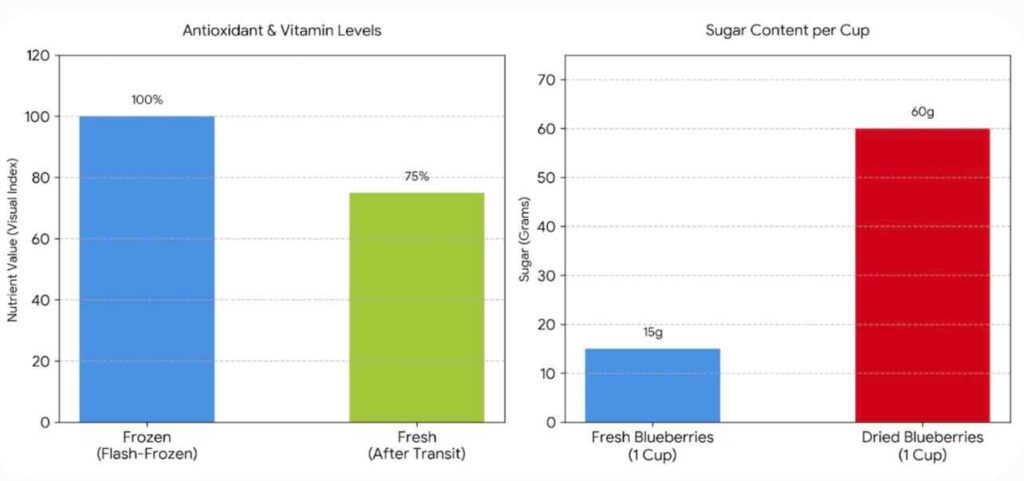
Once they are picked, they immediately get frozen at peak ripeness. This freezing process traps all the antioxidants inside. Frozen blueberries are considered to have more vitamins as compared to fresh ones because they sit in delivery trucks for hours.
Dried Blueberries (The Sugar Trap)
Dried blueberries have zero water; however, they contain sugar. A single cup of berries can have 60 grams of sugar easily. They are small; people can eat many easily at a single sitting, which leads to a quick blood sugar spike.
The Salicylate Factor: A Hidden Cause of Daily Intolerance
If you eat blueberries every single day and start to experience issues like headaches, skin rashes, or a stuffy nose without having a berry fruit allergy, then you may be facing salicylate sensitivity because blueberries are high in salicylates, the same compound that is found in aspirin. While it is completely harmless for many people, daily intake of it can cause mild histamine-like reactions in highly sensitive individuals.

Specific Child-Safety and Preparation Guidelines
As we discussed earlier, young kids have sensitive digestive tracts as compared to adults, so the parent must follow a safety protocol while giving children blueberries.
The Choking Hazard Realignment
Whole blueberries are round, slightly firm, and match the exact physical size of a toddler airway. Never serve whole blueberries to toddlers under 4 years of age. Instead, always give them mashed blueberries to avoid choking risks.
Managing the Blueberry Diaper Mom Panic
Some people get panicked when a toddler’s diaper is filled with dark blue, purple, or near-black stools over the next 24 hours after consuming many blueberries. This happens when the intense pigments (anthocyanins) pass from the child’s short digestive tract without even breaking down. That’s why the color of stool changes. The color, however, is completely harmless.
Pesticide Mitigation
Since the blueberries’ skin is thin, it is listed on annual agricultural tracking reports; you need to wash them properly. Put berries in cold water mixed with a teaspoon of baking soda for 5 to 10 minutes, then wash properly in running water. This will remove surface impurities before your family or kids consume it.
Also Read: What Happens If You Eat Too Many Cherries? Side Effects & Safe Limits

Can I Die From Eating Too Many Blueberries?
No, you won’t by eating blueberries, even in high amounts, as blueberries don’t contain any lethal toxins, cyanogenic compounds, or natural poisons. However, there are two main conditions that can be life-threatening if completely ignored:
Severe Choking Risk (Critical for Children): As we discussed earlier, the size of a blueberry matches the size of a small child’s airway. If a child who is under 4 years old eats too many at once, it can easily cause airway obstruction.
Severe Allergic Reactions (Anaphylaxis): If a person is allergic to blueberries or salicylates, eating them in high quantity can trigger throat swelling, hives, and acute difficulty breathing. This can be a life-threatening medical emergency; you need to go to the doctor.
What Happens If I Overeat Blueberries During Pregnancy?
While blueberries are rich in vitamins and antioxidants, which are important during pregnancy, getting them in extra amounts can lead to a blueberry overdose shift in your body.
A single cup of blueberries contains 3.6 grams of dietary fiber. Consuming a high amount of berries at once is like introducing a high amount of fiber, which leads to sharp abdominal cramps, painful bloating, loud gas fermentation, and sudden osmotic diarrhea. During pregnancy the digestive system is already slow, which makes the fiber flush-out difficult.
In pregnancy, eating food items that are high in sugar can cause blood sugar spikes followed by an energy crash that leaves you feeling incredibly fatigued.

What Happens If an Older Adult Consumes Blueberries in High Amounts?
In old age, blueberries can be beneficial for heart health and brain longevity, but eating them in unlimited amounts can introduce a few distinct medical risks as follows:
Seniors’ High-Volume Ingestion Risk Matrix
| Potential Effect / Risk | Physiological Mechanism | Why It Matters for Older Adults |
|---|---|---|
| Gastrointestinal Distress | A sudden influx of unabsorbed fiber and natural fruit acids draws water directly into the lower GI tract. | Can cause painful bloating, severe gas cramping, and urgent diarrhea, increasing the risk of dehydration. |
| Prescription Medication Interference | Blueberries contain a modest, natural amount of vitamin K (24% DV per cup), which functions as a structural blood-clotting agent. | If an older adult is taking traditional prescription blood thinners (like Warfarin or Coumadin), sudden, massive fluctuations in daily berry intake can disrupt the medication’s consistency. |
| Blood Sugar Instability | Processing an excessive volume of fruit sugar (fructose) heavily tasks the liver and pancreas. | Can exhaust glycemic regulation pathways, leading to acute blood sugar spikes and placing stress on insulin production in diabetic or prediabetic individuals. |
Regulatory Insights: Official Stances from Global Food Authorities
According to the U.S. Food and Drug Administration (FDA), alongside the United States Department of Agriculture (USDA), 1 cup (approx. 150 grams) of raw blueberries is classified as a single standard reference serving.
According to the federal Dietary Guidelines for Americans, a healthy adult can consume 2 cups of fruit in a single day.
According to the European Food Safety Authority (EFSA), in alignment with the Joint FAO/WHO Expert Committee on Food Additives (JECFA), it set the acceptable daily intake at 2.5 mg of pure anthocyanins per kilogram of body weight per day.
Daily Anthocyanin Safety Thresholds By Body Weight
| Individual Body Weight | Safe Daily Extract Limit (ADI) | Equivalent in Whole Berries | The Regulatory Safeguard |
|---|---|---|---|
| Small Child (20 kg / 44 lbs) | 50 mg | ~1/3 Cup | Whole fruit slows down digestion; concentrated supplements can overwhelm small systems. |
| Average Adult (70 kg / 154 lbs) | 175 mg | ~1.2 Cups | The body safely processes whole berries over hours, preventing sudden chemical spikes in the bloodstream. |
| Larger Adult (90 kg / 198 lbs) | 225 mg | ~1.5 Cups | Fibrous skin structures ensure a steady, non-toxic release of active plant compounds during digestion. |
Medical Disclaimer: The information contained in this comprehensive guide is provided for educational and informational purposes only. It is not intended to serve as a substitute for professional medical advice, diagnosis, or targeted treatment plan. Always consult with a qualified healthcare professional or registered dietitian.
The Bottom Line: The Final Verdict on Daily Berry Ingestion
Adding some blueberries in a morning smoothie or over oatmeal is the best way to get an energy boost at the start of the day. Blueberries work as metabolic shields as they help in improving arterial dilation, protect brain cells, and reduce oxidative stress. However, the benefits of blueberries depend completely on your body’s digestive and mechanical limits. Overconsuming this fruit can lead to some problems like diarrhea or stomach disturbance. To get full benefits, eat one cup a day.
Frequently Asked Questions (FAQ)
1. Is there any biological risk to consuming blueberries every single day?
No, if you eat it in a moderate amount, like a single cup per day, it can have many benefits without overloading the liver with sugars.
2. What temporary side effects can an adult expect from a massive berry binge?
If you eat blueberries in large amounts, then the digestive system will likely experience acute distress, and you may experience sudden stomach cramps, severe bloating, and loose stools.
3. Is it safe to introduce blueberries into a newborn’s diet?
No, according to the pediatric guidelines, a newborn baby should consume breast milk or formula. However, after 6 months you can start introducing food items like blueberries, but little pieces, not full ones.
4. Why does my child produce dark blue or purple stools after eating these berries?
Don’t panic; this change is happening because of intense natural plant pigments (anthocyanins) on blueberry skin. A toddler has a short and rapid digestive transit time, so these pigments pass directly without breaking down.
5. Do frozen blueberries lose their nutritional value compared to fresh ones?
No, in fact, frozen blueberries have more nutrition as compared to a fresh one because, in freezing, the antioxidant structures are perfectly locked in. Whereas the fresh one stays in the truck for hours.
6. Can a person suffer a fatal poisoning from eating too many blueberries?
No, blueberries won’t cause fatal poisoning even when taken in high amounts because they don’t contain any lethal chemical compounds, cyanogenic substances, or natural poisons.
7. What makes a whole blueberry such a dangerous choking hazard for young children?
A raw, whole blueberry is round, firm, and matches the diameter of a toddler’s windpipe. If a child under four swallows one whole blueberry, it can block the airway, leading to choking.
8. What exactly is a salicylate sensitivity, and how does it relate to this fruit?
Salicylates are chemical compounds, and they are found in blueberries, so if a person is allergic to salicylates, it can trigger mild, allergy-like symptoms such as headaches, skin rashes, or nasal congestion.
9. Can a regular blueberry habit interfere with any prescription medications?
Yes, since the blueberries contain vitamin K, which the body uses to assist blood clotting. If you are already taking blood thinners, then avoid taking blueberries daily.
10. Does blending blueberries in a morning smoothie change how your body absorbs them?
Yes, significantly. Liquid blending completely pulverizes the fruit’s physical cell walls and structural fiber matrix. This allows you to drink a massive, multi-cup volume of fruit sugar in just a few minutes, completely bypassing your body’s natural satiety cues and hitting your liver with a rapid rush of fructose.
11. Does washing blueberries remove their natural white, waxy coating?
No, however, you don’t need to scrub them off. Washing blueberries properly can remove bacteria and directly make them completely safe to consume on a daily basis.
12. Can individuals with kidney stones eat blueberries daily?
Yes; however, they need to avoid other types of berries, like raspberries or blackberries, because they are high in oxalates.
13. Why do my teeth and tongue turn completely purple after eating them?
It can be temporary, and your teeth’s color will go back to normal. This color change takes place because of the high concentration of water-soluble anthocyanin pigments inside the fruit. All you need is to brush your teeth and drink plenty of water.
14. Is it better to eat blueberries on an empty stomach or with a meal?
Consuming blueberries on an empty stomach can allow the body to absorb the vitamin C and active antioxidants quickly without digestive interference. However, if you face acid reflux, then pair it with a meal like yogurt or oatmeal.
15. Do blueberries lose their health benefits if you bake them into muffins or pies?
Yes, blueberries do face nutritional downgrades as they are heated at typically over 350°F / 180°C, degrading while baking; however, the fiber in them stays the same. If you want to get full nutrition, then use blueberries as a topping instead in a baking product.
High-Authority Scientific References
- U.S. Department of Agriculture (USDA): Detailed macro and micronutrient allocation metrics can be verified directly via the USDA FoodData Central Analytical Database.
- U.S. Food and Drug Administration (FDA): Serving size regulations and standard single-sitting metrics are established in the official guide on FDA Reference Amounts Customarily Consumed (RACC).
- The American Journal of Clinical Nutrition (AJCN): Read the full methodology and vascular results of the landmark 6-month clinical trial via PubMed: Blueberries Improve Biomarkers of Cardiometabolic Function.
- National Center for Biotechnology Information (NCBI / PubMed): Explore the peer-reviewed clinical reviews on how plant pigments cross the blood-brain barrier via PMC: Effects of Anthocyanin Supplementation on Inflammation and Cognition.
