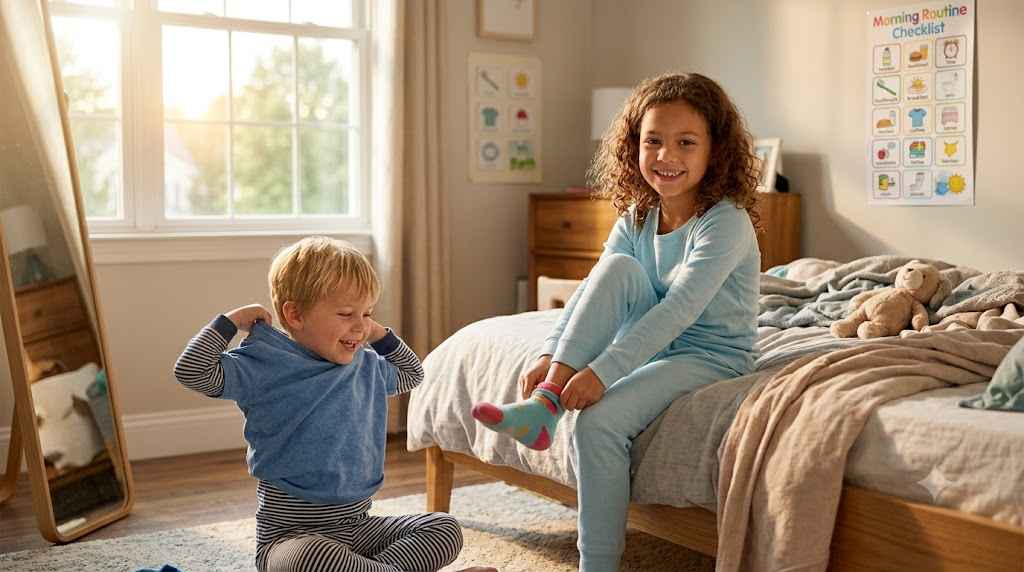
Quick Answer: A successful morning routine for kids relies on predictable habit stacking rather than rigid schedules. Anchor daily tasks into a simple sequence: prep gear the night before, complete hygiene right after breakfast, grab supplies from a central launchpad, and include a 10-minute buffer for delays.
Mornings with kids can be an exciting yet overwhelming experience for parents. From hunting for matching shoes, taking a sleeping toddler out of bed, and convincing them to eat breakfast to making them ready on time, a parent feels so exhausted at the start of the day. If your morning hours are so busy and not as easy as they were when you woke alone to go to your job, then you are not alone.
To make morning hours less difficult, you have to create a predictable morning routine for kids so your family can have a good time in the morning. In this guide we will break down all the realistic and stress-free strategies to help you in building a smooth morning schedule, nurturing your child’s independence, and restoring peace to your early hours.
Why Traditional Morning Routines Fail (And How to Fix Yours)
Many parents print out a clean morning chart and follow it for a day, but the next day everything falls apart again and this leads to frustration in parents. According to much parenting advice, the secret of smooth mornings is all about discipline and waking up earlier. If a chart were the only solution, without considering those two main factors, mornings would obviously remain a stressful part of the day.
Traditional morning plans fail, and the main reason behind it is not because parents aren’t trying but because they are made from robots, not real families. To make a routine that sticks, we have to look at why there is so much rush in the early morning hours.
The Hidden Cause of Morning Friction: Cognitive Load & Micro-Decisions
Whatever we do in a day drains a finite mental battery, which in psychology is known as decision fatigue. In the early morning, both parents and kids are forced to process many small decisions before the clock hits 8:00 AM:
- “Which shirt should I wear?”
- “What do I want for breakfast?”
- “Where are my shoes?”
- “Should I brush my teeth before or after I put my socks on?”
Managing a fast routine in the morning can be less stressful to adults as compared to kids because their brains are still developing; the overload leads to immediate friction. When young kids face too many inputs and decisions in the morning, it creates so much pressure.
However, when parents step in with reminders like “Did you put your shoes on?” Eat your toast! Go pack your bag! And kids don’t listen to every single thing; it doesn’t mean they are ignoring it. It means their brains are already overstimulated by the sheer volume of micro-tasks.
Morning Routine vs. Morning Schedule: What Most Parents Get Wrong
The biggest mistake parents make and the reason they fail to make a smooth morning is they confuse a morning schedule with a morning routine.
| Feature | Morning Schedule (Rigid) | Morning Routine (Flexible Anchor) |
|---|---|---|
| Structure |
Clock-Bound Bound to strict clock times (e.g., “7:15 AM: Eat breakfast”) |
Sequence-Bound Bound to natural sequences (e.g., “After breakfast, brush teeth”) |
| Focus |
Clock Management Primary focus on tracking and managing rigid time blocks. |
Habit Flow & Momentum Primary focus on building rhythm and natural habit progression. |
| Stress Level |
High Stress A 10-minute delay disrupts or ruins the entire plan. |
Low Stress Adapts easily when unexpected hiccups happen. |
| Child Response |
Anxiety or Rebellion Time pressure leads to power struggles, stress, and resistance. |
Independence & Confidence Built through predictable cues and self-directed flow. |
Why Rigid Schedules Backfire?
Parents often anticipate that a rigid schedule will be effective and that everything will proceed according to plan. However, in a household with children, a variety of occurrences may occur, such as a misplaced library book, a spilled cup of milk, or a toddler who is wearing the incorrect shoes.
When you planned, the kids would be at the door at 7:20 AM, and it’s still 7:18 AM. The kids are still stuck at breakfast. The panic happens and leads to stress in adults.
The Fix: Flexible, Anchored Habit Stacks
Instead of just focusing on finishing everything on time without taking any action, apply these strategies.
Ask your kid to do: When I finish my breakfast, I put my plate in the sink, and then I put my lunchbox in my backpack. This way they quickly finish breakfast because they know they have more tasks to do.
Age-by-Age Breakdown: Tailoring the Morning Flow
The morning routine for kids of every age isn’t the same, so your morning strategy shouldn’t be either. A 3-year-old toddler has a different routine where they are stuck on wearing socks, whereas an 11-year-old kid learns to manage their time.
To create a morning routine for kids that sticks without any distractions, you must look at the expectation you have for the child’s specific developmental stage. Here is the morning routine step by step from toddlers to preteens.
Toddlers & Preschoolers (Ages 2–4): Visual Cueing & Micro-Steps
At this stage the toddlers are still in the developing phase, but they can experience cognitive overload. They can’t work with time when you say, “Go brush, get dressed, and get your shoes in 10 minutes.” Keep steps microscopic; use visual cues to avoid morning bedlam.
- Use a visual card that has pictures of the steps they need to follow so even if they forget to do a task, they see and remember what to do step by step.
- If you say “toddler, get dressed,” it will be vague for them. Break it into 2 steps, like step 1 pants and step 2 shirts.
- To make them independent without slowing the morning time, give clear options like “Do you want to wear the blue shirt or the red shirt?”
Parent Tip for Ages 2–4: Keep basic things like shoes, socks, and outerwear near the toddler bed so they can easily grab them without doing any extra hard work.
Small clothing choices can also make a toddler’s morning routine easier. Socks that feel comfortable, stay in place, and suit the weather can reduce unnecessary struggles when getting dressed. For colder mornings or outdoor activities, options like merino socks for toddlers can help provide warmth and moisture management without making shoes feel too tight. Preparing comfortable clothing items the night before allows children to focus less on small frustrations and more on building independence.
Early Elementary (Ages 5–8): Building Self-Reliance & Clock Awareness
Children at this age understand sequences and love being independent. However, we are still unable to manage time; 5 minutes can feel like a split second based on whatever task they are doing.
In the morning use a sand timer or a digital disk timer instead of a traditional clock. When they see time is shrinking, they will manage tasks quickly. Create logical sequences to keep them supported; for example, say, “When you make the bed and wear the shoes, then you can turn your favorite music on and pick a breakfast spot.”
Keep the backpack, jacket, and water bottle near the door so they can grab them in last easily before heading out.
Recommended Task Ownership
- Ages 5–6: Dressing independently, placing dishes in the sink, and brushing teeth (with adult inspection).
- Ages 7–8: Packing lunch snacks, making simple beds, checking off their own morning checklist.
Tweens & Pre-Teens (Ages 9+): Independence, Alarm Responsibility, & Self-Pacing
When kids turn 9, they can easily manage the morning routine independently. The goal of parents shifts from giving step-by-step guides to letting them do everything alone. Ask them at night to set an alarm for morning. Use a traditional clock in their room; don’t rely on smartwatches so they wake up fully to turn it off.
Give them printable task trackers, dry-erase whiteboards in their room, or a simple morning task app. If you notice 10-year-olds don’t have time for breakfast because they wake up late, then apply strict rules, like you will face no TV penalty the whole day if you don’t wake up on the first alarm.
Step-by-Step Execution: Building a High-Efficiency Morning Stack
Now that you understand what instructions a kid wants based on their age, the next step is developing an efficient, repeatable system into motion. Structure the morning into four phases, which include the night before and morning; this way you will remove morning panic and create an effortless, high-efficiency routine.
The Night Before: The 15-Minute Launchpad Reset
The recipe for a smooth morning isn’t about when the alarm rings; it usually starts one night before. By handling things at night that can be stressful in the morning, you protect yourself from morning disturbance and missing-item emergencies.
Setting Up Your Dedicated “Exit Station” (The Launchpad)
Make a single spot near the main entryway like a hall tree, a bench with cubbies, and a set of wall hooks as a launchpad. Nothing leaves the door. You can save this 15-minute checklist as follows:
- Lay out entire outfits such as underwear, socks, and shoes. If you think the rain is coming, then check the forecast in the morning.
- Pack homework, sign slips, and add library books into the bag, then hang it on the Launchpad hook.
- Prepare their lunchbox in the morning, but manage all items like washing fruits, portioning snacks, etc. at night so it will be easy to assemble in the morning.
- Fill kids’ water bottles at night and place them on the refrigerator door.
The Wake-Up Window: Gentle Waking & Mood Anchor Strategies
How kids wake is important because it sets the emotional tone for the entire day. High-pitched alarm clocks, bright overhead lights, and shouted reminders can easily stress out kids in the morning and lead to a defense mode in kids.
If you wake up before kids in the morning, then open their room curtains to signal their brain to lower melatonin levels naturally. Swap the loud alarm clock with a warm yellow light-up alarm clock. Give kids 5 minutes to settle after waking up, sit on their bed, and talk about good things.
Breakfast & Hygiene Flow: Eliminating Stall Points
Breakfast and the early bathroom routine are the main places where time is lost easily. If you manage these two, then the morning can be easy to handle.
- Start with breakfast; don’t ask what you want to eat. Instead, make a simple 5-day breakfast menu like Monday: Oatmeal; Tuesday: Eggs & Toast; Wednesday: Smoothies. Prepare everything at night.
- Instruct them that once you finish breakfast, put the plate in the sink, then wash hands properly and get ready so they stay clean.
- Store kids’ toothbrushes, toothpaste, brushes, and washcloths in one place so they don’t waste time finding anything.
The Final Door-Dash: Buffer Minutes & Last-Minute Scrambles
The final 15 minutes before leaving for school is very stressful. To protect everyone’s mood right before going out, build structural nets in a last-minute routine.
Aim to leave 10 minutes earlier than the actual time. If you have a strict deadline and have to leave at 8 am, then treat 7:50 am as your final time so you can just take keys and go without any panic at the actual last time.
At the last minute kids need to just grab bottles and bags and put on shoes. Before kids go, give them a hug or say, “Have a nice day,” so they feel blessed and motivated.
Free Tool: Customizable Morning Routine Checklists
Mostly guides on the internet will just give you a visual chart, but here is a tool that I feel is useful for you as a parent. The following are the age-tailored checklist templates made to keep your morning flowing smoothly, along with an interactive, customizable widget.
☀️ Interactive Morning Tracker
Select your child’s age group and check off tasks as you go!
Troubleshooting Common Morning Disruption Scenarios
When morning chaos happens, the main goal isn't to force anything by yelling at kids; it is to correct the situation quickly while keeping the routine on track. Here is how to handle the most common morning roadblocks using gentle, effective micro-scripting.
What to Do When a Child Refuses to Get Dressed
Clothing resistance is more about sensory discomfort, feeling overwhelmed, and thinking to control oneself before going out instead of being stubborn.
| Scenario | Instead of Saying (Triggers Power Struggle) | Try Saying This (Restores Flow) |
|---|---|---|
| Pants Resistance |
Avoid Threatening "Put your pants on right now or no iPad this weekend!" |
Offer Choices "Do you want to put your pants on first, or your shirt first? You choose." |
| Morning Stalling |
Avoid Panic & Guilt "We're going to be late! Why are you just standing there?" |
Make It Playful "Let's see if we can get your shirt on before I count to 10 like a slow robot!" |
| Complete Refusal |
Avoid Rigid Battles "You can't go to school in your pajamas!" |
Validate & Pivot "I see you really want to wear pajamas today. Let's put your clothes in your backpack, and you can change at school when you're ready." |
Managing Sibling Clashes During Peak Rush Hours
If you are have multiple kids, then you know how siblings fight with each other in the morning because they are stressed and morning routines make them out of control. When you see 2 kids are fighting over who goes first to the bathroom, separate their hygiene tasks by letting one go to the bathroom to brush and the other can go to the kitchen sink. Don't take one kid aside every time for the bathroom; rotate turns every day.
| Scenario | Instead of Saying (Triggers Power Struggle) | Try Saying This (Restores Flow) |
|---|---|---|
| Fighting Over Cereal |
Avoid Blame & Shaming "Stop arguing over the bowl! You guys ruin every morning!" |
Divide Roles Equitably "Two kids, one red bowl. Who wants to hold the bowl today, and who wants to pour the cereal?" |
| Crowded Bathroom |
Avoid Barking Orders "Quit pushing your brother! Move out of the way!" |
Redirect & Separate "The bathroom is crowded right now. Maya, take your hairbrush to the hallway mirror while Leo finishes teeth." |
| General Squabbling |
Avoid Exasperated Venting "Why can't you two just get along for five minutes?!" |
Rally Team Focus "I hear raised voices. We are on Team Morning right now. What's the next step on our checklist?" |
How to Handle "I'm Too Tired" Days Without Yelling
Sometimes kids don't have a mood to go to school, so they say they're too tired to move; however, if you yell over this, it only worsens the situation. Always move forward with the schedule.
Hear when kids say they are tired and say it's ok to feel it. I was in the same situation when I went to school; this way they feel you heard them. You can support them by saying the following things:
| Scenario | Instead of Saying (Triggers Power Struggle) | Try Saying This (Restores Flow) |
|---|---|---|
| Refusing to Get Out of Bed |
Avoid Frustrated Demands "I'm not doing this today! Get out of bed right now!" |
Acknowledge & Gentle Connection "Your body feels super heavy today, huh? I hear you. Let's sit up together and take three deep breaths." |
| Slumping on the Couch |
Avoid Labeling & Dismissing "Stop being lazy! You slept for nine hours!" |
Co-Regulation & Small Steps "It's hard to move when you're sleepy. I'll help you put on your left shoe, then you do your right shoe." |
| Morning Meltdown |
Avoid Empty Threats "If you don't hurry up, I'm leaving without you!" |
Micro-Goals & Regulating Breaks "I know mornings feel fast and hard today. Let's do just ONE step: brush teeth, then you can rest for two minutes." |
Refrence and Sources
- CDC (Sleep Guidelines for Kids): https://www.cdc.gov/sleep/about_sleep/how_much_sleep.html
- NIH / MedlinePlus (Child Development & Routines): https://medlineplus.gov/ency/article/002017.htm
- USDA MyPlate (Kids' Healthy Breakfast & Nutrition): https://www.myplate.gov/life-stages/kids
- U.S. Department of Education (Helping Your Child Succeed in School): https://www.ed.gov/parents
- CDC (Childhood Anxiety & Emotional Regulation): https://www.cdc.gov/childrensmentalhealth/anxiety.html
