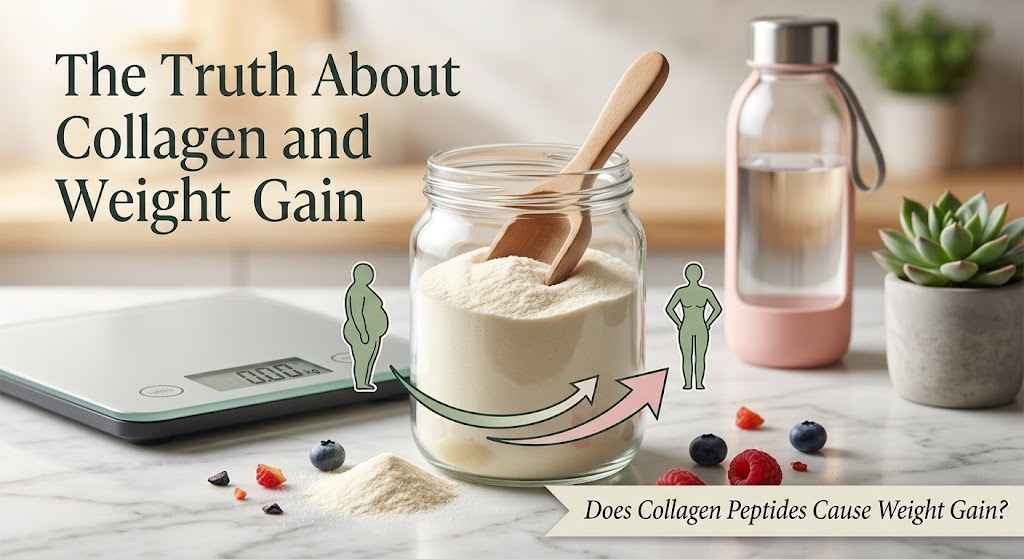
Quick Answer: Does Collagen Peptides Cause Weight Gain? No, pure collagen peptides do not cause weight gain. With only 35 to 40 calories per 10g scoop and zero fat or carbs, collagen cannot cause fat gain on its own.
Recently, people have gone for things that are good for their health, especially skin health. Some use medications while some prefer supplements or collagen peptides. They use it in smoothies, coffees, and protein shakes to get better skin and strong joints. Due to their population and intake in daily life, people have a question in mind: do collagen peptides cause weight gain? If you’re curious about a collagen scoop that might make you gain weight or hinder your weight loss, you’re not alone. In this article we will dive deep into collagen, its nutritional benefits, whether it’s good for you, and whether it causes weight gain, so let’s begin.
The Collagen Craze: What Exactly Are Collagen Peptides?
Before we get into the question of whether collagen helps in weight gain or not, let us first understand what exactly collagen is. Well, collagen is the most abundant protein in the human body, about 30% of total protein, which helps in providing glowing skin. It also supports muscles, bones, and ligaments. Collagen peptides, also known as hydrolyzed collagen, are a small form of amino acid that can be found in animal or marine collagen since they are small in nature, so they can easily break down and help in better digestion.
Collagen is best for your body when it comes to repairing and rebuilding connective tissue. You can easily get natural collagen from bovine (cow), porcine (pig), chicken, or fish sources. Collagen has 30 to 40 kcal in a 10 g serving; more of it contains amino acids like glycine, proline, and hydroxyproline, which work best for tissue repair. However, it still lacks essential amino acids like tryptophan.
Additionally, collagen peptides are protein; they are not considered as fat or carbs, but the question that arises in mind is, can this protein contribute toward weight gain? Let’s find out.
Amino Acid Profile Breakdown: Collagen vs. Complete Protein (Whey)
| Amino Acid | Collagen Peptides (per 10g) | Whey Protein (per 10g) | Primary Function in Body |
|---|---|---|---|
| Glycine | ~2.2g (Very High) | ~0.2g | Collagen synthesis, joint repair, gut lining |
| Proline & Hydroxyproline | ~2.5g (Very High) | ~0.6g | Skin structure, cartilage maintenance |
| Tryptophan | 0g (Absent) | ~0.2g | Essential amino acid; mood & sleep hormone regulation |
| Leucine (BCAA) | ~0.3g (Low) | ~1.1g | Primary driver of muscle protein synthesis |
Understanding Weight Gain: A Quick Reality Check
Before putting all the blame on collagen, let’s first understand how weight gain takes place.
Weight gain usually happens when you don’t follow any diet, have unlimited calorie intake, and burn fewer calories. It doesn’t matter where those calories are coming from; they can be from different sources like collagen, bread, or avocado.
If you eat everything all day without doing any kind of balancing, it can lead to excess energy in your body, which later results in weight gain.
If you eat less or in a balanced quantity and burn more calories, then your body uses stored fat for energy, which leads to weight loss.
If we talk about collagen and weight gain, then let me tell you a single scoop of collagen contains very few calories as compared to half a banana. This means even if collagen supplements are part of an overall calorie surplus, it doesn’t mean they alone contribute toward weight gain.
Calorie & Nutrient Comparison: Collagen vs. Common Food Add-ins
| Ingredient / Add-In | Portion Size | Approx. Calories | Protein (g) | Fat (g) | Carbs / Sugar (g) |
|---|---|---|---|---|---|
| Pure Collagen Peptides | 1 scoop (10g) | 35–40 | 9g | 0g | 0g |
| Flavored Collagen Blend | 1 scoop (15g) | 70–90 | 9g | 0.5g | 6–8g (added sugar) |
| Whole Milk | 1 cup (240ml) | 150 | 8g | 8g | 12g |
| Flavored Coffee Creamer | 2 tbsp (30ml) | 70–100 | 0g | 3–5g | 12–15g |
| Medium Banana (Smoothie base) | 1 medium | 105 | 1g | 0g | 27g |
| MCT / Coconut Oil (Bulletproof) | 1 tbsp (15g) | 120 | 0g | 14g | 0g |
Collagen and Metabolism: What Really Happens Inside Your Body
When you digest collagen, it breaks down into small amino acids that can be easily digested and absorbed into the bloodstream. Later your body uses those amino acids to rebuild collagen in different parts of the body, like in skin, joints, and cartilage. Collagen intake also helps in muscle recovery and repair after an intense workout. If you are someone who is recovering from an accident with major surgery, then collagen can also help in tissue recovery and wound healing.
Like all protein sources, collagen has a higher thermic effect than carbohydrates or fats, meaning your body uses a bit more energy to break it down. Additionally, supporting lean muscle mass helps sustain your natural resting metabolic rate.
The Psychology of “Feeling Heavier” After Supplements
One of the most common reasons people think about why collagen can contribute toward weight loss is that it causes temporary bloating or water retention. Some people report mild, temporary bloating when adding any new protein powder to their routine as the digestive system adjusts. However, pure collagen does not cause systemic water retention or fluid accumulation. Lastly, the weight you feel or see after taking collagen can be because of hydration or muscle fullness instead of any fat increase in the body.
We cannot say that collagen helps in weight gain; however, it can indirectly cause a small increase of weight in the body, but in a positive way, like when you use it in resistance training, collagen can help in boosting muscle protein and helps in recovery. It can also improve strength and increase muscle mass in some cases.
| Weight Variation Cause | Timeline | Scale Shift | Is It Fat Gain? | Primary Solution |
|---|---|---|---|---|
| Digestive Adaptation / Mild Bloating | Days 1–10 | +0.5 to 2 lbs | No | Reduce dose to 1/2 scoop; drink more water |
| Lean Muscle Mass Gain | 4–12 Weeks | +1 to 4 lbs | No | Monitor body fat percentage and waist measurements |
| Caloric Surplus (Extra Add-Ins) | 2+ Weeks | Gradual increase | Yes | Track liquid calories (syrups, creamers, oils) |
The Muscle Connection: Why Collagen Might Make You “Heavier” But Leaner
We cannot say that collagen helps in weight gain; however, it can indirectly cause a small increase of weight in the body, but in a positive way, like when you use it in resistance training, collagen can help in boosting muscle protein and helps in recovery. It can also improve strength and increase muscle mass in some cases.
To understand more, I have an example for you: A middle-aged man in 2019 notices that when he takes 15 g of collagen peptides on a daily basis and he is doing resistance training at the same time, he gains lean mass and also loses some fat. So using collagen may raise the scale that leads to muscle gain rather than fat gain. Taking collagen can make you leaner because of muscle weight; however, you will not consider it as fat.
Appetite and Satiety: Why Collagen Might Help Control Weight
Another benefit of collagen is its potential to curb hunger. Foods that are rich in protein promote satiety by regulating hormones like ghrelin and peptide YY. Collagens like ghrelin and peptides are made up of amino acids, which can help in normalizing blood sugar levels which play an important role in weight management, as when your blood sugar does not spike, you will not crave more, which indirectly leads to less calorie intake, leading to weight loss.
Common Mistakes That Can Lead to Unintended Weight Gain
If you notice you are gaining weight while using collagen, then let me tell you collagen alone is not the reason for it; maybe you are making some mistakes while taking it. Some common mistakes people make are as follows:
- Collagen comes in many variations; some collagen powder contains sugar, maltodextrin, or syrups to enhance the taste of the powder. However, it includes calories, which leads to weight gain, so it is recommended to always look at the label for what ingredients they use.
- If you are using collagen in coffee, then also add cream, syrups, nut butters, or coconut oil. All these ingredients have calories, so when combined with collagen, they can cause weight gain.
- Another big mistake people usually make is they replace their regular meals with multiple scoops of collagen, which may overshoot the protein target and lead to weight gain.
- Collagen helps in improving joints if you take it with workouts; however, if you are less active because of work or stress, it can lead to weight gain.
- So for good results the best thing you can do is mix a small scoop of collagen mix with water and milk and make sure the milk is unsweetened in nature. You can also add collagen in black coffee to get balanced nutrients.
Real-World Insights: What Users Experience
Many users share positive feedback when they consume collagen on a daily basis. They observe good changes in the body, like firmer muscles and smoother skin, while there is no weight gain. However, some people report negative feedback, like they face bloating after consuming collagen in the starting stage, but it is completely gone in two weeks.
Common observations:
- “My skin looks better, and I feel stronger—no weight gain.”
- “Collagen helped my recovery after workouts.”
- “I saw a 1 lb increase initially, but it turned out to be muscle, not fat.”
These reviews are reasonable and completely align with clinical research: Collagen never contributes toward weight gain; in fact, it supports overall metabolism and tissue in the body.
Also Read: Is protein powder made from worms? Myth vs. Mealworm Facts (2026)
How to Use Collagen Peptides Without Worrying About Weight
Following is a practical guide on taking collagen wisely to avoid fat gain issues:
Choose a Clean Source
In order to get full benefits of collagen without facing any weight gain issues, always read the label on collagen and go for options that are unflavored and pure hydrolyzed. Also avoid collagen powder that contains fillers, sweeteners, or artificial flavorings.
Stick to Recommended Doses
Remember,, moderation is the key; taking anything in excessive amounts can lead to weight gain, so just take 1–2 scoops of collagen daily.
Pair With Exercise
When you pair protein sources with your workout routine, it can provide good results, so if you pair collagen with resistance or strength training, it can lead to muscle building and also save your body from storing fat.
Monitor Body Composition
When you include anything in your daily diet, always monitor how your body reacts; for this, you can use body-fat scanners or measurements. Collagen helps in improving body shape and even toning your body by keeping your weight the same.
Stay Hydrated
Because collagen draws water into connective tissues, drinking enough fluids prevents bloating and keeps digestion smooth.
Remember to always listen to your body; like, if you start issues like bloating, then lower the intake of collagen for some days.
| Target Health Goal | Suggested Daily Dosage | Optimal Timing | Best Pairing |
|---|---|---|---|
| Skin Elasticity & Anti-Aging | 2.5g – 5g | Morning | Vitamin C (boosts natural synthesis) |
| Joint & Bone Support | 5g – 10g | Pre- or Post-Workout | Water, green tea, or black coffee |
| Muscle Recovery & Lean Mass | 10g – 15g | Within 1 hr Post-Workout | Combined with resistance training |
The Middle Ground: What If You’re Still Unsure?
If you are still unsure about whether collagen contributes toward weight gain or not, then the answer is scientifically proved that collagen peptides don’t cause any weight gain issue; in fact, they support overall body health, including increasing lean mass and reducing fat mass, when you use them correctly with a balanced diet and exercise routine. However, like other supplements, the result may vary from person to person. Collagen can be a friendly option when it comes to a a healthy lifestyle.
Collagen Beyond Weight: Hidden Benefits Worth Noting
Some other hidden benefits of collagen are as follow:
| Benefit Area | Primary Mechanism | Biological Outcome |
|---|---|---|
| Skin Elasticity & Hydration | Stimulates dermal fibroblasts to synthesize Type I and III collagen | Enhances skin density, improves elasticity, and reduces fine line depth |
| Joint & Cartilage Support | Accumulates in cartilage tissue to stimulate chondrocyte activity | Reduces post-exercise joint stiffness and improves mobility |
| Gut Lining Integrity | High concentration of glycine and proline rebuilds mucosal tissue | Supports intestinal wall strength and aids digestive comfort |
| Hair & Nail Strength | Provides proline, the main amino acid required for keratin production | Reduces nail brittleness and supports healthier hair follicle structure |
| Bone Density Maintenance | Stimulates osteoblast activity (bone-building cells) | Supports bone mineral density, especially alongside calcium/vitamin D |
The Final Word: Does Collagen Peptides Cause Weight Gain?
In conclusion, whether collagen leads to weight gain or not, the answer is no! Collagen doesn’t cause weight gain, as it contains fewer calories, supports metabolism, stabilises blood sugar levels, supports lean muscle growth and even reduces fat mass in some time. If you experience your weight change after using collagen, then it might be because of water shifts, muscle gain, or dietary changes because collagen doesn’t have the power to do it alone. Make sure to consume collagen peptides to get full benefits, as it is a body-friendly, metabolism-neutral supplement that helps in overall body health.
Medical Disclaimer: The information provided in this article is for educational and informational purposes only and is not intended as medical advice. It should not be used to diagnose, treat, cure, or prevent any health condition. Always consult a qualified healthcare professional or registered dietitian before starting any new supplement, diet, or exercise regimen, especially if you are pregnant, nursing, or have an underlying medical condition.
References and Sources for Further Reading
- NIH / PubMed (Skin Aging Study): Hydrolyzed Collagen Supplementation and Skin Aging (PMID: 33742704)
- PMC / British Journal of Nutrition (Body Composition Study): Collagen Supplementation with Resistance Training and Body Composition (PMC4594048)
- PMC / Nutrients Journal (Satiety & Anti-Obesity Review): Collagen Peptide Administration and Metabolic Effects (PMC10143894)
- U.S. Food and Drug Administration (FDA): FDA Dietary Supplement Guidance
