Direct Answer: Yes, the carnivore diet can cause diarrhea. This is a very common side effect, especially during the first 1 to 3 weeks. It is typically triggered by a sudden lack of fiber, microbiome shifts, an electrolyte flush, and temporary bile acid overflow caused by eating a high volume of dietary fats. For most people, it is short-lived and resolves as the digestive system adapts.
The carnivore diet is very popular recently. Everyone wants to try it for weight loss, inflammation reduction, and improved mental clarity. This diet removes plant-based food items and includes only animal-based food items like beef, pork, chicken, fish, eggs, and sometimes dairy. Although it does have health benefits, some people report they get diarrhea after following an extreme carnivore diet, so the real question is, does carnivore diet cause diarrhea? In this article we’ll explore the reason behind carnivore-caused diarrhea, whether it’s temporary or long-term, and how to manage or avoid it effectively.
Why Does the Carnivore Diet Cause Diarrhea?
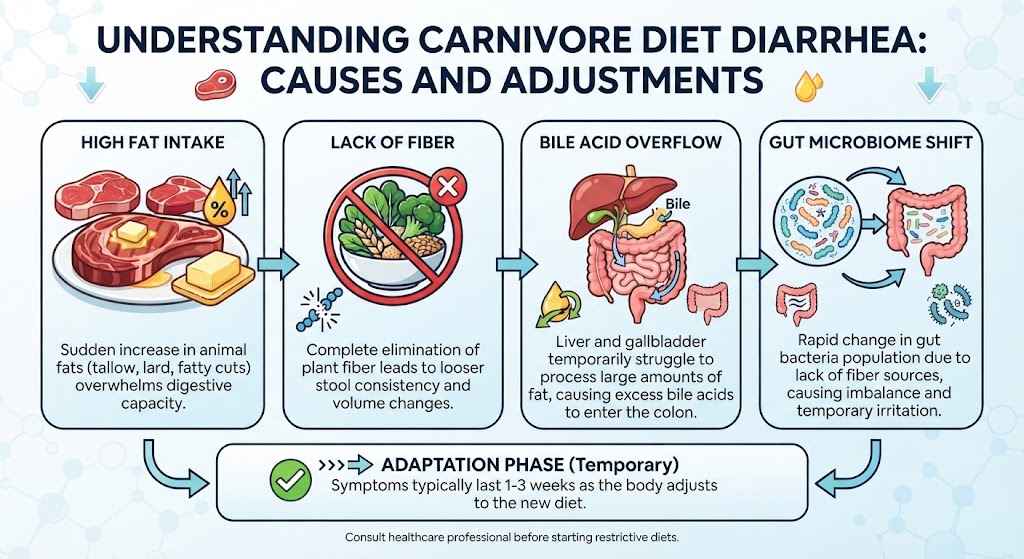
When you start a carnivore diet, you eliminate all plant-based foods, which are rich in fiber. Fiber isn’t digestible, but it helps to pass stool smoothly and slow down digestion. But if fiber isn’t available, it can lead to looser stools, which leads to diarrhea.
Fiber helps to keep gut health good, as it includes beneficial bacteria. When you remove food that includes fiber, the gut microbiota shifts, which triggers the digestive system and results in diarrhea.
High Fat Intake
The carnivore diet is completely based on animal products, which are naturally high in fat, especially when you are eating steaks. If your stomach is not used to such a high-fat item in such a high quantity, then it will react, and then you will get diarrhea. Many people experience this during the initial phase of the carnivore diet.
Bile Overproduction
If you suddenly stuff yourself with a lot of fat, it overwhelms your digestive system. Too much fat and bile acids that are not absorbed leak into your colon, which pulls water into the colon, causing diarrhea.
Electrolyte Imbalance
Electrolytes play an important role in insulin sensitivity. When you cut all the carbs from your diet, it can lead to insulin level reduction, which later causes the kidneys to excrete more fluids. This electrolyte imbalance can lead to diarrhea and dehydration.
Is Carnivore Diet Diarrhea Temporary?
For many people, diarrhea on a carnivore diet is common, especially in the early days of following this diet, as your stomach gets used to this diet. Diarrhea disappears. However, if your diarrhea lasts for 1 to 3 weeks, then it can be a sign of too much fat consumption, food intolerance, and bacterial infections.
| Timeline Phase | What is Happening inside Your Gut | Expected Digestion Status |
|---|---|---|
| Days 1–3 (The Shock Phase) | Carb withdrawal, sudden lack of fiber, rapid electrolyte/water flush. | High likelihood of loose stools or urgent bathroom trips. |
| Days 4–14 (The Adaptation Phase) | Liver and gallbladder ramp up bile acid production; microbiome shifts to favor fat-tolerant bacteria. | Symptoms gradually taper off; consistency starts improving. |
| Weeks 3–4+ (The Fully Adapted Phase) | Bile recycling is efficient; gut microbiome has fully adjusted to an animal-based profile. | Normal, well-formed, and significantly less frequent bowel movements. |
How to Reduce or Prevent Diarrhea on the Carnivore Diet?
- If you are new to the carnivore diet, don’t stop plant-based foods; suddenly increase intake of animal-based products over a week. This technique gives your digestive system time to adjust to a meaty diet.
- Since a carnivore diet is already rich in high fats, avoid drinking or cooking with excessive liquid fats. This can help your digestive system to adjust properly.
- Some people are lactose intolerant; when they eat or drink dairy products, their stomach can be disturbed and cause diarrhea or food poisoning. If you are lactose intolerant, then avoid dairy items in your diet.
- A carnivore diet removes all plant-based items, which are rich in fiber and water, so you may feel dehydrated during this diet. Drink plenty of water and even take supplements that are rich in sodium, potassium, and magnesium, especially during the first few weeks.
- Supplementing with ox bile or lipase may help if you’re struggling to digest fat.
- Beef and lamb are easy to digest in a carnivore diet as compared to pork or chicken. Start your diet with beef and lamb meat to avoid digestive issues.
People Who Should Avoid the Carnivore Diet
While a carnivore diet does have many benefits, as with any other diet, it is also not suitable for everyone. Here is a clear, scannable guide on who should avoid or strictly consult a healthcare professional before attempting the carnivore diet:
| Population Group | Why They Should Avoid It | Potential Risks |
|---|---|---|
| Individuals with Kidney Disease or Impaired Renal Function | The carnivore diet is extremely high in animal protein, which increases the workload on the kidneys. | Accelerated progression of kidney disease and dangerous filtration strain. |
| People with a History of Eating Disorders | The strict, highly restrictive nature of an all-meat diet can trigger obsessive tracking, anxiety, or relapse into restrictive eating patterns. | Psychological distress and disordered eating triggers. |
| Pregnant and Breastfeeding Women | This life stage requires a wide array of micronutrients, steady carbohydrates for fetal/infant brain development, and diverse dietary fiber. | Nutrient deficiencies (like folate and certain vitamins) and inadequate caloric/carb intake for milk production. |
| Individuals with History of Gallbladder Issues or Gallstones | The massive surge in dietary fat forces the gallbladder to contract forcefully to release bile. | Intense gallbladder pain, cramping, or acute flare-ups if gallstones are present. |
| People with Familial Hypercholesterolemia or Heart Disease Risk | High saturated fat intake can dramatically spike LDL cholesterol levels in genetic responders. | Accelerated plaque buildup and elevated cardiovascular risk markers. |
| Growing Children and Adolescents | Kids and teens need balanced macronutrients, complex carbohydrates, and diverse plant nutrients for bone density and growth. | Stunted development, nutrient shortfalls, and lifelong restrictive habits. |
| Athletes Relying on Explosive Performance | Cutting all carbohydrates depletes muscle glycogen stores, which are essential for high-intensity, short-duration athletic performance. | Severe drops in workout stamina, “keto flu” fatigue, and slower recovery. |
Foods to Avoid on the Carnivore Diet to Prevent Diarrhea
- Avoid food items such as bacon fat, melted tallow, lard, and excess butter/ghee, as these are high in liquid fats. If you are lactose intolerant, you should avoid dairy products such as milk, cream, yogurt, soft cheese, and processed cheese.
- You should avoid eggs, as they are inflammatory and hard to digest, especially the egg white.
- Avoid pork and chicken skins, as they are very hard to digest. If you still want to take it, eat in small amounts.
- You should avoid processed meats (sausages, hot dogs, and deli meats) because they contain fillers and spices, which can cause irritation in the gut.
- You should avoid organ meat in excessive amounts, as it can overwhelm your system with vitamin A, which leads to diarrhea.
Final Thoughts: Does Carnivore Diet Cause Diarrhea?
Yes, diarrhea is a common side effect, especially in the early days of adopting the carnivore diet. It’s typically the result of rapid dietary changes, increased fat intake, and gut microbiome shifts. For most, it’s temporary and manageable with proper planning and gradual adaptation.
Key Institutional References & Sources
- Bile Acid Dynamics & Fat Adaptation: Documented mechanisms of digestive transit and fat load responses are reviewed in clinical literature via the National Institutes of Health (NIH) PMC Database, detailing how sudden surges of dietary lipids impact enterohepatic circulation and fluid balance in the colon.
- Fiber Elimination & Metabolic Strain: Public health overviews regarding the complete lack of dietary fiber and high protein/fat strain on baseline organ systems are outlined by the British Heart Foundation (BHF).
- Gastrointestinal and Adaptation Side Effects: Clinical insights into how sudden elimination diets impact gut flora and cause temporary adaptation diarrhea are summarized in health evaluations by the Cleveland Clinic.
