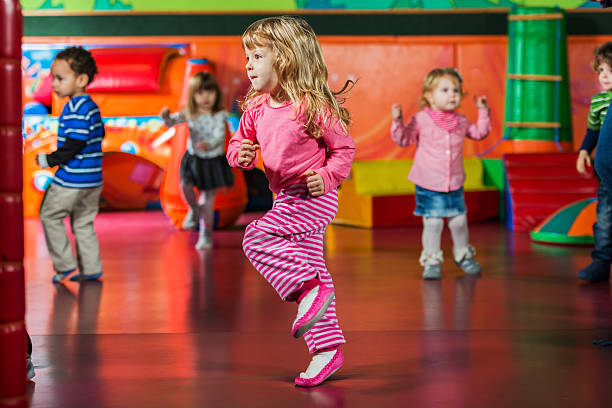
Quick Answer: Locomotion in children refers to the acquisition of movement skills that allow them to move through space, starting with rolling and crawling, then walking, running, jumping, and skipping. This physical growth proceeds from the head downward and from the center outward, creating the balance, coordination, and strength necessary for physical independence.
Becoming a parent for the first time is a precious thing, and everyone wants to experience it. Every parent remembers different milestones a baby makes in the journey, the excitement of the first roll of a baby in the room, and those little steps they take towards your open arms. Behind these everyday moments is a physical ability known as ‘locomotor skills’. In simpler words, locomotion is how a baby learns to move the body from one place to another; they start with tummy time wiggles and end in running, jumping or skipping confidently.
Whether you are a new parent and celebrating your baby’s first crawl or worried your toddler is on the right track or not, this guide will assist you to understand how child locomotion takes place from age to age, what you can expect and how you can help children in this step of their journey.
What Are Locomotor Skills?
Locomotor skills are considered a movement a baby takes to travel from one location to another in the same space. They are completely different from non locomotor skills like bending, stretching, twisting, throwing, catching, or kicking a ball.
The locomotor skills include weight shifting, which means transferring baby weight from one foot or limb to another. Postural control and spatial orientation, like judging distance, direction, and speed while overcoming obstacles; and bilateral coordination, like synchronising both sides of the body.
When your baby has a strong grip on these movement patterns, they create the neuromuscular base needed for future sports skills, active play, self-confidence, and other physical activities.
Primary Locomotor Skill Progression
There is a certain order in which children begin to learn to move. The order is from the head to the toe and from the center of the body outwards. Babies start building core strength and neck control even before they take the first step. The step-by-step chart below provides a comprehensive overview of every major movement milestone, including the step-by-step chart below; it has everything from rolling on the floor to jumping.
| Locomotor Skill | Primary Movement Pattern | Typical Age Range | Essential Biological Prerequisites |
|---|---|---|---|
| Rolling | Weight shifting to turn body from supine (back) to prone (belly) and vice versa | 3–6 Months | Head control, neck extensors, core rotational control |
| Crawling | On-floor propulsion using four-point contact (belly crawl or classic quad) | 6–10 Months | Upper body stability, trunk strength, cross-body coordination |
| Cruising | Upright lateral movement while maintaining hand contact with furniture | 9–12 Months | Postural standing balance, lateral hip stability, weight-bearing legs |
| Walking | Independent forward gait featuring alternating single-leg support | 9–15 Months | Single-leg weight bearing, core alignment, dynamic posture |
| Running | Accelerated forward movement with a distinct flight phase (both feet off ground) | 18–24 Months | Dynamic stance balance, single-leg takeoff power, foot-strike control |
| Jumping | Simultaneous two-foot propulsion off the floor and simultaneous landing | 2–3 Years | Bilateral symmetry, ankle/knee flexor power, landing impact control |
| Hopping | Repeated continuous takeoff and landing on the same single foot | 3–4 Years | Unilateral leg strength, single-leg dynamic balance, ankle stability |
| Galloping | Asymmetrical movement pattern (lead step followed by a rear foot catch-up hop) | 3–4 Years | Rhythmic motor timing, foot-lead differentiation, temporal control |
| Leaping | Extended single-foot takeoff landing onto the opposite foot over obstacles | 4–5 Years | Directional momentum, spatial awareness, force absorption |
| Skipping | Complex, alternating, rhythmic step-hop sequence across distance | 5–6 Years | Advanced bilateral integration, executive motor planning, fluid balance |
Phase-by-Phase Breakdown with Milestone Charts
Each baby moves at their individual pace so don’t worry if your child hits a stage in few weeks or earlier or later as compared to someone else’s toddler. The only thing that matters is the progress of movement not the time limit. When you understand what is happening behind the physical milestones, you can support the child naturally. You will also know what home exercises can help them to move easily. I have a roadmap for you, which will help you to understand fully.
Phase 1: 0 to 6 Months — Core Activation & Anti-Gravity Control
Right before locomotion takes place, infants need to develop foundational axial control to fight gravity.
| Sub-Stage | Developmental Milestone | Physical Execution |
|---|---|---|
| 1–2 Months | Head lift in prone position | Lifts chin briefly during tummy time |
| 3–4 Months | Forearm support & head control | Lifts head & upper chest to 90 degrees; holds head steady when sitting |
| 4–5 Months | Rollover (Back to Side/Belly) | Uses trunk rotation to roll onto side or belly |
| 5–6 Months | Full rolling & tripod sitting | Rolls back-to-front and front-to-back; rests on hands in tripod sit |
Phase 2: 6 to 12 Months — Floor Locomotion & Weight Bearing
This stage bridges initial floor mobility with upright anti-gravity stability.
| Sub-Stage | Developmental Milestone | Physical Execution |
|---|---|---|
| 6–7 Months | Independent sitting | Sits upright without arm support; frees hands to reach for toys |
| 7–8 Months | Belly / Army crawling | Pulls body along floor using forearms with belly touching ground |
| 8–10 Months | Quadrupedal crawling | Moves smoothly on hands and knees in cross-lateral rhythm |
| 9–11 Months | Pull-to-stand & Cruising | Pulls up on low tables; walks sideways while holding onto furniture |
| 11–12 Months | First unassisted steps | Takes 2–3 independent forward steps with broad stance & raised arms |
Phase 3: 12 to 24 Months — Gait Stabilization & Early Acceleration
When child is in toddlerhood the locomotor skills changes from hesitating balance to confident, fluid navigation.
| Sub-Stage | Developmental Milestone | Physical Execution |
|---|---|---|
| 12–15 Months | Fluent walking | Walks independently with heel-toe contact and arms lowered to sides |
| 15–18 Months | Backward walking & stair crawling | Steps backward intentionally; crawls up stairs on hands and knees |
| 18–20 Months | Early fast trot / running | Accelerated walking speed without full flight phase; wide stance |
| 20–24 Months | Stair stepping with help & ball kicking | Walks up stairs holding rail (2 feet per step); kicks ball without falling |
Phase 4: 2 to 3 Years — Two-Foot Elevation & Spatial Agility
At this milestone, children master explosive vertical movement and basic elevation.
| Sub-Stage | Developmental Milestone | Physical Execution |
|---|---|---|
| 24–28 Months | Two-foot jump in place | Propels both feet off floor simultaneously and lands together |
| 28–32 Months | Drop-jumping down from ledges | Jumps down safely from a bottom step or low curb with bent knees |
| 32–36 Months | Running control & sharp turns | Runs smoothly with controlled stops, dodges obstacles, and navigates corners |
Phase 5: 3 to 5 Years — Single-Leg Mastery & Rhythmic Locomotion
Preschoolers progress changes from basic moving patterns into asymmetrical and unilateral locomotor skills.
| Sub-Stage | Developmental Milestone | Physical Execution |
|---|---|---|
| 36–42 Months | Single-leg balance & early hopping | Stands on one foot for 3–5 seconds; hops 1–3 times on preferred foot |
| 42–48 Months | Galloping gait | Steps forward with lead foot and brings rear foot up in continuous rhythm |
| 48–60 Months | Leaping over obstacles | Takes off from one foot over low barriers and lands smoothly on opposite foot |
Phase 6: 5 to 6 Years — Complex Bilateral Coordination
When children starts going to kindergarten all foundational locomotor skills shifts into complex, highly coordinated movement patterns.
| Sub-Stage | Developmental Milestone | Physical Execution |
|---|---|---|
| 60–66 Months | Continuous skipping | Alternates step-hop sequences on left and right feet with fluid rhythm |
| 66–72 Months | Dynamic athletic agility | Sprints, changes direction instantly, shuffles laterally, and jumps rope |
Pediatric Red Flags & Warning Signs Chart
Watching how the child moves is one of the best ways to catch any physical or developmental snags in earlier days. While every little one grows at their own time and speed, missing some movement steps can sometimes indicate their muscles or balance needs support. The chart below highlights the warning sign for each month so you know when to help the child by taking them to a pediatrician or a physical therapist and how you can support them at home.
| Age Threshold | Motor Milestone Red Flag | Primary Clinical Focus / Underlying Area |
|---|---|---|
| 4 Months | Complete lack of head/neck control during tummy time | Neck/Core hypotonia, cervical weakness |
| 6 Months | Inability to roll over in either direction; extreme stiffness | Core rotational delay, hypertonia / spasticity |
| 9 Months | Inability to maintain sitting balance without support | Trunk stability deficit, postural lag |
| 12 Months | Not pulling to stand; non-weight-bearing on lower extremities | Lower extremity weakness, hip dysplasia risk |
| 18 Months | Complete inability to walk independently without support | Global gross motor delay, gait pathology |
| 24 Months | Persistent toe-walking; inability to run or clear feet off floor | Achilles tendon tightness, calf spasticity |
| 36 Months | Frequent unprovoked falling; inability to jump with both feet | Vestibular deficits, bilateral coordination delay |
| Any Age | Regression: Loss of previously mastered locomotor skills | Immediate neurological / neuromuscular review |
| Any Age | Marked asymmetry (using one side of the body exclusively) | Hemiplegic tone differences, brachial/nerve palsy |
Environment & Footwear Strategy for Optimal Locomotion
If you want to speed up or help the child in movement milestones, then you need to create the right environment and make smart footwear choices for them. When the child is very young, their feet are soft, and the soles are covered with sensory nerves that send constant balance signals to the brain.
Whenever your child walks on any surface, it helps to shape the posture, strength, and confidence.
1. Indoor Surfaces: The Power of Barefoot Play
- When a child is inside the house, then barefoot is best because walking without anything on their feet can help the feet to interact with the ground, which is important for healthy development.
- Walking barefoot also helps the toes to spread out and grip the floor, which leads to a strong arch and stable ankles.
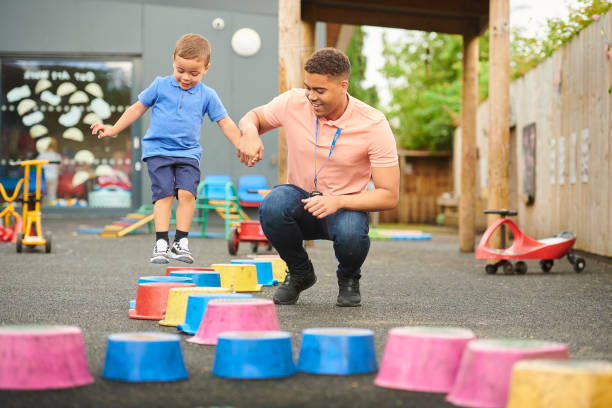
- To support the movement, you can give your child indoor challenges at home by adding hurdles like placing sofa cushions on the rug and letting them climb over or setting up low play tunnels to crawl through.
2. Outdoor Terrain: Building Strength on Natural Surfaces
The indoor floors are flat and predictable because obviously we know about our home fully; however, outdoors is the opposite. When a child plays outdoors, they have to walk through uneven terrain that challenges their muscles in new ways.
- When you take kids to the park, they walk on a natural surface that forces both feet and ankles to adjust with each step, which helps in strengthening ankle stability and calf muscles.
- When you take kids to a beach where sand is everywhere, they need to push their legs extra to stay on the sand; this helps in building strength for future jumping and running.
- When you take kids to grassy hills and inclines, they have to walk on up and down slopes; this helps them to control the speed.
3. Footwear Essentials: How to Choose the Right First Shoes
When the child is going outside for a walk, they need shoes to protect the feet from unknown sharp objects and hot pavement. However, the shoes should be for protection, not for support or restricting the foot. Footwear should allow the foot to move like it moves barefoot. For this you can let the kid have ultra-flexible soles on one shoe.
Toddlers also have wide feet naturally, so the front area of the shoe must be wide; narrow shoes work best here. Avoiding shows with heels means the sole needs to be completely flat. Choose lightweight shoes secured by adjustable Velcro straps or elastic laces. Avoid heavy boots.
| Shoe Feature | Recommended Specification | Clinical Rationale / What to Avoid |
|---|---|---|
| Sole Flexibility | Thin, highly pliable rubber soles that bend easily at the ball of the foot | Avoid stiff, rigid soles: Rigid soles prevent natural foot flexion and alter normal gait mechanics. |
| Toe Box Width | Wide, foot-shaped toe box allowing toe splay | Avoid narrow/tapered toes: Squeezing toes together impairs balance and toe-off power during walking. |
| Heel Counter | Flat heel (zero drop) with a soft, supportive heel cup | Avoid elevated heels: Raised heels shift the child’s center of gravity forward, causing toe-walking. |
| Closure System | Secure adjustable Velcro or elastic laces | Avoid slip-ons that fall off: Loose shoes force the child to grip with toes unnecessarily, distorting gait. |
Age-Targeted Activity Strategies to Support Locomotor Development
Active play is a main vehicle that helps the child to refine locomotor skills. Below are evidence-based, age-specific activities designed to target key movement milestones.
| Target Age Bracket | Recommended Locomotor Activity | Primary Physical & Neuromuscular Benefit |
|---|---|---|
| Infants (0–12 Months) | Tummy Time Reach & Floor Exploration Place colorful toys just beyond the infant’s reach during floor time. | Stimulates crawling motivation, strengthens shoulder girdles, and activates cross-body trunk rotation. |
| Toddlers (1–2 Years) | Soft Obstacle Course Navigations Set up sofa cushions, low ramps, and floor tunnels to climb over and through. | Builds leg strength, spatial judgment, balance recovery, and dynamic weight shifting during early walking. |
| Early Preschool (2–3 Years) | Animal Movement Games & Jumping Pads Encourage hopping like a frog, waddling like a duck, or jumping over chalk lines. | Promotes two-foot takeoff power, knee flexion impact absorption, and fun repetition of core locomotor patterns. |
| Preschoolers (3–5 Years) | Hopscotch & Guided Line Galloping Draw hopscotch grids on pavement; practice galloping along curved outdoor chalk lines. | Enhances unilateral leg stability, single-foot hopping endurance, and rhythmic motor control. |
| Kindergarten (5–6 Years) | Obstacle Skipping & Agility Tag Incorporate rhythmic skipping challenges, side-shuffling games, and controlled stopping drills. | Refines bilateral step-hop coordination, rapid deceleration mechanics, and athletic spatial awareness. |
Is it harmful if my baby skips the crawling phase entirely and goes straight to walking?
While some healthy children do skip the classic crawling and move into scooting or cruising to walking, which is completely normal and not harmful at all, crawling comes with many developmental benefits. The hands-and-knees crawling helps to strengthen the shoulder girdles, refines palm arch formation, and supports cross-lateral brain integration. If your child skips the crawling milestone, then don’t worry; you can still help them by adding floor-based play activities like crawling through tunnels in early childhood to build strength.
Why are traditional infant baby walkers considered hazardous for locomotor development?
According to pediatric organizations like the American Academy of Pediatrics, they strongly advise against seated, wheeled baby walkers. The first reason is it comes with many safety risks, like rolling down stairs or reaching hot surfaces, and second, it delays the natural locomotion. When you put the infant in wheeled walkers, they stay in an unnatural upright position and depend completely on the seat instead of their own body functions.
My 14-month-old is not walking independently yet. Should I be worried?
Independent walking can naturally occur in 9 to 15 months, but normal development variations can extend to 18 months. This means if your 14-month-old is actively moving with the help of furniture, pulling up to stand, bearing weight on legs, or exploring crawling, then they are following a normal pattern. However, if you find them not interested in weight-bearing, appearing excessively stiff or floppy, and even at 18 months old not walking, then go to the doctor.
How can I tell the difference between normal toddler clumsiness and a motor delay?
If you see the toddler is currently tripping or falling during the first 6 months of independent walking, then it is completely normal because at this stage they refine their center of gravity and stride mechanics. However, if you notice they have clumsy movements even after turning 3 years old, then go to a pediatric physical therapist.
Medical Disclaimer: This content is for informational purposes only and does not replace professional medical advice. Always consult a pediatrician or healthcare provider with any concerns regarding your child’s development.
Authoritative Government & Institutional Resources
1. Developmental Milestones & Early Intervention
- CDC’s Developmental Milestones (U.S. Centers for Disease Control and Prevention)
- MedlinePlus: Infant & Toddler Development (U.S. National Library of Medicine)
2. Infant Safety & Equipment Guidelines
- Baby Walker Warning & Safety Alerts (U.S. Consumer Product Safety Commission)
- HealthyChildren.org: Movement & Physical Activity (American Academy of Pediatrics)
