
Quick Answer: Yes, you can take too much magnesium through supplements, powders, or laxatives. While it is impossible to overdose on magnesium from real food, high doses of isolated supplements can cause nausea, abdominal cramping, and watery diarrhea. To prevent toxicity, health experts recommend that adults stick to a safe upper limit of 350 mg per day for supplemental magnesium.
In recent years, magnesium has become popular among the wellness industry like a storm. Everyone is using remedies for every single thing from chronic insomnia to restless legs; magnesium supplements are selling to everyone. However, due to the popularity among people there, a high-stakes question arises: can you take too much magnesium? The human body depends on magnesium, so it is very common that you would end up taking it in unsafe amounts.
Additionally, when the body bypasses natural dietary matrices with high-dose isolated formulations, it can overwhelm biological filtration systems.
In this comprehensive guide we will look in detail at what magnesium is. How much can your body realistically tolerate? What happens if you take too much, or who gets affected most from an overdose? So let’s start.
What Is Magnesium?
Magnesium is an important macromineral, meaning the human body needs it in relatively large quantities as compared to other minerals like zinc or iron. It works like a behind-the-scenes manager for both the earth and the human body. Magnesium plays an important role in plants; without it, plants can’t absorb sunlight or make oxygen.
Additionally, the human body can’t produce magnesium by itself, meaning the body is completely reliant on getting it from diet or via supplementation. A high amount of magnesium is stored in bones, while the remaining goes in muscles, soft tissues, and bodily fluids. Your body needs this mineral to function properly.

The Role of Magnesium in the Body
Magnesium works as a helper molecule (a coenzyme), meaning it doesn’t do the job alone; it combines with other elements like proteins and enzymes to turn on and off so the body chemistry can function. To understand more how magnesium works in the body, let’s look into it in more detail.
The Energy Key (ATP Binding)
The body cells create energy in the form of a molecule called ATP. However, ATP can’t work alone on its own, so it needs magnesium to create a complex (Mg-ATP), meaning the cell can only unlock and burn energy if magnesium exists.
The Calcium Gatekeeper (Muscle Relaxation)
In muscles, calcium plays an important role, meaning it turns on to cause the muscle fibers to grip together and contract. Magnesium works as a turn-off switch; it sits in the cell receptors to block calcium leads to force the muscle fibers to slide apart and relax.
The Brain’s Volume Knob (NMDA Receptors)
In the nervous system, a chemical called “glutamate” is responsible for turning up brain activity, which can cause overexcitation and stress. Here magnesium plays an important role, as it works as a plug in the NMDA receptor, meaning it restricts too much glutamate from entering so the brain activity won’t cause stress.
The Ion Pump Conductor (Cellular Transport)
Every time a heart beats or a nerve sends a signal, the potassium and sodium move in and out of the cells rapidly. Magnesium helps the minerals to push across cell membranes, which means it keeps the electrical currents stable.
The Vitamin D Activator (Enzyme Binding)
Vitamin D also can’t work alone in the body. The main enzymes in the liver and kidneys that convert stored vitamin D into an active form need magnesium to trigger the chemical reaction.
The Blueprint Stabilizer (DNA and RNA Construction)
The human body makes new cells and repairs tissues constantly; however, the enzymes that help in building, winding, and replicating your DNA need magnesium to keep its structure in shape and prevent copying errors.

Types of Magnesium: Which One Is Best?
When you go to buy magnesium supplements, you may notice that magnesium is always bound to another molecule, like an organic acid or salt, in order to help the body to absorb it.
Every type of magnesium is bound differently to help different areas of health. Let’s look at the different types and which one is best for which health concern as follows:
| Magnesium Type | Best For | Absorption Rate | Common Use |
|---|---|---|---|
| Magnesium Glycinate | Anxiety, insomnia, stress | Very High | Highly bioavailable works best on sensitive stomachs. |
| Magnesium Citrate | Occasional constipation | High | Works as mild natural laxative. Draws water into the intestines. |
| Magnesium Threonate | Brain fog, cognitive health | High | The only form that effectively crosses the blood-brain barrier. |
| Magnesium Malate | Chronic fatigue, muscle soreness | High | Bound to malic acid, which plays a key role in cellular energy cycles. |
| Magnesium Oxide | Heartburn, indigestion | Very Low | Poorly absorbed by muscles; mostly used as an antacid. |
What are the main benefits of magnesium?
1. Relieves Muscle Cramps and Spasms
As we discussed earlier, magnesium works as an off switch that tells muscles to relax after the on switch, calcium, asks them to contract, which creates a balance that helps to save muscles from getting stuck in a tight grip. For this, you need to make sure to get the required magnesium; this will help in reducing painful leg cramps, nighttime charley horses, and annoying muscle or eye twitches.
2. Lowers Stress and Promotes Calmness
Magnesium also helps to prevent stress by blocking excess entry of glutamate, so make sure your body gets enough magnesium.
3. Improves Sleep Quality
Magnesium calms the central nervous system, which helps both mind and body to wind down at night. It also helps in regulating the biological clock and in the production of melatonin, the hormone that plays an important role in the sleep cycle.
4. Reduces Migraine Frequency and Intensity
People who have migraines need more magnesium as compared to others because it prevents the blood vessels in the brain from over-narrowing and also blocks signals that cause pain or severe headaches.
5. Supports Stronger Bones
When we talk about bone health, the first element that comes to our minds is calcium; however, the body can’t produce calcium without magnesium. It also guides calcium to go in bones and teeth instead of arteries.
6. Regulates Blood Pressure and Heart Health
Magnesium keeps your heartbeat steady. It also signals the smooth muscle walls of your blood vessels to relax, which allows blood to flow more freely and naturally lowers blood pressure.
7. Aids Blood Sugar and Insulin Control
Magnesium helps insulin (the hormone that takes sugar out of the blood). This will help the blood sugar to stay stable, which results in fewer cravings and even reduces the risk of metabolic issues.
8. Relieves Constipation and Aids Digestion
Some types of magnesium are osmotic in nature, meaning they draw water into intestines naturally. This helps in softening stool and relaxing muscles lining, which helps the food to pass easily through your system and helps in relieving constipation.
| Food Item | Serving Size | Magnesium (mg) |
|---|---|---|
| Seeds & Nuts | ||
| Pumpkin Seeds (roasted) | 1 ounce (approx. a handful) | 156 mg |
| Chia Seeds | 1 ounce (approx. 2 tbsp) | 111 mg |
| Almonds (dry roasted) | 1 ounce (approx. 23 nuts) | 80 mg |
| Cashews (dry roasted) | 1 ounce (approx. 18 nuts) | 74 mg |
| Greens & Veggies | ||
| Spinach (cooked) | 1/2 cup | 78 mg |
| Swiss Chard (cooked) | 1/2 cup | 75 mg |
| Edamame (cooked) | 1/2 cup shelled | 50 mg |
| Potato (baked, with skin) | 1 medium potato | 48 mg |
| Legumes & Grains | ||
| Black Beans (cooked) | 1/2 cup | 60 mg |
| Quinoa (cooked) | 1/2 cup | 60 mg |
| Brown Rice (cooked) | 1/2 cup | 42 mg |
| Oatmeal (cooked) | 1 cup | 56 mg |
| Fish & Fruits | ||
| Salmon (cooked) | 3 ounces (deck of cards size) | 26 mg |
| Avocado | 1 medium whole | 58 mg |
| Banana | 1 medium fruit | 32 mg |
| The Sweet Treat | ||
| Dark Chocolate (70-85% cacao) | 1 ounce (1 square) | 64 mg |
How Much Magnesium Should You Take in a Day?
The daily intake of magnesium depends on age and other factors, meaning it’s not the same for every person. To understand more about it, I have provided a chart based on the official Recommended Dietary Allowance (RDA) by health authorities. The range is from infant to older person, so whatever category you are in, it can help.
| Age Group | Male RDA (mg/day) | Female RDA (mg/day) | Pregnancy / Lactation (mg/day) |
|---|---|---|---|
| 0 to 6 months | 30 mg | 30 mg | — |
| 7 to 12 months | 75 mg | 75 mg | — |
| 1 to 3 years | 80 mg | 80 mg | — |
| 4 to 8 years | 130 mg | 130 mg | — |
| 9 to 13 years | 240 mg | 240 mg | — |
| 14 to 18 years | 410 mg | 360 mg | 400 mg / 360 mg |
| 19 to 30 years | 400 mg | 310 mg | 350 mg / 310 mg |
| 31 to 50 years | 420 mg | 320 mg | 360 mg / 320 mg |
Is it Possible to Eat Too Much Dietary Magnesium?
The short answer is no, a normal person can’t eat too much magnesium just from regular food items. However, the overdose can take place easily with supplements, pills, or laxatives because the body handles magnesium from these sources differently as compared to food.
If you eat too many food items that are rich in magnesium, like a giant spinach salad, a bowl of oatmeal, or a handful of pumpkin seeds, then don’t worry; the kidneys work as natural filters. Once the body absorbs the required amount of magnesium, the remainder will be filtered out with the help of the kidneys and pass away in pee.
In whole foods, the magnesium is combined with other nutrients like fiber, protein, and water. The digestive system breaking the food slowly means the magnesium enters the bloodstream in a small portion rather than a sudden dose like a high-potency pill.
You will only hit the toxic level of magnesium when you eat several pounds of pumpkin seeds or bags of spinach in an hour, which is obviously not possible and your stomach physically wouldn’t allow you to do anyway.

What Happens If You Take Too Much Magnesium?
If you consume more magnesium than the body needs, the effect depends on whether that magnesium comes from food or supplements.
From Food (Completely Safe)
If it is coming from food, then you don’t need to worry because your body has a built-in safety valve for magnesium that is found in the food. As we discussed earlier, once the body absorbs needed magnesium, the kidneys filter out the remaining one. Most importantly, the food alone gives you an excessive amount of magnesium even if you eat pumpkin seeds, spinach, and avocados in a day.
From Supplements (The Digestive Safety Valve)
When you take high doses of magnesium that come from pills, powders, or liquids, the body can’t absorb it. The unabsorbed magnesium stays in the intestines; because of this, the large amount of fluids drawn into your bowels leads to rapid muscle relaxation in the gut, resulting in abdominal cramping, nausea, and diarrhea. This is the way the body reacts to take out excessive magnesium before it can even enter the bloodstream.
Can You Overdose on Magnesium?
Yes, you can overdose on magnesium, but it’s a rare case from standard daily supplementation. The toxic and dangerous overdose is known as hypermagnesemia when a high amount of magnesium goes into the bloodstream.
In a healthy individual, the kidney filters out excessive magnesium out of the blood. However, this dangerous overdose only takes place in two conditions.
If a person has kidney disease or one kidney isn’t functioning properly, the body loses the ability to filter out excess minerals. If you are taking a magnesium supplement, it can stay in the body for a long time because it doesn’t have anywhere to go.
If you are taking supplement doses in high amounts as compared to the daily recommended limit, then these toxic and high levels of magnesium-containing laxatives or antacids can affect kidney health.
What are the magnesium overdose symptoms?
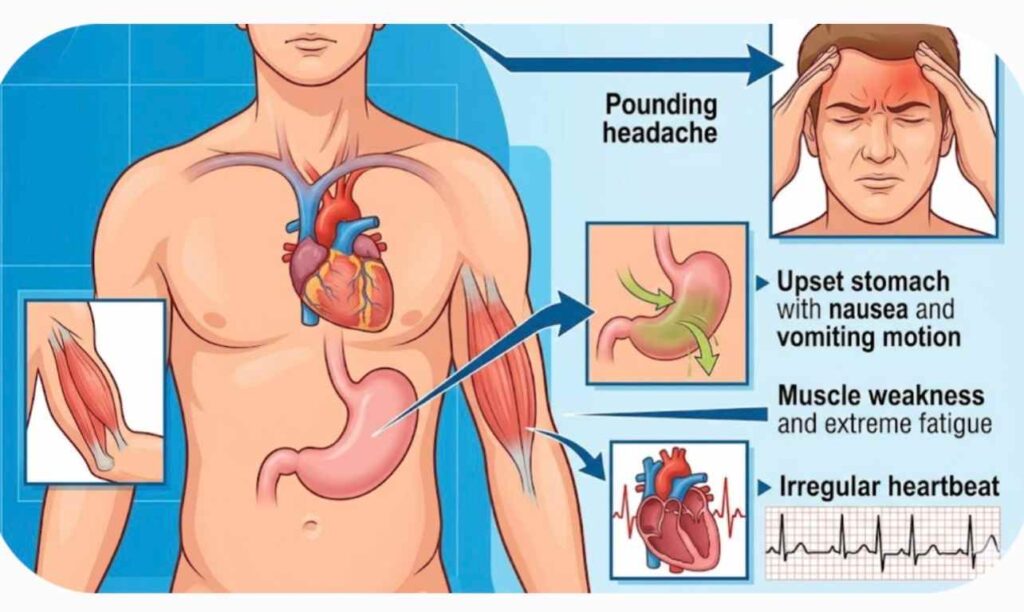
When the high amount of magnesium goes inside the bloodstream and past the safe zone, it begins to over-relax the body system. The symptoms can be mild, like digestive issues, to dangerous ones, such as severe neurological and cardiovascular complications.
List of Mild to Moderate Symptoms
You can consider these symptoms as the initial warning signs the body is giving of an overdose.
- The first and most common one is severe diarrhea and stomach cramps.
- You start vomiting and feel nausea because the digestive system tries to take it out.
- Magnesium blocks the calcium to relax muscles. When an overdose of magnesium happens, the muscles feel heavy, and you experience extreme muscle weakness.
- Magnesium relaxes blood vessels, which lets them widen. It can result in a sudden drop in blood pressure, so a person can experience lightheadedness, dizziness, or unusual warmth.
Severe Symptoms (Medical Emergency)
- When magnesium builds up to a high level, it starts to shut down important electrical and muscular functions:
- Loss of Deep Tendon Reflexes: When magnesium levels become too high, the nerve signals are completely blocked, and your leg won’t kick. The doctors do check for it by tapping your knee with a rubber mallet.
- Difficulty Breathing (Respiratory Depression): A high level of magnesium can make the muscles that expand the lungs too relaxed, which creates a problem in pumping air easily, leading to shallow, labored breathing.
- Irregular Heartbeat (Arrhythmia): Magnesium also disrupts the electrical signals that tell your heart to pump.
- Cardiac Arrest: In extreme, untreated cases, the heart muscle becomes so over-relaxed that it stops beating entirely.
Safety Note: Never take a magnesium supplement on your own or change the dose; always consult the doctor before taking any magnesium supplement or a high dose. A person with kidney issues needs to talk properly with the doctor, as they will suggest whether they can take it or not.
Should You Take a Magnesium Supplement?
Whether you should take magnesium supplements or not is completely based on your diet, lifestyle, and health goals.
While the best way to get magnesium is from whole food items. However, an adult body finds it less, and they don’t even meet their daily recommended magnesium intake through diet alone.
You can consider taking magnesium supplements when your daily diet doesn’t include magnesium-based food items like greens, nuts, seeds, legumes, and whole grains or when you’re still not getting enough.
If you experience symptoms of low magnesium like frequent muscle cramps, poor sleep quality, persistent high stress, or regular tension headaches, then you can consider a magnesium supplement.
Some people also use magnesium supplements to manage conditions like chronic constipation, high blood pressure, or migraines.
Note: It is always best to have a quick conversation with a healthcare provider to see if a supplement fits your specific health profile.
What to Look for in a Magnesium Supplement?
When choosing a supplement, look for these three key factors:
1. The Right Type for Your Needs
While magnesium oxide is cheap and easily available at any medical store, you need to avoid it, as it has very low bioavailability, meaning the body barely absorbs any amount, leading to diarrhea.
- You can go for magnesium glycinate because it is very gentle on the stomach and works best if you are facing sleep or anxiety.
- You can also take magnesium citrate; it works best for people who have constipation issues.
- You can go for magnesium malate; it works best for muscle recovery, and if you take it in the morning, it can help in cellular energy production without causing jitters.
- The last one on the list is magnesium L-threonate; it works best for people who want to improve brain health, memory, and cognitive focus.
2. Third-Party Testing
Always look for the brands that have a seal from an independent testing organization (such as USP, NSF, or ConsumerLab). This will help you to be sure that the ingredients written on the label are actually inside the bottle and the product is free from heavy metals.
3. Elemental Magnesium Content
Check the supplement facts label on the back of the bottle and look at the amount of elemental magnesium, also known as the actual weight of the magnesium mineral, not the total weight of the entire compound (mineral + carrier). Ensure that elemental dosage matches the recommended daily intake of magnesium, which is 200–400 mg based on age or gender.

Type of Individuals Who Are at Risk for an Overdose?
While healthy adults can easily flush out extra amounts of magnesium, there is a specific group of people that are at high risk of toxic magnesium levels in the body. Here is a list of individuals who need to talk to a doctor first before taking a magnesium supplement.
People with Chronic Kidney Disease (CKD) or Kidney Failure
This is the highest-risk group. When the person is already facing a kidney disease, it means the kidney can’t function properly, so the magnesium easily goes and builds up in the bloodstream.
Individuals Taking High-Dose Laxatives or Antacids Long-Term
Many common over-the-counter medications that people use for constipation or heartburn have massive, therapeutic doses of magnesium. When the people over-use it, the body’s ability to clear the mineral gets overwhelmed.
Older Adults
When people get old, kidney function naturally declines in seniors. The buildup of minerals in the bloodstream is very common for a young person if they take high-dose supplements without routine blood work.
People with Certain Neuromuscular Disorders
Those who already have conditions like myasthenia gravis need to strictly avoid magnesium because it relaxes the muscles and blocks nerve signals; a high dose can make muscle weakness worse.
Medical Disclaimer: The information provided in this article, including text, charts, and advice, is for educational and informational purposes only. It is not intended to be a substitute for professional medical advice, diagnosis, or treatment. Always seek the advice of your pediatrician, family physician, or other qualified healthcare provider with any questions you may have.
Medical Interventions for Magnesium Toxicity
If a person comes to the hospital with severe magnesium poisoning, then the doctor follows the strict clinical protocol to make the body normal.
Intravenous Calcium Gluconate (10% Solution): This is the first antidote given for magnesium toxicity. This calcium dose can’t lower the magnesium toxicity in the bloodstream, but it stabilizes the cellular membranes. It instantly reduces the threat of nerve paralysis and dangerous cardiac arrhythmias.
Forced Diuresis via Isotonic Saline: If a person’s kidney is completely healthy, then the medical teams administer intravenous normal saline combined with loop diuretics (like furosemide). This forces the kidney to flush out the extra magnesium from urine.
Emergent Hemodialysis: If a person is living with end-stage renal failure or those presenting with extreme serum levels exceeding 8 mg/dL alongside unstable vitals, then doctors go for hemodialysis immediately to clear the magnesium from the bloodstream.
3 Hidden Reasons Why Magnesium Overload Happens (That Most Parents Miss)
When people search, can you take too much magnesium? They are looking at the dose on the back of the bottle. However, we don’t release every person; body processes supplements differently. Let’s look at 3 practical reasons to understand better.
1. The “Traffic Jam” Effect: Magnesium vs. Calcium
In a healthy body, magnesium and calcium work together as a team, but when you give your child or yourself a high dose of magnesium, you can indirectly create a traffic jam where magnesium crowds out the calcium completely. When calcium gets blocked, the muscle can’t tighten, which is why the high amount of magnesium leads to muscle weakness, floppy limbs, and a super-slow heart rate.
2. The Tummy Acid Trap
If you or your family members are already taking regular medication for acid reflux or heartburn (like Prilosec, Nexium, or Pepcid) daily, then the body’s mineral radar gets scrambled. To absorb magnesium, the body needs strong stomach acid, but because of reflux medications, that acid turns down.
3. Your Family’s Unique Blueprint
You may notice one kid can easily eat a dairy product, but others face stomach disturbances. It happens because everybody is different, and the tolerance level can vary from person to person.
Some people have a good digestive system, which means they can easily absorb magnesium. However, the kidney may filter it out slowly. If your family has a history of sluggish kidneys or sensitive tummies, then your tolerance level for magnesium is lower as compared to someone outside of the family. This is why you should always consult a healthcare provider.
Also Read: What Happens If You Eat Too Many Cherries? Side Effects & Safe Limits
3 Quick Safety Rules for Savory Parents
To keep your family safe while having magnesium, you need to follow three main rules.
Count the Foods First: If your kids are already eating pumpkin seeds, avocados, and dark chocolate, it means they are getting enough magnesium, so if you are thinking of giving them magnesium supplements, then always consult a doctor first; they will guide you about the dosage.
Look for Glycinate on the Label
If you are buying a magnesium supplement for kids, then choose magnesium glycinate instead of magnesium oxide because it can be harsh on little kids’ tummies. If you notice the kid is having loose stools or a rumbly tummy after starting a supplement, then stop it and talk to the doctor again about the dose.
Summary for Busy Parents (The Cheat Sheet)
The answer to “Can you take too much magnesium?” Yes, the overdose can’t take place if you are getting magnesium from healthy foods like spinach or seeds. However, if you are taking too many pills, powders, or gummies, then an overdose can happen.
The first sign of overdose in kids and adults is sudden diarrhea. A very high dose can cause muscle weakness and extreme sleepiness. Always take magnesium supplements after talking with a pediatrician and doctors, as they know better.
Frequently asked questions by people
How much magnesium do I need?
Well, the answer completely depends on age and biological sex. If you are asking for a toddler from 1 to 3 years of age, then 80 mg per day is fine. If you are asking for a young kid who is aged between 4 and 8 years, then 130 mg in a day. If you are an adult woman, take 310 to 320 mg/day; however, this range can be changed in pregnancy. If you are male, then 400 to 420 mg/day is enough.
When do I know I have too little magnesium or too much in the body?
Your body will react whether you have a little or high amount of magnesium. The signs of too little include muscle twitches, eye tics, restless legs at night, stubborn foot cramps, unexplained anxiety, and trouble falling asleep. The signs of too much magnesium include an incredibly rumbly tummy, nausea, and sudden, watery diarrhea.
Is there a test to check magnesium levels in the body?
Yes, the most common standard serum magnesium blood test. However, it can’t determine the exact amount of magnesium, as there is only 1% of your body’s magnesium that is actually floating around in your bloodstream. To look for more and better and deeper results, ask the doctor to do an EXA test or an intracellular (RBC) magnesium test.
Should you take a magnesium supplement?
You don’t need a magnesium supplement when your diet already involves food items that are rich in magnesium, like leafy greens, pumpkin seeds, avocados, black beans, and whole grains. However, if your family is struggling with stress, poor sleep, or muscle tension, then you can go for magnesium supplements according to a doctor’s prescription.
Can I overdose on magnesium if I take it with food?
Getting magnesium from food is a much safer option; it slows down the digestion naturally, which stops the magnesium from going into the bloodstream suddenly. Extra magnesium from food is removed from the body in urine by the kidneys so it doesn’t build up in the body.Does any household product have a high level of magnesium that can be harmful for the family?
Yes, the two major products that are common in many houses are Epsom salts (100% magnesium sulfate) and milk of magnesia (a concentrated magnesium laxative/antacid). They are in crystal form; they do have massively concentrated doses. If your toddler accidentally swallows bath water that contains Epsom salt, a few gulps of milk of magnesia can lead to extreme and dangerous mineral poisoning. Make sure to keep these things away from children.
How quickly do symptoms of magnesium overdose appear?
It usually happens quickly if you take a high dose of a supplement in liquid or powder form on an empty stomach. The most common symptoms you may face include gastrointestinal symptoms (nausea, cramping, and loose stools); these symptoms can go away in 1 to 2 hours. More severe symptoms include extreme sleepiness or dizziness.
What if I miss a dose of my magnesium supplement? Should I double up the next time?
A big no. If you skip a dose, then don’t take a double dose the next time; just take the needed dose. Overdose can lead to severe stomach cramping and diarrhea.
Can magnesium interact with other medications I’m taking?
Yes, magnesium is highly reactive and can interact heavily with antibiotics (especially tetracyclines and fluoroquinolones) and osteoporosis medications (bisphosphonates) and blood pressure drugs (calcium channel blockers). Make sure to take the magnesium supplement with a 2-hour gap with these medications.
What is the safe upper limit for magnesium supplements in the UK and US?
In the UK the safe limit for a daily magnesium supplement is 400 mg per day for adults. The US limit is 350 mg, but still the main advice is always to consult the doctor.
What happens if I take too much magnesium in pregnancy?
During pregnancy the body requires everything, more so as the magnesium builds the baby’s bones and tissues; however, high doses of magnesium supplements can pass recommended limits, and they can be dangerous. First, this overdose will cause severe maternal diarrhea and dehydration, which leads to uterine cramping. In rare cases these supplements can cross the placenta, which leads to lowering the baby’s heart rate or causes them to be born with quiet, floppy muscles. Always consult your doctor before taking any supplement in pregnancy.
