
Every parent checks their child’s height by following a growth chart; however, they are always curious and concerned about child height because, in today’s world, physical development is often seen as a marker of overall health.
When parents search for how to increase baby height, they aren’t looking for short answers; in fact, they want full details to make sure their child reaches the correct height needed.
As a mother, I do search about how to increase my children’s height, so you are not alone. In this guide I will share the details I look for when my child is growing up. We will explore toddler growth, covering nutrition, sleep science, hormonal health, and physical activity.
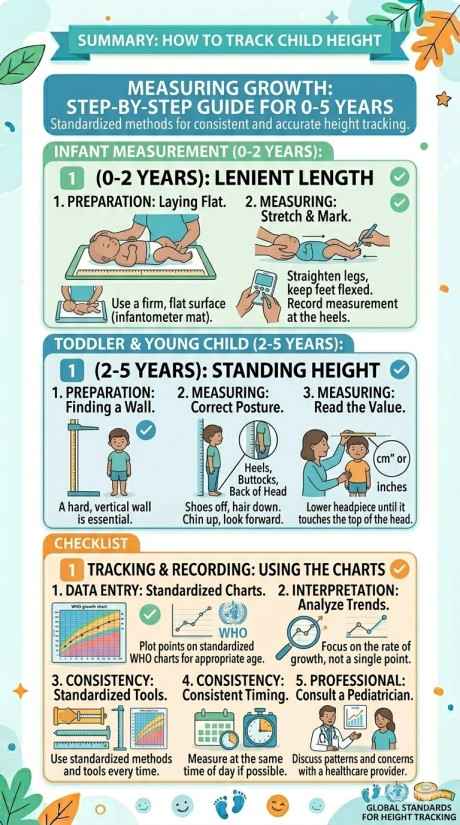
The Biology of Height – What Really Happens?
To understand how to increase child height naturally, we must first know how a baby grows. Humans don’t grow slow or steady; however it happens. In saltations or growth spurts during these periods, every baby can grow a centimeter in just one day.
The Role of the Epiphyseal Plates
Growth takes place at the ends of long bones such as the femur and tibia in areas known as growth plates or epiphyseal plates. These plates are made from cartilage, so in the time till these plates open, a child can surely grow taller.
These plates are highly active, especially in babies. However, if a child is facing any injury in this area, it can lead to long-term effects; this is why the safety of a child matters.
The Endocrine System’s Impact
If we talk about height, the most important element is the pituitary gland, which is located at the base of the brain. It secretes human growth hormone (HGH). This hormone then travels to the liver, where it produces insulin-like growth factor 1 (IGF-1). All these chemicals together help the bones to lengthen. So if you’re focusing on the height of a child, you should focus on supporting the mentioned hormone by following a good and healthy lifestyle.
Nutritional Foundations for Vertical Growth
While nutrition plays an important role when it comes to health and overall body function, it is also an important factor for growth. If your child didn’t receive the right amount of nutrition, they may fall short of their genetic potential, regardless of their genes.
The Breast Milk Advantage (0–12 Months)
When the baby is an infant and can’t eat or drink anything at that time, the best source of nutrition is breast milk. It contains specific growth factors and hormones that can’t be found in any other milk formula or cow milk.
Mothers produce a liquid called colostrum in the first days of breastfeeding. This substance is rich in IGF-1 and antibodies, which contribute to better growth and help protect the baby from infections.
Protein: The Building Block
Bones are a part of the body that can’t only grow based on minerals; in fact, they need a protein matrix that is collagen. If your baby doesn’t get enough protein, it cannot create the framework for bones. To provide your baby protein, give them solids like eggs, pureed chicken, lentils, and Greek yogurt.
Minerals: Calcium, Phosphorus, and Magnesium
As we all know, calcium is important for bones; however, there are some other nutrients, like phosphorus and magnesium, that work best for bones. To provide your child enough calcium, give them food items based on dairy, ragi, and dark leafy greens.
The Vitamin D Revolution
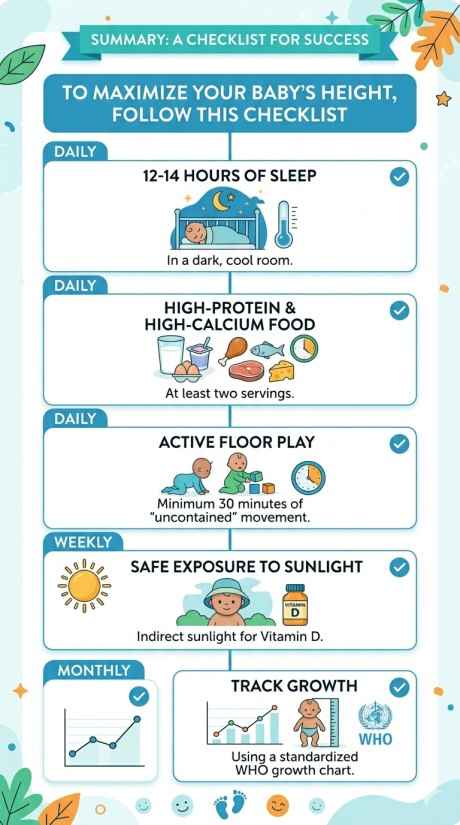
Like calcium, vitamin D also plays an important role in the development of a child. So make sure to give indirect sunlight (vitamin D) to your child for 10 to 15 minutes daily. Most pediatricians recommend vitamin D drops, especially to breastfed babies, because breast milk lacks vitamin D and babies can’t be kept in sunlight for 15 minutes straight like children.
The Secret Factor – Sleep
Like nutrition, your baby also needs sleep to increase height. When a human sleeps, roughly 75% growth hormone is released. So if your baby is sleeping shortly or wakes after short naps, then they can miss those growth hormones, leading to short height.
Also Read: 4 Month Sleep Regression: Why It Happens & How to Fix It
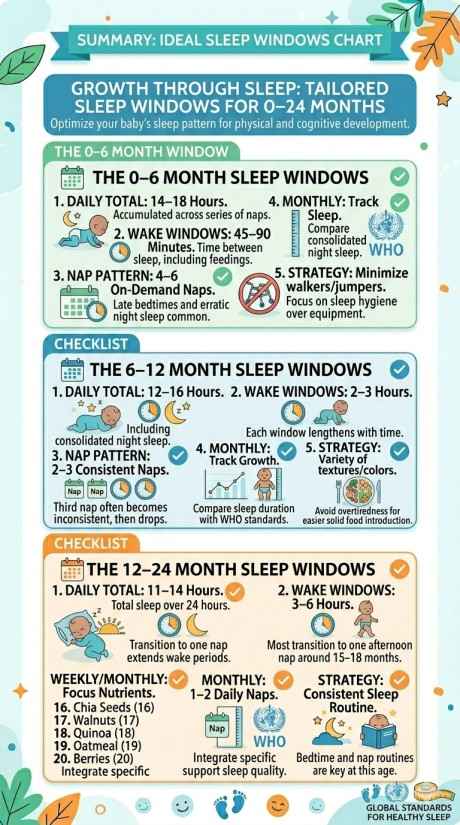
Ideal Sleep Windows Chart
Gut Health and the Microbiome
According to recent research, the microbiome bacteria in a baby’s gut play an important role in height growth.
For a healthy gut, your baby’s body needs both vitamins and minerals. If there is a lack of nutrition, it can lead to inflammation in the gut, caused by allergies or poor bacteria, which results in malabsorption. In this, the child’s body starves for nutrients even when they are getting full food.
According to some studies, infants who have a diverse range of gut bacteria tend to hit their growth milestones more consistently.
Introducing antibiotic food items like yogurt and kefir can help baby guts to stay healthy and support the overall internal ecosystem.
Physical Activity and Bone Loading
We always know that all the adults need physical activity; however, when it comes to babies, we think they are still very young for exercises. However, movement is an important part for bone density and length.
Tummy time is not about crawling only; it is also about stretching the spine and strengthening the back muscles. A strong muscle can support the spine, which leads to maximizing height.
It is not advisable to push a baby’s limb; however, it can be done naturally by playing. For example, keep the baby toy at a little high position and support them to reach and take it; this will help the body to stretch naturally. You can also take babies swimming, as it can help them to move their limbs freely, promoting joint health.
Avoiding Container Baby Syndrome
A very common thing that many parents neglect when a baby spends too much time on car seats, bouncers, or strollers is that it can compress a baby’s spine and even limit the movements they can do. So it’s better to avoid long sittings and allow them to play freely; this can help the spine to lengthen naturally.
Baby carriers are a very common part of parenting; however, when you take one, make sure it is hip-healthy and supports the natural C curve of the infant’s spine. Proper alignments play an important role in a baby’s development as they prevent postural issues that could make a child smaller.
Common Myths and Misconceptions
Some common myths that distract parents are as follows:
Myth: Manual Stretching Increases Height.
Reality: pulling on limbs isn’t advisable, and it doesn’t even lead to increased height.
Myth: Caffeine Stunts Growth.
Reality: Caffeine isn’t recommended for babies because it can cause sleep disturbances that can be a real culprit in the height growth journey.
Myth: Walking Too Early Bows the Legs.
Reality: Most bowed legs in infants are a normal developmental stage and do not negatively impact final height.
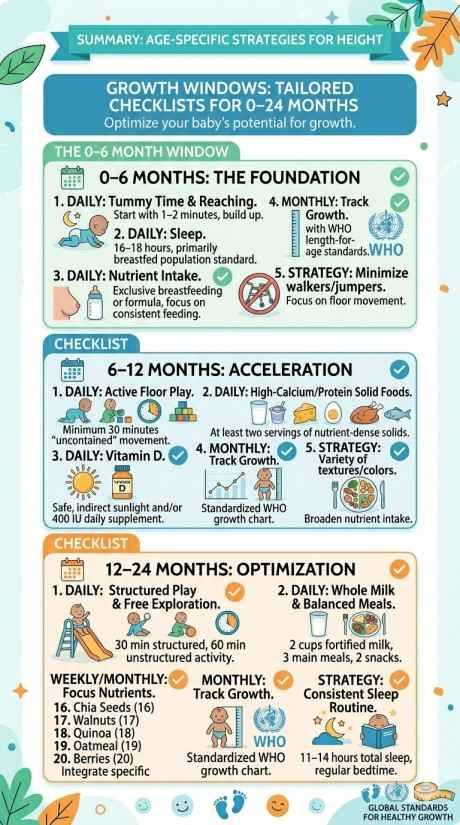
Age-Specific Strategies for Height
The strategy for baby height can change at all stages of their growth:
The 0–6 Month Window
At this stage the main food supply comes from liquid items like milk; it is nutritious and helps in better sleep. Make sure as a mother you are well because your diet and health impact the breast milk.
The 6–12 Month Window
At this stage the introduction of solids occurs, like ragi, pureed meats, and egg yolks. This helps the pincer grasp development, which leads to better movement.
The 12–24 Month Window
At this stage the focus changes from food to activity and bone loading. Running, jumping, and climbing helps the bones to grow, leading to better height. Besides these activities, make sure your child is getting enough calcium needed by the body.
When to See a Specialist (Pediatric Endocrinologist)
Some babies do need medical intervention as they don’t grow enough properly.
Growth Hormone Deficiency (GHD)
In some cases a baby is born with a pituitary gland that doesn’t provide the needed HGH; however, this can be treated with synthetic hormone injections. It can be helpful if you go for the process in the earlier growth days of the baby.
Hypothyroidism
Another problem can be with the thyroid, as an underactive gland can lead to a complete plateau in height. However, to know if your baby has a thyroid gland issue, you can go for a blood test recommended by a doctor.
The Psychological Factor—Psychosocial Short Stature
It is considered a physical phenomenon where children stop growing due to high-stress, unloving, or neglected environments.
High stress produces cortisol, which disturbs the growth hormones. In order to save your child from stress and a neglected environment, create a home full of laughter and security. Make sure your child won’t feel ignored.
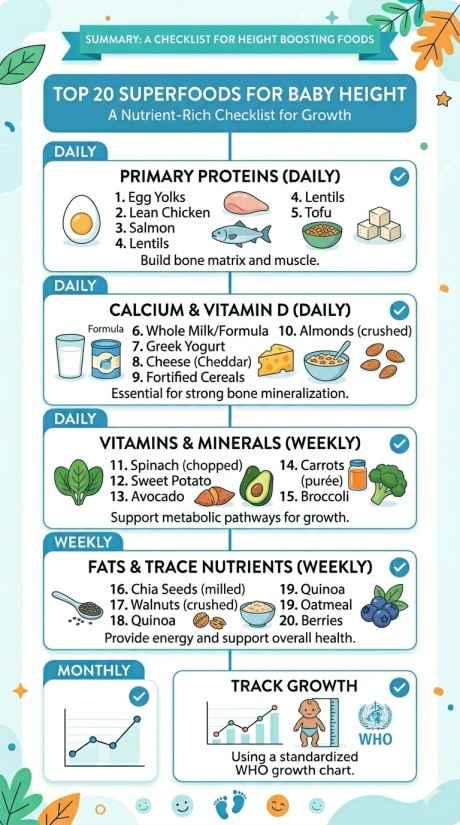
List of Top 20 Superfoods for Baby Height
The Impact of Chronic Illness
Parents don’t realize it, but sometimes infections like ear infections, chest congestion, or diarrhea can also be a hurdle in baby growth. Because when a baby gets sick, their body uses energy for healing rather than growing.
You can also give children immunity boosters like vitamin C-based food items such as citrus or papaya. This will help in keeping the immune system strong.
Final Thoughts
Focusing on how to increase baby height is an important part of their growth. In today’s world appearance matters, and even a body that is well-nourished, well-rested, and stress-free provides confidence. You can’t change the genes of your child, especially if we talk about height; however, you can give them a perfect environment where the child can grow freely and fully. Every time a child’s height increases, celebrate it so they feel proud, positive, and confident. A healthy, happy child is a “tall” achievement in itself.
Medical Disclaimer: This article is for educational purposes only and is not a substitute for professional medical advice. Always consult your pediatrician or healthcare provider for guidance regarding your baby’s sleep, health, or development.
