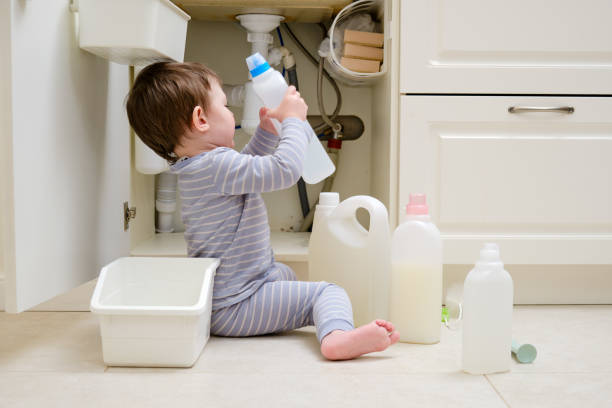
Quick Answer: Childproofing supplements and gummies requires elevated home safety measures because children frequently mistake chewable vitamins and tablets for candy. To prevent accidental overdose, store all wellness products in high, locked cabinets out of reach and sight, keep them in their original child-resistant packaging, and never refer to vitamins as “treats.” In case of accidental ingestion, immediately contact Poison Control at 1-800-222-1222.
The Up and Away campaign, which promotes safe medicine storage for families, points out that pills can look like candy to young children. Children may confuse medicines or supplements with sweets, including vitamin gummies, chewable tablets, and fruit-flavored supplements sitting on the kitchen counter.
Why gummies and tablets need the same rules as medicine
Up and Away guidance says to store vitamins and supplements up and away, like any other medicine. It advises keeping them out of reach even between doses, and it warns against leaving loose pills on a counter, table, or bedside. That rules out the open bottle left next to the coffee maker.
Words matter too. The campaign says never to tell a child that medicine is candy, even when the child resists taking it. Calling a vitamin a treat blurs a line that young children cannot draw for themselves.
Texture is a separate problem from taste. Our guide to candy for toddlers explains why dense, chewy sweets such as gummies are a choking hazard for small children, so a gummy is a poor snack even before anyone asks what is inside it.
Where to keep supplements and medicine at home
The goal is a spot a child can neither reach nor see, and the best version is a locked cabinet or box. The American Academy of Pediatrics advises storing medicines and chemicals in locked cabinets or containers, out of sight and reach of children. A hook, a high shelf or a zip bag may slow a child down, but none of them is a guarantee.
Start with the places adults use every day. Look at each one from a child’s height.
- The kitchen counter or table where a daily bottle sits as a reminder
- the bedside table, bathroom shelf and nightstand drawer
- handbags, diaper bags and coat pockets, plus the car cup holder and glove compartment
- pill organizers, which are not always child-resistant
Up and Away recommends keeping medicine carried in purses, bags, pockets or pill organizers out of sight and reach of young children, even away from home. If a bottle sits in view as a daily reminder, set a phone alarm and keep the bottle itself in the locked spot. Leave products in their original containers, since the label and the cap are part of the safety system.
Visiting guests and grandparents
A visitor does not know your house rules. A grandparent who sets a bag with tablets beside the sofa has put them at toddler height without meaning to. Up and Away suggests asking guests to keep bags and coats that hold medicine up, away and out of sight while they are in your home.
If you are the visitor, ask your host for a spot where children cannot reach or see your products. The campaign also offers a separate tip sheet written for grandparents.
What child-resistant packaging does and does not do
Child-resistant is not the same as childproof. The Consumer Product Safety Commission explains in its guide for healthcare professionals that packaging does not have to stop every child. It has to make opening significantly difficult for children under 5 within a reasonable time, as measured in laboratory tests under set conditions. Those test results describe a package design, not the chance that your own child will fail to open a bottle.
Coverage also differs by product. The same guide lists the substances regulated under the Poison Prevention Packaging Act and points readers to 16 CFR 1700.14(a) for the current list and any conditions or exemptions. A product from a store or a friend may therefore have no child-resistant closure at all.
A cap only helps when it is closed. Close it according to the instructions on that package and check that it has locked. Up and Away says to twist a locking cap until it stops or you hear a click, and not every cap clicks. A zip travel bag does not replace the original child-resistant container.
Read the claims on the shelf
Labels with words such as natural, herbal or gentle describe marketing, not safety for a two-year-old. Ordinary vitamins, gummies and supplements still get the same locked storage as any medicine, and keeping the original packaging lets you tell a poison center exactly what was swallowed.
Products with concentrated 7-OH need a closer look. 7OHMZ tablets contain concentrated 7-hydroxymitragynine (7-OH), and the FDA states that 7-OH is not lawful in dietary supplements. A class action lawsuit over concentrated 7-OH tablets alleges that the seller marketed them as natural and safe without warning of addiction risk, and those marketing claims are disputed. The case concerns that alleged lack of disclosure, and these are allegations rather than court findings. In a home with children, keep tablets like these locked away in their original packaging, out of sight and reach.
If a child may have swallowed something
If you think a child got into a medicine, vitamin or supplement, call Poison Control at 1-800-222-1222 right away, even if you are not sure. That number is for the US, and the call is free and confidential. Do not try to make the child vomit.
If the child collapses, has a seizure, has trouble breathing or cannot be woken up, call 911 immediately. Saving the Poison Control number in every adult’s phone and posting it on the fridge puts it where a babysitter or grandparent can find it.
Medical & Safety Disclaimer: This article provides general child safety information regarding supplement storage and is not medical or toxicology advice. If you suspect your child has ingested any supplement, gummy, or medication, contact Poison Control immediately at 1-800-222-1222 (US) or seek emergency medical help.
