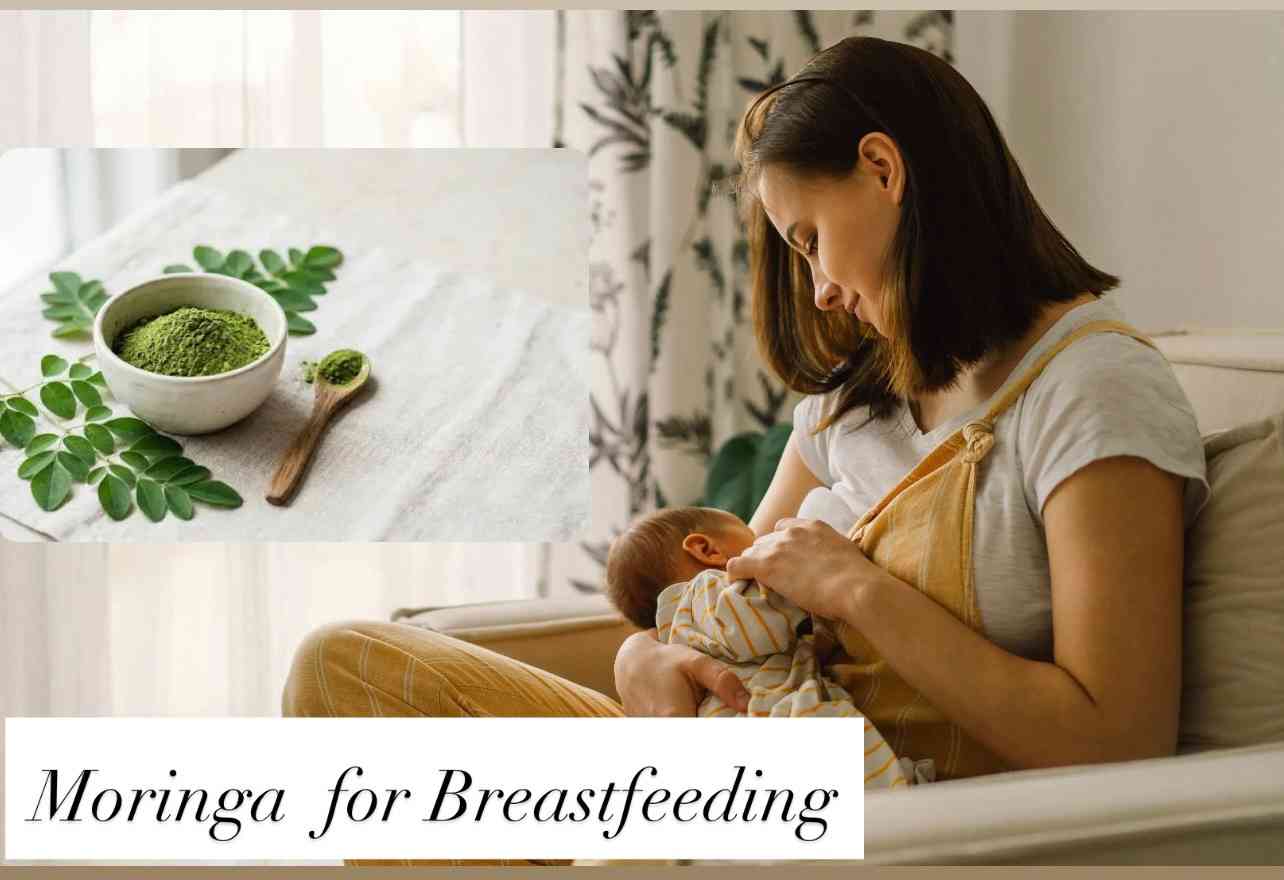
Quick Answer: Moringa for breastfeeding increases milk production by naturally boosting prolactin the primary hormone responsible for milk synthesis. Clinical studies show that taking 500mg to 1,000mg of pure moringa leaf daily increases daily milk volume by 150 mL to 245 mL within 5 to 7 days, without altering milk taste or quality.
When a mother sees a sudden dip in breast milk consistently, it becomes a stressful moment, especially when they are doing everything right. When I was a mom for the first time, I had experienced the same. The best method for increasing milk is obviously power pumping; however, some people also prefer the organic remedies for an extra boost. If you are considering taking moringa for breastfeeding, you are on the right track, as these herbs are backed by genuine clinical research rather than just social media trends.
It is derived from the nutrient-dense leaves of the Moringa oleifera tree. This superfood is proven in all randomized controlled trials, as it increases serum prolactin levels and boosts daily milk volume in just some days after using.
In this guide, we will look in detail at how much you should take, how it actually works, if it is safe for your newborn, exact dosage protocols, potential medication interactions, and how to use it in breastfeeding safely to support your mom journey.
Moringa Nutrition Profile & Maternal Benefits Chart
| Key Nutrient & Density | Biological Action in Lactation | Direct Benefit to Mother |
|---|---|---|
| Phytosterols & Flavonoids High conc. in dried leaves | Stimulates hypothalamic-pituitary axis to increase serum prolactin levels | Directly elevates daily milk output and speeds up milk let-down reflex |
| Bioavailable Non-Heme Iron Higher than raw spinach | Rebuilds hemoglobin stores depleted by postpartum blood loss | Combats chronic postpartum fatigue and prevents supply drops linked to anemia |
| Plant-Based Calcium 4x more than cow’s milk | Provides minerals directly transferred into synthesized breast milk | Protects maternal bone mineral density (preventing calcium leeching during nursing) |
| Beta-Carotene (Vitamin A) 4x more than carrots | Supports cellular growth, mucosal immunity, and postpartum tissue repair | Promotes faster recovery from birth tears/C-section incisions and enriches milk quality |
| Complete Plant Protein 2x more than Greek yogurt | Delivers all 9 essential amino acids needed for tissue building | Provides fundamental building blocks required for continuous milk peptide synthesis |
| Vitamin C & Antioxidants 7x more than oranges | Neutralizes oxidative stress and enhances intestinal iron absorption | Strengthens maternal immune defense and improves overall nutrient uptake |
| Potassium & Electrolytes 3x more than bananas | Regulates cellular fluid balance and cellular hydration | Prevents muscle cramping and maintains optimal hydration for milk production |
Before You Supplement: Addressing the Root Cause First
Before adding any kind of herb to your daily routine, like moringa in breastfeeding, it is important to understand how milk production in the human body takes place. The milk production works on a biological supply-and-demand feedback loop. Every time a baby feeds, the body releases prolactin and oxytocin, which signal the brain to produce more milk.
If the baby doesn’t take enough milk, a protein called Feedback Inhibitor of Lactation (FIL) builds up on breast tissue and signals the body to slow down the production. Taking herbs without understanding the body mechanism is a waste.
Why Herbal Galactagogues Should Never Replace Latch & Removal Assessment
Herbal supplements help in healthy lactation system; however, it doesn’t repair a loop that is broken, so depending completely on galactagogues by ignoring the Latch quality or transfer efficiency can lead to more delay, resulting in frustration and infant weight loss.
The Mechanics of Milk Transfer: A baby needs to draw the nipple deeply to compress milk sinuses. If the latch is shallow, the baby won’t get enough milk, so the body won’t produce more milk.
Signs of Ineffective Milk Removal: You will feel pain in your nipples or notice a lipstick-shaped nipple after every feed. You will hear frequent clicking or smacking sounds during nursing. The baby may fall asleep in some minutes but is hungry. You will notice that the baby’s diaper is wet only 6 times in a 24-hour period.
Anatomical Barriers: You will experience issues like ankyloglossia, or tongue-tie; high palates; or maternal elastic tissue, which also reduce milk transfer. A galactagogue like moringa can help in increasing milk, but if the baby isn’t taking all the milk, then the supply will still drop.
When to Work Directly with an IBCLC (Lactation Consultant)
If you notice the milk supply is dropping, then the first thing you need to do is go for a clinical evaluation by an International Board Certified Lactation Consultant (IBCLC); it is the highest clinical credential in lactation care.
Baby weight: These consultants do a detailed assessment that is better than general advice. During this consultation they will check the baby’s weight on a precision medical scale before and after the feeding session to measure how many grams/milliliters were transferred. They will evaluate oral anatomy and functions by checking the tongue ties, lip ties, jaw tension, and suction strength.
Flange size: They will check the flange size to make sure the breast pump has the right flange size. They will give a plan like pairing mechanical stimulation such as triple-feeding or power-pumping with targeted supplementation.
If you are finding a certified professional nearby, then use the International Lactation Consultant Association (ILCA) Directory or consult the clinical guidelines provided by La Leche League International to review everything.
What Makes Moringa a Powerhouse Galactagogue?
It is not like synthetic medications or traditional single-action herbs; moringa helps in milk production by using two things. The first one is that it directly stimulates the endocrine system to raise the hormone, which is important for milk production. The second way it helps is by restoring the micronutrients that get lost during different phases like pregnancy, blood loss, and childbirth micronutrients that get lost during different phases like pregnancy, blood loss, and childbirth.
In short, moringa supports both hormone production and recovery; it creates a perfect condition for sustained milk synthesis.
The Biological Mechanism: How Moringa Stimulates Prolactin
The main reason why moringa helps in increasing milk is it contains both a concentration of phytosterols (plant sterols) and active flavonoids. When you consume it, these two elements are absorbed by the bloodstream, and they interact with the pituitary gland, leading to release of prolactin, which is the main hormone that signals the mammary glands to start producing milk.
According to clinical research, mothers that take moringa leaf extract see an increase in serum prolactin levels in some days, like from 150 ng/mL to well over 230 ng/mL. Moringa works naturally without causing mood shifts or depression.
Postpartum Nutritional Recovery Profile (Iron, Calcium, & Vitamin A)
Lactation needs a high amount of energy and nutrition. Moringa leaf is rich in nutrients; it provides vital minerals in a form that can be absorbed by the body easily.
Bioavailable non-H can be Iron: absorbed by the body. Low iron levels are the main causes of maternal fatigue and milk delay. Dried moringa leaves are rich in iron, which helps in rebuilding haemoglobin and daily stamina.
Absorbable Plant Calcium: During nursing, most mothers lost 3 to 5% of bone density because the body takes calcium from bones to fortify breast milk. Moringa is a plant-based source of calcium; it helps in protecting bones and supporting healthy muscles when milk ejection takes place.
Beta-Carotene (Precursor Vitamin A): Moringa is also rich in beta-carotene that helps in supporting tissue repair after a baby is born, healing perineal tears or C-section incisions while making the immune system strong for both the baby and the mum.
Clinical Proof: What the Research Actually Says
Unlike ashwagandha, moringa is backed by randomized, double-blind, placebo-controlled clinical trials. It does not just depend on social media trends.
Daily Milk Output Volume Increases (Clinical Trial Breakdown)
In many clinical trials, mothers have moringa leaf capsules or leaf powder, and they find the milk is producing more. In early postpartum trials, mothers who take 250 mg of moringa 2 times in a day after 3 days have an average of 124 additional milliliters of trials per day.
In longer trials, mothers get ASA between 700 mg and 1,000 mg daily. The average volume increase is from 152 mL to 176 mL per day. Mothers who took the leaf powder in their daily meals for a month noticed an increase in the volume of milk up to 47% from the baseline.
All these trials indicate starting moringa in the early postpartum period produces milk faster.
Does Moringa Change Breast Milk Taste, Color, or Nutrient Quality?
Mothers ask such questions when they consume a dark green plant powder like moringa. Clinical observations reveal three main things: the first one is the high chlorophyll concentrations found in moringa can give a faint green tint to breast milk, but it’s completely safe and has no harm for the baby. Second, the leaves have a green tea-like taste when you eat them raw; however, it won’t change the taste of breast milk.
Finally, minerals like iron already exist in human milk. Maternal moringa supplementation is rich in fatty acids like DHA in breast milk, which works best for newborn babies.
How Moringa Compares to Fenugreek & Milk Thistle
Choosing the right herbal galactagogue relies on how the body tolerates it. Moringa has more advantages as compared to herbs like fenugreek and milk thistle. Many people use fenugreek, but they experience digestive cramping, painful bloating, loose stools, and an odor like maple syrup in Mom’s sweat and baby diapers. It also causes gas issues in babies. On the other hand, moringa leaf powder is gentle to the stomach and doesn’t cause frequent digestive issues in babies.
Milk thistle is also gentle on digestion, but it only works as an antioxidant with prolactin-boosting effects. Moringa provides strong prolactin stimulation and has many nutritional benefits.
Recommended Dosage & Timeline Protocol
| Protocol Step | Details & Best Practices | Target Outcome |
|---|---|---|
| 1. Choose Your Form | Capsules: 450mg–500mg (2–3x daily) Powder: 1–2 tsp/day (approx. 2g–4g) Capsules offer taste-free, precise dosing; powder works best blended into food or smoothies. | Optimal delivery method tailored to daily routine and taste preference. |
| 2. Daily Schedule | Morning: 1 dose with breakfast Lunch: 1 dose with lunch Evening: 1 dose with dinner Taking doses with meals containing healthy fats maximizes absorption and provides steady prolactin stimulation. | Sustained serum compound levels and boosted nutrient absorption throughout the day. |
| 3. Days 1–2 (Initial Phase) | Maintain normal nursing/pumping routine while active plant compounds enter the system. | Prolactin signaling begins; minimal immediate change in milk volume. |
| 4. Days 3–4 (Early Surge) | Pair intake with consistent hydration (16+ oz water per dose). | Initial increase in breast fullness and early pump volume uptick (+30 to +60 mL/day). |
| 5. Days 5–7 (Peak Threshold) | Continue steady daily dosing alongside frequent milk removal. | Reaches clinical trial benchmark results, yielding an average increase of +150 to +245 mL/day. |
Crucial Safety Guidelines & Potential Side Effects
Pure moringa leaf is completely safe for lactating mothers. If you are taking any active botanical supplement in the postpartum recovery period, then you have to keep an eye on sourcing, medical history, and dosage. Additionally, you need to understand the difference between safe parts of plants and drug interactions and know how they react with a baby’s digestion to make sure you boost milk safely.
Leaf vs. Root/Bark: Avoiding Contractions & Harmful Compounds
The safety of this herb totally depends on which part of the plant is consumed. Dried Moringa oleifera leaves are a whole food galactagogue, but other components of this plant have risks and need to be avoided in pregnancy as well as postpartum recovery.
So make sure you avoid roots, root bark, and stems of the moringa tree, as they have toxic alkaloids known as spirochin and moringinine. They can cause serious complications in pregnancy. If a mom consumes it during postpartum, it causes abdominal cramping or interferes with natural uterine involution.
Always use supplements that have the 100% Pure Leaf Powder (Moringa oleifera folium) label and avoid those with whole plant extracts, root tinctures, or unrefined botanical blend labels.
Drug Interactions: Thyroid, Blood Sugar, & Blood Pressure Medications
As moringa has natural phytochemicals, it can interfere with prescription medications, either enhancing their effects or interfering with how the liver and digestive system absorb them.
| Medication Category & Names | How Moringa Interacts | Clinical Risk & Effect | Actionable Precaution |
|---|---|---|---|
| Thyroid Medications Levothyroxine (Synthroid, Levoxyl, Eltroxin), Liothyronine (Cytomel) |
Reduces GI Absorption: Leaves bind to thyroid hormones. Alters Conversion: Thiocyanates impair thyroid iodine uptake. |
Reduces medication efficiency, leading to unmanaged hypothyroidism symptoms (fatigue, low supply). | Separate moringa and thyroid meds by at least 4 hours. Monitor thyroid levels with your doctor. |
| Blood Sugar / Diabetes Metformin, Insulin, Glyburide, Glipizide, Empagliflozin (Jardiance) | Additive Hypoglycemic Effect: Moringa naturally lowers blood glucose by increasing insulin sensitivity. | Hypoglycemia (dangerously low blood sugar), leading to dizziness, shakiness, sweating, or fainting. | Frequently monitor blood glucose. Your physician may need to adjust your dosage. |
| Blood Pressure Meds Amlodipine, Lisinopril, Losartan, Metoprolol (Lopressor) | Additive Vasodilatory Effect: Quercetin naturally relaxes blood vessels and lowers blood pressure. | Hypotension (abnormally low blood pressure), causing lightheadedness, blurred vision, or fainting. | Avoid high doses without consulting your doctor. Track blood pressure daily. |
| Blood Thinners Warfarin (Coumadin), Enoxaparin (Lovenox) | Vitamin K Antagonism: High Vitamin K content promotes blood clotting, counteracting thinners. | Reduces blood-thinning effect, increasing the risk of unwanted blood clots. | Avoid moringa if on Warfarin unless explicitly monitored and cleared by your physician. |
Managing Initial Digestive Adjustments & Gas
Moringa leaf powder contains dietary fiber, chlorophyll, and natural glucosinolates. However, when you take them in high doses, it can lead to mild and temporary gastrointestinal adjustments as the gut microbiome adapts.
You may experience side effects like mild stomach pain, bloating, gas, or even loose stools. These symptoms go away on their own in 3 to 5 days when the digestive system is used to these large doses.
To avoid such issues in the recovery phase and breastfeeding as a mother, it is recommended to start with low doses, like one-half teaspoon of moringa powder or a single 500 mg capsule, daily. Then, after a week, you can increase the dose to full. Don’t take it on an empty stomach; always consume it with meals that are rich in healthy fats and complex carbohydrates so it digests smoothly.
Is Moringa Safe for Newborns via Breast Milk?
The most common concern among breastfeeding mothers is whether the active compounds in herbs pass into breast milk and affect the infant or not.
According to clinical research, the pure moringa leaf extract is safe for breastfed infants. Unlike fenugreek, which causes painful gas or loose green stools. Moringa leaves are gentle on mothers’ digestive systems. Water-soluble micronutrients and chlorophyll can pass in breast milk but in small amounts. They are not toxic and can easily be tolerated by a newborn’s stomach.
In rare cases, as babies have sensitive stomachs when a mother takes a high dose of moringa, you may notice a change in baby stool color, like light green. If the baby shows unusual signs like fussiness, skin rashes, or watery stools after you start the supplement, then reduce the dose or pause for 8 hours to confirm tolerance.
To understand more, you can look at this video: How Moringa Powder Affects Thyroid Health and Medication
Quality & Sourcing Checklist: Buying Clean Moringa
The market of herbal supplements is generally safe; however, the product quality can vary from brand to brand. Since Moringa oleifera trees act as natural bio-accumulators, they absorb all the compounds in the soil, so using a clean and unadulterated powder is critical for lactating mothers.
Heavy Metals & Contamination Red Flags in Botanical Powder
Moringa trees are found in industrial regions among many developing nations; however, the poor monitoring can lead to absorption of soil contamination, heavy metals, and environmental runoff.
Heavy Metal Accumulation (Lead, Cadmium, Arsenic): Moringa roots absorb heavy metals from the soil and transfer them to the leaves. When a mom digests these leaves while breastfeeding, it causes risks, and these toxins can even affect the baby.
Microbial Contamination & Mold: When some companies use poor harvesting and drying methods like air-drying raw leaves on open soil instead of in an indoor controlled environment, the moringa is exposed to bird droppings, E. coli, salmonella, and mycotoxins from mold growth.
Fillers and Synthetic Flow Agents: Cheap brands mix pure moringa powder with low-cost fillers like maltodextrin, silica, or pulverized stems. If you go to buy moringa powder and see the color is bright neon green or pale yellowish-brown, it means the powder is not pure and has artificial dyes or stale leaf matter. High-quality moringa powder always comes in a rich, deep forest-green color.
Key Certifications to Look For (USDA Organic & Third-Party COAs)
To ensure the moringa powder is completely safe and free from contaminants, look at three compulsory verification benchmarks before buying:
| Certification / Seal | What It Verifies | Why It Matters for Mothers | Look For vs. Red Flag |
|---|---|---|---|
| USDA Organic (or EU / JAS equivalent) |
|
Prevents synthetic pesticide residues from entering maternal blood and passing into breast milk. | Look For: Official green/brown USDA Organic seal on packaging. Red Flag: Vague claims like “100% Natural” or “Wildcrafted” without official seal. |
| Third-Party COA (Certificate of Analysis) |
|
Moringa trees absorb heavy metals from soil. A COA proves the batch is within strict safety limits for infant protection. | Look For: Batch-specific COA available on brand website or via QR code. Red Flag: Brands that refuse to share lab reports or claim “in-house testing only.” |
| NSF International / USP Certified |
|
Ensures you are getting pure leaf powder without hidden flow agents or adulterants that could trigger infant reactions. | Look For: NSF “Contents Tested & Certified” or USP Verified badge. Red Flag: Generic powder with no independent testing seals or manufacturer address. |
| 100% Pure Leaf Identity (Moringa oleifera folium) |
|
Roots and bark contain toxic alkaloids (spirochin) that can trigger uterine contractions and abdominal pain. | Look For: Ingredients listed strictly as “Organic Moringa Oleifera Leaf Powder.” Red Flag: Ingredients listing “Whole Plant Extract,” “Moringa Root,” or “Proprietary Blend.” |
How to Take Moringa (3 Quick, Earthy-Flavor Masking Recipes)
Pure moringa leaf powder has an earthy taste profile, the same as a concentrated mix of spinach and matcha green tea. When moms take it raw mixed with just water, it leads to nausea or taste aversion. The best way to consume a daily dose of moringa is by pairing it with healthy fats, natural sweet items, or warm spices so you don’t feel the raw taste.
Smooth Superfood Lactation Smoothie
The best time to take it is in morning smoothies paired with moringa, creamy peanut butter, ripe banana, and oat milk. The natural fats in peanut butter combine with moringa and oat milk to provide galactagogue support, as they are rich in beta-glucans. To make it, you need the following ingredients.
Ingredients:
- 1 teaspoon organic pure moringa leaf powder
- 1 ripe frozen banana
- 1 tablespoon natural peanut butter or almond butter
- 1 cup rolled oat milk
- 1 tablespoon ground flaxseed or chia seeds
Add all ingredients in a blender and blend everything for 60 seconds until it becomes smooth. Drink it with breakfast.
Warm Postpartum Golden Milk Latte
Warm beverages support early postpartum recovery because they promote relaxation in tissues and oxytocin release; it triggers the milk let-down reflex. Combine moringa with turmeric milk to make an anti-inflammatory evening tonic. To make it, you need the following ingredients.
Ingredients:
- 1/2 to 1 teaspoon organic moringa leaf powder
- 1/2 teaspoon ground turmeric powder
- 1 cup warm unsweetened almond milk or coconut milk
- 1 teaspoon raw honey or maple syrup
- A pinch of black pepper
First heat the milk in a small saucepan; keep it on medium heat until the milk becomes warm. Add moringa, turmeric, honey, and spices and let them dissolve. Lastly, add it in a mug and drink it before bedtime.
Savory Meal Add-Ins for Quick Dinners
If you want savory flavors over sweet drinks, then you can also add moringa in warm lunch and dinner dishes because high-heat meals can degrade vitamin C and antioxidants; always add moringa in dishes at the end of cooking when the meal is warm.
Lentil Soups & Vegetable Broths: Add one teaspoon of moringa powder into dishes like warm lentil, chicken, or bone broth soups before eating. It will blend naturally in dishes.
Curries & Coconut Sauces: Stir 1 to 2 teaspoons into warm coconut milk curries, dal, or stewed green vegetables.
Grain Bowls & Pasta Sauces: Fold half a teaspoon of powder into dishes like warm quinoa, brown rice, or pesto pasta sauces.
Frequently Asked Questions (FAQs): Moringa for Breastfeeding
Q1: How fast does Moringa increase milk supply?
Most mothers see an increase in milk in just 3 to 5 days of using moringa; the increase can be 150 mL to 245 mL daily by day 7.
Q2: Can I take Moringa and Fenugreek together?
Yes, but to see moringa results, only start it alone for the first 7 days to see how the body responds, as fenugreek can cause gas, bloating, and baby fussiness.
Q3: What happens to my milk supply if I stop taking Moringa?
The milk supply will be the same if the baby latches well. However, if milk removal is lower, the supply will drop again.
Q4: Can Moringa cause fussiness or green stool in my baby?
Fussiness is rare, but due to moringa’s high chlorophyll content, the baby’s stool color can change to a green tint. If you see a gas issue in the baby, then reduce the dose.
Q5: Will Moringa change the taste or smell of my breast milk?
No raw powder tastes earthy, but it doesn’t change the milk taste or leave a maple syrup odor in Mom’s sweat and milk.
Q6: Can I take Moringa during pregnancy to prepare for breastfeeding?
No, moringa isn’t recommended in pregnancy because its root contaminants can lead to uterine contractions. You can start using it in the recovery phase after 3 days of delivery.
Q7: Is Moringa powder or capsule form better for milk supply?
Both are effective; capsules are flavorless, while leaf powder is cheaper and can easily blend into smoothies.
Q8: Does Moringa interact with thyroid or blood pressure medications?
Yes, keep Moringa separate from thyroid drugs such as levothyroxine by a distance of 4 hours to be safe from any issues.
Official Government & Research Sources
U.S. National Institutes of Health (NIH) – LactMed® Database
- Resource: Drugs and Lactation Database (LactMed®) – Moringa Record
- Overview: Managed by the National Library of Medicine (NLM), this official government database reviews clinical evidence regarding Moringa’s safety during breastfeeding, prolactin stimulation, and infant safety.
2. PubMed Central (NIH) – Systematic Clinical Review
- Resource: Moringa oleifera Supplementation as a Natural Galactagogue (PMC)
- Overview: A peer-reviewed clinical systematic review evaluating randomized controlled trials on Moringa’s effect on serum prolactin levels and daily milk volume.
3. PubMed Central (NIH) – Randomized Controlled Trial
- Resource: The Effect of Moringa oleifera in Increasing Breast Milk Volume (PMC)
- Overview: A double-blind, randomized controlled trial measuring postpartum milk output gains when supplementing with Moringa leaf capsules.
4. NIH LiverTox Database
- Resource: Moringa Clinical & Botanical Overview – LiverTox
- Overview: A clinical medical summary provided by the NIH detailing botanical properties, blood glucose interactions, and safety considerations.
