Quick Answer: You should skip retail pre-made chicken salad, deli counters, and restaurant cold chicken sandwiches during pregnancy due to the high risk of Listeria contamination. However, it is entirely safe to eat cold chicken salad if it is homemade. To make it safe, you must cook the chicken fresh to an internal temperature of 165{F} (74{C}), flash-chill it in the refrigerator within one hour, mix it exclusively with pasteurized commercial mayonnaise, and consume it within a strict 24 to 48 hours.
In pregnancy you crave many things that you don’t even eat the whole year, so if you are currently in this phase and crave a crisp and creamy chicken salad sandwich, then it’s very common. A chilled protein-based meal can be a perfect part of the morning when you are already dealing with morning sickness and can’t eat hot, steamy food items that smell.
However, as I always say, everything you eat in pregnancy does have a positive and negative impact, so people are always curious to search for the item they crave first: Can You Eat Chicken Salad While Pregnant? Some pregnancy food-detecting apps will show a red flag on chicken salad, while others show it’s fine.
Let’s be honest here: chicken salad isn’t just based on a single food item; it is a combination of cooked poultry, raw produce, and emulsions. Whether it is safe or not is completely based on the ingredients used in it or how they are handled. In this complete brief we will look at what food authorities say about it and how you can eat it safely, so let’s start.
The Quick-Check Chicken Salad Matrix
Before diving into the medical science, use this rapid-testing matrix to evaluate the lunch in front of you.
| Chicken Salad Type | Safety Status | Action Required / Alternative |
|---|---|---|
| Freshly made at home (Eaten within 24–48 hours) |
Safe ✓ | Ensure chicken hit 165°F and mayo is commercial store-bought. |
| Canned chicken salad (Mixed fresh at home) |
Safest ✓ | Canned chicken is pressure-sterilized; zero initial pathogen risk. |
| Pre-packaged, sealed grocery tub (e.g., Reser’s) |
Proceed with Caution | Safe only if eaten immediately upon opening. Discard leftovers. |
| Deli counter scoop (Grocery display cases) |
Strictly Avoid ✗ | High risk of Listeria cross-contamination. Pass it up. |
| Subway / Sandwich shop (From the metal bin) |
Strictly Avoid ✗ | Bins sit open, are topped off constantly, and stay cool but not cold enough. |
| Sit-down restaurant chicken salad | High Risk ✗ | Skip unless the kitchen explicitly confirms it was prepared fresh today. |
Why Chicken Salad Presents a Unique Prenatal Risk
While a fresh green salad or a hot grilled chicken breast is a perfect choice if you are looking for prenatal nutrition, the cold chicken salad sits long in an area where other elements like sushi and unpasteurized cheeses are also placed. Why this interaction can be risky for a salad, you need to look at the following points:
1. The Cellular Vulnerability of Shredded Poultry
The main reason why chicken salad can be extremely dangerous when kept with such items as compared to a chicken breast is when you cook the breast, the bacteria, like listeria, get killed at high temperatures; however, when you put shredded or diced chicken salad in the cold space, the
The meat’s cellular structure is broken open. From this, any bacteria can easily enter the salad by knife, cutting board, or gloved hand.
2. The Moisture Trap and the “Cold-Growth” Superpower
Some bacteria, like Salmonella or E. coli, stop multiplying when you put the food at a temperature of below 40°F (4°C); however, other bacteria, like Listeria, don’t kill and even double at this temperature. The creamy base of a chicken salad contains mayo, sour cream, or yogurt. They are high in moisture, becoming a perfect place for bacteria. We all eat chicken salad cold, so the chance of bacteria getting destroyed becomes zero.
3. The Placental Barrier Concern
The main reason why all prenatal specialists ask to avoid cold meat items is only because of listeria because it can easily cross the placental barrier. The symptoms won’t be visible easily. The bacteria can pass into fetal circulation, which leads to pregnancy complications, preterm labor, miscarriage, or severe systemic infections in the baby.
According to Melanie McGrice, Adv APD, Accredited Practicing Dietitian and Prenatal Nutrition Specialist, the ready-to-eat food items like leftover meats, which stay in the refrigerator for days and can’t be heated, have risk. It is best to avoid pre-made chicken salad you found in a grocery store during pregnancy.
The Component-by-Component Safety Audit
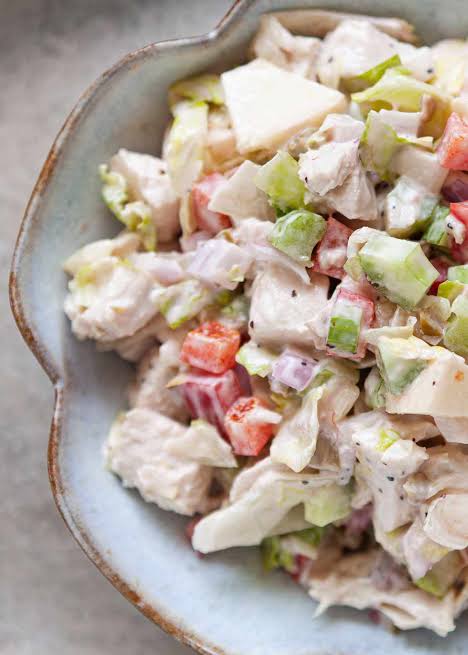
To understand more why the combination of cooked meat and dressing needs a pre-and medical audit, we have to look at all the ingredients individually. When all the ingredients mix together to make chicken salad, the surface area and salad moisture make a suitable ground for bacteria.
1. The Protein: Poultry Anatomy, Water Activity, and Pathogen Colonization
The shredded chicken breast is considered a foundation of salad, but from a microbiological perspective, it is also a highly nutritious area.
According to the USDA Food Safety and Inspection Service (FSIS), poultry achieving a 7.0 log₁₀ reduction in Salmonella enteritidis can be safe for humans, but for pregnant women, you need to heat the food item at 165°F (74°C).
2. The Emulsion: Lipid Profiles, pH Limits, and Acidic Suppression
The binder used in chicken salad helps in controlling the overall acidity and moisture that have a direct influence on whether a bacterial cell can reproduce.
According to the FDA 21 CFR 169.150, a commercially made mayonnaise needs to have 65% vegetable oil and also vinegar (acetic acid) or lemon juice (citric acid). This combination drops the pH and increases the acidity to 4.0, where Listeria can’t easily multiply.
Additionally, according to federal law, all commercial eggs need to be pasteurized at 140°F (60°C) for 3.5 minutes to remove the risk of salmonella.
A pregnant woman needs to avoid traditional restaurant-made salads because they surely include homemade mayonnaise that uses raw, unpasteurized egg yolks emulsified with oil.
If the salad is based on sour cream, crème fraîche, or Greek yogurt as a replacement of mayonnaise, then it can be safe. However, avoid farm-based raw milk or unpasteurized yogurts completely.
3. The Crunch: Surface Microflora, Phytochemical Wash Constraints, and Endophytic Contamination
The raw vegetables in chicken salad give a crunchy texture, but as these vegetables come from soil, they can also be main vectors of environmental pathogens. Celery stalks and green onions are highly vulnerable because of their shape. Celery has vertical ribs and is porous, where listeria can easily take place.
To avoid bacterial risk, a pregnant woman needs to wash the vegetables properly for some minutes.
Avoid adding alfalfa, clover, or radish sprouts to your chicken salad, especially if you are pregnant, as it is extremely dangerous.
High-Risk Ingredients: 10 Items to Absolutely Avoid it in chicken salad.
Use this definitive screening chart to keep high-risk items out of your kitchen entirely.
| # | Ingredient | Primary Threat | Core Risk Mechanism & Medical Rationale | Safe Alternative |
|---|---|---|---|---|
| 1 | Deli-Sliced Cold Chicken | Listeria monocytogenes | Slicing blades in retail delis are rarely stripped down during the day, creating an active vector for transferring biofilms across multiple meat batches. | Fresh chicken breast cooked to 165°F (74°C). |
| 2 | Raw Alfalfa or Clover Sprouts | Salmonella & E. coli | The seeds require high humidity to germinate. Bacteria get drawn up into the interior vascular walls of the sprout plant, making surface washing completely useless. | Shredded red cabbage or crisp romaine ribbons (washed thoroughly). |
| 3 | Scratch-Made / Restaurant Mayo | Salmonella enteritidis | Authentic restaurant recipes rely on unpasteurized, raw egg yolks to create the emulsion, which can harbor pathogens inside the shell. | Pasteurized commercial store-bought mayo (pH 3.6–4.0). |
| 4 | Unpasteurized Feta / Blue Cheese | Listeria monocytogenes | High-moisture, low-acid unpasteurized cheeses provide a perfect growth environment for cold-tolerant bacteria to replicate. | Pasteurized sharp cheddar or pasteurized crumbled feta. |
| 5 | Pre-Cut Celery Bags | Secondary Cross-Contamination | Industrial processing facilities chop massive volumes of produce on shared machinery, increasing the risk of broad-batch exposure to environmental pathogens. | Whole celery stalks, scrubbed vigorously with a clean produce brush at home. |
| 6 | Cold Leftover Chicken (Day 3+) | Listeria monocytogenes | Listeria replicates at standard refrigeration temperatures (34°F–38°F). By day three, negligible cells can grow into infectious doses. | Freshly cooked chicken or canned chicken opened and mixed immediately. |
| 7 | Raw, Unpeeled Apples / Grapes | Toxoplasma gondii & Listeria | The textured skins of grapes and apples easily trap microscopic soil fragments containing cysts or environmental bacteria. | Fruit that has been friction-washed under high-velocity running tap water. |
| 8 | Fresh, Unpasteurized Dressings | Listeria & Spoilage Organisms | Refrigerated artisanal dressings found in grocery produce sections frequently avoid chemical preservatives or thermal pasteurization to preserve flavor. | Commercial, shelf-stable bottles stored at room temp until opening. |
| 9 | Raw Green Onions / Scallions | Soil-Borne Pathogens | The hollow structure of green onion stalks acts as a natural straw, trapping contaminated dirt and irrigation water inside the tube where rinsing cannot reach. | Finely diced red onion (outer layers completely peeled away and surface washed). |
| 10 | Leftover Buffet Mix-ins | Multi-Pathogen Exposure | Cross-contact from shared serving spoons and fluctuating temperatures in ambient display trays allow bacterial counts to spike rapidly. | Fresh components pulled directly from their primary sealed containers. |
Structural Swaps for Gestational Symptoms
Once you know the homemade chicken salad is completely safe to consume, you can modify the recipe to mitigate common prenatal conditions:
For gestational diabetes (GDM): It can be a main concern in pregnancy, so avoid adding sweet mix-ins like raisins, dried cranberries, or honey-mustard dressings, as they can spike the glycemic index.
For Extreme Prenatal Heartburn: If you face heartburn in pregnancy, then avoid adding raw onions, heavy garlic powder, black pepper, or highly acidic lemon juice to chicken salad; instead, use pasteurized sour cream.
For Pregnancy-Induced Constipation: To make the meal rich in fiber, use scrubbed walnuts, skin-on red apples, and chia seeds, then use 100% whole-wheat bread to stimulate healthy digestive transit.
The Clinical-Standard Homemade Chicken Salad Recipe
All you need is 1 plastic container or cutting board only for raw poultry. 1 separate sanitized cutting board for produce. A calibrated digital instant-read stem thermometer and lastly a shallow glass or stainless steel baking dish.
Ingredients List
- For the protein base, you need 1 lb (450 g) of fresh, boneless, skinless chicken breasts. 4 cups of water to boil.
- ½ cup commercial, shelf-stable mayonnaise that has pasteurized eggs mentioned in the label, like “pasteurized eggs.”
- ¼ cup Plain, Pasteurized Greek Yogurt
- 1 tbsp Pasteurized Lemon Juice
- For vegetables, take 2 whole stalks of organic celery, ¼ cup finely diced red onion, ¼ cup raw walnut pieces, 1 tsp fine sea salt & ½ tsp dried dill.
Step-by-Step Culinary Instructions
First add raw chicken breast in a saucepan and add cold water or broth; let it be on medium to high heat, then reduce heat to low once the first boil comes. Keep it on low heat for 15 minutes straight. To check if the chicken breast reaches the required temperature of 165°F (74°C), use a digital thermometer.
Remove the chicken from hot liquid onto a clean cutting board. Use clean forks to shred it so the steam is released from the chicken completely. Put the shredded chicken in a cold glass baking dish. Place it in the refrigerator on the middle shelf and leave it for an hour until the chicken temperature drops below 40°F (4.4°C).
While the chicken is getting cold, use this time to whisk pasteurized mayonnaise, Greek yogurt, lemon juice, salt, and dill in a clean bowl. Also add prepped celery, onions, and walnuts.
Add the cold chicken and mix well until it becomes completely coated in the dressing. Seal the bowl with an airtight lid and return it to the refrigerator immediately.
Supermarket Pre-Cooked Chicken: Category Risk Assessment
| Category | Typical Retail Location | Pathogen Risk Level | Core Vulnerability Matrix | Safe Prenatal Protocol |
|---|---|---|---|---|
| Canned / Foil-Pouch Chicken | Center Grocery Aisle (Shelf-Stable) | Lowest Risk | None. The meat undergoes industrial thermal sterilization (retort processing) inside a completely sealed container, making it completely sterile until opened. | Safe to use cold. Open the can, drain immediately, and mix directly into your dressing. Do not store open leftovers for more than 24 hours. |
| Freshly Roasted Rotisserie | Hot Display Case / Deli Island | Moderate Risk | The chicken is thoroughly cooked initially, but holding domes can drop below 140°F (60°C), allowing surface spore germination. High risk of cross-contamination during retail packaging. | Safe ONLY if eaten hot. Buy it steaming hot, carve it immediately at home, and eat it warm. Never buy a hot rotisserie chicken, let it cool in the fridge, and eat it cold. |
| Chilled Rotisserie (Day-Old) | Open Grab-and-Go Refrigerated Cases | High Risk | These are unsold hot chickens from the previous day that have been cooled down by the store. The cooling process in commercial settings is often too slow, creating an extended window in the Danger Zone. | Avoid completely for cold salads. Only purchase if you plan to shred it and heat it until steaming hot (165°F) in a hot meal. |
| Pre-Sliced Deli Counter Chicken | Service Deli Counter (Behind Glass) | Highest Risk | Slicing machines, shared counter space, and frequent handling by staff make this a primary vector for Listeria biofilms. Listeria actively multiplies at these exact refrigeration temperatures. | Avoid entirely. Do not purchase cold chicken sliced to order at a supermarket deli counter while pregnant. |
| Factory-Sealed Strips / Cubes | Refrigerated Meat & Poultry Aisle | Moderate-High Risk | While sealed at a factory, these products are vulnerable to contamination during the high-speed chopping and packaging phases before sealing. | Do not eat straight from the package. To use in a chicken salad, you must first microwave or pan-sear the strips until steaming hot (165°F), then flash-chill them at home using a shallow dish. |
The Reality of Cold Chicken Sandwiches During Pregnancy
For example, with a cold chicken sandwich, the decision to eat it or not depends entirely on when it was made and how the chicken was handled because even if the sandwich looks fine, it can be high risk in pregnancy, but you don’t need to throw it away easily if you change the preparation methods at home.
Why You Must Skip Retail and Restaurant Versions
You should completely avoid the pre-made, restaurant, cafe, or grab-and-go cold chicken sandwiches in pregnancy. The main risk is listeria; it can easily grow in a commercial refrigerator.
Restaurants do fast work; they don’t have the time to assemble any sandwich for long. All they do is assemble slices and add chicken salad on bread, and it’s done. While the salad stays cold, it creates a listeria environment. If even a single cell of Listeria were introduced from a deli slicer, a worker’s gloved hand, or cross-contact with unwashed lettuce, the bacteria doubled.
How to Safely Eat Them at Home
You can safely eat cold chicken salad or sandwiches during pregnancy only if you manage the preparation chain.
By making one at home, you can easily avoid the risk of cross-contamination and the risk of bacteria. To safely enjoy it at home, use the following execution steps:
Apply a Verifiable Kill Step
First, properly cook a fresh chicken breast at home. To check temperature, use a digital food thermometer. Make sure the internal temperature from the middle thick part hits 165°F (74°C) so the bacteria can be completely destroyed.
- Flash-Chill to Bypass the Danger Zone: Don’t let the cooked chicken sit on the counter to let it cool. Slice the chicken and then shred it when it is less hot so the internal steam goes out, spread it in a glass dish and put it in the refrigerator.
- Use Safety-Certified Condiments: When you are making salad, use only commercial, shelf-stable jarred mayonnaise from the grocery store because popular commercial brands use pasteurized eggs and vinegar that create a highly acidic environment where listeria can’t survive long. Avoid adding homemade or restaurant-based mayonnaise because it uses unpasteurized eggs.
- Enforce a Strict Storage Clock: Once adding mayonnaise, add washed vegetables properly. Make sure you eat salad within 24 hours, as after this time limit the bacteria can take place, and also it becomes very cold.
If you have leftover cold chicken salad or sandwiches lasting in the fridge for two days, then avoid eating them.
Chicken Salad, Chicken Mayo, and Deli Counter Chicken: Retail Risk Profiles
| Retail Category | What It Actually Is | Primary Pathogen Target | The Retail Vulnerability (Why It’s Contaminated) | Absolute Clinical Directives |
|---|---|---|---|---|
| Retail Chicken Salad (Pre-mixed tubs) |
Shredded chicken pre-combined with commercial mayo, celery, and herbs, sold in plastic tubs or grab-and-go cases. | Listeria monocytogenes | The Shelf-Life Multiplier: Because it is pre-mixed and sits in refrigeration for days or weeks, even a baseline count of 1–2 Listeria cells has the time to multiply into millions of highly infectious cells. | Avoid completely. Never purchase pre-made chicken salad from grocery tubs, salad bars, or airport grab-and-go coolers. |
| Chicken Mayo (Sandwich / Cafe filling) |
Fine-shredded chicken mixed with heavy mayonnaise, typically stored in deep open pans behind a service glass counter. | Salmonella & Listeria | The Thermal & Condensation Trap: Deep metal pans trap heat in the center when first chilled. Furthermore, the high moisture (aw) of mayo combined with regular exposure to room-temperature air during service causes rapid bacterial nesting. | Avoid completely at cafes and buffets. Only consume a “Chicken Mayo” profile if you mix it yourself at home using freshly cooked, flash-chilled chicken and pasteurized jarred mayo. |
| Deli Counter Chicken (Sliced to order) |
Whole loaves of seasoned or roasted chicken breast meat, sliced to order by deli staff behind the glass. | Listeria monocytogenes | The Industrial Slicer Biofilm: Slicing machines are incredibly difficult to clean. Listeria builds microscopic, sticky layers (biofilms) on the blades and rubber gaskets, transferring bacteria directly onto the face of the chicken loaf with every single slice. | Avoid entirely unless reheated. Do not eat cold deli-counter chicken. If you must use it, you must heat the slices until steaming hot (165°F) to kill surface bacteria, then cool it immediately. |
What to Do If You Already Ate a Cold Chicken Sandwich
If you eat cold chicken salad or a sandwich accidentally, then don’t panic; take a deep breath. While cold meat items can be unsafe in pregnancy as they contain risk of bacteria, that doesn’t mean you will get sick from just one bite.
The vast majority of commercial food items don’t always contain bacteria or enter the body.
The Immediate 48-Hour Protocol: Stabilize Your Gut
If you consume the cold chicken salad or sandwich within some hours, the first thing you need to do is watch how your body reacts.
Don’t force yourself to vomit, as it will not remove bacteria from stomach acid and leads to dehydration. If you begin to face symptoms like mild stomach upset, don’t take any antidiarrheal drugs because these can stop the intestinal tracking.
Stay hydrated by drinking plenty of water, bone broth, or electrolyte-infused beverages; this will keep fluid levels stable.
Understanding the Two Pathogen Timelines
Different bacteria act differently, so you could experience symptoms on two different timelines depending on the bacteria. Understanding this timeline helps to detect the symptom in the first place.
1. The Short-Window Intestinal Pathogens (Salmonella or E. coli)
If salmonella enters into your body during pregnancy, you may notice symptoms in 6 to 72 hours after consuming chicken salad. The symptoms will include sharp stomach cramping, watery or bloody diarrhea, persistent vomiting, and a sudden fever.
These symptoms will go away on their own, but if you have severe vomiting or diarrhea for more than 12 hours, then go to the doctor.
2. The Long-Window Systemic Pathogen (Listeria)
You can’t easily detect listeria like other bacteria because its symptoms can take place in 3 days to 60 days.
Listeria doesn’t cause stomach infections; however, it can mimic a mild case of the flu. Symptoms include high fever, deep muscle aches, a persistent headache, and sudden, severe exhaustion. If you notice any symptom from above, then visit the doctor.
When to Call Your OB-GYN or Midwife
If you don’t face any symptoms after eating cold salad for days or months, then you don’t need to go for any medical treatment. According to both
The CDC and the American College of Obstetricians and Gynecologists (ACOG) state that asymptomatic exposure doesn’t need any medication.
However, you can go to the doctor immediately if you face a fever of 100 or higher; the doctor will likely give you a maternal blood culture to check for listeria.
If you face symptoms like chills, severe body aches, or a stiff neck in the coming weeks after eating a cold chicken salad sandwich, then don’t take it easy; go to the doctor.
If after 10 weeks of salad consumption you suddenly notice a decrease in the baby’s regular kick, then go for immediate ultrasound assessment ASAP.
The Prenatal Cold Chicken Salad Safety Checklist
| Phase | Safety Checkpoint Verification | Status | The Underlying Clinical Reason |
|---|---|---|---|
| 1. Sourcing | Poultry is either freshly cooked at home or sourced from a newly opened shelf-stable commercial can/pouch. | [ ] Verified | Completely eliminates the high risk of Listeria biofilms transferred via retail deli slicing blades and open-air display cases. |
| 2. Thermal Kill | Cooked chicken internal temperature verified at 165°F (74°C) using a calibrated digital stem thermometer. | [ ] Verified | Achieves the mandatory 7.0-log10 reduction of Salmonella enteritidis and destroys active vegetative cells. |
| 3. Cold Chain | Cooked meat shredded immediately while hot, spread thin in a shallow dish, and placed in the fridge within 1 hour. | [ ] Verified | Breaks the chilling cascade, preventing the core of the meat from lingering in the Danger Zone where Clostridium perfringens spores germinate. |
| 4. Appliance | Refrigerator internal temperature is actively verified between 35°F and 38°F (1.6°C to 3.3°C). | [ ] Verified | Standard dials are inaccurate; keeping the environment strictly below 38°F is necessary to slow down Listeria replication. |
| 5. Storage Location | The chicken salad container is placed deep on the bottom shelf, never in the refrigerator door. | [ ] Verified | The door shelves constantly fluctuate above 45°F due to room air exposure, creating a volatile micro-climate. |
| 6. The Dressing | The binder consists exclusively of commercial, shelf-stable pasteurized mayonnaise or verified pasteurized yogurt. | [ ] Verified | Commercial mayo undergoes mandatory egg pasteurization and maintains a hostile, highly acidic pH profile (3.6–4.0) that suppresses pathogens. |
| 7. Produce Prep | Celery, onions, or fruit are whole-bought and friction-scrubbed under high-velocity tap water before slicing. | [ ] Verified | Knives push surface soil bacteria (Toxoplasma and Listeria) directly into the plant tissue if not vigorously cleaned before cutting. |
| 8. Exp. Clock | The mixed salad is consumed within a strict 24-to-48-hour maximum window from the time of cooking. | [ ] Verified | General public limits (3–4 days) are too wide for prenatal safety; Listeria grows at cold temperatures and builds an infectious dose over time. |
| 9. Transport | If traveling, the container is sandwiched between two frozen gel ice packs inside a thick insulated bag. | [ ] Verified | Ambient air above 90°F compresses the safety window to 1 hour max. Ice packs preserve a sub-40°F climate until eating. |
Medical Sources & Verification
To verify the medical guidelines and clinical risk profiles mentioned in this article, you can review the official publications from the following global health authorities:
