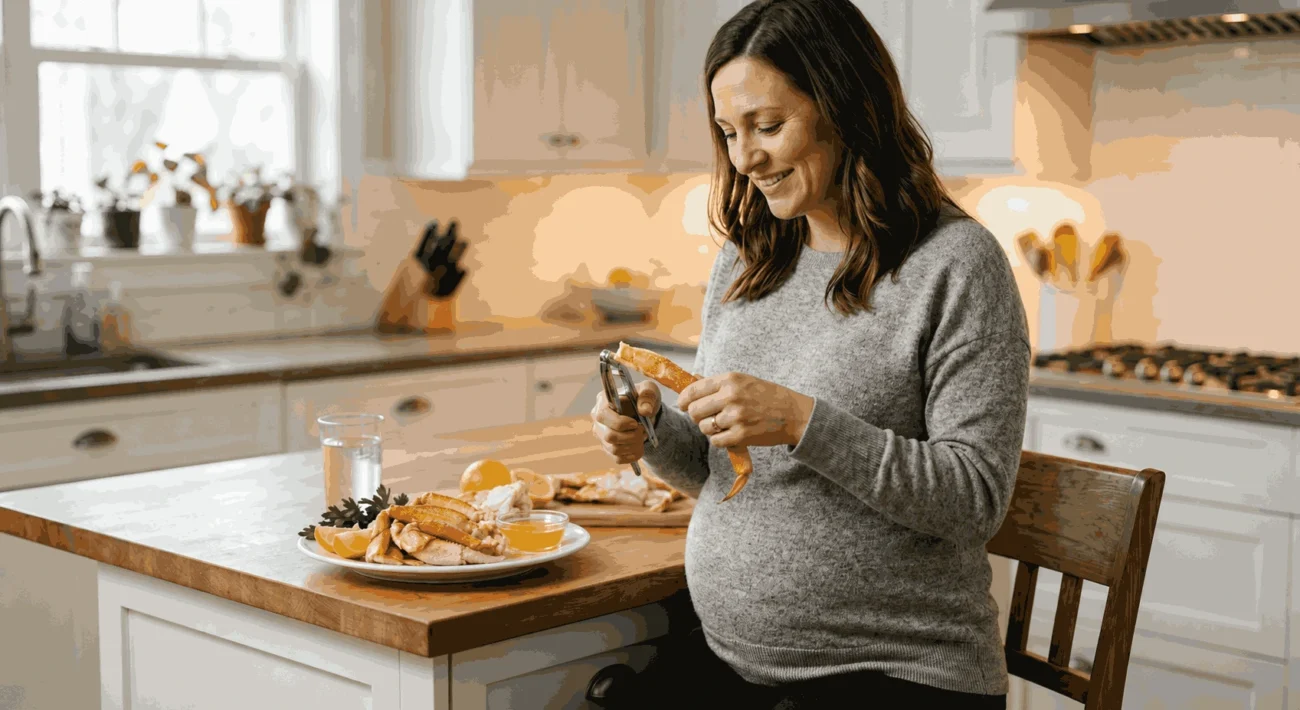
Quick answer: Yes, you can eat crab while pregnant. In fact, real crab is an excellent source of protein, zinc, and omega-3 fatty acids, which are vital for fetal development. However, safety is key: it must be fully cooked to an internal temperature of at least 165°F (74°C) to eliminate the risk of foodborne bacteria. Always avoid raw or undercooked crab, and be cautious of cross-contamination in restaurants and seafood boils.
Pregnancy changes the way you look and the food; it comes with many restrictions to keep the child safe and make the journey smooth. If you love seafood and are at a restaurant or a fish counter, you may be looking at the menu and have a question in mind. Can I eat crab while pregnant? Many women think the same in pregnancy about seafood because there are mercury-level warnings and fear of foodborne illness, so you aren’t alone. You don’t need to skip the seafood completely from your diet for the next nine months.
Crabs are one of the most nutrient-dense superfoods and a must to include in a pregnancy diet because they are full of specific zinc, vitamin B12, and selenium, which help in baby development. However, “real” and “safe” are two different things. To get full nutrition safely, you need to understand what type of crab you select, cook, and serve.
In this guide, you will get full detail about crab from nutritional benefits and restaurant scripts to home-kitchen safety standards so you eat every bite stress-free. Whether you are craving a fresh steamed crab leg or planning a safe way to attend a summer seafood boil, I have provided everything you need.
The Prenatal “Crab Safety” Quick-Reference
| Category | Safety Status | The Rule to Remember |
|---|---|---|
| Real Crab Meat | YES (Best Choice) |
Must be cooked to 165°F (74°C).
|
| Imitation Crab | Proceed with Caution |
High sodium/additives; eat only in moderation.
|
| Weekly Limit | Target |
8–12 ounces (224–340g) per week.
|
| Deli-Case Salads | AVOID |
High risk of Listeria; often sit in “danger zone” temps.
|
| Raw / Cold Shellfish | AVOID |
Never eat raw (sushi, oysters, ceviche).
|
| Restaurant Order | YES |
Only if served piping hot from the kitchen.
|
From Fancy Dinners to Quick Lunches: Why Crab Fits Into Every Phase of Pregnancy
Crab is on the list of few foods that are a part of celebratory dinners as well as midday meals. However, the safety of it depends on two things: the species you select and how the crab is made. Crabs are safe to consume in pregnancy because they have very low mercury levels.

Know Your Crab: The Top 5 Species
During pregnancy you have to be cautious, so you can’t just go for any crab. When you are choosing a crab, look for these species, as they are universally considered the best choice due to their low mercury level and good nutritional profile.
- King Crab: This is a luxury choice popular among people for large and meaty legs. King crab is very low in mercury (0.09 PPM) and high in protein.
- Snow Crab: This is the sweet choice that works best for steaming. Snow has a very low mercury (0.06 PPM).
- Blue Crab: This is the local choice, perfect for crab cakes and picking. Blue crabs also have low mercury (0.11 PPM).
- Dungeness Crab: This is the flavor choice. It also has low mercury (0.06 PPM).
- Stone Crab: This is the Premium Choice. It is often served as clams and is also low in mercury (0.06 ppm).
The Mercury Reality: Why Crab Is a Best Choice
The FDA and EPA have a list of best-choice seafood items that you can eat 2–3 times per week (8–12 ounces total). Crabs are also a part of the best choices because they have no risk to babies due to low mercury levels.
The Raw Caution: Why Undercooked Crab is a Pregnancy Risk
Cooked crab is completely safe to consume and has many benefits; however, raw or undercooked crab isn’t safe in pregnancy because when you are pregnant, the immune system undergoes many changes to make sure the body doesn’t reject the fetus, which makes you more vulnerable to foodborne illnesses.
The Vibrio Bacteria Threat
Vibrio is a genus of bacteria commonly found in coastal waters where crabs live. Unlike some other bacteria, Vibrio thrives in shellfish.
Why it’s dangerous: If Vibrio goes into the body, it can cause severe gastrointestinal distress, including violent vomiting, diarrhea, and abdominal cramps. If a pregnant woman faces these symptoms, it results in dehydration, which can trigger contractions or compromise blood flow to the placenta.
The Systemic Risk: In rare cases, this bacteria can enter the bloodstream, posing a danger to both the mother and the child. This is why pregnant women should avoid consuming raw crabs.
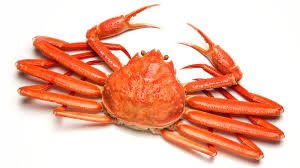
Why is Real Crab a Prenatal Superfood?
Real crab is full of nutrition, a perfect food in pregnancy. It is not like the red meats that take a long time to digest or high mercury, like other seafood items have. Crab provides a dense concentration of brain-building nutrients. Following are the nutrients found in crab.
Zinc (The Growth Architect): Crab is rich in zinc. This mineral is important for DNA synthesis, and rapid cell division happens in babies every day. Zinc also plays an important role in maintaining the immune system.
Vitamin B12 (The Nervous System Support): You can get the required amount of B12 a body needs from a single serving of crab. B12 is important for the development of a baby’s central nervous system and production of red blood cells.
Selenium (The Antioxidant Shield): It is important for thyroid function and helps in protecting cells from oxidative stress.
High-Quality Lean Protein: The body needs more protein in pregnancy because it has to support the placental growth and fetal tissues.
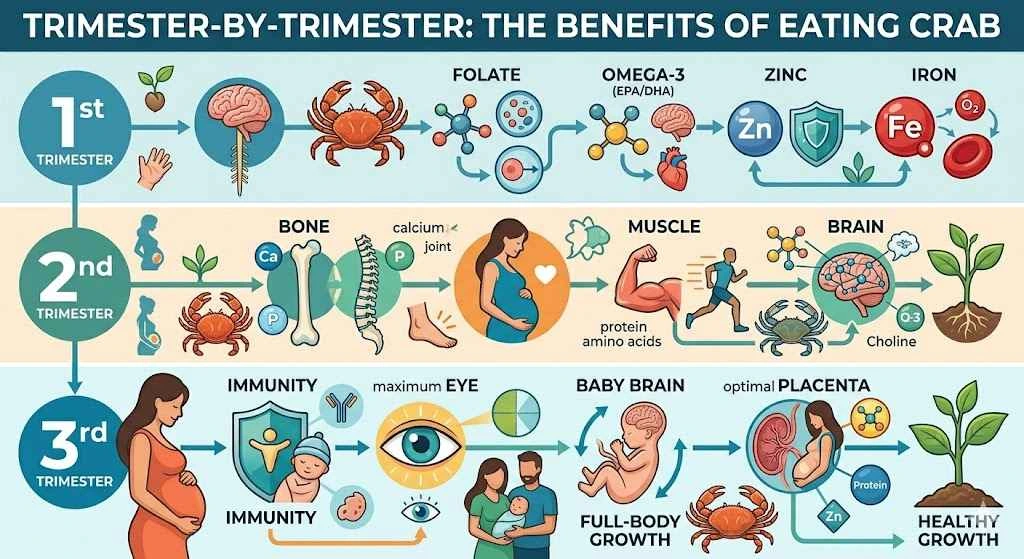
What are the benefits of eating crab? (Trimester-by-Trimester)
First Trimester (The Nausea-Friendly Protein)
Many women face nausea while making or even eating meat because of the smell in the first trimester. Crabs are smell-free and have a delicate texture that pregnant women tolerate easily. The B12 component in it helps to overcome fatigue that is very common in the first 12 weeks.
If you are struggling with morning sickness, then keep pre-cooked, cold, and pasteurized crab meat. You can just toss it in a simple salad with olive oil and lemon juice. No trouble or kitchen efforts needed.
Second Trimester (Fueling the Growth Spurt)
This is the time when a baby’s skeletal system and brain start growing fast. The zinc helps in this growth, and the protein helps the body to handle the increased demand for blood volume expansion. Both these nutrients are in crab; that’s why crab is a good option in pregnancy.
For dinner you can eat grilled or steamed Dungeness. You can also go for the king crab dish; it has a good dose of vitamins.
Third Trimester (Managing Inflammation & Energy)
When you enter the final trimester, the body needs magnesium. Crabs are rich in this nutrient, so it helps in reducing leg cramps and soothing tired muscles. Crab also keeps your blood sugar stable, which is necessary in the last trimester.
To avoid high sodium intake, you can avoid salty deli meats or heavy, processed snacks. If you want to get the same amount of protein as meat, eat fresh crab. Also, it is better for digestion.
Nature’s Seasoning: Flavoring Crab Without the Salt
In pregnancy many women face edema, and the major reason behind it is high sodium intake. Crab is naturally delicious, but many store-bought seasonings and restaurant butter sauces have a high amount of sodium. To get full nutrition and prevent high sodium intake, you can eat crab with some amazing tips as follows:
The Citrus Zest: Use fresh lemon or lime juice. Lemon is acidic in nature, so it will cut through the richness of the crab and make it more flavorful.
Herbal Infusions: You can pair fresh dill with crab to get a refreshing taste.
Aromatics: Take a pan, add a small amount of extra virgin olive oil, and then sauté garlic or shallots in it until they become golden brown in color. Add the mixture into the crab; this will give you full flavors without adding salt.
Seafood Boils: How to Safely Enjoy Them During Pregnancy
Seafood boils are fun social events. And you can have fun with a group of people. But in pregnancy the safety rules are needed. I’m not saying you should skip seafood boils completely, but you must be proactive.
The Steaming Hot Rule: Never eat crab that has been sitting on a table for hours. Only eat crab if they serve you steaming hot. Heat is your partner in pregnancy, as it kills the bacteria.
Avoid the Shared Pot Risk: In restaurants the creators often add raw shrimp, crawfish, and crab that are dumped into the same crab water but at different times. If you are eating at a restaurant, make sure to ask the server: Can you please have the kitchen prepare my portion of crab in a separate, clean pot, or ensure it is the first item added to the boil? Before ordering.
Another way to ask at a restaurant: I am pregnant and have to be very careful with food safety. I’d love to order the crab, but I have two quick requests: Can you please ask the kitchen to ensure it is cooked fresh and served steaming hot? Can you make sure it is prepared on a clean surface away from any raw shellfish to avoid cross-contamination? I’d really appreciate it!
Skip the Communal Dump: Some places also do a traditional dump of seafood onto the paper at the table to provide an amazing experience; however, it is also not safe in pregnancy because there is a chance of cross-contamination from raw ingredients and from a surface that is shared by many people. You can completely avoid it or request the server to give you crab on a separate plate.
Prioritize the Crustaceans: Crawfish, crab legs, and shrimp are main elements of a seafood boil; however, crawfish and shrimp have a higher risk of bacterial contamination than large crab legs do. If you are pregnant, only eat large carb legs; skip the two other items.

The Kill Protocol: Pathogen & Safety Standards
As we discussed earlier, in pregnancy, the immune system naturally adapts to protect the baby, which makes you vulnerable to foodborne pathogens, so just-cooked food doesn’t match the safety standard in the kitchen or even in the restaurant. You need to follow kill protocol, an approach to temperature and preparation that makes your crab free from bacteria and safe to consume.
Why Cooked Isn’t Enough: Understanding the 165°F (74°C). Safety Threshold
Many people have the misconception that if the crab leg is pink or red, it is cooked.
In food safety, “cooked” is a subjective term, but 165°F (74°C) is a scientific absolute. At this temperature bacteria like Vibrio get killed.
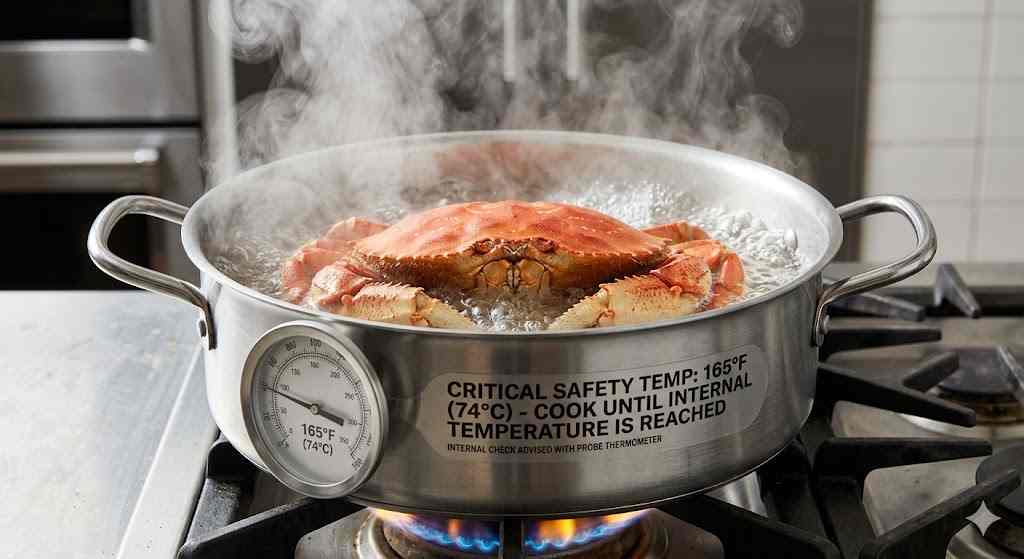
Surface heat isn’t enough. You need to make sure the thick part of the crab meat has reached the temperature of 165°F (74°C). To check this, use a digital food thermometer.
This is the temperature recommended by food safety authorities for poultry and shellfish because the bacteria can easily survive at a temperature of 140°F.
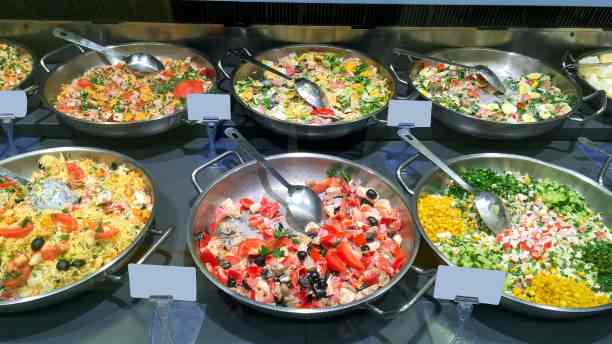
The Deli-Case Prohibition: Why You Must Avoid Pre-Mixed, Cold Seafood Salads
Freshly cooked crab is considered the best choice during pregnancy, but seafood salads found in supermarkets or deli counters have high risk. You should avoid them because of the following reasons.
The Listeria Factor: Listeria monocytogenes is a unique and dangerous bacterium; it can easily survive and multiply in places that are cold, moist, and dark, like deli cases.
The Hidden Age of the Product: Deli salad isn’t always fresh and made on the same day; it is prepared in advance, like 1 or 2 days back. During this time, the listeria can take hold and even grow more. The salads are served cooled so there is no chance to kill the bacteria by heating.
The No-Go Zone: Always avoid seafood salad, crab salad, or seafood dip from a grocery store grab-and-go case because you don’t know when the crab was cooked, when it was stored, or if it was handled properly or not. Especially in pregnancy, eat the crab you prepared or ordered fresh and hot.
How to Make Crab Safely at Home
Cooking crab at home is one of the safest ways and best things you can do in pregnancy because you have full control and knowledge of how it is made. To follow the Kill Protocol, use these steps:
The Boil Method: Use a large pot filled with water and bring it to a rolling boil (212°F / 100°C). Put your crab on and let it boil for 15 minutes or more based on size.
The Temperature Check: Insert a digital food thermometer into the thickest part of the crab meat so it reaches 165°F (74°C).
Surface Hygiene: Always wash your hands before and after touching the crab and clean the surface and all the equipment you used during the process.
Recipe Inspiration: A 10-Minute, Pregnancy-Safe, Low-Sodium Crab Salad
If you are looking for a lunch that is light and doesn’t include heavy mayo and high sodium of store-bought versions, then this recipe is highly recommended for you. The recipe has fresh, vibrant aromatics to highlight the natural sweetness of the crab While keeping the sodium intake very low.
Prep Time: 10 minutes when you use pre-cooked, chilled, or fresh-steamed meat.
Ingredients
- 1 cup cooked, flaked real crab meat
- 1 tbsp high-quality extra virgin olive oil
- 1 tbsp fresh lemon juice
- 1 tsp fresh dill, finely chopped
- 1/4 small cucumber, finely diced
- A pinch of cracked black pepper
Instructions
Place your cooked crab meat into a bowl, then gently flake it with the help of a fork. Make sure it is opaque and firm. If you are using store-bought pasteurized crab, then verify the container was sealed and not open from any side before you opened it.
On the other side, take a small cup, add olive oil and fresh lemon juice, and mix well. This way you create a light, heart-healthy dressing, a perfect replacement for high-sodium mayonnaise.
On the crab bowl, add cucumber and fresh dill. Lastly, pour the olive oil dressing you made and toss all the ingredients. Serve immediately over a bed of fresh greens.
How to Spot Safe Crab at the Fish Counter
When shopping for seafood, your eyes and nose are the best tools. Follow this 3-point plan before you buy:
The Smell Test: Fresh crab smells like the ocean, so if you are buying crab and notice any sour, ammonia-like, or fishy odor, don’t buy it. Ammonia is a sign meat is not fresh.
The Visual Check: The meat should look tight and firm, but if it looks mushy or watery, this means the crab is not fresh; the seller froze it.
The ice bed: Before buying, make sure the crab is displayed on a bed surrounded with fresh and melting ice. If the ice looks dirty or if the crab appears warm when you touch it instead of cold, avoid it.
Safe Handling & Storage: The 24-Hour Rule
Even if you cooked the crabs properly, safety doesn’t stop there; if you have leftovers, then you need to manage them strictly too so there is no chance of bacterial growth.
The Two-Hour Window: Never place the cooked crab for more than 2 hours at room temperature; if it’s a hot day, reduce the hour to 30 minutes because if the crab stays outside for a long time, there is a chance of bacterial growth.
The 24-Hour Rule: For more safety, consume the leftover crab within 24 hours. While the guidelines also suggest 48 hours, in pregnancy the 24-hour rule works best for you.
Storage Protocol: Always store the leftover crabs in an airtight container and place it at the back of the fridge, which is the coldest part. When you want to eat it and go for reheating, make sure the temperature reaches 165°F all the way through before you take a bite.
Why do you want crab during pregnancy?
Suddenly many pregnant women start to get obsessed with salty food items or flavored ones like crab. While we attribute cravings to a pregnancy symptom that occurs due to hormonal changes, there is actually a physiological explanation for the craving for crabs that is more than just hunger.
In pregnancy, the thyroid gland works 50% more to produce the hormones that are important for the baby’s brain and nervous system development. Iodine is a fuel for the thyroid, so when you eat real crab, your body sends a craving signal to make sure the thyroid is getting enough iodine. The body needs more electrolytes and minerals, including sodium and potassium, so you crave salty items.
Medical Disclaimer: This content is for informational purposes only and is not a substitute for professional medical advice, diagnosis, or treatment. Always seek the advice of your obstetrician or qualified healthcare provider with any questions regarding your health or dietary needs during pregnancy. Never disregard professional medical advice or delay in seeking it because of something you have read here.
The Pregnancy Portion Protocol: How Many Crab Legs Can You Eat?
Crab legs are a low risk and high-reward staple. As we discussed earlier, the crab is ranked as a low-mercury seafood item by the FDA and EPA; it is also considered a best-choice food. You can confidently eat it as a consistent part of a weekly rotation.
The Gold Standard Weekly Goal: According to the clinical guidelines, it is advised to eat 8 to 12 ounces (224 to 340 grams) of low-mercury seafood per week. A single crab is 4 ounces (113 grams) of extracted meat. This means you can eat 2 to 3 servings of crab per week.
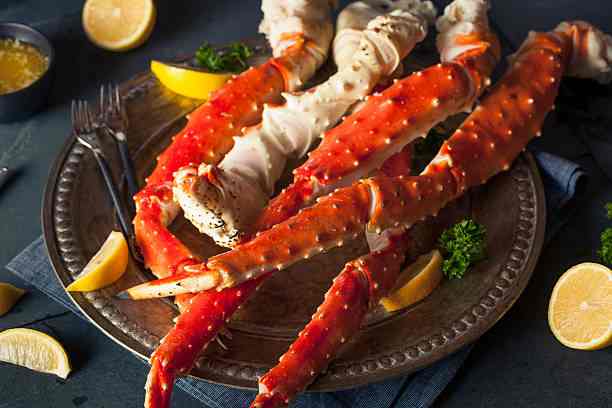
If you are eating crab legs for dinner and are confused about how much you can eat, don’t worry; you can eat one to two large meaty legs. This will give you a 4-ounce serving of meat.
The Strategic Intake Approach: If you enjoy a larger portion of crab at a special dinner, then you likely hit 6 or 8 ounces in one sitting; however, you don’t need to worry because crab is low in mercury, so occasionally eating a heavy meal will not make it dangerous.
Consider crab intake as a building block. If you are eating a 4-ounce serving of crab, you get a good amount of zinc and B12 for the week, so eat other items the next few days, like wild salmon for omega-3s or shrimp for lean protein.
Remember crab legs are basically protein and water. It can give you a physical filling, but it is lower in calorie density than other meats.
The Global Safety Verdict: What Food Authorities Really Say
According to the U.S. Food and Drug Administration (FDA), crab is the best choice food item during pregnancy because it has low mercury as compared to shark, swordfish, or tilefish.
According to Dietary Guidelines for Americans, seafood that is high in nutrition is recommended during pregnancy.
Seafood Intake Calculator: Track Your Weekly Allowance
Weekly Seafood Tracker
Frequently Asked Questions: The Definitive Guide to Crab During Pregnancy
1. Is it safe to eat crab or lobster while pregnant?
Yes, because both are classified as the best choice by the FDA, as they are low in mercury content. Crab and lobster are excellent sources of protein and essential minerals. The safety risk is based on how they are prepared. They must be cooked at an internal temperature of 165°F (74°C) to kill Listeria and Vibrio.
2. Can I have crab in my first trimester?
Yes, you can eat crab during the first trimester, as it is a clean protein. Not like chicken or beef, which cause nausea in the first trimester. Crab supplies B12, which helps to fight tiredness. Appears at the start of 12 weeks.
3. Can I eat crab rangoon in pregnancy?
Yes, crab rangoon is made from a deep-fried cooking method that may kill bacteria, but it is loaded with salt and cream cheese; excessive sodium can make swelling severe in pregnancy. You can enjoy them as an occasional treat rather than a daily protein source.
4. Can I eat crab cakes in pregnancy?
Yes, but you have to be careful if you order them in a restaurant; make sure to order a piping hot one. Never eat the crab cakes you find at a grocery store or deli counter, as they can have the risk of listeria due to being pre-mixed and stored in certain conditions.
5. What types of shellfish should be avoided in pregnancy?
Avoid everything that is raw like oysters, clams, scallops, ceviche, and any sushi containing raw shellfish. All these raw items contain a high risk of bacteria. Eat fully cooked crab, lobster, and shrimp.
6. What’s best to eat, real crab or imitation crab?
Real crab is best in pregnancy, as it is rich in zinc, B12, and selenium. Imitation crab (surimi) is a processed product made from starch and fish paste with additives. It is also safe to eat in pregnancy, but it offers little nutrition as compared to real crab.
7. Should I avoid real crab in the first trimester and switch to imitation?
No, if you are struggling with severe nausea and can only tolerate imitation crab, then you can eat it in moderate amounts. If you can tolerate crab in the first trimester, then eating it is the best choice.
8. Is canned crab meat safe?
Yes, it is safe if it is pasteurized, shelf-stable, and sealed. Once you open the can, you need to treat it like fresh meat stored in the coldest place and consume it in 24 hours. Never eat canned crab that has been sitting in the fridge for multiple days.
9. What is faux crab in supermarket salads?
Faux crab is a mixture of pulverized pollock fish, binders, sugar, and preservatives. While the foe isn’t dangerous, the salad is. Salads stay in cold cases where Listeria can multiply. It is better to avoid eating faux salad in pregnancy.
10. How can I tell if restaurant crab is safe?
Observe the crab is steaming hot when it arrives. Avoid eating crab that is kept at room temperature. If the meat feels mushy instead of firm or it has an ammonia smell, return it immediately.
11. Is cooked spicy crab safe?
Yes, it is safe; the spices like chili, garlic, and ginger won’t affect the safety of the crab. If you are a spice lover, then you can eat it without the need for extra salt; just make sure the crab has to be cooked at an internal temperature of 165°F.
12. Does freezing crab legs affect their safety during pregnancy?
Freezing is actually a safety tool; the commercial freezing of crab takes place at ultra-low temperatures that kill the bacteria. The only risk is if you thaw the crab improperly. Always thaw crab in the refrigerator or in cold running water. Cook the crab immediately after it is thawed.
13. Why does my doctor/midwife sometimes say to avoid all shellfish just to be safe?
They say to avoid eating all shellfish so you won’t accidentally eat raw shellfish. If you have good knowledge about killing protocols (cooking to 165°F), you can follow the recommendations for cooking temperatures provided by the FDA/EPA to make crab safe.
14. Can I eat crab from a buffet?
Proceed with extreme caution. Buffets are risky in pregnancy because food often sits in the danger zone of 40°F–140°F for hours. If you have no other option and need to eat at a buffet, then make sure to only eat crab that has been kept on a constant heat warmer or is coming out from the kitchen in steaming-hot portions. If the crabs look unappealing, avoid it.
15. I’m allergic to iodine; can I still eat crab?
No. Crab is a concentrated source of natural iodine. If you have a diagnosed iodine allergy, you must avoid all crab and most other seafood, as these typically trigger allergic reactions.
16. What if I accidentally ate lukewarm crab? Should I be worried?
First of all, don’t panic, as foodborne illness is a risk, not a compulsory thing. See how your body reacts if you see symptoms like fever, diarrhea, or severe stomach cramping over the next 48 hours, and then go to the doctor; if not, then you are completely fine.
17. Is blue crab safe to eat during pregnancy?
Yes, in fact, blue crab is one of the most famous types of crab in the USA and safe to consume. It is small in size and more flavorful as compared to king crab. Just follow the same cooking rule of 165∘F.
18. Are crab-flavored snacks (like chips or crackers) safe?
Yes, crab-flavored snacks (like chips or crackers) are completely safe to eat if you don’t have any existing allergies. While they don’t have the risk of bacterial or mercury risk, they are high in sodium, so make sure to eat them as an occasional snack. Don’t consider them for prenatal nutrition.
19. Can I eat crab from a local, non-commercial fisherman?
You need to be very careful, as local waters can have advisories for pollutants like PCBs or high mercury that commercial fisheries do not. Before eating locally caught crab, do check your state’s Department of Natural Resources or environmental protection website for local fish consumption advisories. If you can’t find anything like that in your state, then avoid it.
20. How can I tell if the crab has been “re-frozen”?
If you are buying crab legs, then make sure the meat should not have the large ice crystals inside the shell, and the meat should not appear grayish or translucent. If you find the legs slimy or have a bad smell, then ignore it.
