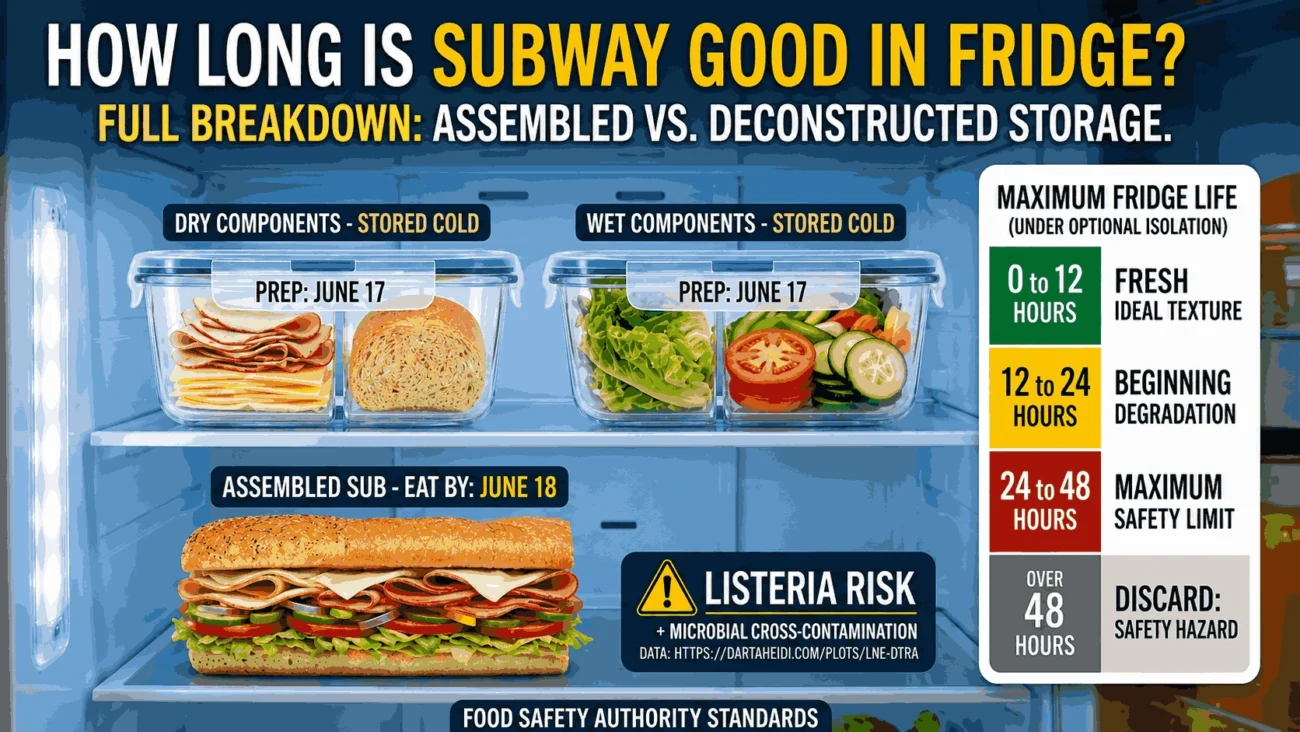
Quick answer: A Subway sandwich is generally safe to eat for up to 24 to 48 hours if kept refrigerated at or below 40°F (4°C). However, for the best taste and texture, it is recommended to eat it within 12 hours. If the sandwich has sat at room temperature for more than 2 hours, it must be discarded due to the risk of bacterial growth. To keep it fresh, remove it from the original paper, place it in an airtight container, and keep sauces separate.
At midnight, you suddenly feel hungry and consider eating the half-eaten footlong sub in the fridge; for a moment, you wonder, how long is subway good in fridge? We all get hungry at night, and whatever we find in the fridge, we think the same. The fear of a soggy and unappetizing meal, which can lead to food poisoning, stays there. The subway sandwich is a complex, high-moisture product that requires more than just a quick toss in the crisper drawer to stay safe and tasty.
In this guide, we will look deeply into the topic by looking at the food science behind why a Subway sandwich lost its crisp and the bread became soggy and what the critical danger zones for bacterial growth and professional tips to store it are. Whether you are trying to pack a leftover sub for tomorrow or eating the leftover at home, here is exactly how to manage the sub so it stays fresh, crisp, and safe.
| If your sub has… | Fridge Life (Max) | Action Required |
|---|---|---|
| No Sauce / Veg | 48 Hours |
Seal in airtight container.
|
| Mayo / Dressing | 12 Hours |
Remove dressing or discard.
|
| Tomatoes / Cukes | 12 Hours |
Must be removed to prevent mush.
|
| Meat / Cheese Only | 48 Hours |
Airtight storage is critical.
|
The Science of the Subway Lifecycle
Every Subway sandwich is made fresh, which makes this product appealing, and everyone eats. When Subway is made fresh, it is a safe and nutritional meal, but when it leaves the controlled restaurant environment, it begins a rapid, irreversible countdown.
Subway doesn’t behave like a sealed bag of pasta or can of soup; they stay fresh because they don’t have many elements, whereas Subway sandwiches have a multi-component system.
When the sub is made, the server combines fresh, moist vegetables, deli-sliced proteins, and sauces on a porous bread base. All these components together make a complex ecosystem. While the sandwich tastes fresh and amazing at the counter, later this moist environment in the sandwich can be a place for bacteria like listeria.
Why Proper Storage Matters: The Bacterial Clock
Many people have the misconception that placing a sub sandwich in the fridge can keep it safe for a long time; however, it is not true. Even some bacteria can still grow in the fridge. It only slows it down.
The Difference Between Safe and Stable
It’s important to understand that safe doesn’t mean stable. “Safe” refers to the absence of bacteria that leads to food poisoning. “Stable” refers to the structural and sensory quality of the food.
Bacteria like Staphylococcus aureus or Listeria easily live in sandwiches and can multiply if the temperature is between 40°F and 140°F (Danger Zone). When you put a sandwich wrapped in moisture-trapping paper in the fridge, bacteria can grow easily in the cheese and meat inside the Subway sandwich.
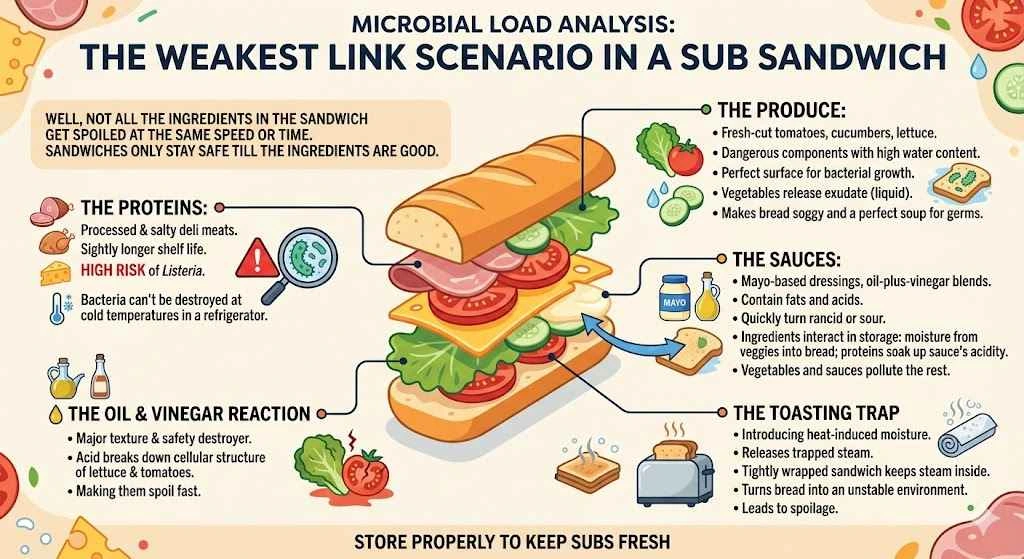
Microbial Load Analysis: The Weakest Link Scenario
Well, not all the ingredients in the sandwich get spoiled at the same speed or time. This can be a weak point in sandwiches: they only stay safe till the ingredients are good.
The Proteins: Subway and other sandwich chains use processed and salty deli meats, which give sandwiches a slightly longer shelf life; however, they also have a high risk of bacteria like listeria. This bacteria can’t be destroyed at cold temperatures in a refrigerator.
The Produce: Vegetables like fresh-cut tomatoes, cucumbers, and lettuce are dangerous components, as they have a high amount of water and take the place of the meat. A perfect surface for bacterial growth. All the vegetables release exudate, the liquid that makes bread soggy and a perfect soup for germs.
The Sauces: The sandwich also has mayo-based dressings or oil-plus-vinegar blends that contain fats and acids, quickly turning rancid or sour. When you store a sub full of all these ingredients, they interact; the moisture in the vegetables goes into the bread, and protein items soak up the sauce’s acidity.
The vegetables and sauces pollute the rest of the sandwich. To keep subs fresh, it is important to store them properly.
The Oil & Vinegar Reaction: This component is a major texture and safety destroyer. The oil and vinegar dressing added in subs is acidic; with time, this acid breaks down the cellular structure of lettuce and tomatoes, making them spoil fast.
The Toasting Trap: If the sandwich is toasted at the store, then you have to introduce heat-induced moisture. Toasting can make bread more perfect to eat, but it also releases trapped steam. At that time, if you wrap the sandwich tightly, steam stays inside and turns the bread into an unstable environment, which leads to spoilage.
The Precise Timeline: When Does Your Subway Sandwich Actually Expire?
Understanding how long a sandwich lasts is important since Subway sandwiches are highly customized and prepared in an open kitchen environment, so their shelf life is shorter than other pre-packaged food items. To manage your leftover sub safely, you need to follow three main rules.
The 12-Hour Quality Peak
The sandwich is safe to eat in this timeline, but the quality starts losing. In 12 hours the structure of the sub starts to fail, meaning the bread starts to lose the crusty texture, the lettuce becomes too wet, and the sauces start getting absorbed by the bread, which makes the sandwich taste and structure less appealing as compared to a fresh one. If you love subs because of their flavors and crunch, then you must eat them within some hours before the 12-hour window.
The 24-Hour Safety Cutoff
It’s not just about Subway sandwiches; in fact, for every sandwich that has moisture elements like sliced tomatoes, cucumbers, pickles, or mayonnaise-based sauces, it needs to be eaten in 24 hours. The main reason is
These high-moisture ingredients introduce water activity in sandwiches where Listeria can multiply. Even by the 24-hour mark, the sandwich in the refrigerator is still a perfect place for bacterial growth, making these ingredients no longer safe to consume.
If your sub is fully loaded with vegetables, only then treat it as a day-old item so you don’t face any digestive issues.
The 48-Hour Hard Limit
If the sandwich is based on bread, cheese, and cured meat and there are no vegetables or sauces in it, then you can eat it within a 48-hour window. After this limit, don’t eat it because Listeria monocytogenes genes are a serious concern. You may find the sandwich has no visible sign of spoilage after the time limit, but listeria still exists there because it doesn’t produce any foul odor, change the color of the meat, or make the bread slimy.
The Car Rule: The 2-Hour Danger Zone
All the timelines mentioned are for the sub you eat at a restaurant and take the remainder at home directly into a refrigerator. However, if your sandwich sits in a hot car or kitchen counter for more than 2 hours at 40°F to 140°F (4°C to 60°C), then the rules change. Because when food sits out in this room or in a hot temperature for hours, the bacteria can double every 20 minutes. By the time you put it into the fridge, the bacteria already take place in high amounts to cause food poisoning, so the fridge won’t help. If you have doubt that you put the sub late in the fridge, then it’s best to discard it because the cost of a new sandwich is still less than the cost of medicine.
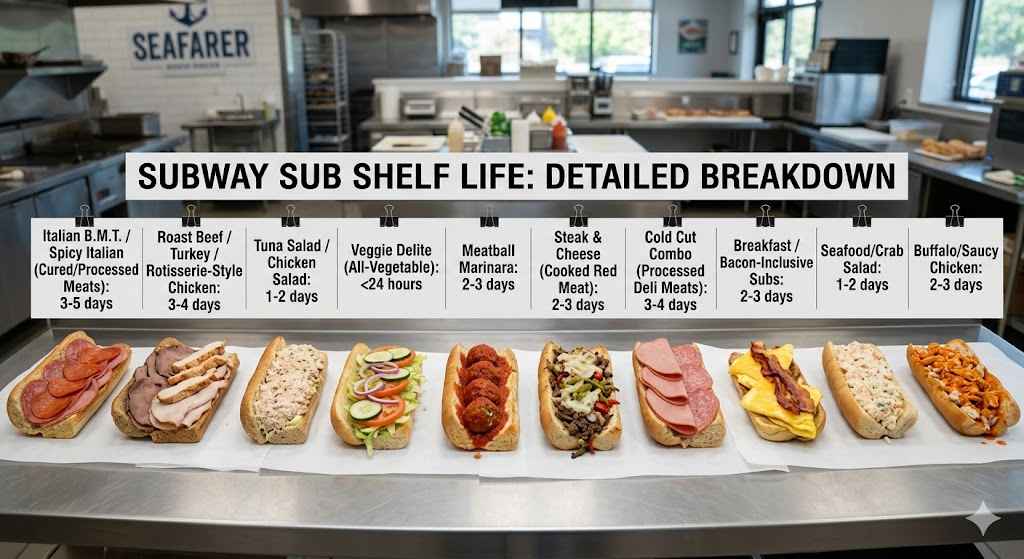
Subway Sub Shelf Life: Detailed Breakdown
Italian B.M.T. / Spicy Italian (Cured/Processed Meats): Subs fall into this category and last for 3 to 5 days because they are based on dry-cured meats like salami and pepperoni, which have higher curing agents, so they have a more stable life as compared to fresh roasted options. However, the problem of the soggy factor remains the same, so if you want to avoid it, eat the sub in 24 hours.
Roast Beef / Turkey / Rotisserie-Style Chicken: These subs last for 3 to 4 days because they are high-moisture proteins that can be the main target of listeria.
Tuna Salad / Chicken Salad: These should be consumed in 1 to 2 days because there is an involvement of mayonnaise, and the high water content of the salad base is a perfect place for bacterial growth.
Veggie Delite (All-Vegetable): These subs last longer than 24 hours because there is no protein source in the sandwich, so the water from vegetables like tomatoes and cucumbers can directly go into the bread and make it soggy.
Meatball Marinara: This should be eaten in 2 to 3 days because the marinara sauce adds significant moisture that causes the bread to be soggy.
Steak & Cheese (Cooked Red Meat): These need to be consumed within 2 to 3 days. While the steak itself cooks well at high heat, the combination of cheese and moisture from peppers or onions makes the sandwich spoil faster than a turkey or roast beef one.
Cold Cut Combo (Processed Deli Meats): These typically last for 3 to 4 days, similar to the B.M.T., due to the processed nature of the meats like bologna, ham, and salami. They have high sodium, which provides a longer window for safety.
Breakfast / Bacon-Inclusive Subs: These are best to consume within 2 to 3 days. While bacon is cooked and preserved well, fat content is susceptible to oxidation, which can negatively affect flavor and texture even if the sub is technically safe to eat.
Seafood/Crab Salad: These need to be consumed in 1 to 2 days because seafood salads are highly perishable due to the involvement of protein moisture content; they can be an ideal place for bacteria.
Buffalo/Saucy Chicken: These last for 2 to 3 days. The added vinegar or spicy sauces in these preparations introduce extra acidity and moisture, which may inhibit some bacteria but significantly accelerates the softening of the bread.
How to Store a Sub for Maximum Longevity
If you want to keep your sandwich safe for a long time, then you must do more than just depend on storing it in the refrigerator. You need to save the sandwich from moisture migration and oxidation. Follow these professional protocols to maintain the structural integrity and safety of your meal.
1. Immediate Unwrapping: The Paper Problem
The paper wrapper given with the sandwich is made for short-term transit, not for long-time storage. It helps the steam escape from the sandwich, but inside the fridge it does the opposite. It acts as a trap to keep condensation against the bread and creates a space for moisture.
It is a best practice to throw out the sub once you reach home because if you put that sub with paper in the fridge directly, it can lead to fast spoilage and sogginess.
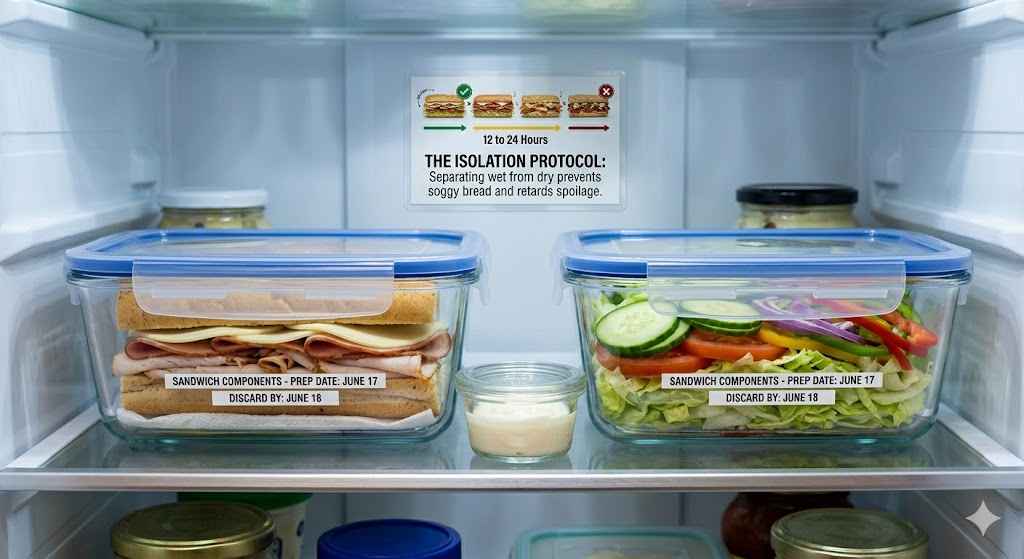
2. The Deconstruction Protocol: Isolating the Components
To make sandwiches fresh and safe longer, you can separate the ingredients completely. Remove all the high-moisture items like tomatoes, pickles, cucumbers, and any leafy greens, then place them in a separate airtight container.
The Dry Layer: Keep dry items like meat, cheese, and bread together because protein won’t make the bread soggy like vegetables do.
Reassembly: When you want to eat the sub in a few hours, then reassemble the separate items together again. This will keep the texture same as when you bought it.
3. The Airtight Protocol: Controlling the Micro-Environment
Oxygen is a primary reason for oxidation, which can spoil the lettuce, turn it brown, and cause deli meats to lose their juicy flavor.
The Container Choice: Make sure to use a glass container that has a silicone gasket seal because glass doesn’t let the odor enter the food from other items in the fridge, like a plastic one.
Volume Management: Always use the smallest containers for your items that are in the sub because the large container is filled with excess air, which lets oxidation take place and spoils the ingredients fast.
The Ziploc Displacement Hack: If you only have a bag, then use the water displacement method. Place the sandwich in the bag, then slowly dip the bag into water. Make sure to keep the opening out of it. The water pressure will force the air to leave the bag so you can seal it completely airtight before pulling it out.
4. Humidity Control: The Paper Towel Desiccant
Even if you are using an airtight container, the residual moisture can still take place in bread. To solve this problem, place a dry and lint-free paper towel (folded) inside the container. The paper towel will work as a food-grade desiccant that keeps any micro-droplets of condensation away, keeping the bread texture crispy.
5. The Fridge Map: Strategic Placement
Storage is a half part to keep a sandwich good in the fridge; the other half is based on where you place it in the refrigerator.
I always recommend this in every nutritional blog: keep food containers in a place that has a good cooling environment, like the middle or bottom shelf toward the back rather than on the fridge door because the temperature of the door fluctuates every time you open it, so the food item won’t get enough cooling temperature.
The Rescue Mission: How to Revive a Cold Sub
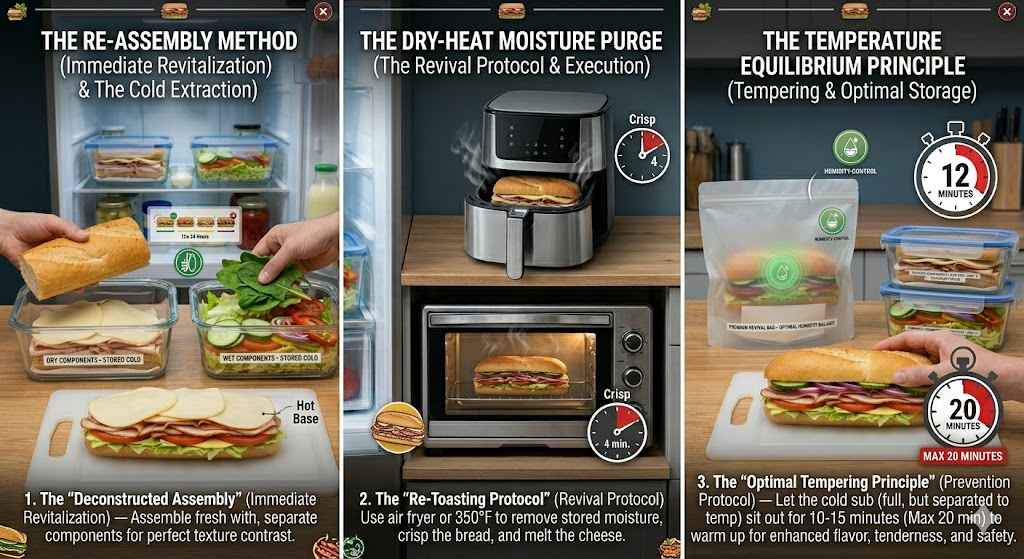
When you take out the cold sub from the refrigerator, you rarely deal with a fresh experience. Due to the cold temperature, the bread looks firm, the meat looks waxy, and the overall texture looks lackluster. Many people make the mistake of quickly putting the cold sub in the refrigerator; this makes the sandwich condition bad because the microwaves depend on water-molecule excitation, which leads the bread to turn into a steaming, gummy, and eventually rock-hard mess. To successfully make your sub ready to eat again, you can follow the Dry-Heat Rejuvenation Protocol.
1. The Pre-Heat Separation
Before applying any heat, you must strip the sandwich down. Don’t assemble it and then heat it. Keep lettuce, spinach, tomatoes, cucumbers, and peppers aside because if you heat the sub with these items, they lose the crunch and become soggy too.
The Hot Base: Just heat the toasted bread, meats, and cheeses because these can handle heat.
2. The Dry-Heat Execution
Use an oven or air fryer to restore the sandwich texture; avoid the microwave.
Temperature Setting: Preheat your oven or air fryer at 350°F (175°C).
The “Crisp” Cycle: Place the meat and bread into the oven or air fryer and let them heat for 3 to 5 minutes.
Why it works: This is called convection (or radiant) heating, and it uses dry air to disperse the excess moisture that can build up in bread when it’s refrigerated.
3. The Temperature Equilibrium Principle (Tempering)
If you don’t want to heat the sandwich and prefer to eat it cold like some people do, then don’t eat it right after taking it from the fridge.
Let the sandwich sit outside for 10–15 minutes. This method will allow the chilled proteins to adopt the room temperature, which improves the flavor profile and tenderness.
Never exceed this recommended limit of 20 minutes because leaving a sandwich out for hours can make it a perfect place for bacteria growth. If you are not in a mood to eat the sub after 15 minutes, put it back in the refrigerator immediately.
Forensic Safety Check: When to Throw It Away
Don’t think that if you put it at the correct time in the refrigerator, it’s immune from spoilage because the spoilage is a biological process. Look for the following signs; if you find any, it means the sub is spoiled. Don’t eat it.
Iridescence & Sliminess: When the deli meats spoil, they show signs like they have a shimmering, rainbow-like sheen (iridescence), where definitely Listeria exists.
Produce Necrosis: If you notice the lettuce or spinach turns to a dark or bruised brown color, then it means they are spoiled and have E. coli and Salmonella.
The Off Odor: If you notice a sour smell, then it can be a sign of fungal (mold) activity. If you notice an ammonia-like scent, then it is a critical warning that protein has broken down; avoid eating it.
The Tacky-Gummy Scale: Run your finger on the bread; if it feels tacky, then it is not safe to consume even if you don’t see any mold. They may be present inside.
Medical Disclaimer: The information on Orangeparenting.com is for educational and informational purposes only and is not intended as medical advice. Always seek the advice of a qualified healthcare provider regarding any medical condition or dietary changes. Never disregard professional medical advice or delay seeking it because of something you have read on this website.
Clinical Consequences: What Happens If You Eat a Compromised Sub?
Eating a spoiled sandwich can lead to foodborne illness, so if you’ve already eaten a compromised sub, look for symptoms like nausea, violent abdominal cramping, vomiting, and acute diarrhea. They will surely appear in 6 to 48 hours once the sub is digested.
The symptoms may not appear quickly after consumption; that’s why most people don’t think the cause behind it is the sub.
When to Seek Urgent Care: If you are facing symptoms that are worse than simple digestive problems, like a high fever of 101.5°F (38.6°C), the presence of blood in urine or stool, dehydration, dizziness, blurred vision, and severe muscle weakness, immediately reach out to the doctor.
The Freezer Myth: Why It’s a No-Go
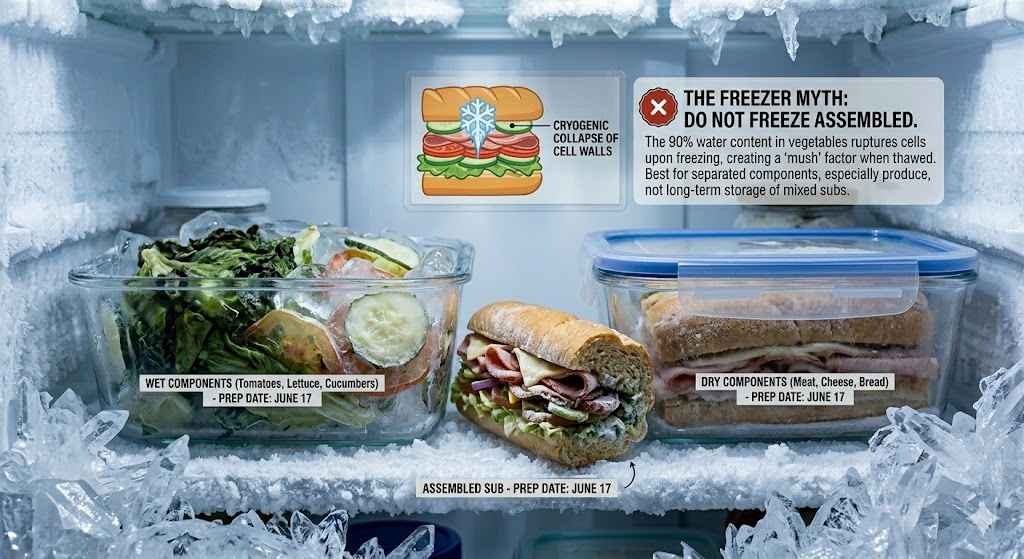
Freezing an assembled sandwich is a texture destruction event. The vegetables like cucumbers, tomatoes, and peppers are full of water content. When you freeze a sandwich that has these vegetables, the water forms ice crystals that expand the plant’s cell walls.
When you thaw the sub, these ice crystals melt, and the vegetables collapse completely, releasing all the water into the bread and making it soggy.
The sub is made from many components, so freezing it won’t work; it’s better to consume it within a 24-hour refrigerator window.
Pro-Tips for Future-Proofing Your Order
To avoid damage, you can change the ordering strategy:
The Deconstructed Request: Ask the sub maker to separately add sauces like oil, vinegar, mayo, and mustard in separate soufflé cups. This will save your bread from getting soggy if the order is delayed.
Strategic Veggie Selection: As we discussed earlier, all vegetables have different water activity levels. Ask the sub maker to add spinach, onions, and bell peppers to the sub, as they do not have high water content like cucumbers, lettuce, and tomatoes.
The Date-Stamp Hack: We often forget the time and date when we freeze or store any food item in the refrigerator, so use a sticky note on the storage container and write the exact time and date you store the item. This will help you to know if the sub is still safe to consume or if it’s better to throw it.
| Ingredient | Influence on Freshness | Pro-Tip |
|---|---|---|
| Lettuce | Fast wilting |
Keep dry; add fresh later.
|
| Tomatoes / Cukes | High moisture (soggy) |
Remove immediately for storage.
|
| Mayo | Bacterial risk |
Do not store >12 hours.
|
| Oil / Vinegar | Texture destroyer |
Always ask for “on the side.”
|
| Meat | Protein spoilage |
Must be kept in an airtight seal.
|
| Onions / Pickles | Flavor migration |
Their juices bleed into meat/bread.
|
Is a Leftover Subway Sandwich Safe for My Child’s School Lunch?
Giving a leftover Subway sandwich to your kids for lunch needs high caution because it’s very different from packaging lunch for yourself. Children have developing immune systems, which is why they are more susceptible to foodborne illness.
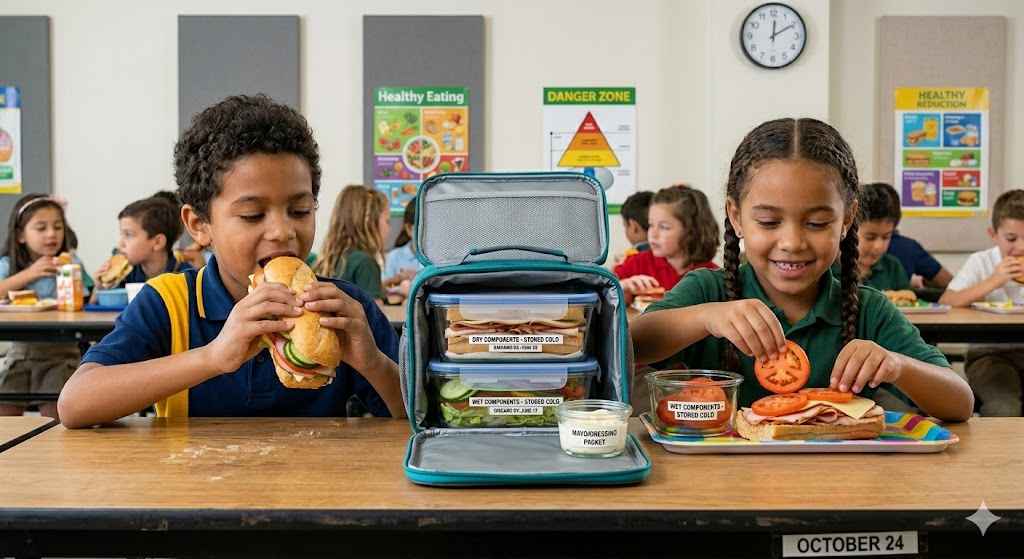
The lunchbox in a school environment sits in a backpack for hours without any refrigerating, so there is a high risk of bacterial growth. If you are giving subs to kids in school lunchboxes, then follow the steps.
- Thermal Insulation: You need to pack the sandwich with 2 frozen ice packs in an insulated lunchbox.
- The Discard Rule: If you kids take the sandwich back, discard it because it will surely go bad.
How to Pack a No-Soggy Sandwich That Kids Will Actually Eat
The primary reason why children come back with the same untouched sub at home is the texture. The sandwich may become soggy, limp, or tacky when they try to eat it at lunchtime.
To make it a lunchbox win, use the Assembly Required strategy.
- Pack components separately, like meat and cheese inside the bread in one airtight container and lettuce, tomatoes, and other veggies in a separate, small container or a silicone pouch.
- Give a small packet of mustard or mayo sauce so kids can add it easily at lunchtime.
- If your kid can’t assemble it, then you can use the shield method: place one layer of cheese, then a large lettuce leaf, so the moisture of the lettuce doesn’t go into the bread directly.
- Kids are more likely to eat veggies that are crunchy so you can avoid adding tomatoes and cucumbers for school. Give them bell pepper strips or spinach to add to the sub.
Is a Subway Sandwich Safe for a Child with Food Allergies?
The short, critical answer: Use extreme caution. Subway staff use the same knives, gloves, and cutting boards for every sandwich. A sub that may look allergy-free may have been in touch with allergenic items like gluten, dairy, soy, or nut proteins from the previous order.
The bread, meats, and sauces contain complex ingredients, so make sure to read the specific allergen guide on the franchise because you can’t guarantee safety.
Additionally, many schools have strict allergy awareness policies not to give your child a nut-based meal since you can’t verify the ingredients that can cross-contaminate levels at a fast-food counter, so avoiding Subway in a school lunchbox is the only thing you can do.
If your child has allergies, it’s better to give them homemade subs so you know the ingredients are not cross-contaminated with any other item.
Frequently Asked Questions (FAQs)
Can I freeze a fully assembled Subway sandwich?
No, freezing an assembled sandwich can cause the water in vegetables to expand, resulting in mushiness when thawed.
Is it safe to bring an unfinished school lunch back home?
No sandwich that spends a whole day in a lunch box enters a danger zone (40°F–140°F) and needs to be discarded ASAP.
Why is the microwave the worst way to reheat a sub?
Yes, because microwaves heat the sub unevenly and create steam, which can make bread soggy. Always use an oven or air fryer at 350°F for a dry-heat crisp.
Does toasting a sandwich at the restaurant make it safer for later?
Toasting causes steam, and if you wrap the sub tightly, the steam traps inside and creates an unstable environment perfect for bacterial growth.
What is the “Isolation Protocol”?
The practice of storing dry ingredients like meat, bread, and cheese together in one airtight container by keeping moisture-heavy vegetables in a separate, sealed container prevents sogginess in bread and the growth of bacteria that happens from storing all ingredients together.
How long can I safely leave a cold sub out to “temper” before eating?
You can let a sandwich sit at room temperature for 10–15 minutes to improve flavor, but never exceed 20 minutes before consuming or returning it to the fridge.
Why are tomatoes and cucumbers considered “high-risk” for lunchboxes?
Yes, because these vegetables have high water content and release liquid that works as a breeding ground for bacteria.
Is Subway truly safe for a child with food allergies?
Subway uses shared cutting boards, knives, and gloves so the risk of cross-contamination with common allergens like gluten or soy is very high, making it a risky choice for allergic children.
Why do mayo-based sauces reduce the shelf life of a sub?
Sauces containing fats and acids, when interacting with other ingredients, break down the structural integrity of the sandwich and can turn sour or rancid faster than dry components.
References & Sources
- USDA Food Safety and Inspection Service (FSIS) – “Keep Food Safe! Food Safety Basics”: This resource provides the foundational four guidelines (Clean, Separate, Cook, Chill) and an extensive cold storage chart for meats, poultry, and leftovers.
- FoodSafety.gov – “Cold Food Storage Chart”: A direct reference for specific shelf-life data for deli meats, prepared salads, and various leftovers in the refrigerator and freezer.
- FDA – “Safe Food Handling”: Official guidance on minimum internal temperatures for cooking and reheating, as well as the “two-hour rule” for perishable foods.
- FDA – “Are You Storing Food Safely?”: Consumer updates detailing the risks of Listeria in refrigerated ready-to-eat foods and why keeping the refrigerator at or below 40°F is critical.
- University of California Agriculture and Natural Resources – “Food Safety Facts Basics”: Provides additional clarity on handling deli products and vacuum-packed items, including refrigerator and freezer shelf-life timelines.
- Centre for Food Safety (Hong Kong) – “Sandwiches: Food Safety Guide”: Offers technical insights into the industrial storage of sandwich ingredients, the risks of bacterial growth in cut produce (like tomatoes and cucumbers), and proper display protocols.
