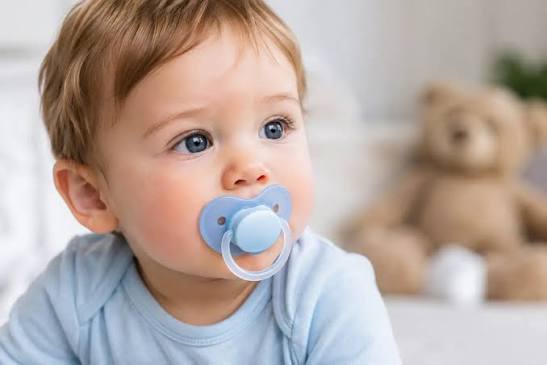
The best pacifier for oral development is not necessarily the one labeled “orthodontic.” The safer choice is a properly sized, one-piece pacifier that your baby accepts comfortably and a plan to limit prolonged, frequent use as your child grows. Design matters for safety and comfort, but duration, intensity, and age at weaning have a larger effect on developing teeth and bite.
Parents sometimes focus so much on choosing the perfect pacifier that they overlook two bigger oral-health issues: how the pacifier is used and what is put on it. Never dip it in honey, sugar, syrup, or other sweet substances. If you are already seeing white spots, brown areas, or cavities on baby teeth, learn about baby bottle tooth decay treatment rather than trying to manage the problem at home.
What “Oral Development Friendly” Really Means
A pacifier supports a baby’s natural need to suck and can be a useful soothing tool. It may also be offered for naps and bedtime as part of safe-sleep guidance. But no pacifier shape can completely prevent bite changes if a child uses it frequently and for a long time.
The practical goal is not to find a magic product. It is to choose a safe pacifier, use it intentionally, and begin reducing reliance before the habit becomes difficult to stop.
For one child, a standard nipple shape may work well. Another may prefer an “orthodontic” shape designed to sit flatter against the tongue. What matters most is that the pacifier fits the child’s age range, is intact, and is not used as a substitute for feeding, comfort from a caregiver, or a response to every moment of boredom.
What to Look for When Choosing a Pacifier
Use the manufacturer’s age guidance, but also inspect the product itself. A safe pacifier should be easy to clean, difficult to break apart, and appropriately sized for your baby.
| What to check | Why it matters | What parents should do |
| One-piece construction | Reduces the risk of pieces separating | Choose a durable, one-piece model when possible |
| Shield size and ventilation | Helps prevent the entire pacifier from entering the mouth and allows airflow | Look for a firm shield with ventilation holes |
| Age-appropriate size | Supports safe, comfortable use | Replace the pacifier as your child outgrows the listed stage |
| Soft, undamaged nipple | Worn material can tear or harbor buildup | Inspect regularly and replace if sticky, cracked, discolored, or torn |
| Easy cleaning | Pacifiers frequently fall or collect residue | Follow cleaning instructions and keep spare clean pacifiers available |
| Child acceptance | A rejected pacifier has no practical benefit | Do not force a baby to use a style they do not want |
An orthodontic-shaped nipple is not automatically better for every child. Parents should be cautious about claims that one design can “protect” the bite regardless of use. The way a child sucks, how many hours per day the pacifier is used, and how long the habit continues all matter.
The Timeline Matters More Than the Brand
A pacifier can be helpful in infancy, but the oral-development conversation changes as children get older. Prolonged non-nutritive sucking can affect the alignment of developing teeth and the shape of the dental arches. Potential changes include an anterior open bite, in which the front teeth do not meet, or a posterior crossbite, in which the back teeth do not align properly.
That does not mean every child who uses a pacifier will develop a bite problem. It does mean that parents should avoid treating prolonged use as harmless simply because the product is marketed as orthodontic.
A practical age-based approach looks like this:
- Infancy: Focus on safe use, cleaning, and avoiding sweetened pacifiers.
- Around the first birthday: Discuss pacifier habits and cavity risk during your child’s dental visit.
- Toddler years: Begin reducing use to sleep times rather than offering it throughout the day.
- By age 3: Work toward ending non-nutritive sucking habits, with support from your pediatric dentist if needed.
If your child is breastfeeding, discuss pacifier timing with your pediatrician or lactation professional. Once breastfeeding is well established, many families choose to offer a pacifier for soothing or sleep. The right timing can vary by family.
Avoid the Habits That Increase Dental Risk
A clean pacifier does not cause cavities on its own. Dental decay develops when teeth are repeatedly exposed to sugars and harmful oral bacteria over time. Problems can arise when a pacifier is coated in a sweet substance or when it is used after sugary drinks, snacks, or bottles have left residue on teeth.
To protect early teeth:
- Do not dip a pacifier in honey, sugar, syrup, juice, or medication.
- Do not “clean” the pacifier in an adult’s mouth; cavity-causing bacteria can be transferred through saliva.
- Clean the pacifier according to the manufacturer’s instructions.
- Start brushing as soon as the first tooth appears, using an age-appropriate amount of fluoride toothpaste.
- Avoid putting a child to bed with a bottle containing milk, formula, juice, or other sweet drinks.
- Schedule a dental visit by the first birthday, or within six months after the first tooth erupts.
If a child already has persistent white spots, visible holes, tooth pain, swelling, or trouble eating, prompt dental evaluation is important. Early treatment is often simpler than waiting for decay to progress.
A Better Question Than “Which Pacifier Is Best?”
Instead of asking only which pacifier to buy, parents can ask: “How can we use this pacifier in a way that supports soothing now without creating a hard-to-break habit later?”
That question leads to better decisions. Use the pacifier for specific moments, such as sleep or short periods of comfort, rather than keeping it available all day. Keep a simple routine for cleaning and replacing it. As your child grows, gradually introduce other ways to settle—such as a bedtime story, a comfort item, music, or a predictable sleep routine.
Gentle reduction generally works better than pressure or punishment. If a child is strongly attached to the pacifier, start by identifying the times it matters most. Removing daytime use before bedtime use is often more realistic than trying to stop everything at once.
When to Ask a Pediatric Dentist for Help
A pediatric dentist can review your child’s pacifier habit as part of a routine oral-health visit. They can look for early changes in tooth alignment, discuss cavity prevention, and help you create a realistic weaning plan.
A visit to pediatric dentistry of Fredericksburg can be especially helpful if your child is still using a pacifier frequently after age 2, has trouble giving it up, or shows visible changes in the way the front or back teeth meet.
You should also seek advice sooner if you notice:
- Front teeth that do not close together when your child bites.
- Back teeth that appear to meet unevenly.
- Persistent mouth breathing or speech concerns.
- White, yellow, brown, or dark spots on teeth.
- Tooth sensitivity, pain, swelling, or reluctance to eat.
These signs do not always mean the pacifier is the cause, but they are worth discussing with a dental professional.
Frequently Ask Questions by Parents
Are orthodontic pacifiers better for teeth?
They may have a different nipple shape, but no pacifier design eliminates the risk of bite changes from prolonged, frequent sucking. Limiting duration and weaning at an appropriate age matter more than the label alone.
Can a pacifier cause cavities?
A pacifier itself does not cause cavities. The risk increases if it is dipped in sweet substances, if it transfers bacteria through saliva, or if a child has frequent sugar exposure and inadequate brushing.
When should a child stop using a pacifier?
Many families begin reducing use during the toddler years. The American Academy of Pediatric Dentistry encourages discontinuing non-nutritive sucking habits by age 3, while individual guidance can vary based on your child’s habit and oral development.
Should I replace a pacifier regularly?
Yes. Replace it if it becomes torn, sticky, cracked, discolored, or otherwise worn. Follow the manufacturer’s age and replacement guidance as well.
Final Takeaway
The best pacifier for oral development is a safe, clean, age-appropriate one used with a plan. Choose a durable design your baby accepts, avoid sweetened pacifiers, keep use purposeful rather than constant, and begin weaning before the habit becomes prolonged. The most protective decision is not finding a perfect pacifier—it is helping your child gradually outgrow the need for one.
